LINES OF THE DAY

". . . But the past does not exist independently from the present. Indeed, the past is only past because there is a present, just as I can point to something over there only because I am here. But nothing is inherently over there or here. In that sense, the past has no content. The past -- or more accurately, pastness -- is a position. Thus, in no way can we identify the past as past." p. 15

". . . But we may want to keep in mind that deeds and words are not as distinguishable as often we presume. History does not belong only to its narrators, professional or amateur. While some of us debate what history is or was, others take it into their own hands." p. 153

Silencing the Past: Power and the Production of History (1995) by Michel-Rolph Trouillot

Showing posts with label African history. Show all posts

Sunday, February 26, 2023

The Woman King

     . . . .  The Woman King (2022) on Netflix. 
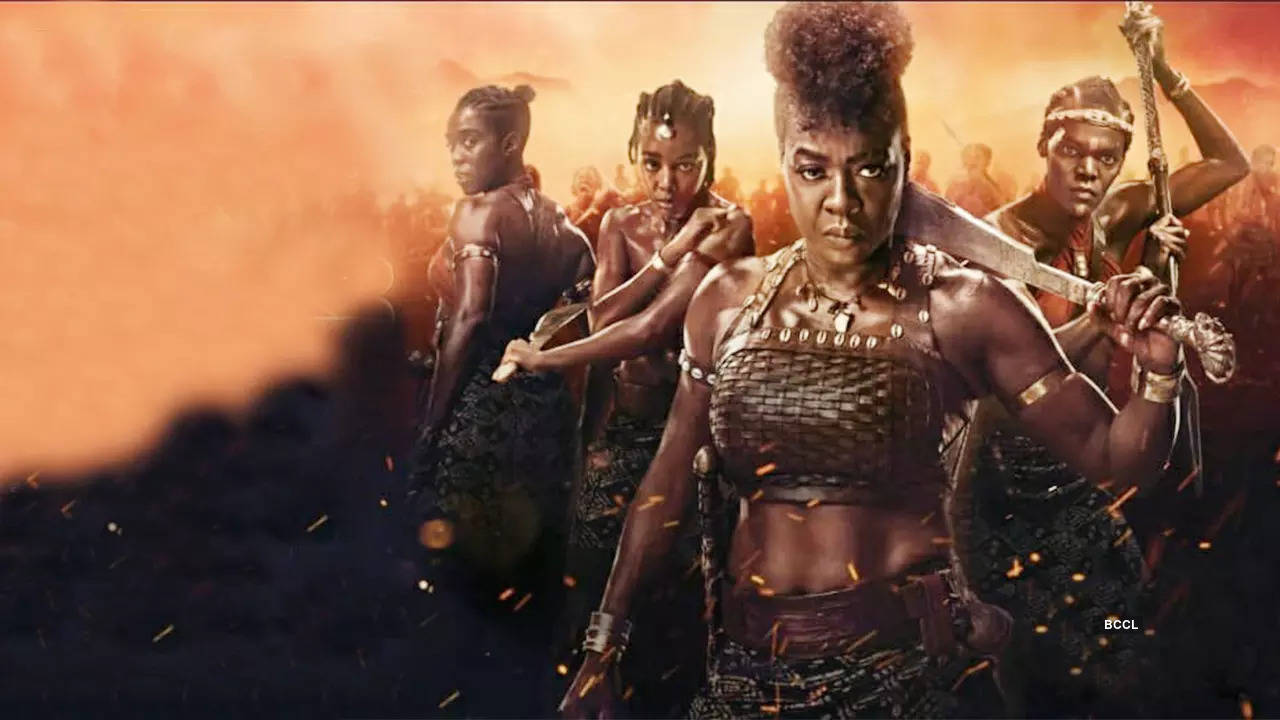


The film has been shut out from all the awards and their categories – too womanly. All the criticisms that declared it ignored or distorted Dahomey’s slaving of Africa must be from those who don’t know this history. just heard something somethingv from somebody somewhere. This slave or be slaved history is central to the narrative. That criticism seems to be pushing the relentless attitude that Africans remain ahistorical until white historians inform them of their own history.

The people of Dahomey/Ouida and Oyo knew why this condition was in place, and how it happened, and who was benefiting as well as how much Africans of every group were exploited and plundered as entire peoples. Those who benefited were the  Europeans and USians, as well as the Islamized tribes working in concert, such as the Fulani and the jihad of the time against the Oyo Empire, which too, was all about the riches from supplying the European slavers. 
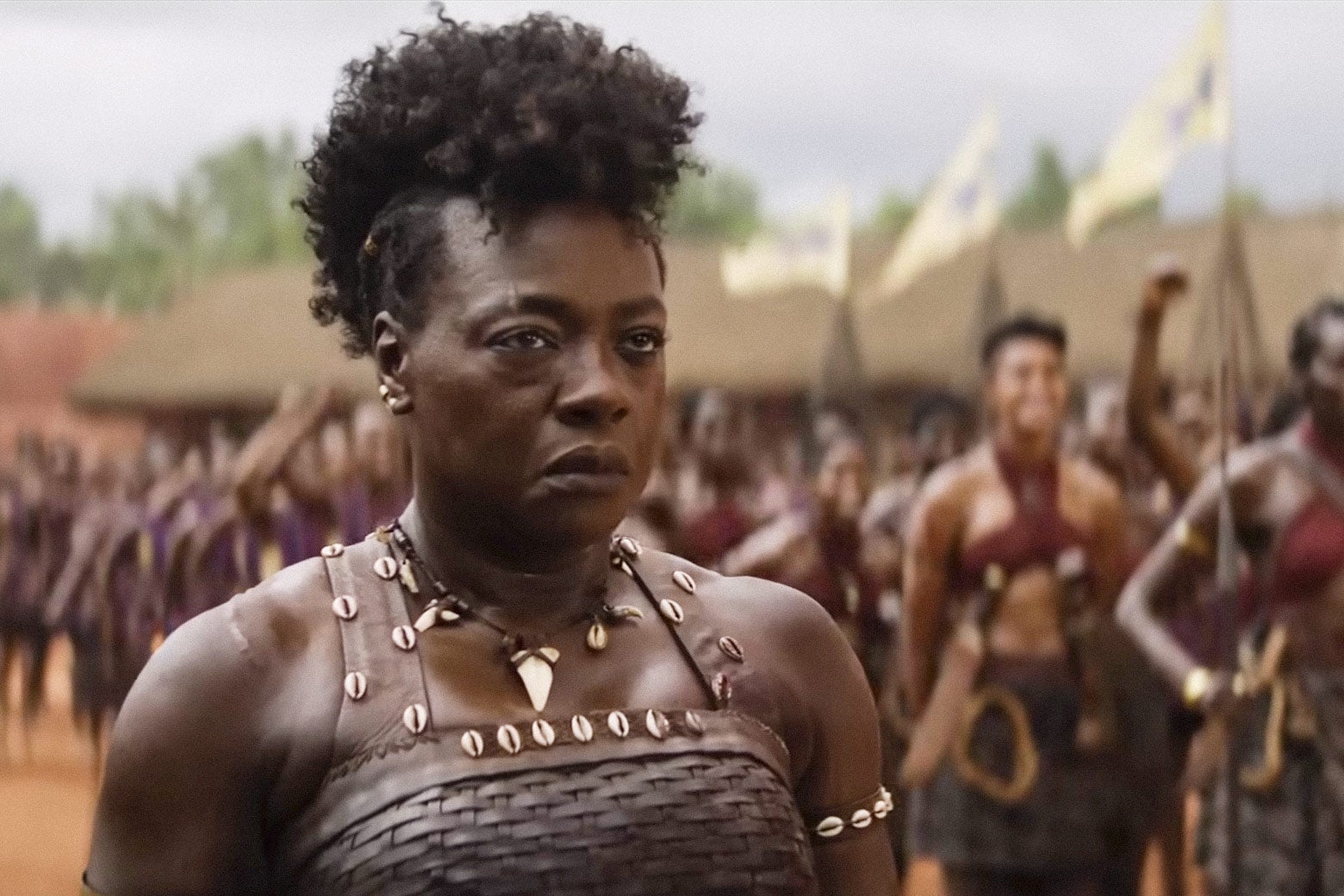


The Agojie commander, Nanisca, played by Viola Davis, is brilliant, as advisor, general and warrior who is at the prime of her strength, but whose body is scarred and has aches and pains from so many wounds, whose heart and mind carries just as many scars and pains. As right hand to the king Nanisca is expected to have wisdom as well as battle skills. And she does; Nanisca sees the future, not only of her own Dahomey, but all of Africa, being slaved and enslaved by the Europeans.  She has this vision, but how to change matters so they – and other kingdoms – stop slaving themselves and each other, and instead create wealth and prosperity through other means. Ah, that is very difficult, not only to do, but to even envision, much less convince others to do, such as the 'nobles' and queens of the Dohomean king's palace.  Slaving is embedded throughout the continent as economy, offense and defense, and status.

The milieu of this woman army is a fascinating, welcome contrast with both Wonder Woman’s Greek vase and statuary fantasy landscape, superhero comic girlhood training, and with the super hero Afro Futurism of Wakamba. Those superhero comix adaptations are slick, smooth, cheesy and tacky when viewed in company with what we see here, as the film reaches to recreate the dust, mud and natural world of historic reality, including how women are physically, who have been trained from youth to be "Agojie",  warriors who command armies, who fight, kill and are killed – or are captured. Taking a famed Agoji ewarrior is a coup indeed.
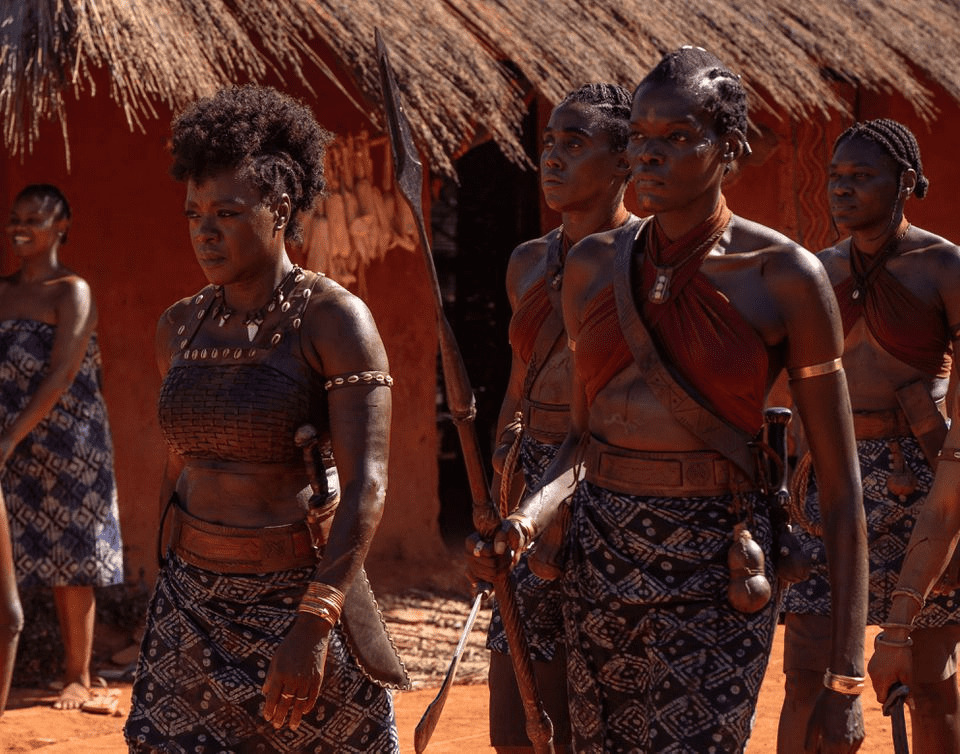


As an army of warriors these women claim physical space in a way one never sees women who are to be good, traditional women do.  They claim physical space in the same matter-of-fact, unconscious way that men do. They walk differently, sit differently, move and are still, differently from traditional women. These women are like men, while – and this is what is so brilliant in the acting, one would never mistake them for men, ever.  They are fully womanly, women like all women, but who have all the masculine space and entitlement – except to have partners and children. 

Dahomey's indigenous religion is depicted in a most matter of fact manner.  This is what we know in the US as Vodun, as it was imported via slavery to San Domingue/Haiti, Bahia in Brasil, and to the US, via French slave owners who refugeed to Cuba. and, when Spain and France went to war, to New Orleans.  The altars where our figures meditate and meet on occasion are as much natural parts of their world, as the lands outside the walled city and palace. 

What follows is me interpolating, because I've not encountered this in any of the books I've read. However, presumably, such effective warriors and commanders must be prevented from having their own children because – in the end – even these women must be ultimately subservient to male power – the king.  A successful, brilliant commander, to whom the army is devoted and loyal, a woman with her own children might well be interested in taking the throne herself, or for her children, instead of merely serving a king's wishes and status.*  Indeed, the film includes the oral tradition that at least once Dahomey was ruled by a Woman King commander of an army of women warriors.

There was not, cannot be a happy ending for the slaving Kingdom of Dahomey, despite winning all the battles ... but happiness is allowed. Around the 2/3 point, the story line includes that of a mother and daughter finding each other, in this time when vision tells them both, the world will not get better. Yet, Viola Davis is recognized by the King again, as his chief advisor, no matter what his wives and courtiers want.  She may end her life free and honored, but we can almost sure thing bet her daughter's life is going to be even more difficult than hers, as the French become determined to take out the Dahomey kingdom, and are horrified by the women who go to war.

This film mesmerized me from start to finish, which I can’t say about hardly any film, television series or novel these day

*  There are many instances in history across the world where a ruler's successful military leader has taken power for himself and his family, so one will speculate!

Sunday, June 7, 2020

Lord. How Long. How Long. In the UK Too

     . . . . In an entry Elsewheres, I concluded with "Lord. How long. How Long."  To my astonishment, people asked what that means.   

  . . . . People with a religious background or any experience of protestant, Jewish, African American recognize it immediately.  It's part of US literary tradition by now, in many parts, even recognized within canon.  This is the rhetorical Introduction and Refrain of passionate lamentation over inexplicable suffering and oppression, begging an explanation from God,  of Why, Lord? why at all? Why to me? to us? and for how long, Lord, will you allow this to go on?

Versions of "How Long" are everywhere in the Old Testament, whether in the Book of Habakkuk or the Psalms. It is in protestant hymns and prayers, it is naturally, particularly prevalent in African American religious tradition, whatever the mode of expression, and beyond that has been heard even in pop music made by African Americans and covered by whites, yea, even in the UK -- even when the lamentation is about another band member playing off on the side in secret with another band, as with Ace's one hit wonder.*


So, yes, among the lamentation of African Americans -- and British people of color too, who are at least as religious out of the protestant traditions as in the US, to speak "Lord. How long. How long,' as a response to a white guy doing absolutely nothing for racial justice except to say, ya! go risk your life and health -- go go go! and then demand cookies from god himself (who he is currently referring to as karma points!) for typing that in the comfort of his comfy home and bank account, far far far away from anything remotely threatening, whether the pandemic, eviction, or police brutality, is something very many people immediately 'get', so to speak.

But not this tone deaf white guy -- who also poo pooed  Covid-19 as a cozy disaster that would over in two weeks. Thus, this traditional African American expression in prayer, in sermon-oratory -- see Dr. Martin Luther King


and music, secular and popular, and has been since the early days of slavery -- is appropriate.  How long, Lord, must we put up with clueless complacent white guys  typing clueless, complacent words, and then demanding a reward?

* Another example of how African American traditions get reworked into commentary upon what is happening right this minute can be heard in the soundtracks to both Coppola's Apocalypse Now, and Spike Lee's imminent release, Da 5 Bloods, which comments on our conditions both back in political and film history -- Vietnam -- and that history commenting on contemporary events.


~~~~~~~~~~~

The BLM Protest movement is indeed global. The monument to African slave trader, Edward Colston, in Bristol, on which Bristol's modern fortune was founded, was pulled down. The protest in London by the US embassy is enormous!

https://www.itv.com/news/westcountry/2020-06-07/thousands-attend-black-lives-matter-protest-in-bristol/

https://www.reuters.com/article/us-minneapolis-police-protests-britain/thousands-join-black-lives-matter-protest-outside-u-s-embassy-in-london-idUSKBN23E0A3?

https://www.itv.com/news/2020-06-07/more-black-lives-matter-protests-to-take-place-across-the-uk-on-sunday/

With horses featuring in stories about the clashes between cops both here 


and the UK, with the horses and the cops in armor, while a pandemic rages, I have no trouble re-visioning the uprisings in the 14th century in England,


particularly the largest, longest one, the Watt Tyler Revolt, or, the Peasants' Uprising, against Richard II -- particularly directed at his uncle, Duke of Lancaster, John of Gaunt -- whose newly built palace, reputed to be the most exquisite in Europe, was not looted, it was destroyed, deliberately, every part of it, from marble wall facings to the smallest bibelot,  ground to shards and dust, and then burned.  That's how tired the people were of waiting for justice, dignity and food for So Long. 

So. Long.  So. Very. Long.

Friday, December 11, 2015

Dirty and Flea-bitten - The Stuart Restoration

You know, the more one learns of the era and court of Charles II, the more strongly it emerges is a court of slatterns.

Dogs and people pissing and shitting anywhere they pleased, vomiting and farting from their daily excesses. Stinking of sweat and other essences including the excrescences on their mouths, noses and fingers caused by their inveterate snuff taking, drenching themselves in perfumes and oils. Fleas and lice.

The rest of their behaviors mirror their lack of elegance, taste, and interest in the arts, even as the  poor man's monarch, Charlie 2, aped the genuine article in France.

Every Stuart monarch was a disaster, though each of them was a disaster in a different way. Charles II cared far too little about being a monarch and its day-to-day responsibilities and obligations -- perhaps he'd dreamed so long about becoming one but had never dreamed beyond taking back the crown?  But once he received the crown, ruling mattered little to him.  He left all that to his brother and others, while courting affection by giving away what should have been in the kingdom's treasury. Not even his Queen's own properties, not even excluding her personal jewels and furniture, were exempted from his compulsive gifting to his favorites, male and female alike.

What, beyond amusement, interested him at all seems to be going to war with the Dutch to take their conquests in West African and India for his own.  For that he needed a navy, but the responsibility of making one was left to his brother, James.

The two sides of the Elephant and Castle, from Charles II's Royal African Company coin, soon and thereafter commonly known as the "guinea." *  There's a section in The American Slave Coast explicating this, as part of the only goods for which Africans would take in trade for their captives -- which is why it was so difficult for the English colonists to engage directly in the African trade themselves.  As colonists they did not have  the goods that Africans would accept, and as colonists, they were forbidden to manufacture them. Nor were there significant sources of gold and other precious metals in North America, and would not be until the 1848 California Gold Strike after the Mexican-American War.
Thus one cannot be surprised that he and his favorites turned to slave trading to enrich their private purses. The Royal African Company was set up specifically to trade in "negroes" up and down the West African Coast, selling them to the voracious New World markets. It was led by James, Duke of York, Charlie 2's brother.

When it came to the Royal African Company, even Pepys must have felt a bit of queasiness since as often as he mentions talking business there, and on many occasion with the Duke of York himself, in the course of serving his Majesty's navy, he never mentions in his own personal diaries what the purpose of Africa House is.

Anyone wishing to romanticize the reign of Charles II has to scrub and scrub and scrub and white wash and white wash and white wash, while wearing nose plugs and blinders, and then deliberately choose not to read the primary record, to get there.

-------------------------

*   Even now the guinea generates more money: we paid $300 to the British Museum for permission to reproduce the elephant and castle in The American Slave Coast. We had taken the photo ourselves, but it was from a display in the museum.

Saturday, December 13, 2014

Kongo Mangaaka and -- Phoenician Hippoi

Maps, oliphants, raffia textiles, masks, crucifixes and nkisi.

Oliphants, still carved today in Kongo and Angola, were among the ornamental objects presented by the Mani-Kongo to European powers, including the Pope and the Medicis, as "business cards", initiating a relationship between them, himself and his kingdom for trade and mutual benefit.  Thus there are many of these found in public and private art collections from the Mediterranean up to the northern royal collections of Sweden and Denmark. Oliphants are still being carved in Angola and elsewhere. Nkisi are still being made there and in Cuba, at least. Power vessels containing power materials have been discovered by archeologists in Maryland, Virginia, and Louisiana.

The invitees were academics at the graduate level or museum / gallery people, most of which are also part of universities, such as both Yale and Princeton. However, el V was the only one in this company, including the Met curators of both this coming exhibit (September 2015) and the Met's African, Oceania and South American wing, to actually have been in Mbanza-Kongo.  As told when it happened, and almost didn't happen, it's very difficult to get into Angola.  The powers do not want outsiders.
Before the the early 19th century all surviving objects are nonrepresentational -- abstract and geometric -- whether sacred or ornamental. This break into respresentational occurs, presumably due to the change from European partnership with the region's rulers, to colonial invasion into the interior out of their long confinement on the coasts. Now there is direct conflict instead of trade, that includes the destruction of culture and folkways.


This is the era in which objects first appear, such as female wooden sculptures depicting the rulers' desire for population, particularly of men (recall, entire regions of Central Africa were depopulated by then by centuries already of the slavery industry, taken to everywhere in the New World).

A nkisi. Ritually prepared materials -- power packets -- would be secreted within the figure.
It's from the early 19th century as well that were created another variety of the nkisi power figures, mangaaka.  These were huge in size, taken and removed from nodes of mercantile communities.  These figures were, scholars speculate,

A mangaaka.  Very few of these large nkisi have survived.
the last line of defense of communities that had been barely surviving, subjected to intense stresses, such as loss of both population and trade, from colonial invasion by Portuguese, French and Belgians. The mangaaka have been ritually cleansed of their secret power packets somehow, before the European invaders and / or pirates seized them, and thus got into European collections.

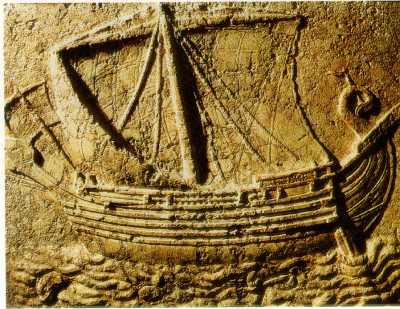
Named hippoi by the Greeks, because of the horse heads at stem and stern.
So, it may be asked, how does one get from mangaaka to Phoenician hippoi? The Met currently has up for a while longer a special exhibit called "From Assyria to Iberia, the Dawn of the Classical Age."  Most of the objects are borrowed from other institutions and collections, which is why this is a "special" exhibit (with no photography allowed, not even cell phones).

After our session finished at noon, after the networking, and so on, we were given passes to the Met's galleries. El V and I had lunch in the museum restaurant, before going through the "Assyria to Iberia" galleries.  As usual, I am


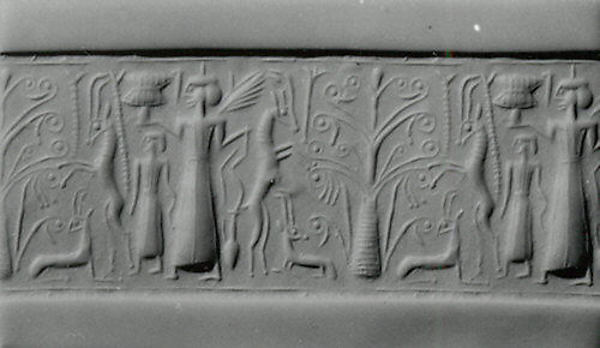
struck by the refinement of the Assyrian artists, particularly in the cylinder seals. Each time I look at these objects I am more impressed by the Assyrians than the last time. Their visual imagination expresses a spirituality that we can't comprehend emotionally, yet is deeply striking: the human-beast composite figures of

Cylinder seal depicting a Mistress of Animals, surrounded by horned beasts.
guardianship and expressions of power. The griffons, and especially, the Masters and Mistresses of Animals.  What is that all about, really?  Their sacred tree?  There seems at least some deep influence of these figures and designs upon the Scythians, who show up quite a lot later.

We spent a long time looking at a panel that showed cargo being taken off a Phoenician hippoi ship.  Trade was much the focus of this exhibit. Just as with the coming Kongo exhibit -- many of the objects in that show are pieces sent to European princes (including the Medicis!) by the Mani-Kongo, who controlled the most extensive trading system on the continent, back in the 15th, 16th and 17th centuries.

It was an emotional day, from the sense of tragic sadness and desperation felt in those sculptures of women cradling and nurturing -- not infants as the western eye always interprets initially -- but grown men, just made small, in the vain hope of repopulating the land.  While in the meantime, the women have been taken off to have their wombs forever repopulating the slave breeding and trading industry in the New World.  Then this joy in the exquisite refinement and achievement of what artists could create so very long ago, in the millennium before the ACE.

Not only is the detail exquisite -- in the round one can see each toe of the boy's foot -- it's also mysteriously, even tenderly, erotic. Note the placement of the lioness's paw around the boy's shoulders, holding his throat to her mouth ....
Yet, there too, the sense of tragedy.  A bit of ivory work that may perhaps be ranked by the world's art historians in these matters as the most perfect of ivory work in the world, surviving.  There was a matching ivory panel to this piece, but it could only be represented by a photograph, because it was looted from the Baghdad museum in 2003, never to be seen by the public or scholars again.

This ivory was from the elephant herds living in what we now call Syria. They were hunted to extinction long before ACE for the sake of their tusks, so what goes round, comes around?  We look at the ivory tusks from these elephants of the Middle East, all that survives of their DNA, and think again of the ornamental oliphants given to European princes by the Mani-Kongo, whose elephants too are nearly hunted to extinction for their ivory.

But what survives from a temple in the Phoenician port of Spal, which today we know as Seville, is gold. Gold has no dna ... nevermind . . . .

At that thought, our feet and backs couldn't take any more marble floors. We left to meet up with the people visiting NYC from North Carolina who wish to do some events around The American Slave Coast after publication. This includes the largest bookstore in the triangle (Raleigh, Durham, Chapel Hill), historical black college radio, and so on and so forth, and hopefully a gig or two presenting at one of the academic institutions which will finance this jaunt. While we were meeting, we were observed for long minutes by a drone garbed in Christmas lights, through le Café's large windows facing the street . . . .

After that we stopped in at the Grad Center's Christmas party, came home to eat rice and vegetables and read.

Somehow . . . it felt like the Christmas season had started.

Thursday, December 5, 2013

RIP - Nelson Mandala

It's impossible not to think about what Michelle and Barack Obama are feeling and thinking tonight.

They must be considering how many shadows and echoes there may be for their own obituaries -- hopefully, far, far, down the timeline -- in seeing, hearing and watching all the memorials to this black man who was a pioneer.

Nelson Mandela  1918- 2013


Thursday, June 20, 2013

Dub Bush's Great + 4 Granddaddy an African Slave Trader

But then, so was Thomas Jefferson's father-in-law.

This is the family founder for whom the 'W' in GWB stands for.

What is striking is that this ancestor in the 18th century carried the nick-name of 'Beau' -- Thomas 'Beau' Walker, like George Bryan 'Beau' Brummell and Richard 'Beau' Nash.  Can't you just see his quadruple grandson in this: cock walking, smirking, sneering and uttering mendacities?

This comes to us from the now-regular history feature on Slate, here, four screens in length. The link is to the single page view.

What this isn't, is surprising.  This is how people got rich, and got rich quick in the 17th and 18th and 19th centuries -- they bought and sold slaves, and nowhere so much as in England and the colonies that eventually became the United States.  Recall Andrew Jackson was an out-and-out slave trader.  Benjamin Franklin was a slave trade 'faciliatator,' not only coining money with adverts for slave sales and run-aways, but holding slaves in the basement of his business quarters, and owning some himself.  It is everywhere in the history of the U.S. until the end of the Civil War.
Roberts said that while he had not known of Walker's slave dealing, the finding did not surprise him, given that the Walkers were a mercantile family and Baltimore, where they established themselves in the United States, was a hub for the slave trade. "It would strike me as being perfectly logical and perfectly expectable," he told Slate.
It's also fascinating that part of the hard evidence for these facts was found in Africa, Sierra Leone.
The historical evidence suggests that Thomas Walker died at sea in 1797 when his own crew mutinied and threw him overboard. Documents in the British House of Lords Sessional Papers indicate Thomas Walker is the same man as a “Beau Walker,” whose unpleasant end is in turn recorded in the journal of Zachary Macaulay, a British anti-slavery activist, sometime governor of Sierra Leone and father of the celebrated Whig historian Thomas Macaulay.
Macaulay’s journal entry for Oct. 24, 1797, is as follows:
“You have heard of the noted Beau Walker, an English slave trader of these parts. He arrived at the Isles Du Los [off present-day Guinea] lately in an American Brig being bound to Cape Mount [in present-day northwest Liberia] for slaves. He had scarce arrived at the last place, when exercising his usual barbarities on his officers & crew, they were provoked to conspire against him.  As he lay on one of the hencoops a seaman came up & struck him on the breast with a handspike, but the blow being ill directed, did not produce its intended effect and Walker springing up wd soon have sacrificed the mutineer to his fury, had not a boy at the helm, pulling a pistol from his breast, shot him dead on the spot. His body was immediately thrown overboard. Thus ended Walker’s career, an end worthy of such a life. The vessel left Cape Mount, and it is supposed has gone for the Brazils or South Seas. There could not possibly have been a more inhuman monster than this Walker. Many a poor seaman has been brought by him to an untimely end."
As above, can't you just see his descendant in this guy?

Thursday, September 13, 2012

*Hip Deep Angola* Premieres

The first episode goes up today and will be available at www.afropop.org

It will air on WNYE 91.5 FM in New York Saturday at 11 p.m. and Monday at noon.

You can also hear it (right now) at
http://soundcloud.com/afropop-worldwide/hip-deep-angola-part-1-music


[Sorry -- the photos didn't come through in the press release, cut and pasted below. ]


* * *


PRESS RELEASE 
September 13, 2012 
Afropop Worldwide 
info@afropop.org / 718-398-2733

HIP DEEP ANGOLA TO AIR
FOUR-PART RADIO SERIES BEGINS IN SEPTEMBER

Premiering in September and continuing in four episodes through November, AFROPOP WORLDWIDE’s HIP DEEP ANGOLA will present an unprecedented exploration of the history and contemporary reality of this southern African nation -- a story told in music.

Angola is not an easy place to report from even now, but until recently, it was almost impossible. From 1961 to 2002, it was at war on its own territory, emerging with little in the way of infrastructure. Now, fueled by oil revenues, it’s undergoing a massive national construction project unlike anything else in the world.
Produced by HIP DEEP co-founder Ned Sublette, who traveled to Angola in July, and featuring commentary by leading musicians and distinguished scholars, HIP DEEP ANGOLA will air on public radio stations around the  country via Public Radio International. (In New York City it airs on WNYE, 91.5 FM, on the Saturday following distribution date at 11 p.m., and again on Monday at 12 noon.) It’s available streaming as of the distribution date at www.afropop.org.

1
HIP DEEP ANGOLA 1: MUSIC AND NATION IN LUANDA (distribution: September 13) explores the role music played in the creation of a uniquely Angolan consciousness as the country struggled toward independence in the 1960s and ‘70s after centuries of colonialism. Our guide will be Dr. Marissa Moorman, historian of southern Africa and author of Intonations: A Social History of Music in Luanda, Angola from 1945 to Recent Times.
On the ground in Angola, producer Ned Sublette talks to critic and musicologist Jomo Fortunato, and to guitarist and bandleader Carlos Vieira Dias. We’ll hear the pathbreaking Ngola Ritmos, who dared sing songs in Kimbundu publicly when it was prohibited by the Portuguese. And we’ll hear the voices of Teta Lando, Urbano de Castro, Artur Nunes, and Luis Vizconde, from the age when the guitar-driven style called semba ruled, as well as some snazzy ‘60s guitar instrumentals. We’ll also check in on the new generation of semba, via Paulo Flores and Yuri Da Cunha.

2
HIP DEEP ANGOLA 2: 21st CENTURY URBAN ANGOLA: KIZOMBA, KUDURO, AFRO-HOUSE AND BEYOND (distribution: September 27) takes us to  the street in Angola’s dense, smoggy, oil-booming capital city of Luanda. Peace came to Angola in 2002 after forty-two years of war, and now everything is different.
The postwar generation of the last ten years communicates via text-messaging and electronic music. Producer Ned Sublette checks out kuduro (literally, hard-ass) – the high-energy electronic dance music that dominates Luanda today, as well as the the zouk-like couple dance of kizomba, a phenomenon that began in the 80s and still packs in dancers to Luanda clubs, and, on a more underground level, the computer-driven style called Afro-House.
We’ll talk to musicologist Stefanie Alisch, who’s been studying the world of kuduro in Luanda this year; historian Marissa Moorman about kizomba and the early days of kuduro; transgendered whirlwind dancer and rap diva Titica, the first out-gay African music star; 21-year-old superstar Cabo Snoop, whose “Windeck” became a hit via Bluetooth; CorĂ©on DĂş, executive producer of the weekly kuduro TV program Sempre a Subir; the charismatic, comic hosts of that program, the duo of Os Namayer, better known as PrĂ­ncipe Ouro Negro e Presidente Gasolina (Prince Black Gold and President Gasoline); DJ Satelite, a leading beatmaker and producer on the Afro-House scene; and JĂł Kindanje, the Angolan writer who published the first book on kuduro.

3
HIP DEEP ANGOLA 3: A SPIRITUAL JOURNEY TO MBANZA-KONGO (distribution date TBA). Today Mbanza-Kongo (Kongo City) is part of Angola, in the north where the Congo River divides Angola from the  Democratic Republic of Congo. When the first missionaries arrived there in 1491, it was the seat from which the Manikongo (king) ruled over a large area that reached to south of Luanda. It was a city of luxury, with perhaps as many as 60,000 people at its peak. To make this unprecedented program, producer Ned Sublette traveled to Mbanza-Kongo to rendezvous with Dr. Bárbaro MartĂ­nez Ruiz, professor of art and art history at Stanford.
We’ll learn about the simbi, the spirits that MartĂ­nez Ruiz describes as “the multiple power of god”; hear Antonio Madiata play the lungoyi-ngoyi, the two-stringed viola of the Kongo court; attend a session of the lumbu, the traditional tribunal of elders; listen to the voice of a deceased singer who took 500 years of genealogical knowledge with him when he departed; talk to a traditional healer; and meet Gabriel Bortolani, a Capuchin priest who has made a deep anthropological study of the area. With the help of historian C. Daniel Dawson and with Angolan composer and musicologist Victor Gama, we’ll examine Kongo-Ngola culture in the diaspora – in Brasil, Haiti,  Cuba, and more.

4
HIP DEEP ANGOLA 4: THE CUBAN INTERVENTION IN ANGOLA (distribution date TBA). The twenty-seven-year-long Angolan civil war was also an international crossroads of the Cold War, involving Cuba, the Soviet Union, Zaire, South Africa, and the United States. When it was over, Namibia was independent, apartheid had fallen, Angola was a nation, and the Soviet Union had ceased to exist. Through music, interviews, and historical radio clips, this program will tell the story of Cuba’s massive commitment in Africa, tracing an arc from 1959 to 1991. We’ll talk to Piero Gleijeses, foreign policy specialist at Johns Hopkins University and author of Conflicting Missions: Havana, Washington, and Africa 1959-1976, and to Marissa Moorman, author of the forthcoming Tuning in to Nation: Radio, State Power, and the Cold War in Angola, 1933-2002, who will share with us rare archival recordings of radio broadcasts featuring the voices of Agostinho Neto, Jonas Savimbi, and others. We’ll talk to Cuban trovador Tony Pinelli, who traveled in a brigada artĂ­stica playing music for Cuban soldiers and for Angolans. And from Cuba, Angola, Zaire, and Portugal, we’ll hear some of the music that accompanied the struggle.

HIP DEEP ANGOLA was produced with support from the National Endowment for the Humanities. A SPIRITUAL JOURNEY TO MBANZA-KONGO was supported by a 2012 Knight Luce Fellowship for Reporting on Global Religion. The fellowship is a program of the University of Southern California's Knight Chair in Media and Religion.


Monday, August 27, 2012

A Tide Turned - African Returnees

Their parents and / or grandparents left their African homes in search of a more secure and prosperous life.  Now their children and grandchildren are coming back.  They are returning for all kinds of reasons.  It isn't necessarily easy, and it certainly is expensive.  Yet, for instance, a woman wrote this article concerning the reverse migration.  She includes this:

[ " "Who needs the glass ceiling when you could be running your own business in one of the world's fastest-growing economies, enjoying the warm weather and surrounded by your own people?" one returnee to Ghana told me. "There is no contest." " ]

Women have traditionally been the market, run the market in so many African cultures.  In business they are plugging right back into that status when they come back to their family's country.  I hadn't thought of that until reading this article.

The article is long and tries to cover all the aspects, negative as well as positive.  Being a returnee herself, she focuses on an area that in this country, with our current confusion outright bigotry to racialist disputes that debate cultural appropriation and cultural appropriateness, we could do well to consider deeply -- because, you know, not everywhere does it the way we're doing it here:

[ " The battle for the image of Africa – helpless and underdeveloped versus rapidly emerging economic giant – often gets personal. Journalists frequently, and rightly, draw criticism for describing a continent of 54 nations and breathtaking diversity as one country. But some commentators are quick to employ a definition of what it means to be African that excludes returnees like me for being too fair-skinned, too British or too westernised.

But being African is an increasingly complex identity. As someone who has been told she is too black to be British, and too British to be African, I am strongly against the notion that identity can be policed by some external standard. And I am not alone. The term "Afropolitan" is beginning to enter the mainstream; one definition describes it as: "An African from the continent of dual nationality, an African born in the diaspora, or an African who identifies with their African and European heritage and mixed culture.

"It doesn't matter whether they are born abroad or not; the important thing is their global perspective on issues, as well as their mixed cultural identity."
The enthusiasm with which people of African heritage around the world are embracing their roots has reached the level of a cultural resurgence. In stark contrast to my teenage Africa-denial, a significant number of international cultural icons are now African. The black British music scene is dominated by rappers with Ghanaian heritage – Tinchy Stryder, Dizzee Rascal and Sway. Azonto, a popular Ghanaian dance, has begun colonising clubs in London, a growing number of which now include Afrobeat on regular rotation.

This is not to dismiss the inequalities that still exist between Africa's increasingly visible international, urban elite – a category many returnees fall into – and the vast majority of Africans.

The reality is that, on so many levels, access to the west is still a fault line for determining privilege. For example, entrepreneurs in west Africa currently find that borrowing money for their businesses typically comes with interest rates of up to 30%, an unrealistic burden by any standard. Returnees, on the other hand, who have access to loans from foreign banks, can enjoy single-digit interest rates, effectively dominating local markets. " ]

You see all that she speaks of in this article in the large cities all around the world, including right here in NYC.


Monday, July 9, 2012

M'banza Kongo

Which is where el V is currently.  And happy as a clam in whatever clams are happy in!  Its air is clean, it's in the mountains, he's working with a great scholar at the Kongo Kingdom Museum there -- it's everything he dreamed it would be, but better.

It is also bare bones, i.e. not easy.  He's only the second scholar to ever go there, second after BM, who has been coming for years, who has walked all of Angola starting with the war when South Africa attempted to annex Angola for its own apartheid exploitation. Fortunately, this is an area where there are few if any land mines. BM really knows this country. So much is being lost, and will be gone forever within 3 or 4 years, when these seniors who are still playing instruments that people elsewhere have no idea exist.

These google images give a sense of where it is and what it is like.

Here's some history of the region.

I cannot post photos as he's currently sans a computer and connection.  We are still able to skype daily, at the very least.