LINES OF THE DAY

". . . But the past does not exist independently from the present. Indeed, the past is only past because there is a present, just as I can point to something over there only because I am here. But nothing is inherently over there or here. In that sense, the past has no content. The past -- or more accurately, pastness -- is a position. Thus, in no way can we identify the past as past." p. 15

". . . But we may want to keep in mind that deeds and words are not as distinguishable as often we presume. History does not belong only to its narrators, professional or amateur. While some of us debate what history is or was, others take it into their own hands." p. 153

Silencing the Past: Power and the Production of History (1995) by Michel-Rolph Trouillot

Wednesday, January 15, 2020

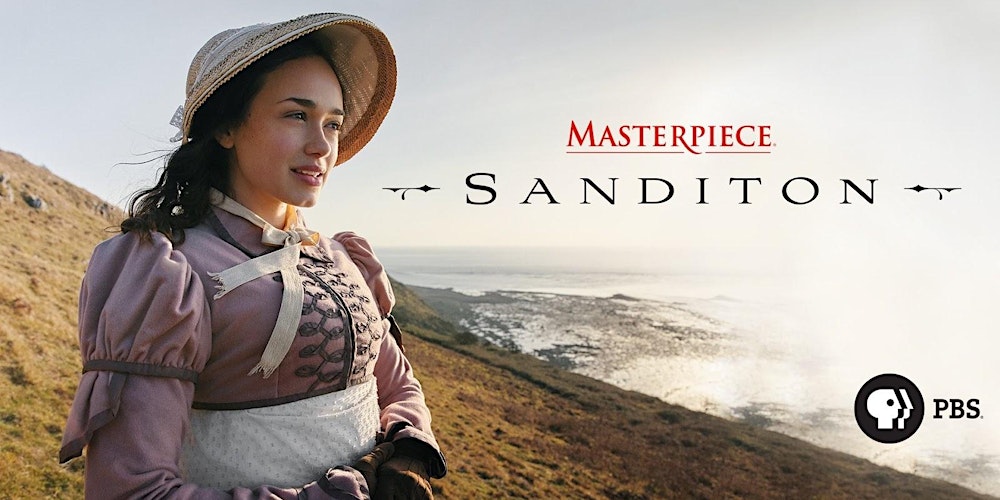
An Amiga and I Talk About Sanditon

       . . . . . Sanditon (2019) ITV-PBS.  8 frackin’ episodes!  How can there be that many 48 minute tv episodes from a unfinished novel that only had 12 chapters?

It premiered in the US this past Sunday night on PBS, showing the first two episodes, not just the first one. So much has been lifted whole out of other Austen novels for this series, mostly, of course, from Pride and Prejudice, particularly in the dialogue, and scenes repeating or at least referencing the 1995 BBC Pride and Prejudice.

And people talking about a second season, though ITV said it cancelled the series as not enough viewers / unenthusiastic - hostile - derisive reponse.  The UK reviewers at least, really didn’t like it – dull and tedious. Out of what could they fashion a second season anyway? 

The UK viewers also strongly objected to the depictions of sexual behavior that departed so sharply from the 
Austen universe as Austen depicted. The writers for Sanditon felt they MUST give us as villains, a sexually transgressive half sister-brother duo.  The bro’s a serial, violent seducer-rapist. There’s a strong suggestion of the two of them doing what even half sibs should not do, while living mostly within a room in their crumbling mansion frescoed with naked men doing ... what exactly? Really, Austen was able to show schemers determined to get All the Stuff without going that far. 

My favorite Mansfield Park, BBC 1983

Henry Crawford


Mary Crawford

The splendid Crawford brother and sister pair of Mansfield Park -- they created havoc and crossed boundaries -- certainly the brother did! -- but we see how their charm, likeability and worldly joie de vivre -- even their sophisticated sense of the comic and absurd -- allowed for their seductions, without rape and violence of that sort. These two are as interesting to the reader as they are to the the characters of Mansfield Park.

Even the way the writers did it, the pretext to get a lively but moral ingenue to this sea-side resort in the making, was hard to believe.  Really, even in those days? Responsible parents like the Heywoods would allow their adolescent daughter to go off to stay with the Parkers, people they’ve known for, o all of 5 minutes?

Even if Tom Parker is played by Kris Marshall!?* whom last I knew as the detective on Death in Paradise, who left the fictional Caribbean island of Saint Marie after two seasons, to marry his love back in London. I saw Marshall first in Love Actually (2003) as the horny Brit kid trying to get laid who travels to the US to do it. Remarkably, one of the three midwestern babes who helps him out of his virginity was January Jones, who played Betty Draper, the unpleasant first wife of Don Draper on Mad Men.  Gotta say this for Marshall the actor -- he does get around some beautiful women, over and over and over again!*

A friend writes to me about Austen's Sanditon vs. ITV-PB's Sanditon after she too watched these first two episodes on offer:
 ... Reread Sanditon. [What Austen wrote] almost fills up the first ep. The ball sequence and everything follows is invention ... also kind of Northanger Abbey ... it's [NA's] Catherine Moorland, Not Charlotte Heywood. [Austen's Sanditon's]CH was a sensible young woman of two and twenty, ie, a bit too long on the shelf but not at all a husband-hunter. It's only a fragment. but that ball sequence is PURE Catherine Moorland.
Here's the thing about Charlotte Heywood - she is an observer figure. She stands apart and judges the other characters but doesn't enter into their lives. She exhibits no romantic interest in them. (This might have changed if the book had been finished - or maybe not. It would have been an unusual and rather progressive narrative strategy.)
But this Charlotte Heywood has been buried in the TV series.
My response:
     This is all true -- and playing Charlotte as Austen wrote her would also be a most interesting acting challenge, and worth watching.
But the actor playing Charlotte isn't up to that any more than the writing is up to Austen. Writers: NO WE MUST HAVE ROMANCE! WE MUST DO ELIZABETH AND DARCY ALL OVER AGAIN ALL THE TIME BECAUSE THAT’S ALL THE LADIES ADORE AND THAT’S ALL THE LADIES KNOW.

Especially the tv Darcy and Elizabeth of 1995, which itself took some serious liberties with Austen’s Pride and Prejudice text, like Gerwig does with Alcott's Little Women. Which mostly means, at least for this Sanditon, we must squeeze in as much nekkid men as the screen can hold.
The ghastly Pineapple luncheon though, in terms of how things surely were and, tragically, the way things still are right this minute, was remarkably on the money: consider what's going on right this minute with Meghan Markle:
https://www.huffpost.com/entry/exclusive-meghan-markle-targeted-by-hundreds-of-racist-and-sexist-tweets-amid-plan-to-step-back_n_5e1f5b28c5b673621f6f7965
Plus there are so many more racist comments and actions that can rather more subtle than these and the way the hideous person Ann Reid is playing shows so well (like, that member of the royal family / court? who to meet the Duchess to be, wore a blackamoor pin). Reid's performance is far and away the best thing in the piece. The actor playing Charlotte, I saw last as the vapid Princess Clode in the last season or so of the ridiculous, non-historical period series, Reign, in which we see Mary Queen of Scots host a run-way fashion show in her Scotland castle.
~~~~~~~~~~~~~
Woo! does that resort on the coast of England broadcast cold!  And the actors had to get in the water!  But it looked almost equally cold out of the water and inside walls.  All the actors who have played the detective on Death in Paradise have talked extensively of how difficult it is to do this series in the climate of Guadeloupe. So it was probably more pleasant for Marshall to shoot in cold England. 

Monday, January 13, 2020

Screen Time

     . . . . Did anyone watch the first episode of Sanditon last night on PBS?


The Brit reviews when it played there last year were fairly unanimous that this was dull and tedious, lacking any sizzle or wit.

I can stream it, but am reluctant without some recs from people who have seen it.

     . . . . It's shame that Hustlers and JLo got shut out of #oscarssowhitemen. Additionally, Hustlers is the Little Women for our time. Four principals, diverse in background and skin tone including J Lo as Marmee as well as Jo, they are the March sisters we all need, reflecting our Reel Amurica!


Four Sisters Who Aren't the Marches, Praise the Lord!

The Irishman was a great film.  But I honestly feel that Hustlers was its superior according to all the criteria by which we judge these matters. The exception is the screen interpretation and record of the history and culture of the USA. As historical and cultural commentary The Irishman and Hustlers are equal.

Saturday, January 11, 2020

Today's Thoughts Include Edith Wharton

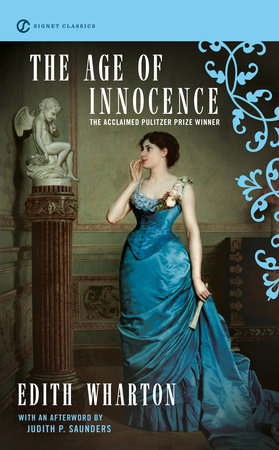
    . . . . Since my first reading of Age of Innocence, accomplished long after its initial publication in 1920, but chronologically set in the author's past of 1870's Gilded age New York, Edith Wharton has  high on my personal canon of fiction that never goes stale, whatever age we are in or whatever age we are when first reading it and re-reading it thereafter.


Devouring Age of Innocence, in which the destruction is merely bitter-sweet, I turned to The House of Mirth, set in the Gilded Age, which was still in effect in 1905, when it was first published. 


O the bitterness, the waste of a life -- a talented, struggling, isolated woman's life -- the sheer awe-fullness of it, eclipsed anything I'd read up that time, other than in George Eliot.  There was nothing warm about the people of this book other than the protagonist's fire to not be what she was condemned to be.


So, these quoted words of Wharton concerning centering a frivolous, useless society in one's writing resonate magnificently in the past, the present, and if there shall be one, no doubt in the future too.

Wharton had already written books including a novel set in 18th-century Italy and a volume on interior design when she began drafting a novel set in the rarefied world of moneyed New York. The challenge, she recalls in A Backward Glance, was to find the gravitas in such a world. “The answer was that a frivolous society can acquire dramatic significance only through what its frivolity destroys. Its tragic implication lies in its power of debasing people and ideals. The answer, in short, was my heroine, Lily Bart.”
Presently we daily witness and experience ourselves, we who aren't members in our neo-Gilded Age class of heartlessly frivolous powerful and obscenely wealthy, the destruction they wreak upon us and the planet.

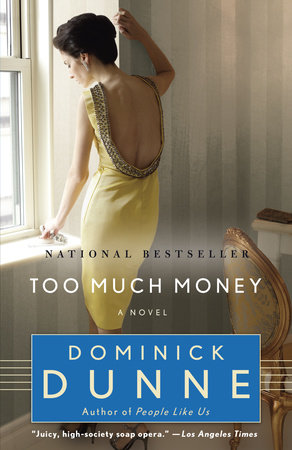
No wonder Dominick Dunne, one of our own literary chroniclers of the descendants of Wharton's people and those who came and come up to elbow them aside, named his novel, Too Much Money (2009), after them.


Friday, January 10, 2020

Nelson, Janet L. (2019) King and Emperor: A New Life of Charlemagne.

     . . . .  Happily reading through the 483 pages (that's before the subsequent pages of Acknowledgments, Notes, indices, etc. that bring us to 668 pages) of King and Emperor: A New Life of Charlemagne (2019) by Janet L. Nelson.


Last night's reading included the ambush / The Battle of Roncevaux Pass in 778 A,D. The author delves deeply into the campaign out of Aquitaine, across the Pyrenees and into Spain. As we know, already Charlemagne was employing in various capacities, including as warriors, disgruntled Spanish “saracens,”* both Umayyeds and Abbasids, in German areas during his endless Saxon campaigns.

The Roncevaux debacle took place during the period of the Umayyed-Abbasid wars in southern Spain, between the two rival Caliphates and their various kingdoms. Thus Charlemagne was invited into Spain to fight on behalf of the Spanish Muslims of Zaragoza, with the promise of very much booty. It all worked quite well, until, according to Charlemagne’s characteristic organization of his force, he divided his army in  two divisions. This tended to allow him to approach an opponent within a pincher movement, generally unexpected. The two parts, each with their outlier trains and troops, proceeded by close, but separate paths, across the Pyrenees. The force led by Count Roland was ambushed by an effective force of Basques. The Frankish force was utterly defeated, and the baggage train, which presumably included much booty, was high jacked and taken back into deep Basque country.

What excited me about this account is seeing for how long the Basques have been fighting to maintain their independence from invading conquerors. Their first mention that I’m familiar with is from the the late Roman Republic in the Sertorian War 80 – 71 B.C. Back then they and others in Celtiberia maintained an ongoing fierce guerrilla war against Rome's invasion. They strategically allied themselves with rebellious Roman governor, Sertorius, yet still managed to escape Pompey and Metellius's retribution once Sertorius was defeated. This history shows that Hispania was always effective at organizing guerrilla warfare -- they didn't just stumble into it during the Napoleonic or fascist eras – or even just now, as the Basques continue to fight for autonomy.

What was most interesting to me though, specifically in terms of Roncevaux, is Nelson’s deep scholarship to reveal Count Roland a real person. Among the evidence is a single contemporary coin that was struck by what evidently was his own small county. Nelson is painstaking in providing her scholarship within the narrative that supports her choices of interpretation of certain events, and details her reasoning. The battles among these sorts of medieval scholars over interpretation of the most obscure lines of most obscure texts and records, are constant, heated and, as time goes on, have changed our perspectives on the received wisdom regarding many events of Charlemagne's life.

Nothing has changed interpretation and understand in our time as much as the revelations that Charles self-consciously employed poets, minstrels, churchmen, scholars and chroniclers to create works that informed the international and local audiences who he was and what he did. These range from the tales on which the chansons de geste were based and other thoroughly, deliberately composed works by the crowds of poets and scholars he employed to do so. This is where we get the idea that he was a warrior against Islam. He wasn't. He really wasn't.


It's also in the great Song of Roland, first surviving work of French literature, composed nearly two centuries after the event, but employing the names and the re-written contemporary history, that posterity has learned and believed ever since  that Roland was treacherously attacked by "Saracens" through the efforts of a personal betrayal to both Roland and Charlemagne. Not true.

What is historically true, is this was the catastrophic event in Charlemagne's life, that probably did end any idea he may have formed to return and expand his own territories in that direction. It also urged him to re-write the history, erase the history, to change history via the the written record, the spoken, sung and recited word.

A driving impulse, Nelson  further argues, beyond preserving his historical dignitas, gloria et honore, was guilt for his over-confidence, i.e. his self-conceit.  The strands out of documents by which Nelson arrives at this conclusion are many, long and – convincing. It was this which led to the deaths of so many of his very good warriors, of whom a very many he must have shared a warrior’s intimacy, as they were his most dependable, crack cohorts, who never asked to turn back from any campaign, no matter how long it went on. The Ronceveaux disaster didn’t need to have happened and wouldn't have if he hadn't divided his army again, on his way home, leaving that smaller force vulnerable.

The trajectory of his life until the debacle of Ronceveaux had been that of victory and strength, to more victory and strength. His decision to invade Spain came after his greatest international achievement so far, his 777 A.D. campaign against the Saxons, which was glorified in contemporary chronicles and poetry. This victory was celebrated deliberately at Paderborne, ancestral Westphalian center of the by-now ancient Merovingian kingdoms of the Franks, which would become the birth place of the Holy Roman Empire. Here gathered an international audience that included Muslims from both Baghdad and Spain, Greeks as well as powerful Roman Churchmen, Franks and Lombards, emissaries, warriors, merchants and administrators, all there to witness the magnificent pageant of thousands of Saxons baptized.** Even more significantly, when the defeated Saxons swore allegiance to Charles in awe-inspiring ceremony and spectacle, they swore their eternal fidelity to Charles, his sons, and the Franks. This was the first time submission was sworn not just to Charles and the Franks, but to the progeny specifically of himself. As it wasn't necessary even in his father's time that the heir of a powerful ruler be fathered directly by that ruler, this sent a very powerful message of how Charles was seeing the future, even after he left the stage himself.

That great year’s winter – spring quarters were at the Aquitaine palace of Chasseneuil.*** The Christmas and Easter courts provided a never-ending dazzle and sizzle of confidence, enjoyment and ambition. The poets and emissaries proclaimed Charles invincibility and God's favor non-stop. It went to his head. He very quickly accepted the offers of Abd-al-Rahman, who had lost his control of Toledo, Zaragoza and the Ebro Valley to the Abbasids, who now also held the Caliphate. Charles’s military and lucrative successes in Spain enforced his conviction the poets were correct about his invincibility and inevitability. So, on the way home, he left off his normal carefulness and planning ahead for the geography and lay of the land – which he read as brilliantly as every brilliant general does, from Julius Caesar to Ulysses S. Grant.

Charles didn’t make that error again.

Maybe not for you all but this is exciting stuff for me!

~~~~~~~~~~~~~~~~~

* Sarcana / sarcanii was the Romans’ designation of the peoples of the Arabian peninsula.

** It appears that these Saxons at least, were mostly Christian already, long even before Charlemagne's day. But it was in his interest that the poets and chroniclers show the Saxons as "other", as such a worthy enemy. And as pagans, he was destroying, plundering and forcing them to 'baptism/submission for the great good and glory of God.

*** Charles current ‘wife’, Hildegard, was pregnant again. As she always traveled with him, this palace was considered most comfortable for her condition.  In Aquitaine, it was convenient to the Pyrenees passes into Celtiberia.

Wednesday, April 10, 2019

The Accursed Kings series by Maurice Druon

     . . . Prior to the opening of The Iron King, the first novel in the series, Iron King Philip, so named for his iron fist implementing his iron will, has dissolved the Knights Templar on trumped charges of sorcery. 

He has imprisoned and tortured as many Knights as could be caught by his forces. With the connivance of certain well-placed Archbishops and Cardinals inside and outside the Inquisition, both Church and King have appropriated the Templars' wealth, and incidentally, destroyed the records that could be found of their enormous debts to the Templars. 


At the start of the narrative proper, the Iron King gets the cooperation of the Church to burn at the stake the Knights Templar Grand Master, Jacques de Molay. As the Grand Master burns with his closest and oldest friend, he lays a curse upon the king and his line. The night the Grand Master burns, concurrently, the Queen of France and her sister are committing adultery with two young men about-court, for which they too are soon arrested, thanks to the scheming of the Iron King's daughter, Isabella (the she-wolf), the Queen of England. From the arrest of the Templars and the royal adulteresses follow all of what happens in the series of seven novels, which end with the end of the line of the Capets.

This post is evidently provoked by the inability to escape the frantic bleating of media of every kind around the coming premiere of the final season of HBO's Game of Thrones.  GRRM really did pull more inspiration from the novels of The Accursed Kings than he ever did from the Wars of the Roses.

This re-read of the the French historical fiction series revealed even more information of how much the first three volumes of ASOIAF took from the English language translation of Druon's retelling of the end of the Capetian dynasty. This dynasty, at the conclusion of the series, is replaced by the Valois (though, of course, the replacements were also related to the Capetians, just as the Capetians themselves were growths from the Merovingian and Carolingian families). 

When I say ‘inspiration,’ I don't mean only such Westros governing administrative bodies such as 'the small council,' the names of characters such as Loris, Brienne, figures that certainly are prototypes of the Clegane brothers, twins, dwarfs, etc., as well as place names, but so much else, such as 'banner' and 'bannerman'. 

'Bannermen'  is not French per se.* In French this affiliate to various lords would probably be called something more like 'moyens' the middles, as they were of middling ranked status, with lands -- but not nobility, nor peasants, some of which also small lands.

In English,'bannerman' derives from Scotland with Edward I’s conquest, coming into Norman-French speaking England, and then brought to France via his combined English and Scots forces. These campaigns play out in The Accursed Kings by the two final volumes, which is why the final volume is titled King Without A Kingdom. Here are the roots of the 100 Years War between France and England, as the Capets are replaced by the Valois.

To my historian’s mind, the most significant inspiration GRRM took for his fantasy history Game of Thrones, was The Iron Bank of Braavos. There are no banks in Lord of the Rings, thus they have seldom been part of medievalist fantasy or historical fiction until the Iron Bank of Braavos.** Occasionally there are Jews in historical fiction who provide the funds and credit by which nobility and royalty can carry on their endless wars, as in Ivanhoe, by the creator of historical fiction. However, in The Accursed Kings, the historical consortium of 13th- 14th century Lombard money lenders, credit extenders, and investors are essential to not only to the expensive military and political events (not least marriages and coronations) that take place over the course of series, but also to individual characters who make the wars. Even Gucci, the very young nephew-scion of the most important Lombard banker in France, Tolemei – a continuing, significant character in his own right -- is an ancillary character,who becomes more a featured player in the books’ events as he matures, even as he has a private life, which the consequences are, at best, bittersweet. -- and with which The Accursed Kings concludes.

Among the historical cultural elements that The Accursed Kings does include that ASOIAF doesn’t, is the place of artists and poets within this elevated society of churchmen, royals, nobles and bankers. We meet the father of the poet Boccaccio, who wants to retire from the Bank and just write poetry; Dante and his work is invoked, particularly in an affecting scene in the tent of an exception to most of the lords running French army. The army’s bogged down under a summer’s relentless rain and mud, this lord keeps his men’s spirits up by having Dante’s Inferno recited, encouraging the discussion and hoots of appreciative laughter when particularly disliked figures – whose deeds are very familiar to the men, some of whom, or their families do, have actual skin in the game -- are described suffering in hell. Did we know the Inferno  a/k/a The Divine Comedy had funny bits? These poets and writers also play a role as messengers, negotiators and information gatherers.

Inversely, partly via Sam Tarley and mageisturs, but primarily via crones’ folk tales, Game of Thrones does emphasize the importance of scholars and historians; the fabulous past is part and parcel of High Fantasy. Significantly, in this inversion of High Fantasy tropes, no one pays attention to them, or acts on what they learn, unlike Aragorn requesting information the herb athelas to heal Frodo and Eowyn, or Gandalf in the archives of Minas Tirith.

It is equally the case in The Accursed Kings that few learn anything from the past, beyond, occasionally the new king thinking over what his predecessor did for good or ill, so there are no historians or scholars as characters. What we do have is a large, fractious, rebellious faction of nobles who think everything will improve by returning to the ‘good old days of chivalry’ of Saint Louis IX in the 13th century. In those days the lords of the land weren’t obligated to follow rules decreed by a king. They behaved with impunity in their own lands and against each other. These short-sighted retrogressive nobles play an important role in bringing down the Capetian dynasty by demands that obligatory allegiance to the king’s central authority be voided. Thus the dissolution of Philippe IV’s first painful steps progressing to France as a nation state, not a state made of many individual feuding states and statelets. This too leads to the end of the Capetians.

I admire these books as perhaps the most honest historical fiction I’ve encountered that is focused solely on the figures who rule: royalty and nobles, popes and cardinals; and most of all, bankers. Druon does not glorify anyone and sticks as best he can to actually what happened. He dramatizes why the Salic Law was implemented, that the line of monarchy cannot go through the female/queen line.

 I can't figure out why the series was so successful in France as these novels are set during one of the worst eras of French descent into dysfunction, anarchy, poverty and suffering -- and in the middle we have the Black Death --made even worse, the historians tells us, through the idiocy of the Capetian kings, the Church (the era of the papacy removing to Avignon from Italy) their nobles and their rivalries. When adapted for television, all of France watched, with enthusiasm. Here in the US there would be no market for novels or television series -- or even histories themselves -- that provide a narrative of the pile-up of stupidities that make a pile-up of failures on the national and international stage. Instead there would howls of outrage accusing the creators and historians of lying and tearing down the country. 

~~~~~~~~~~~~~~~~~~~~

*    Curiously, when one searches online for the French translation of 'bannerman', what one gets as examples are all from ASOIAF. 

**  Alas, then, allowing the conviction be imprinted among so many readers of this sort of fiction, who are so young they know no history, that there was no money in the European Middle Ages, just as there were no people of color in the European Middles Ages, and no women of power and agency in the European Middle Ages. This medieval historical fiction series would show them differently on all three fronts.

Sunday, March 31, 2019

Americans With Guns: The Highwaymen, The Terminator, Bonnie and Clyde, The Man Who Shot Liberty Valance

     . . . .The Highwaymen (2019) Netflix Original. Retelling the 1930’s Bonnie Parker and Clyde Barrow folk ballad (faux) hero tale from the perspective of the two retired Texas Rangers who massacred them without mercy


I love that we don’t really see the killers, Bonnie and Clyde, and we never see their faces, until the very end, when they are killed in a hail of bullets. This underlines how much pov creates sympathy for even the most evil of figures.

This alone creates a discursive antithesis to Warren Beatty and Fay Dunaway's Bonnie and Clyde (1967), the one, after seeing it, I declared their deaths were necessary and not heroic. “They killed innocent people,” I said, which was indeed shown on screen in that film so famous and vaunted for style and counter-cultural narrative, and which influenced the style of women as much as the real life Bonnie Parker’s did (the beret! hair style! writing very poor poetry!). My mistake of a first husband responded, “They were just stupid people. Who cares?” showing our marriage was rushing down the drain of irreconcilable differences.

This one, featuromg wonderful Kevin Costner (who also produced and directed), and equally wonderful Woody Harelson, is sort of a present day counter-cultural narrative, taking mild pains to condemn the giddy media coverage of these un-Robin Hoods, who rob banks and kill poor and innocent people, and the even more frenzied support of the public, naming them heroes. It’s speaking to the instantaneous  with which online communities build up and take down figures 


– even to the Columbine killers in their flapping dusters under which they conceal weapons, as does The Terminator’s (1984) Kyle Reese, when trying to save Sarah Connor from Schwartzenager.


But it wants to have its condemnation of mass media glamorization of violence and have its violence too, quite like John Ford, after re-examining his decades of films of glamorizing the single righteous man with a gun, tries to do, in The Man Who Shot Liberty Valance (1962) Like The Highwaymen, so does this fail, in the end., when Jimmy Stewart’s Ransom Stoddard, who condemns violence in favor of the law and court, to save his own masculinity, goes out with a gun to face Lee Marvin’s Valance, the most violent man of all, while John Wayne’s Tom Doniphon is the real secret assassin behind the wall – and the paper’s editor prefers to prints the lie of Stoddard glory rather than the truth of Donophin's anonymous kill – and Stoddard gets the girl and become a Unites States Senator on the back of the glory of his fake kill.

https://www.youtube.com/watch?v=X1hLe8rSir0

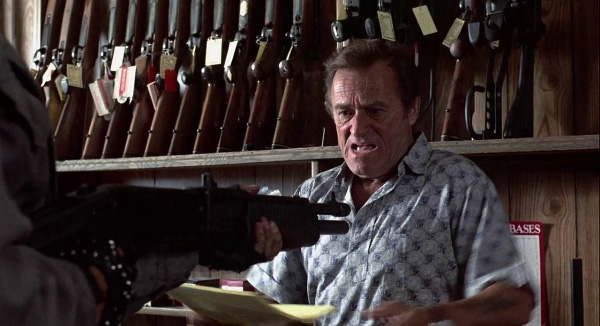
There’s a sly scene in which Kevin Costner’s Frank Hamer – is acquiring the armory with which he’s going to face the Barrow Gang.  He requests one lethal weapon after another from the gun seller.  The seller says, “Which one do you want?” He says, “All.”  Right out of the 1984 The Terminator*, where Arnold Shwartzenager plays the same scene, with the same terse words, originally, though the scene doesn't conclude the same way with Hamer's acquisitions. 


Things get more cruel and heartless in the future than they already are -- and let's not forget what's around the corner historically from this moment in Germany and Europe.

A great deal is made in The Highwaymen by Hamer and Maney Gault, with barely straight faces, concerning the technological advances in law enforcement since the days they rode the Mexican borders on horseback with their peace keepers – wire taps on the party phone lines! While surely most of those watching this Netflix Original film have no idea what a party line even is. So here we have a chronological meditation meta rondelay between three films: Bonnie and Clyde (1967), also set in the 1930’s, The Terminator (1984) set in the 1980’s but permeated by 2049, only 20 years in the future of the time in which we are watching (2019) The Highwaymen, still set in the 1930’s. 

The scenes of endless highway unfurling over the Texas llano under the endless sky within far distant horizons banked with blue, lavender and white cloud strata, and at the west the nearly set sun glows palely, soothe our troubled soul and sore heart.

The location scenes in Louisiana's dark woodlands are disturbing, evocative of inevitable impending bloody justice, as we drive those narrow dirt roads between the piney woods not yet lumbered out.  It's the drive to Angola Prison, always dark, always confined, whether day or night, sunshine or cloud. A long way of unbroken oppression, with only cruel confinement at the end of the road.

I enjoyed watching this film then for several reasons.  It gave me a lot to look at that I liked, starting with the primary actors, and ending with the landscape. That is America.  We cannot separate who we are from where we are, or, as can also be said, economic, political, cultural and technological, there's a lot of US history to unpack here, provided with a not so concealed wink.


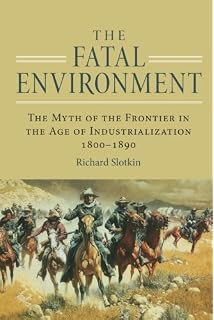
Many thanks to Richard Slotkin's magnificent trilogy of histories that insightfully examine the history of the USA through its culture of violence, giving a primary role to our entertainments that celebrate the righteous solitary man with a gun as the solution to every problem: Regeneration Through Violence (1973); The Fatal Environment (1985); Gunfighter Nation (1992).

~~~~~~~~~~~~~~~~~~~~~~~~~

*The Terminator (1984). Sheer coincidence that it is currently streaming on Netflix so I watched it right after The Highwaymen.  I’ve never seen it before, which seems, somehow, odd. But until Buffy and dvds and streaming, I chose to stay away from most films filled from stem to stern with violence, which is called ‘action.’ For decades this kind of violence was so disturbing to me, I literally could not watch it, as I didn’t grow up on a constant viewing diet of of violence committed by people against people in gory detail – especially that done to women. And then, of course the additional trauma of the kidnapping, torture and rape of my sister.  I still find detailed violence disturbing enough that I cannot keep my eyes on the screen, often leave the room, but, you know, completist.

So, considering some of the early scenes of shotgun concealed under a duster – the good guy – it feels that maybe the Columbine shooters got the idea here, rather than The Matrix.  Or both, of course.  The internet is filled with sites featuring dusters from both films, advertised for sale, the models holding weapons.


Tuesday, March 19, 2019

Loss

     . . . . I haven't posted in several weeks.  The reason is that someone dear was lost shortly after we returned from the Postmambo Havana Nocturne trip in February.


Certain things are difficult to do; among them is engaging with much outside my immediate, face-to-face neighborhood and social-professional life.  This will probably go on for a while.

This is such a pure grief though.  There are no complications as with the deaths of parents, a child, a spouse.  We were just really good friends.  We just enjoyed each other's company.


This friend was beautiful, inside and out.  I was always delighted just to see her; her  vitality, her beautiful hair,  her wonderful face, smile and hearing her laugh, her exquisite taste in clothes.

In all the time we were friends not a single negative crossed my mind.  She loved the world and everything in it -- except, well, we all know who. and his cronies.  

Everyone loved her back.  It was an honor to be among her very very many friends.

Everyone who knew her, misses her.  


She was a light, gone out, in the increasing dark.

We will remember her.