LINES OF THE DAY

". . . But the past does not exist independently from the present. Indeed, the past is only past because there is a present, just as I can point to something over there only because I am here. But nothing is inherently over there or here. In that sense, the past has no content. The past -- or more accurately, pastness -- is a position. Thus, in no way can we identify the past as past." p. 15

". . . But we may want to keep in mind that deeds and words are not as distinguishable as often we presume. History does not belong only to its narrators, professional or amateur. While some of us debate what history is or was, others take it into their own hands." p. 153

Silencing the Past: Power and the Production of History (1995) by Michel-Rolph Trouillot

Sunday, March 31, 2019

Americans With Guns: The Highwaymen, The Terminator, Bonnie and Clyde, The Man Who Shot Liberty Valance

     . . . .The Highwaymen (2019) Netflix Original. Retelling the 1930’s Bonnie Parker and Clyde Barrow folk ballad (faux) hero tale from the perspective of the two retired Texas Rangers who massacred them without mercy


I love that we don’t really see the killers, Bonnie and Clyde, and we never see their faces, until the very end, when they are killed in a hail of bullets. This underlines how much pov creates sympathy for even the most evil of figures.

This alone creates a discursive antithesis to Warren Beatty and Fay Dunaway's Bonnie and Clyde (1967), the one, after seeing it, I declared their deaths were necessary and not heroic. “They killed innocent people,” I said, which was indeed shown on screen in that film so famous and vaunted for style and counter-cultural narrative, and which influenced the style of women as much as the real life Bonnie Parker’s did (the beret! hair style! writing very poor poetry!). My mistake of a first husband responded, “They were just stupid people. Who cares?” showing our marriage was rushing down the drain of irreconcilable differences.

This one, featuromg wonderful Kevin Costner (who also produced and directed), and equally wonderful Woody Harelson, is sort of a present day counter-cultural narrative, taking mild pains to condemn the giddy media coverage of these un-Robin Hoods, who rob banks and kill poor and innocent people, and the even more frenzied support of the public, naming them heroes. It’s speaking to the instantaneous  with which online communities build up and take down figures 


– even to the Columbine killers in their flapping dusters under which they conceal weapons, as does The Terminator’s (1984) Kyle Reese, when trying to save Sarah Connor from Schwartzenager.


But it wants to have its condemnation of mass media glamorization of violence and have its violence too, quite like John Ford, after re-examining his decades of films of glamorizing the single righteous man with a gun, tries to do, in The Man Who Shot Liberty Valance (1962) Like The Highwaymen, so does this fail, in the end., when Jimmy Stewart’s Ransom Stoddard, who condemns violence in favor of the law and court, to save his own masculinity, goes out with a gun to face Lee Marvin’s Valance, the most violent man of all, while John Wayne’s Tom Doniphon is the real secret assassin behind the wall – and the paper’s editor prefers to prints the lie of Stoddard glory rather than the truth of Donophin's anonymous kill – and Stoddard gets the girl and become a Unites States Senator on the back of the glory of his fake kill.

https://www.youtube.com/watch?v=X1hLe8rSir0

There’s a sly scene in which Kevin Costner’s Frank Hamer – is acquiring the armory with which he’s going to face the Barrow Gang.  He requests one lethal weapon after another from the gun seller.  The seller says, “Which one do you want?” He says, “All.”  Right out of the 1984 The Terminator*, where Arnold Shwartzenager plays the same scene, with the same terse words, originally, though the scene doesn't conclude the same way with Hamer's acquisitions. 
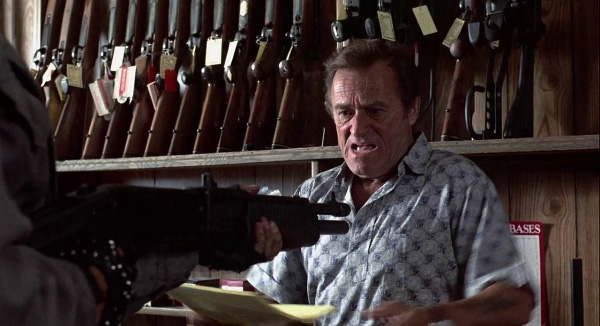

Things get more cruel and heartless in the future than they already are -- and let's not forget what's around the corner historically from this moment in Germany and Europe.

A great deal is made in The Highwaymen by Hamer and Maney Gault, with barely straight faces, concerning the technological advances in law enforcement since the days they rode the Mexican borders on horseback with their peace keepers – wire taps on the party phone lines! While surely most of those watching this Netflix Original film have no idea what a party line even is. So here we have a chronological meditation meta rondelay between three films: Bonnie and Clyde (1967), also set in the 1930’s, The Terminator (1984) set in the 1980’s but permeated by 2049, only 20 years in the future of the time in which we are watching (2019) The Highwaymen, still set in the 1930’s. 

The scenes of endless highway unfurling over the Texas llano under the endless sky within far distant horizons banked with blue, lavender and white cloud strata, and at the west the nearly set sun glows palely, soothe our troubled soul and sore heart.

The location scenes in Louisiana's dark woodlands are disturbing, evocative of inevitable impending bloody justice, as we drive those narrow dirt roads between the piney woods not yet lumbered out.  It's the drive to Angola Prison, always dark, always confined, whether day or night, sunshine or cloud. A long way of unbroken oppression, with only cruel confinement at the end of the road.

I enjoyed watching this film then for several reasons.  It gave me a lot to look at that I liked, starting with the primary actors, and ending with the landscape. That is America.  We cannot separate who we are from where we are, or, as can also be said, economic, political, cultural and technological, there's a lot of US history to unpack here, provided with a not so concealed wink.

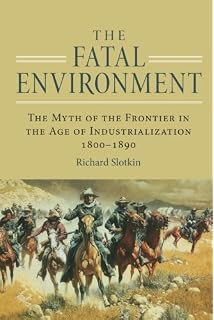


Many thanks to Richard Slotkin's magnificent trilogy of histories that insightfully examine the history of the USA through its culture of violence, giving a primary role to our entertainments that celebrate the righteous solitary man with a gun as the solution to every problem: Regeneration Through Violence (1973); The Fatal Environment (1985); Gunfighter Nation (1992).

~~~~~~~~~~~~~~~~~~~~~~~~~

*The Terminator (1984). Sheer coincidence that it is currently streaming on Netflix so I watched it right after The Highwaymen.  I’ve never seen it before, which seems, somehow, odd. But until Buffy and dvds and streaming, I chose to stay away from most films filled from stem to stern with violence, which is called ‘action.’ For decades this kind of violence was so disturbing to me, I literally could not watch it, as I didn’t grow up on a constant viewing diet of of violence committed by people against people in gory detail – especially that done to women. And then, of course the additional trauma of the kidnapping, torture and rape of my sister.  I still find detailed violence disturbing enough that I cannot keep my eyes on the screen, often leave the room, but, you know, completist.

So, considering some of the early scenes of shotgun concealed under a duster – the good guy – it feels that maybe the Columbine shooters got the idea here, rather than The Matrix.  Or both, of course.  The internet is filled with sites featuring dusters from both films, advertised for sale, the models holding weapons.


Tuesday, March 19, 2019

Loss

     . . . . I haven't posted in several weeks.  The reason is that someone dear was lost shortly after we returned from the Postmambo Havana Nocturne trip in February.


Certain things are difficult to do; among them is engaging with much outside my immediate, face-to-face neighborhood and social-professional life.  This will probably go on for a while.

This is such a pure grief though.  There are no complications as with the deaths of parents, a child, a spouse.  We were just really good friends.  We just enjoyed each other's company.


This friend was beautiful, inside and out.  I was always delighted just to see her; her  vitality, her beautiful hair,  her wonderful face, smile and hearing her laugh, her exquisite taste in clothes.

In all the time we were friends not a single negative crossed my mind.  She loved the world and everything in it -- except, well, we all know who. and his cronies.  

Everyone loved her back.  It was an honor to be among her very very many friends.

Everyone who knew her, misses her.  


She was a light, gone out, in the increasing dark.

We will remember her.

Wednesday, February 27, 2019

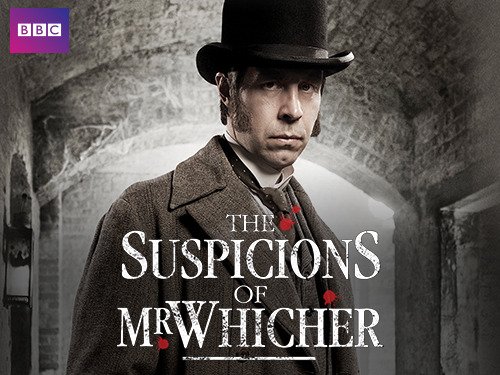
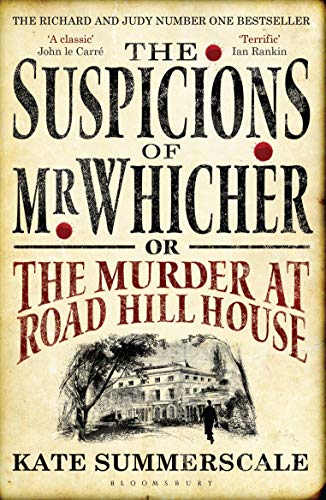
Watching The Birth of the Detective: The Suspicions of Mr Whicher - Not Reading The Witch Elm by Tana French

     . . . . Watching: The Suspicions of Mr Whicher (2013-2014) BBC and seemingly also ITV -- it's a little confusing.  The four stand-alone episodes of the series are available on Amazon Prime.


These are based on the non-fiction book of Kate Summerscale, about the cases of this Victorian investigator, from the era that birthed the 'private inquiry agent.' (I read it, back when it was were published). Her book shows how this real life figure played a primary role in the fictional creation of the 'private inquiry agent,' who arrives then, almost in tandem with the creation of a professional police force, the Scotland Yard.


These cases inspired our early, great crime and detection fiction writers from Wilkie Collins to Conan Doyle.  These are recommended for viewers to whom this high Victorian era (1860's) mystery-crime-detection story appeals.

What this viewer most appreciates is how carefully the writers of the episodes include the mores and behaviors of the day – as depicted in novels by the sensational novelists of the period, such as Wilkie Collins. In other words they don't treat the content and the characters with the sensibilities and understandings of the present -- as far as that is possible, of course.

Though the crimes are grisley, we viewers are spared seeing them take place on screen.  Nor does one have to endure the tension of personal danger to the investigator, as in Ripper Street (which is set later), which lack is something I really appreciate as well.  We are invested in Whicher's character, though we surely don't like him or his methods in the first episode, "The Murder at Road Hill House."

As we travel with Whicher in his life after the debacle that was "The Murder at Road Hill House," both he and we get to known him better, and his character becomes, not necessarily softer, but more clearly primarily concerned with justice -- more so than he was in his earlier life.

It's satisfying to watch in all the best ways (if, like me, you like these things, of course), especially on these very cold nights.

Value added; the second episode has Olivia Coleman in it.

   . . . . READING: The Wych Elm (in the UK); The Witch Elm (In US) 2018.  Alas, the protagonist a bore. Do not care what maybe happened to him, what he maybe did, what happens to him later, and his equally non-entity family members, friends and girlfriends. The author clearly is fascinated by her protagonist and his endless but contentless ultimately ruminations, but they are not interesting.  Worst of all, nothing about the protagonists and the cops that arrive are in the least believable, unlike in her previous books. 

I had been looking forward to reading this novel a great deal for I've increasingly admired her books as they arrived.  This is a disappointment, so far below the engrossing narratives she’s previously constructed. This narrative convolutes its head up its own ass.

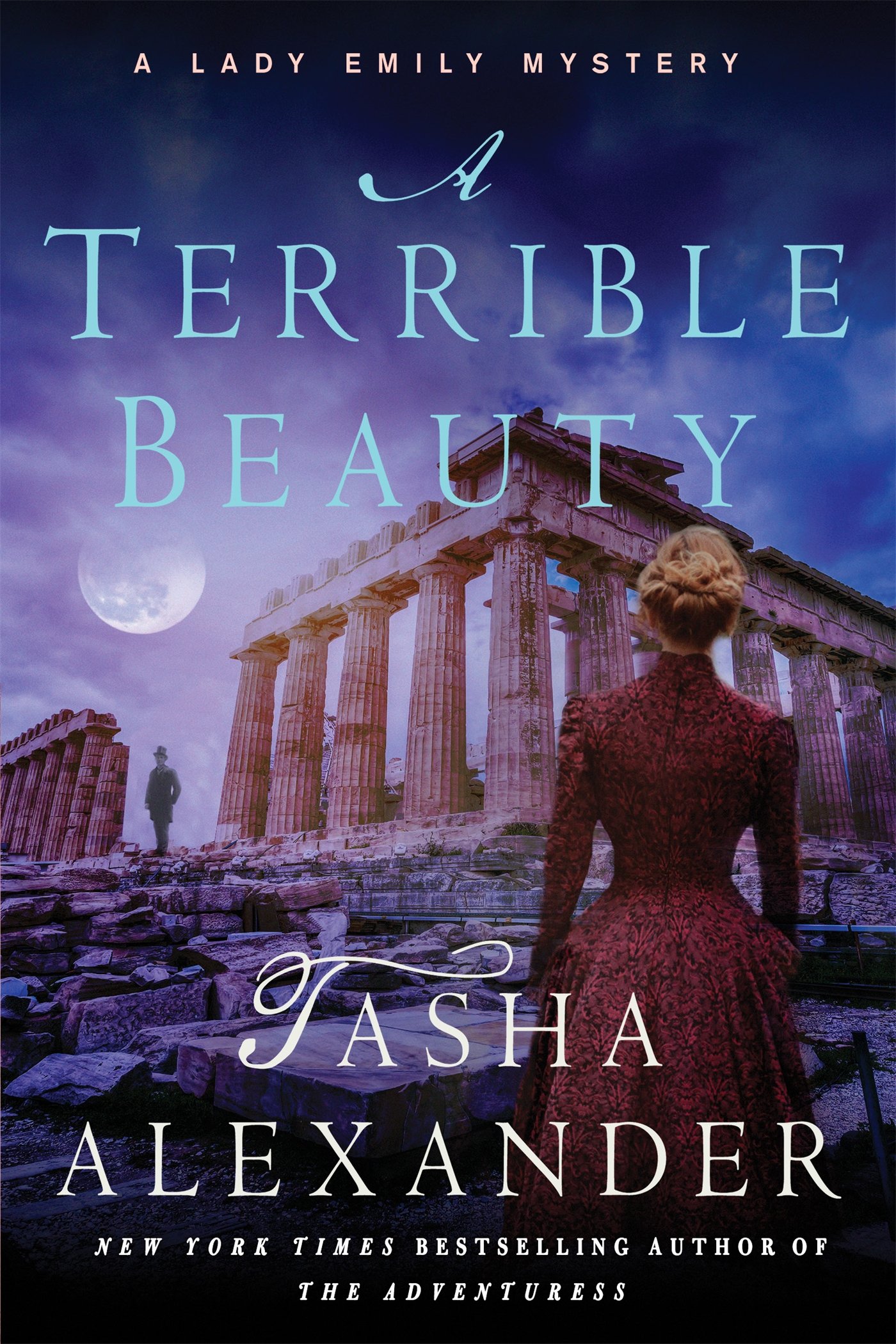
A Terrible Beauty (2016), the 11th installment in Tasha Alexander's series featuring the Lady Emily Ashton. So far there are 13 books featuring the inexpressibly desirable, supremely beautiful and attractive, and smartest person in the room, Lady Emily. O! don't forget Lady Emily also has the most exquisite taste in gowns and jewelry and hair styles, which she manages while reciting Homer in Greek, which has memorized, while writing deeply scholarly, groundbreaking works on Greek mythology and other ancient Greek matters.

This mystery-detection series is set in the last decade of the 19th century within in the hothouse environment of Brit peers who rule the world -- who don't actually, you know, ever work, but jaunt about for the sole opportunity to exchange the most well-bred ripostes.

I read The Adventuress ( #10, 2015), first, last year.  Never managed to finish the initial book of Lady Emily, And Only to Deceive (2005) in which she solves the mystery of her first husband's death, before I got distracted by something more compelling.


# 11 is preposterous. Plot holes and action drop-outs abound.

After a decade of Emily's adventures, marriage to dead husband's best friend, pursuit by a duke, birth of children, the dead first husband returns. Why he never showed up before is not answered in way that makes any sense beyond the author needing a plot, an author who believes if she commits the same risible slap-dash plotting in order to publish three times a year of the 1890's lady novelists, she can get away with it in the 21st century.  Or else,  Emily is so compelling to so many superior men that love of her brings even the dead back to life.

Need it be said that Tasha Alexander lives in the USA?

Wednesday, February 20, 2019

Reading Books: I Can Still Do It! - Tombland by C. J. Sansom

     . . . . Tombland is the seventh installment of Tudor-era lawyer cum crime investigator, Matthew Shardlake. 


Shardlake suffers a degenerative spinal problem, something with which I can identify with intensely from 2019, even though, at least by now, in this seventh account of his perilous manueverings around the monarchy and other powerful English lords and officials, it is only 1549.  Not much has changed for the effective management of such back pain. But at least for now, unlike Shardlike, I am not a hunchback living in an era in which any deviation from the norm physically or mentally or emotionally is regarded either as a sign the person is evil and should be at best expelled from society or burned. 

Thus, as well as making enemies with the cohorts of the powerful (he's been thrown in the Tower not just once, but twice, and it is only his intelligence and the discreet support of rival powers allowed him to not only survive, but continue practicing law), Matthew also has to deal with chronic, ever increasing pain, and the fear and persecution of the foolish and just plain mean.

This is all a way of saying that Shardlake is an exceptional character, of depth and nuance, in historical fiction. He's also a pleasant fellow, loyal and kind in every plausible sort of manner, who does not stay the same throughout this series.  His attitudes and beliefs about class and wealth, and many other matters, slowly shift and broaden as the series continues.

Tombland is a brilliant historical novel, the best of the entire series so far.  It is also the longest, 800 pages, with a 50 page historical essay at the end.  But it doesn't feel saggy or draggy at all.  It is slow perhaps, but so much is necessary for both Shardlake and the reader to learn about the conditions of England in that summer of rebellion, 1549 -- which has been fairly ignored by historians, because nobody comes out of it very well*, except, perhaps, the martyred leaders of Kitt's Rebellion at Mouseland, above the city of Norwich in Norfolk.

I began reading Tombland more than two weeks ago.  The reading concluded in snatched half and three quarters of hours in Havana, while waiting around for others to get to the lobby or waiting my turn for the shower while el V luxuriated (if anyone needed to luxuriate in a hot shower, it was him -- so busy, so hard he works to present the best Postmambo experience to his Travelers as possible -- and it pays off -- all that time and work shows every minute of every day).  I finished the last pages in the Jose Martí airport outside Havana yesterday.

I highly recommend reading this -- and the entire Shardlake series to everyone who enjoys reading historical fiction. However it is unnecessary to have read the others to read Tombland.  If the reader enjoys fiction set in the Tudor era, this, and the entire series, is particularly recommended.


Next up -- not an historical, but by another author I highly admire and enjoy reading, Tana French's The Witch Elm (in the US; Wych Elm in the UK).  Nice to have this on hand now that I'm home again; it's snowing and very cold. Though, They Say tomorrow will be quite warm.

~~~~~~~~~~~~~~~~~~~~~~~~~~~~~~~~~~~~~~~~~~~~~~~

* Rather as US historians have tended to ignore the War of 1812 until quite recently as no one responsible for making and running this show comes off well, including President Madison.  And, let's face it, essentially the US lost -- D.C. and the White House were burned, and Madison fled.

Thursday, February 14, 2019

Hotel Riviera la habana -- Valentine's Day!

     . . .  The flight from JFK to Jose Marti was longer than ever experienced, due to the continuing winds from Tuesday's storms.  We could feel the plane fighting for every bit of headway.  As well, as we began the approach to Cuba this became the most turbulent flight on a commercial flight I've ever experienced.

As the weather forecasts had predicted, it was overcast and coolish in Havana.  What the forecasts did not predict though, was a big rainstorm, which began a few moments after we got into the bus, about 2 PM and continued all through the night. It's still overcast today but it does look as though it is clearing.

The Hotel Riviera is located right on the Malecon; the way Mayer Lanskey had it designed, there is a view of the sea from every room, yet one cannot see the highway and the cars on it that runs along the Malecon.  The view of the plunging, surging, exploding fireworks of wave and water -- the "penetration of the sea" in Havana idiom -- is spectacular through the floor to ceiling windows of the palacial space lobby. Here are a variety of decks and patios and lounging areas, as well as a bar, and the entrances to what used to be the casino and the nightclub and cocktail lounges. All afternoon and night guests were avidly videoing the landscape.

It brought so many memories of me spending hours back in 1999 - 2000 trying to capture these scene, where waves break in a line like aerial bombing against the sea walls of the Malecon.  I walked past the Riviera at least once a day on the way to the market and only 'store' in Havana in those days.  Nor had the Riviera been restored then.  But I did attend music events and have drinks with friends here (Cubans were not allowed up into Cuban hotel rooms then, either.)

The Postmambo travelers arrive in a little while.  Two hours after they check in we will take the mob history tour of the Riviera, go on to la Salon Benny More at la Tropical, then dinner in the hotel at the restaurant L'Aiglon, and then move over to the Bar Elegante for our celebration of Valentine's Day concert by the wonderful Haydee Melendez -- who happens also to be a most elegant musician in her personal appearance as well as magnificently talented -- her father is the, by now, mythic singer - musician, Pablo Melendez.

In the meantime, wifi is hard to do.  Have to buy wifi cards from the the hotel to use in the hotel, and nothing else will work here -- which is another way the hotels get revenue of course.  But one can't use the cards in one's room -- no service -- which also mean one can only use battery power down here in the lobby -- nowhere to plug in.  Morever, a lot of sites, like my little DM friends site can't be reached from Cuba at all.  And for some reason, on this little notebook, the display of any kind of image is all wonky too.  So no posting of photos from here, it looks like.

But there ya, go.  This is Cuba.  If one came here to hang out online, one is a silly willy.  Yet -- if one is doing business, even business that is good for Cuba, it's a real pita.

Unlike last month in Oriente, tourism seems to be doing OK here in Havana, though none of the hotels are full.  I wonder if these giant dream houses built by US mafia lords and their confreres and friends ever were filled even in the halcyon days of Havana US tourism in the 1950's?  My guess is the only time every room in Havana was filled was when President Obama came here -- not even the Pope did that, surely.

Tuesday, February 12, 2019

Cooba 2019 Part the Second -- Packing

     . . . . I confess to never being as pleased and relaxed about packing for Cuba as I was today.  Supposedly mid 80's and sunny starting on Thursday, though tomorrow supposedly mid-high 70's with scattered showers.

However, here -- ooo la la! freezing temps, snow, sleet, freezing rain, high wind gusts, all day, and still going on, though the temp has gotten just above freezing now at dinner time.  Supposed to continue to warm all night, still with rain, but not freezing rain.  So hopefully our flight will take off as scheduled (early) tomorrow morning.


Packing all complete.  Valentine's and BD comin' right along.  This is going to be fun.

Novels which may or may not get read: C.J. Sansom's latest Shardlake novel, Tombland (2018), and The Witch Elm (US title; in the UK The Wych Elm) 2018. One of the Oriente Travelers last month was reading it on the plane on the way to Holguín, and couldn't put it down.

What a day this has been . . . .


Saturday, February 2, 2019

Survival in the Polar Vortex -- ABC Murders

     . . . . Whatever the ABC Murders is (2018; ITV > amazon prime), it is not Agatha Christie. 

It lacks charm and wit, warmth and satisfaction. The storytelling is poor. There is little detection. 

Therefore this three-episoder has nothing to do with Christie's famous Poirot novel of the same title. Worst of all, Poirot's character was given an entirely different backstory to that Christie had given him.  None of the other characters were what they were in Christie's novel either.

So, the question is, why bother calling it Poirot at all?

I ask, because, so changing up Christie's book and characters interfered with experiencing the ABC Murders and Malkovich's performance as the aging Belgian detective still living in England after seeking asylum from WWI so long ago, in any fair and objective manner.

As a viewer I'm attracted to watch this because of Agatha Christie and her character, Poirot.  Whether that is fair of me as a viewer or not, is beside the point because "Christie" and "Poirot" are how the production is advertised and presented, so thus we viewers are going to have some expectations derived from both-- none of which are met. 

This is most unfair to Malkovich, one thinks, who is giving his best to be the best Poirot he can be, but he's never Poirot as many generations of readers and watchers of the very many adaptations of his detecting have come to know him.

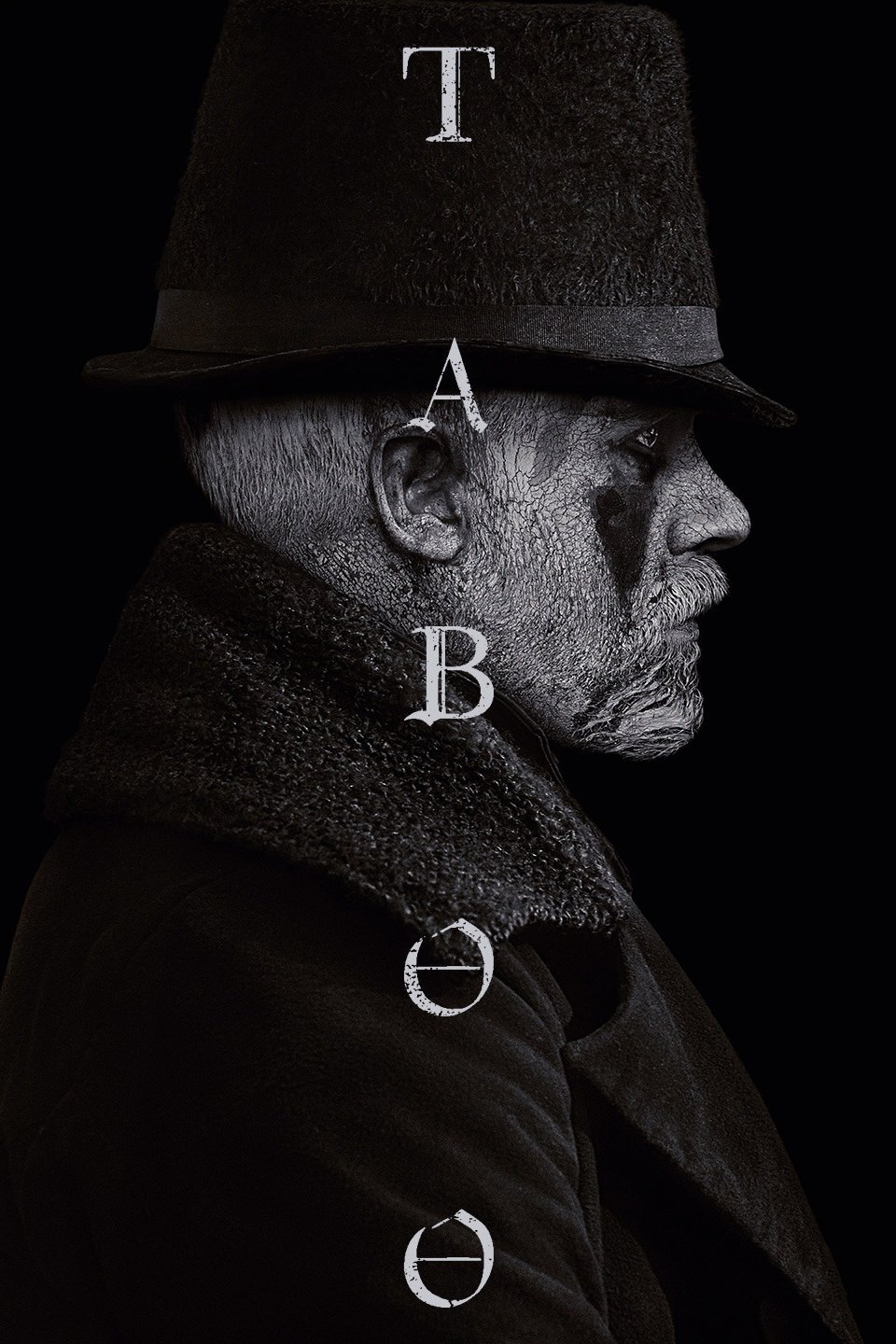
The John Mslkovich Poirot is so dark that he might as well be Tom Hardy's James Keziah Delaney, in BBCI's Taboo (2017).


Malkovich faced a very difficult proposition taking on the role of Poirot in the first place.  But changing up the plot, the characters and Poirot's character itself gave him a nearly insurmountable challenge to engage the viewer.  That Poirot has aged, become sad, without optimism, and again fearful of a future overrun by Germans and racism is understandable and certainly can be, and has been, done -- notably the David Suchet Poirot of The Orient Express, in which his recognition of the global anti-semitism flowing out of Germany enrages and terrifies him. 

The flag of the British Union of Fascists, known as the "Union Banner"

This aspect of this production of The ABC Murders is the best element.  This is 1933; we see posters everywhere demanding 'aliens' be expelled; casual bigotry is expressed by many of the characters; Poirot himself is harassed by a gang of kids for being a foreigner; various figures are shown wearing the flash and circle pins in support of the Brits' fascist parties.  This also addresses current conditions in Britain today.

Here, the focus is on the psychology of everyone, including Poirot, not on the plot of detecting, which is not Christie's way.  So Malkovich is reduced to playing Poirot as sad and pathetic, mourning his lost glory days of  hosting "Murder Games" in the homes of decadent aristocrats -- anyone who knows Poirot knows that the very idea of the "Murder Game" outraged him.  Poirot has always taken murder of anyone as a sin as well as a crime, that he must put as right as can be by revealing the identity of the murderer.

So yes.  Everything about this Poirot is wrong, beginning with Poirot. Evidently the entire point of the murders in this tale is to rejuvenate Poirot as a man and as a reputation -- not to balance the scales of justice that have been put out by the shedding of blood.

I would not recommend watching this unless thoroughly unacquainted with either Christie's novels or any other interpretation of Poirot on screen (and there are many). 

David Suchet as Poirot in the ITV adaptation of Murder on the Orient Express (2010) This is toward the end of the series, when Poirot's and the whole world's milieu was getting darker.  Yet, see? there is still some sun.
But of all the screen, and doubtless stage too, adaptations and portrayals of Poirot, the greatest, without question, is that of David Suchet in the long-running (1989 - 2013) British ITV  series, Agatha Christie's Poirot.  It was a brilliant series, in every way, from design to cinematography to location and casting.  There was ample blood and detection, ample grief and outrage, but there was always sunshine too.