LINES OF THE DAY

". . . But the past does not exist independently from the present. Indeed, the past is only past because there is a present, just as I can point to something over there only because I am here. But nothing is inherently over there or here. In that sense, the past has no content. The past -- or more accurately, pastness -- is a position. Thus, in no way can we identify the past as past." p. 15

". . . But we may want to keep in mind that deeds and words are not as distinguishable as often we presume. History does not belong only to its narrators, professional or amateur. While some of us debate what history is or was, others take it into their own hands." p. 153

Silencing the Past: Power and the Production of History (1995) by Michel-Rolph Trouillot

Friday, November 18, 2016

We CANNOT Safety Pin Together This Shredded Republic

     AS IF the Republic can be pinned together!  Then we call it rebuilt -- while the secret midnight trains roll, and the after-midnight coffles with their shackles muffled by rags to not awake the precious sleeping (white) babes and their precious (white) mommies see out the window by chance, clanking their way to the slave cars.  Shades of Reagan -- give something a different name and it's all fixed now yah!

Nightime coffle in D.C., capital of the brave and home of the free, being shipped further south for sale into the Cotton Prison Camps of the Deep South.


      . . . . In the meantime some bennies may trickle down (for white people), which makes it all the more difficult to see, hear, speak, write, while the rest are ever more marginalized and the midnight trains roll.

That we may even be dithering about whether to safety pin or not to safety pin ought to tell us just what a risible, useless, empty gesture it is.

If you don't believe me, read this, from The Root:


Quote:

Let’s call these safety pins what they are: an empty gesture. Of the white people who actually voted in the election, the majority of them, including white women, voted for a man who rants about banning Muslims and building walls to keep immigrants out and who thinks all “the African Americans” live in inner cities and will be shot going to the store. This same man jokes about grabbing women by their vaginas. And because of that vote, white people are being called out—again—on their racism, this time with actual numbers to back it up. Oh, voting for Trump doesn’t mean you’re a racist? OK. Let me quote you a popular and accurate meme making the rounds: “Not all Trump supporters are racist, but all of them decided that racism isn’t a deal breaker. End of story.” 
These pins—not the wearing of them or the pictures posted of folks wearing them—are not about safe spaces. They’re about not wanting to be perceived as a racist. Like, “I might be white, but I’m not like them, over there. I’m enlightened.” 
No, you’re not. You’re trendy. These safety pins are the 2016 version of a 2004 “Live Strong” wristband. No. Wait. The money spent for those bracelets actually benefited cancer research. Who is benefiting from your safety pin purchase? Wal-Mart? CVS? Rite-Aid? 
Look. I’m all for safe spaces. Don’t get me wrong. But how does your little pin really help someone like Ernest Walker? How does your trite pin help a young Muslim woman who’s forced to remove her hijab or else be set on fire? How does your trendy pin soothe a kid who shows up to school and his teacher tells him his parents will be deported because Trump is president now? 
These are the things happening to disenfranchised groups, and you think they’re gonna turn to you? You? Not their mom? Or their partner? Or their clique? Or their church? To you? You who just realized Tuesday that the racism and bigotry that people of color have been complaining about forever is actually as bad as we’ve all been saying it was? You? You, who finally got informed half a millennium late and showed up $14 trillion (reparations) light and bought a damn pin? You? If this ain’t some white-savior-complex mess, I don’t know what is. 
Like, a pin. A pin? Really? Not even an actual pen, which is said to be mightier than a sword, to write to your local congresspeople demanding that they vote in favor of actual justice and equality for all or else you’re voting them out in the midterms in two years? Not even a figurative pen, like a Facebook screed calling out your grandmom, and hell, your mom, too, about the casual racism of people who continue claiming, “I’m not a racist”? 
Just a pin. The solution for fastening a baby in his nappy or keeping a blessed-in-the-chest girl from busting open her button-down is the same solution you’ve applied to fighting racism, sexism, homophobia and religious intolerance. 
The only time your little pin might maybe mean something is if you’re wearing it to an anti-Trump protest rally or one that supports black, LGBT or brown lives. Extra points if you hold a sign and post the picture on your Instagram so all your friends and family know you’re about that life. Your shiny pin shines sparkles if you put on your big drawers like Brad Pike and call out your racist family members on Facebook. Bonus points if you go HAM over the ham at Thanksgiving. You can relieve the white guilt of your whole bloodline if you film that moment and submit it to WorldStar. 
Your pin will actually count for something if, the next time you see something bad happening to a person of color, you speak up and intervene instead of staring wide-eyed and silent and then writing about it in a status update that’s all about how you were traumatized by witnessing a terrible thing that happened to someone else. 
You want to help? You want your little pin to matter like black lives? Actually create a safe space instead of cheaply designating yourself one because you fastened a piece of malleable metal to your sweater. 
It's more than time for we the people of this nation to put away childish things and grow up.  WE BROKE IT.  WE OWN IT.

Thursday, November 17, 2016

Blank Spaces On The Map -- Here Be Dragons (But Not, YOU KNOW WHO!)

   . . . . After seeing the trailers I will not be watching the latest Harry Potter franchise blockbuster, Fantastic Beasts and Where to Find Them.

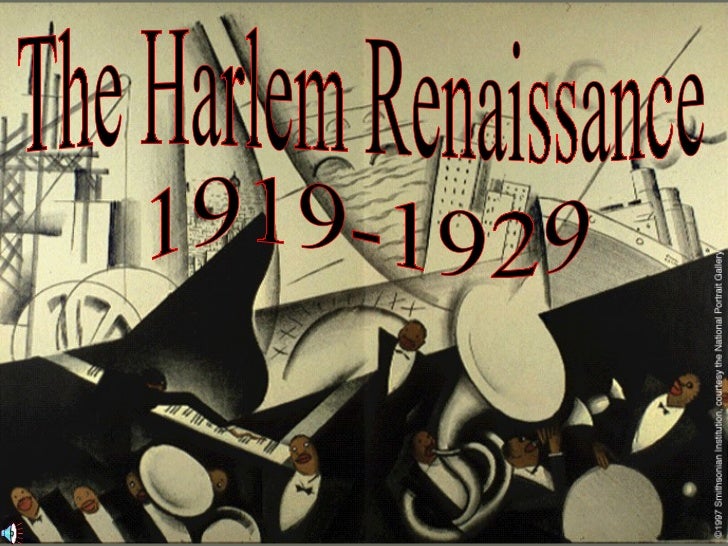
Location is New York City.  Time period is 1926. Pop quiz, kiddos: What is happening in New York City in 1926, hmmmmmmmmmmm?


However this primary cultural, social, economic and political phenomenon is seemingly not even hinted at -- much less having actual characters who happen to be African American?  Why does Rowling persist in getting the U.S. and the many peoples who inhabit this nation and its history so wrong?  Or, perhaps, more to the point, why does she disappear them -- or turn them as in her Wizarding school debacle -- into something they are not?


In Rowling's imagination African Americans and Native Americans in the U.S. are infinitely MORE RARE reaching to IMPOSSIBLE TO FIND -- than imaginary beasts. What does this say?

Saturday, November 12, 2016

The Magnificent Century -- Sulyeman Emperor of 16th Century Ottoman Empire

. . . .The Magnificent Century is extremely popular throughout Eastern Europe, the Balkans, Greece, Macedonia, Egypt and into Pakistan, as well as in the home country of Turkey.  Recall, that all or almost all these nations that watch the series avidly were under lengthy Ottoman rule. It has become popular along with many other Turkish television show in Chile.

[First post about The Magnificent Century here.]


    Finished watching the final episode of the 48 episodes of season one (2011) last night. 48 episodes or not, this was only the first season of four.  As far as I can tell, the entire series centers the trajectory of the survival in the murderous hothouse of the Ottoman Emperor's harem, of Hurrem, the captured, enslaved Ukrainian, Greek Orthodox concubine who becomes muslim and, eventually, Sulyeman's wife. So it is she who is the primary protagonist, though there are many plots and principal characters. The Magnificent Century is, above all, a soap opera. Thus, this 48th episode ends, of course, on a cliffhanger, as do many of the episodes within the season, for that matter.

Sulyeman's Valide Sultan

     Minutes earlier Hurrem and viewers learn she's pregnant with a fourth child from Emperor Sulyeman. She has immediately informed the Valide Sultan (Valide is the title of the queen mother who runs everything, and thinks this includes her son, the emperor), and his sister, Hatice, married to Grand Vizier, Pasha Ibrahim, of the anticipated fortunate event. 

Sadika/Victoria
   While guards, his mother and sister look on horrified in the garden, a knife is being held at Sulyeman's throat by Victoria, a Greek slave girl - spy, renamed by the Valide, Sadıka. Sadika was a princess who was married in a castle of the King of Bulgaria, who had stopped paying tribute to the Ottomans. While the wedding party is at the banquet table, Sulyeman and his army attack.  Sadika's groom was killed by Sulyeman in front of her eyes while they attempted to escape. The guards get the bride away.  Later, she takes on a secret mission to insinuate herself as a slave girl-concubine in the harem and assasinate Sulyeman. In the course of attempting to fulfill this mission she has murdered a couple of other harem concubines, gotten promoted to be the Valide Sultan's personal maid. 

Hatice Sultan, Sulyeman's sister
Later, the Valide gives Sadika to her daughter Hatice, when she marries the Grand Vizier, Pasha Ibrahim, who is also Sulyeman's beloved friend and adviser. They now live in their own palace, away from the Valide's oversight.

In the final episode very much goes on, which will, as seen from the description above, one will not have any comprehension, unless one has watched the whole thing.

   Pasha Ibrahim took Leo prisoner.  He has beaten the Ruthven (Ukraine-Hungary) artist, who stupidly tracked his childhood sweetheart, then fiancée down to Istanbul after the Tatars left him for dead and sold her into slavery. he only stopped because the emperor has ordered the artist be brought into his presence. Ibrahim's attempting to torture* Leo into admitting he's been having an affair with Hurrem. On the contrary, from the moment Alex/Hurrem lays eyes on Leo she's been trying to make him get the hell outta Dodge. She's entirely in love with the emperor.  Beyond that, the slightest hint they know each other would be her death and that of her children.  But Leo, selfish and self-centered doesn't care about the terrible threat his existence in the palace is for the woman he claims to love.

Mahidevran Sultan

Ibrahim, Hurrem, proved to be a traitor to Sulyeman, is rid of her influence over the emperor and will have Mahidevran Sultan, the previous most favorite of the harem, mother of the oldest son and heir-designate, forever in his debt.  Don't forget, the Pasha's managed to marry Sulyman's favorite sister, and is a very ambitious fellow.  I'd identified with im in the earlier episodes, but no longer! Unfortunately the series hasn't made it clear to this non-Turkish expert just why Ibrahim took on such a hate for Hurrem.

Grand Vizier Ibrahim Pargali
So, while Sadıka is holding a knife to Sulyeman's throat, Hurrem is holding a bowl of poisoned candy shoved into her hands by Ibrahim, instructed to eat it and take her own life (while presumably the pasha heads for the harem to strangle her children), or else Leo must, and this would prove, I'm not sure what. She's weeping, Leo is howling, Ibrahim is seething with EviLe, Hurrem's fingers are about to take a candy -- The End.

     More has to come since we have not yet had the precedent-breaking wedding, the Ottoman emperor taking a legally wedded wife! Will netflix get the rousing following 3 seasons? I want to see Ibrahim Go Down. I know from history that he betrayed Sulyeman, went to war on him, and was either beheaded or garrotted or poisoned, though I don't know why he turned on Sulyman.  This being a soap opera, presumably this happens after Sulyman marries Hurrem, and she persuades the emperor to do or not do something that Ibrahim doesn't want or does want? 

Sulyeman riding to war
   With success of the series, later episodes were more lavishly budgeted, with some set pieces as the endless celebration of the Grand Vizier's wedding to Emperor Sulyeman's beloved sister, and more scenes set outside the claustrophobia of the Istanbul palace and harem.  It does remain primarily a talking heads format, with the eyes of every character broadcasting enormous information about themselves and what issue / person / event is centered in a scene.  The clothes remain breathtaking. 

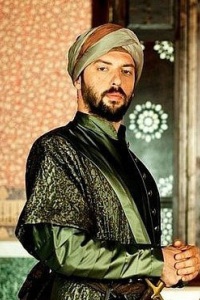
Over such long sequence of episodes, the skills of the actors, particularly that of the actor who plays Sulyeman, become more evident.


When will the next season be available?  I feel bereft, after living with these characters for two months.

------------------------

*   Beating is standing in for serious torture, doubtless. But due to Turkey's standards and regulations for what can be seen on television, it couldn't be too graphic.

Leo the artist

Leo was surely tortured in real life -- if this happened in real life that is.  I have no idea -- this is a soap opera -- he would have been horribly tortured if taken by a Grand Vizier for his own nefarious purposes.  Nevertheless, the beating is bad enough to look at, though no skin is shown broken, despite the pounding of fists, cracking of head against stone cell wall, kicking in the gut and head as well. All we see then is a faintly bruised cheekbone and his velvet clothes are not dirty, torn or even disheveled. The most terrible part of this scene is the face of Ibrahim.  We've seen glimpses of this Mr Hyde face previously in the later episodes as he chokes with his hands the harem overseer, Nigar Kalfa (who for inexplicable reasons has been shown to be in love with him, upon which he learns, he spurns her in the most humiliating way), demanding she find evidence in Hurrem's rooms of adultery.

Evidently this is setting us up to see this character, with whom we have been so sympathetic, because of his love for the emperor's sister, which was impossible.  Hatice is so lovable herself and she was dying for love of him, so how could he be -- evil? As well, he writes beautiful poetry to her, and plays the violin and reads western literature and enjoys western culture of all kinds including art. I don't know enough about Turkey and its politics to know, but perhaps Ibrahim's affinity for western culture is supposed to signal the audience that he will turn evil and betray the empire?

I always keep in mind this is historical fiction and a soap opera to boot!

However, {NY TIMES PAY WALL} reading about this discovery of more than forty very well preserved ships in the shipping waters of Bulgaria spanning the 9th - 19th centuries in the Black Sea -- I was delighted for several reasons, including this frivolous one, since this is the route the ship carrying Hurrem / Alexandra to Turkey takes in the 16th century.


Friday, November 11, 2016

Amsterdam News Reviews Symphony Space Slave Coast Live Performance

Because the video advertisement on the page is so annoying, even though it's from CNN and shows thousands of people protesting the results of the election, I pulled the part of about Symphony Space and Slave Coast from the longer article and c&p ed it here.  The article's  author is the Amsterdam News's editor. Amsterdam News is the longest surviving original African American newspaper in New York City. It is the only Symphony Space performance review, of course, beyond the blog pieces written by white jazz music writers. 


The Amsterdam News Building at 2340 Frederick Douglass in New York has been adorned with some funky new murals as part of the #NotaCrime campaign 

The text came from Ned and Constance Sublette’s book, “The American Slave Coast: A History of the Slave-Breeding Industry” (Lawrence Hill Books). The passages were read by the authors; by vocalist Lezlie Harrison; by musician, vocalist Nona Hendrix; by actor, writer Carl Hancock Rux; by actress Kandia Crazy Horse; and by filmmaker Jonathan Demme. 
The music was composed by the saxophonist Donald Harrison and performed by his versatile quartet of guitarist/banjoist Detroit Brooks, pianist Zacci Curtis and drummer Darryl Staves. 
After reading “The American Slave Coast,” Harrison was inspired to write a composition with an intriguing edge anchored in the blues, and at times his New Orleans roots leaped out. 
For two hours the sold-out audience sat in scary silence as the music consoled them in the midst of being tortured by slavery’s agonizing truths. 
Ned stated, “I knew from the beginning this project needed to be performable.”
“The American Slave Coast” is the 2016 winner of the American Book Awards. Slavery, one of the most horrific crimes on the face of the Earth, is a crucial fabric of America. It is this contemplated abomination that has kept this country racially divided over the past 400 years. 
Last weekend the slavery empire built on terrorism and the torture of Black people, politics and economics traveled through time to sprout the heart-wrenching truth through the words of “The American Slave Coast: Live,”
at Manhattan’s Symphony Space. 
Today, one political candidate is using race as a talking point. But ssshhh! He isn’t using that word. He prefers the phrase “let’s make America great again.” Some folks ask, “Why don’t Black people just get over it? After all, slave masters weren’t really that bad.” 
Perhaps the slave masters they are referring to were former presidents Andrew Jackson, Thomas Jefferson and James K. Polk. Regardless of their presidency, these men were white supremacists who profited from and promoted the selling of African-Americans from birth to adulthood. 
“The American Slave Coast: A History of the Slave-Breeding Industry” is one of the most concise, graphic, historically researched books ever written on the subject. This book should be required reading for Americans, particularly those running for any political office.
By now there are 63 64 reviews of The American Slave Coast: A History of the Slave Breeding Industry up on amazilla.  With very few exceptions all the reviews are four and five stars.  I think, though I haven't looked myself, that the majority of the reviews are 5 stars.

Monday, November 7, 2016

As Yet, Project Untitled

      . . . . Harriet Lane is an interesting historical personage What will initially bring her to the attention of a USian historian is that Harriet Lane Johnston was President. Buchanan's niece and his de facto White House First Lady.

She performed all the duties of a First Lady of her time that are now taken on by a dedicated, permanent member of the White House staff.


In Harriet's earlier years, and for many years, she was considered one of the most beautiful, attractive and interesting belles of the age. Supposedly she received an enormous number of marriage proposals, but remained at her uncle's side until age 35, when she married (1866)  Henry Elliott Johnston (1831-1884), whom she had met many years before, and with whom she always remained in touch, whether in Pennsylvania, D.C., New York, or Europe.
In those decades leading up to 1860, such important matters as creating the seating plans for White House dinners, and even making the place cards, were done by the First Lady and her female relatives, and maybe, a close female friend or two.  She already had a great deal of experience. As a belle of D.C. in her extreme youth her understanding of how things worked in socially, culturally and politically in Washington was deep and broad.  She became even more accomplished, as well as sophisticated in London society, when her uncle was minister to England. She was madly popular in London, a popularity that included an authentic friendship with Queen Victoria (at least, so the U.S. newspapers jubilantly reported, overjoyed that an American was included in the balls, hunting parties and banquets with British nobility).

Harriet Lane's life would have been quite different if her uncle Buck hadn't had such a long, successful political career in D.C.. He filled a seat in the House of Representatives, was elected a Senator, named minister to St. Petersburg (by Old Hickory in his second term), appointed Secretary of State (under Polk). and minister to England (by Pierce), before finally achieving his decades' long goal of becoming President of the United States.

Harriet Lane was educated at the Merritt Boarding School in Charleston in western Virginia (no West Virginia yet).  When Buchanan became Secretary of State he transferred her to the Academy of the Visitation Convent School, Washington, D.C. (1847-1849). He wrote:
 "I think of all the places for you, the nunnery at Georgetown would be the best." 
The convent school was part of what now is Georgetown University. Lane was there only a few years after the Jesuits sold their Maryland plantation slaves down south in 1838, to plug the holes in the college's finances, since their tobacco plantations were no longer producing revenue.

A friend of Harriet's, who has yet hasn't been named, whom she meets at the convent school, a girl who also comes to be friends with Thaddeus Stevens's niece or nieces, will bring this up at some point in a conversation. These girls will remain friends as long as both of them are alive. In their class, friendships formed at school were as important in women's later lives as were the friendships formed by boys and young men at their schools.

Harriet Lane Johnston, Grand Dame. This summer in Lancaster, PA, I took a photo of this portrait that still hangs in the Buchanan mansion, Wheatlands, along with many others. 
Buchanan's character will be played straight -- no scenes of midnight London cruising in the Victorian homosexual haunts of that city, for instance.

Harriet destroyed all of Buchanan's correspondence with "Miss Fancy" (Andrew Jackson dubbed Buchanan and his dear friend, William Rufus DuVane King, Miss Nancy and Miss Fancy), just as King's family did with his correspondence. Thus there are is no smoking gun primary documentation that they had a full-blown homosexual sexual relationship with each other -- or anyone else, for that matter. However, the two men were very close, lived together in D.C. during the months government was in session, went everywhere together, were inseparable.

In a family like Buchanan's and that of his fellow Lancasterian, Thaddeus Stevens, in which female relatives played all the public and social roles that wives would have played, and their housekeepers and their families were treated (unusually for the era!) as part of the family -- even unto receiving substantial legacies, dining with the family, etc. -- Buchanan's family would have taken his deep attachment to King in stride. Perhaps they loved King themselves. And certainly Harriet Lane herself was a sophisticated woman of the world -- she was even a friend of Queen Victoria's. She would have understood how the world might have interpreted her beloved uncle's relationship, and chose to protect his reputation in that area -- he is still vilified in both northern and southern quarters for his actions as POTUS.  The north's point of view is that he aided and abetted the slaveocracy and secession, while the south's is that he didn't help them enough. I feel Harriet would have keenly felt her uncle's grief from King's death, and entered into it with all sympathy.

The families of abolitionist Stevens and pro-southern Buchanan lost so many close members, often within short periods, yet another mirror reflection found so often in the matters of the War of the Rebellion, not excluding the White House in D.C. and the White House in Richmond. Harriet lost her husband and her children and then her uncle, in close succession. Yet, most of her life was still ahead of her, and she lived it fully and filled it with accomplishments that signify into the present.


A Matthew Brady photo of Kate Sprague Chase when she was very young.
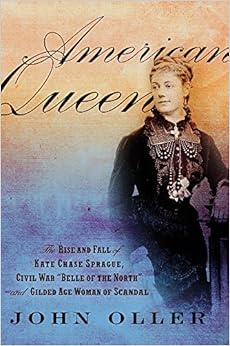
Ultimately a sad story.  Kate's end wasn't the prosperous one of Harriet's, though they both ended in Washington, D.C., where ultimately they both were most at home.


    .... I haven't seen any thing about this but do wonder if she and Kate Chase ever met?  (I read this biography about Kate when it came out.)  Kate truly shone during the war years in D.C. and Buchanan, being a persona non grata for the Lincoln administration, rusticated at Wheatlands.  But they may well have met in New York after the war, after Harriet married, while Kate was still married.


Saturday, November 5, 2016

Requiem For Thousands of BBSes Gone

     >>> Those who had the experience and those who didn't -- a generational as well as digital divide.

Images weren't possible, which had so much with their demise.

Ah, the GEnie SFRT . . . .
The four Science Fiction RoundTables (the SFRT): the official online home of the Horror Writers Association and the Science Fiction and Fantasy Writers of America before the Internet became popular (SFWA members, who were all published authors, received free access to the SF RoundTables) {J. Michael Straczynski developed the show Babylon 5 while on the SFRT and maintained his e-mail presence throughout the run of the show}

Not to mention the Buffy discussion group!

In The Atlantic, "The Lost Civilization of Dial-up Bulletin Board Systems."


Tuesday, November 1, 2016

Our Remarks for Sunday Night's American Books Awards - Before Columbus Foundation

Dr. Roxanne Dunbar-Ortiz kindly read our words as we could not get to the West Coast within a few hours of the Symphony Space live performance with music event of The American Slave Coast . . .

       . . . .  Dear Dr. Roxanne Dunbar-Ortiz:

Thank you so much for lending your voice on behalf of our work as we happily accept an American Book Award. Your endorsement means a great deal to us.

Please thank Justin Desmangles on our behalf, and of course, the Before Columbus Foundation. We salute the Foundation on the longevity of the American Books Award, whose roster of recipients over the years takes on a historical perspective all its own, and in whose magnificent playlist we are now thrilled to reside.

Perhaps because of the stimulating name Before Columbus, and because The American Slave Coast is squarely in the genre of American history, it took a while for it to sink in for us that this wasn’t a history award but a literary award. Which is particularly gratifying, because we have long read history as literature, and vice versa. Creating historical narratives is inevitably a literary act, and it’s a never-ending task, because people interrogate history differently over time: different moments have different urgent questions, different reference points, different techniques, different sources, different taboos.

Our publisher, Chicago Review Press, published all three of Ned Sublette’s books prior to The American Slave Coast; all four were edited by Yuval Taylor, creating for us a long-term continuity of editor, publisher, and writer that is rare in present-day publishing. This solid editorial support has allowed us to create large historical structures, which goes against the grain of a publishing industry focused on short books and narrow topics. Our book is 265,000 words or so, and weighs 3 pounds in hardback. At first we were apologetic for its length and heft, but in New Orleans a woman said to us, “It takes a book that big to tell our story.”

Quote [from The American Slave Coast's text]:
The American Slave Coast is a history of the United States that takes into account something that everyone in slavery days understood: the workings of the slave-breeding industry, which was a unique creation of Anglo-American entrepreneurship, and which was central to American politics as long as it existed. All of American history looks different once the slave-breeding industry is taken into account, and indeed key events like the annexation of Texas and California are inexplicable without reference to it.

The book became a project in 2010, when Ned was named the Patrick Henry Writing Fellow at the C.V. Starr Center for the Study of the American Experience at Washington College in Chestertown, Maryland, and thanks also to our agent, Sarah Lazin. The argument is a little complicated, but here’s how we tried to explain it in the introduction, quote:

This is a history of the slave-breeding industry, which we define as the complex of businesses and individuals in the United States who profited from the enslavement of African American children at birth. At the heart of our account is the intricate connection between the legal fact of people as property—the “chattel principle”—and national expansion. Our narrative doubles, then, as a history of the making of the United States as seen from the point of view of the domestic slave trade.

It also traces the history of money in America. In the Southern United States, the “peculiar institution” of slavery was inextricably associated with its own peculiar economy, interconnected with that of the North.

One of the two principal products of the antebellum slave economy was staple crops, which provided the cash flow—primarily cotton, which was the United States’ major export. The other was enslaved people, who counted as capital and functioned as the stable wealth of the South. African American bodies and childbearing potential collateralized massive amounts of credit, the use of which made slaveowners the wealthiest people in the country. When the Southern states seceded to form the Confederacy they partitioned off, and declared independence for, their economic system in which people were money. . . .

The conflict between North and South is a fundamental trope of American history, but in our narrative, the major conflict is intra-Southern: the commercial antagonism between Virginia, the great

slave breeder, and South Carolina, the great slave importer, for control of the market that supplied slave labor to an expanding slavery nation. The dramatic power struggle between the two was central to the Constitutional Convention in Philadelphia in 1787 and to secession in 1861.
[End Slave Coast quote.]

      . . . .  For us, writing a book doesn’t end with publication, it merely enters a new phase. In the year since publication, we’ve been on the road when we can be, taking it as many places as possible, and hearing what connections people are making to this history in this age of police brutality, open-carry militias, and mass incarceration. We’ve learned so much about our own book by going around the country during the last year, reading, talking, and listening. We had a tremendous experience last month in Columbus, Indiana, where we spoke to 150 high school students. In doing this, we’ve had the privilege of hearing a cross-section of what people are talking about.

It’s been an uphill struggle trying to get the narrative out there: with a few much-appreciated exceptions, mainstream media haven’t been in a hurry to talk about the slave-breeding industry, but we’ve had wonderful experiences with regional black media, especially AM radio, and independent left media.

Unfortunately, we haven’t been to the West Coast yet, but we hope to remedy that in 2017. We’re at home today, just emerging from our Friday night performance at New York City’s Symphony Space of The American Slave Coast Live, a 2-hour reading of the book with multiple voices and a live score by Donald Harrison and musicians. For two hours, a theater full of people listened and responded to historical discourse. It was cathartic, and we hope to present it in other cities.

At the top of the show’s flyer, we proudly set a banner: AMERICAN BOOK AWARD WINNER. So many people have congratulated us on this award. Our publisher is very happy. We send a profound thank-you to the Before Columbus Foundation, and we feel dumb for not being there to celebrate with you.