15,000 Pound Horse -- Internet Drama Part 5
Showing posts with label technology. Show all posts
Showing posts with label technology. Show all posts
Saturday, September 4, 2021

Monday, March 23, 2020
Meeting In Zoom Time
. . . . There's a lot to think about these days, which everybody is thinking about surely -- unless they are the narcissist sociopaths who have determined to deal with this crisis by letting us all die in hopes that this will resurrect the markets and ensure a re-election. Resurrect is the miracle word, all right. Hey ho though -- Easter's a'comin', so you betcha!
. . . . And then, there's doing meetings and courses and so much else via Zoom or another of those web communications with audio and video operations. While cooking this afternoon I also participated in one of those meetings. I'd never thought to say this but I appreciated being in a meeting, one in which I never hit the 'raise hand' function or 'speak' function. The meeting was run by university school's administration and staff. Faculty and students were 'present' and could speak, ask questions, comment. Or not.
But one could see the faces in real time, speaking in real time. After so many days already of self-isolation and now supposedly enforced???? isolation????? I found it actually pleasant to see these other faces and hear their voices. Not that they known anything more than anyone else, but hey -- company! One thing I could not help but notice is that with some of those running things, who happened to be women, there were children's voices bleeding into the audio. Emphasis here -- in these cases it was all women. Make of this what you might.
The nice discovery about Zoom, for those of us who don't have dedicated home offices and studios, is the function that allows for a 'green stage', i.e. one can pull up whatever one wishes from one's own files to be the background, rather than, o, say, Steve Colbert's bubble bath tub. Also, besides the synched audio and visuals, one can in real time import sound -- for instance music, from one's own playlists and files, as well as video and photos from one's own playlists and files.
Something very much appreciated.
Now. How long will everybody's hardware, our bloody laptops, stand up? We're not going to have any new stuff available for a very long time. Anymore than PPEs, masks, gloves, sanitizer, means to get permission slips that allow one to go out for essential things -- if one wears a mask that one does not have and probably never will.
When will we have a national draft to put people to work on the manufacture, organization and distribution of all these essentials? I guess most certainly not until many are dead because saboteur in chief is Bored! Now!

with the virus and his sil thinks everything needs to be reopened to resurrect the market and get elected.
But fear not if you live in Florida, from where all those happy breakers have returned with the virus to all 4 quarters. Florida has received all the PPE and medical supplies from the federal stock it requested. California -- go jump in the lake of herd immunity. So much cheaper and a lot more fun.
. . . . And then, there's doing meetings and courses and so much else via Zoom or another of those web communications with audio and video operations. While cooking this afternoon I also participated in one of those meetings. I'd never thought to say this but I appreciated being in a meeting, one in which I never hit the 'raise hand' function or 'speak' function. The meeting was run by university school's administration and staff. Faculty and students were 'present' and could speak, ask questions, comment. Or not.
But one could see the faces in real time, speaking in real time. After so many days already of self-isolation and now supposedly enforced???? isolation????? I found it actually pleasant to see these other faces and hear their voices. Not that they known anything more than anyone else, but hey -- company! One thing I could not help but notice is that with some of those running things, who happened to be women, there were children's voices bleeding into the audio. Emphasis here -- in these cases it was all women. Make of this what you might.
The nice discovery about Zoom, for those of us who don't have dedicated home offices and studios, is the function that allows for a 'green stage', i.e. one can pull up whatever one wishes from one's own files to be the background, rather than, o, say, Steve Colbert's bubble bath tub. Also, besides the synched audio and visuals, one can in real time import sound -- for instance music, from one's own playlists and files, as well as video and photos from one's own playlists and files.
Something very much appreciated.
Now. How long will everybody's hardware, our bloody laptops, stand up? We're not going to have any new stuff available for a very long time. Anymore than PPEs, masks, gloves, sanitizer, means to get permission slips that allow one to go out for essential things -- if one wears a mask that one does not have and probably never will.
When will we have a national draft to put people to work on the manufacture, organization and distribution of all these essentials? I guess most certainly not until many are dead because saboteur in chief is Bored! Now!
But fear not if you live in Florida, from where all those happy breakers have returned with the virus to all 4 quarters. Florida has received all the PPE and medical supplies from the federal stock it requested. California -- go jump in the lake of herd immunity. So much cheaper and a lot more fun.
Saturday, June 17, 2017
On Not Journaling + The Young Pope
. . . . At the beginning of last week my second laptop arrived, one lighter and smaller than my oversize laptop. The Big Pooter is better for writing and working, but the small one is for copying text, etc. in a special collection, that then can be transferred to the larger one at home/
With everything else going on in our lives it's taken forever to load the little one with what I want and need, and then get it set-up the way I want and need. This has been unnecessarily complicated by Windows 10 deciding to update with a load of applications and 'creative' things that I never use and just get in the way, which its done for both my laptops now. It takes over 2 hours to update, which made updating more than inconvenient. Afterwards, which was much more difficult for someone as unskilled and non intuitive as myself, I had to go in and rid both of them of memory eating irrelevant stuff -- I don't play games, I don't design anything, I don't need special cursors, and so on and so forth.

However, now that I had achieved the smaller and lighter, i.e. more portable device, I have been going uptown to the Schwarzman Research Library to deal with Red River Valley newspapers and copy various information for Far From Anywhere. I have deliberately not added my various e-mail programs and so on to the little poot so far (when traveling, I'll need them, but I don't now), to keep from being distracted while researching. Newspapers and journals and magazines are still a pita to research, even when they aren't on microfilm. Though -- if they're digitized one can do searches, which helps a lot. But however one digs through them it's hell on the eyes, and mine are so bad already.
The weather hasn't helped much, lurching as it does from damp, clammy, chilly and drear to brutally hot and polluted. The subways are packed and suffering from so many years of deferred maintenance. The sidewalks are jammed with tourists. When I get home, transfer the files from the afternoon to the Big Pooter, start dinner, all I can manage is to open the wine, put up my feet and stream some tv.
. . . . The most satisfactory viewing this month has been The Young Pope. Is Lenny Belardo - Pius XIII, the youngest pope ever, the first US Pope, a saint? Or, is he Christ returned? Or is he the worst retrogression to the days of the excommunicating, inquisiting, intolerant Latin Church popes, or merely a self-serving, unbelieving ambitious sort of which the Church appears to be packed? Or -- maybe, he's the devil himself? I still have 2 1/2 episodes to go, but, the way things work in this series, maybe I'll never know. They Say there's to be a second season, but Jude Law won't be pope. Who knows what that means.
Jude Law is co-producer with Paolo Sorrentino, as well as Pius XIII. Shot in Rome, or so it seems, it's sumptuous, but it's also topsy-turvy, almost surreal many times. Many scenes are spoken in Italian, only so unless one has a feature that allows for subtitles, this adds to unexpected turns that are always happening. Every time I think I've got this thing figured out, it reverses and goes sideways simultaneously, and sometimes even, literally, turns upside down.
Jude Law is brilliant, though one occasionally feels Law himself has been, perhaps lamentably and unduly influence by Andrew Scott's Moriarty in the latest BBC Sherlock for some of his deliveries, in the tone of voice, shape of mouth.
More happily, one feels the producer was somewhat influenced for the opening title sequence by the lamentably never completed series, Rome’s brilliant animation of the graffiti of the end of the Republic.
In Young Pope’s case, it’s Jude Law’s Pius XIII strolling along the many great Renaissance painting of a gallery in the Vatican, each coming to life as he passes by.
This has been particularly fun to watch as this month, along with a history of the Capetians, I've been reading Absolute Monarchs: A History of the Papacy.
. . . . Other matters going on of import to us --
M's memorial has been given a date. The planning is finally getting to take shape.

We have learned that so far that the proclaimed changes for Cuba travel (which affect, let us not forget, only about 600,000 of the 4 million + tourists annually) won't affect Postmambo trips, as they alwaqys have been licensed group trips for the express and only purpose of culture and education, and the track record proves it. But it means that an individual or couple or group of friends no longer can invoke people-to-people and go. But it's been nail-biting time here in the casa. Will the you-know-whos destroy the business a second time? But so far, so good, knock knock knock on wood.
Anyway, tonight -- the rain seems to have stopped. Pasta and jazz first, then a friend's dance troupe performing at Roulette.
With everything else going on in our lives it's taken forever to load the little one with what I want and need, and then get it set-up the way I want and need. This has been unnecessarily complicated by Windows 10 deciding to update with a load of applications and 'creative' things that I never use and just get in the way, which its done for both my laptops now. It takes over 2 hours to update, which made updating more than inconvenient. Afterwards, which was much more difficult for someone as unskilled and non intuitive as myself, I had to go in and rid both of them of memory eating irrelevant stuff -- I don't play games, I don't design anything, I don't need special cursors, and so on and so forth.
 |
| By the east side door, where entry is easier, because the front entry is jammed with tourists. |
The weather hasn't helped much, lurching as it does from damp, clammy, chilly and drear to brutally hot and polluted. The subways are packed and suffering from so many years of deferred maintenance. The sidewalks are jammed with tourists. When I get home, transfer the files from the afternoon to the Big Pooter, start dinner, all I can manage is to open the wine, put up my feet and stream some tv.
. . . . The most satisfactory viewing this month has been The Young Pope. Is Lenny Belardo - Pius XIII, the youngest pope ever, the first US Pope, a saint? Or, is he Christ returned? Or is he the worst retrogression to the days of the excommunicating, inquisiting, intolerant Latin Church popes, or merely a self-serving, unbelieving ambitious sort of which the Church appears to be packed? Or -- maybe, he's the devil himself? I still have 2 1/2 episodes to go, but, the way things work in this series, maybe I'll never know. They Say there's to be a second season, but Jude Law won't be pope. Who knows what that means.
Jude Law is co-producer with Paolo Sorrentino, as well as Pius XIII. Shot in Rome, or so it seems, it's sumptuous, but it's also topsy-turvy, almost surreal many times. Many scenes are spoken in Italian, only so unless one has a feature that allows for subtitles, this adds to unexpected turns that are always happening. Every time I think I've got this thing figured out, it reverses and goes sideways simultaneously, and sometimes even, literally, turns upside down.
Jude Law is brilliant, though one occasionally feels Law himself has been, perhaps lamentably and unduly influence by Andrew Scott's Moriarty in the latest BBC Sherlock for some of his deliveries, in the tone of voice, shape of mouth.
More happily, one feels the producer was somewhat influenced for the opening title sequence by the lamentably never completed series, Rome’s brilliant animation of the graffiti of the end of the Republic.
In Young Pope’s case, it’s Jude Law’s Pius XIII strolling along the many great Renaissance painting of a gallery in the Vatican, each coming to life as he passes by.
This has been particularly fun to watch as this month, along with a history of the Capetians, I've been reading Absolute Monarchs: A History of the Papacy.
. . . . Other matters going on of import to us --
M's memorial has been given a date. The planning is finally getting to take shape.

We have learned that so far that the proclaimed changes for Cuba travel (which affect, let us not forget, only about 600,000 of the 4 million + tourists annually) won't affect Postmambo trips, as they alwaqys have been licensed group trips for the express and only purpose of culture and education, and the track record proves it. But it means that an individual or couple or group of friends no longer can invoke people-to-people and go. But it's been nail-biting time here in the casa. Will the you-know-whos destroy the business a second time? But so far, so good, knock knock knock on wood.
Anyway, tonight -- the rain seems to have stopped. Pasta and jazz first, then a friend's dance troupe performing at Roulette.
Saturday, November 5, 2016
Requiem For Thousands of BBSes Gone
>>> Those who had the experience and those who didn't -- a generational as well as digital divide.
Images weren't possible, which had so much with their demise.
Ah, the GEnie SFRT . . . .

Not to mention the Buffy discussion group!
In The Atlantic, "The Lost Civilization of Dial-up Bulletin Board Systems."
Images weren't possible, which had so much with their demise.
The four Science Fiction RoundTables (the SFRT): the official online home of the Horror Writers Association and the Science Fiction and Fantasy Writers of America before the Internet became popular (SFWA members, who were all published authors, received free access to the SF RoundTables) {J. Michael Straczynski developed the show Babylon 5 while on the SFRT and maintained his e-mail presence throughout the run of the show}
Not to mention the Buffy discussion group!
In The Atlantic, "The Lost Civilization of Dial-up Bulletin Board Systems."
Tuesday, August 4, 2015
Sense8, Ex Machina and Prophet Gibson
Watching Sense8 has been such a slog that days, weeks, and now, over a month has gone by since watching an episode. I don't recall which episode I viewed last but then netflix does that for me. :)
Part of the problem for this viewer is it looks like the sort of video loops that play at a rave, or a Burning Man event. The series is not located in the kind of world most people inhabit, but a pick-and-choose-your-own-adventure global picture post card world, with neither cause nor effect as to what shows up, other than it looks pretty and / or exotic.
It broadcasts the world-view of those for whom it seems climate change, loss of human work, etc. are never considered because they exist at the levels where they aren't affected by it. That little is left of the natural world doesn't much matter for these are the sorts that are most comfortable existing in an entirely constructed artificial space where the sensory comes through jacks and shunts of one sort or another directly to the brain, not through the senses of hands, eyes and ears, but highly elegant or gory simulacrum of experience: games, television, graphic novels, fashion and so on. These are the sorts that populate William Gibson's novels, who are thoroughly at home in this post-natural world of pixels and constant, complete connection. So are Sense8's creators and writers, the Wachowskis and J. Michael Straczynski.

Lately I've been thinking of Sense8 in this aspect of sensory and other experience, along with Ex Machina. The the local shops' windows are already becoming inhabited with a fantasy of autumn fashion (despite we have cooling shelters and so on practicing right now due to the heat, pollution and humidity).
More than few of these windows are centering the new mannequins, fashioned after the unclothed, unfleshed AI constructs of Ex Machina. Some of the windows have even left out the clothes the stores supposed are selling, leaving the space empty other than an artistically arranged collection of cyber limbs and a naked torso that reveals the inner working of the technology.
 Fashion, like this almost present world of AIs, the internet of things and Sense8, is a world of infinite possibilities, a series of masques on the walls of an infinite series of halls. Or, as the NY Times reported this weekend "Fashion Finds a More Perfect Model: The Robot." The title of the slide show is, "So Much Like Humans, Only Better."
However, cranky moi has never found a single the DJ music experience even remotely the splendid, transcendent, transformational experiences she's had from living, human musicians playing together. One uses what others make, and the musicians make it. With human musicians even the gods come down to dance with us.
Part of the problem for this viewer is it looks like the sort of video loops that play at a rave, or a Burning Man event. The series is not located in the kind of world most people inhabit, but a pick-and-choose-your-own-adventure global picture post card world, with neither cause nor effect as to what shows up, other than it looks pretty and / or exotic.
It broadcasts the world-view of those for whom it seems climate change, loss of human work, etc. are never considered because they exist at the levels where they aren't affected by it. That little is left of the natural world doesn't much matter for these are the sorts that are most comfortable existing in an entirely constructed artificial space where the sensory comes through jacks and shunts of one sort or another directly to the brain, not through the senses of hands, eyes and ears, but highly elegant or gory simulacrum of experience: games, television, graphic novels, fashion and so on. These are the sorts that populate William Gibson's novels, who are thoroughly at home in this post-natural world of pixels and constant, complete connection. So are Sense8's creators and writers, the Wachowskis and J. Michael Straczynski.
Lately I've been thinking of Sense8 in this aspect of sensory and other experience, along with Ex Machina. The the local shops' windows are already becoming inhabited with a fantasy of autumn fashion (despite we have cooling shelters and so on practicing right now due to the heat, pollution and humidity).
More than few of these windows are centering the new mannequins, fashioned after the unclothed, unfleshed AI constructs of Ex Machina. Some of the windows have even left out the clothes the stores supposed are selling, leaving the space empty other than an artistically arranged collection of cyber limbs and a naked torso that reveals the inner working of the technology.

However, cranky moi has never found a single the DJ music experience even remotely the splendid, transcendent, transformational experiences she's had from living, human musicians playing together. One uses what others make, and the musicians make it. With human musicians even the gods come down to dance with us.
 |
| This is essential to humans, but not to AI's or robots or androids. |
Wednesday, June 3, 2015
Reading Wednesday: The Most Southern Place on Earth
The previous week contained very little reading due to being on the move almost all the time one wasn't asleep: research plus the travel time, meeting up with friends and concluding with the annual Caribbean Studies Association conference. Next year this unfortunately acronymed for USians -- CSA for many of us immediately means the Confederate States of America -- meets in Port-au-Prince, in a tourist hotel bubble surrounded by direst poverty. You cannot go wondering about outside if you don't know your way around the local landscape, cultural, political and economic.
One wonders how this location will work out. There was a great deal of controversy this year, we learned, about holding the conference in New Orleans, as New Orleans is not part of Caribbean geography, as anyone who has looked at a map knows. This latter has been, of course, an argument we have been making for over 20 years now. Though, as our plenary pointed out, "Caribbean" is a terrific brand. As el V put it, 'Nobody was going to spend millions of dollars to create a movie franchise called Pirates of the Gulf of Mexico." (Just like Cuba, Havana and New Orleans are all also excellent brands.)

Being so occupied, the only book I read in, the reading limited to the flights to and from NO, and in Breaux Bridge for an hour before bed, when the internet got knocked out from a lightning strike, was The Most Southern Place on Earth: The Mississippi Delta and the Roots of Regional Identity (1992; Oxford University Press) by James C. Cobb. This is one of the seminal works that explains the contemporary south by viewing the economic and cultural history of this place, a rough triangle between the lower Mississippi River and the Yazoo River.
It is not the Mississippi River delta -- which tends to confuse those unfamiliar with deep south geography. the Mississippi River delta is way down further south. "Delta" here means this particular locale within the state of Mississippi. Or, as author/ historian David Cohn wrote in 1935:

Africatown in Pritchard (where settled the descendants of the last slave ship, the Clotilda, from Africa to land on U.S. shores in 1860, brought as deliberate provocation to war, settled after the Civil War) outside of Mobile, remains as shocking in its tumbledown, malnourished poverty in May, 2015 as it was in May, 1910 or 1930 or 1940.
Katrina made all of it worse, as it's obvious no FEMA monies got trickled down to any of these Africatowns in the deep south, though of course the fracking so-called presidential library of Jefferson Davis got 10 million federal FEMA dollars and the mansion which a wealthy widow gave him, Beauvoir, received 4 million FEMA dollars for repairs after Katrina. But the homes of the poor black citizens of Mississippi and Alabama -- nada. You can see this, with your own eyes. They can't even hide it. But nor do they care obviously, as the stars and bars flies over all the Welcome to Mississippi rest stops . . . .
Among the elements that Cobb works in so cogently within his main threads of white supremacy, labor economics and political dominance of the ruling Delta planter aristocracy is the development of the Blues -- why the development of the Blues, and their significance, in this particular region. He provides maps that coordinate the birth places and earlier years of a legion of legendary Blues

musicians, which run up and down the Mississippi and cluster with the density of cotton bolls in the Delta. One chapter devoted particularly to the Blues is titled, "The Blues Is A Lowdown Shakin' Chill," one of the Blues classics particularly

attributed to the legendary Robert Johnson. I had skipped ahead to that chapter on this re-read, in the hour before meeting up with friends and dinner, and then going out to hear contemporary Blues-man, Brother Tyrone at the Ooh Poo Pah Doo Bar, which is named after the 1960 hit by the owner's father, the late R&B legend Jessie Hill.
All this history is chilling, but the hardest to deal with as an historian, perhaps, is chapter 12, "Somebody Done Nailed Us On the Cross". This is the chapter that describes how the power of the Delta capitalists was retained, regained and expanded into contemporary times, to remain entrenched in conscious white supremacy and denial of any economic opportunity -- and came via the federal tax dollars of the whole nation, poured into the Delta in order to provide aid and assistance for the Delta laborer to raise out of poverty -- stayed in the pockets of the planter class aristocracy. This is supremely depressing reading for all of us who wish to turn around the injustices of economic, political, social oppression, as can be understood from this, the last paragraph:
Frequently Cobb draws understanding from the Delta's white supremacy wealth and power's support by the federal government, used by it to maintain black labor poverty and powerlessness, that this process isn't limited to one place in the United States, or to the klepto governments abroad. This is a deliberate cooperation between one power and another power, united to keep the flow of wealth concentrated in a few hands while keeping oppressed and helpless the rest. The local power achieves wealth, and in return they provide the government the order of local stability. (The Civil Rights era blew this out of the water for a while.) More than once Cobb suggests -- back in 1992! -- that this process will spread out of the Delta to affect the rest of the United States in the near future, because that is how power and capitalism operate.
In other ways though, reading The Most Southern Place on Earth for the first or repeat experience, is exhilarating. Cobb is a fine historian and an equally fine writer. The book is dense with information about the evolution of the planters' ruling class that adjusted to every change from Emancipation through Reconstruction, Jim Crow, FDR and the Civil Rights era to maintain its supremacy, while the laboring class, both poor white and black, always did worse. It's a brilliant study, particularly how the planters such as the Percys were able to divert any and all federal funds for "relief" during the New Deal to themselves, just as they did later with the Food Stamp program. But they were doing this even before Appomattox.
This is a book worth reading even if the south isn't a particular interest of the reader's, if the reader is at all interested in changing the way things are right now as fewer people own more and more of the wealth and the rest of us are left holding the bag.
One thing Marx wasn't able to foresee -- though Cobb was already getting glimmers of it -- that capital would reach a pinnacle of power in which it didn't need human labor at all.
I need to read this one next:

Then I'll be ready to backtrack to an earlier historian, C. Vann Woodward, and his Origins of the New South, 1877–1913 (1951), The Strange Career of Jim Crow (1955) and The Burden of Southern History (1955). Woodward, a Bancroft Prize winner, one of the most influential of historians, who died in 1999, did not like the direction the younger, 'new' historians such as Cobb were going. He tended to quite sneer at them in fact, particularly Cobb's breaking the ground in terms of southern economic-political history, by declaring the biggest change came in the New Deal era, not the Reconstruction and Jim Crow eras.
Which is why my method is to read the more contemporary historians in a subject before the older ones. It makes it easier for me to glean what is still worth learning from the earlier studies, because I won't need to fulminate about -- o dear what you got wrong! If one denies oneself digging into earlier works there's a great deal worth knowing that one misses.
One wonders how this location will work out. There was a great deal of controversy this year, we learned, about holding the conference in New Orleans, as New Orleans is not part of Caribbean geography, as anyone who has looked at a map knows. This latter has been, of course, an argument we have been making for over 20 years now. Though, as our plenary pointed out, "Caribbean" is a terrific brand. As el V put it, 'Nobody was going to spend millions of dollars to create a movie franchise called Pirates of the Gulf of Mexico." (Just like Cuba, Havana and New Orleans are all also excellent brands.)
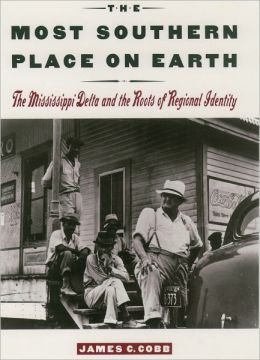
Being so occupied, the only book I read in, the reading limited to the flights to and from NO, and in Breaux Bridge for an hour before bed, when the internet got knocked out from a lightning strike, was The Most Southern Place on Earth: The Mississippi Delta and the Roots of Regional Identity (1992; Oxford University Press) by James C. Cobb. This is one of the seminal works that explains the contemporary south by viewing the economic and cultural history of this place, a rough triangle between the lower Mississippi River and the Yazoo River.
 |
| The green is the Mississippi Delta. |
It is not the Mississippi River delta -- which tends to confuse those unfamiliar with deep south geography. the Mississippi River delta is way down further south. "Delta" here means this particular locale within the state of Mississippi. Or, as author/ historian David Cohn wrote in 1935:
 |
| Peabody Hotel 1886 |
This region is peculiar even within the milieu of the rest of the deep south, and even the state of Mississippi itself. This was a re-read; the first reading was before the March 2014 sojourn there. It was valuable for that sojourn to have read it before spending boots on the ground time there, but even more valuable to read again after having done so. All the markers that Cobb hits in The Most Southern Place on Earth are still present to be read, in the other deep south states, like Alabama and places in Mississippi, as Biloxi.
"The Mississippi Delta begins in the lobby of the [Memphis] Peabody Hotel and ends on Catfish Row in Vicksburg. The Peabody is the Paris Ritz, the Cairo Shepherd's, the London Savoy of this section. If you stand near its fountain in the middle of the lobby... ultimately you will see everybody who is anybody in the Delta..."

Africatown in Pritchard (where settled the descendants of the last slave ship, the Clotilda, from Africa to land on U.S. shores in 1860, brought as deliberate provocation to war, settled after the Civil War) outside of Mobile, remains as shocking in its tumbledown, malnourished poverty in May, 2015 as it was in May, 1910 or 1930 or 1940.
Katrina made all of it worse, as it's obvious no FEMA monies got trickled down to any of these Africatowns in the deep south, though of course the fracking so-called presidential library of Jefferson Davis got 10 million federal FEMA dollars and the mansion which a wealthy widow gave him, Beauvoir, received 4 million FEMA dollars for repairs after Katrina. But the homes of the poor black citizens of Mississippi and Alabama -- nada. You can see this, with your own eyes. They can't even hide it. But nor do they care obviously, as the stars and bars flies over all the Welcome to Mississippi rest stops . . . .
Among the elements that Cobb works in so cogently within his main threads of white supremacy, labor economics and political dominance of the ruling Delta planter aristocracy is the development of the Blues -- why the development of the Blues, and their significance, in this particular region. He provides maps that coordinate the birth places and earlier years of a legion of legendary Blues

musicians, which run up and down the Mississippi and cluster with the density of cotton bolls in the Delta. One chapter devoted particularly to the Blues is titled, "The Blues Is A Lowdown Shakin' Chill," one of the Blues classics particularly
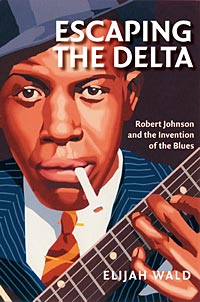
attributed to the legendary Robert Johnson. I had skipped ahead to that chapter on this re-read, in the hour before meeting up with friends and dinner, and then going out to hear contemporary Blues-man, Brother Tyrone at the Ooh Poo Pah Doo Bar, which is named after the 1960 hit by the owner's father, the late R&B legend Jessie Hill.
 |
| The thickest number of blue markers of Blues musicians's birthplaces or place of early prominence is at the top, left. This is the Mississippi Delta. As Chicago, for obvious geographical reasons was a primary destination for Mississippi's black labor's outward migration, this explains why Chicago also is historically an important blues scene -- and later, for rock 'n roll. |
As was often the case with American assistance to other nations, in the Delta aid offered in the name of economic rehabilitation and human uplift was routed, in the interest of political expediency and stability, through those at the top of the region's socioeconomic structure. As a result, the story of the interaction of agricultural, civil rights, and social welfare policy in the Mississippi Delta is especially instructive. Regardless of region, nation, or hemisphere, when economic reform proceeds under safeguards against redistribution of wealth or power, social and political rights will prove difficult to extend and dangerous to exercise. Meanwhile, whether its story is told in the smudged ledgers of the landlord or the antiseptic memoranda of the bureaucrat, the phenomenon of economic and sociopolitical dependence is likely to remain as real and debilitating as ever.The lesson is that neither assistance nor reform can happen from "inside" or from the top down via the ruling establishment.
Frequently Cobb draws understanding from the Delta's white supremacy wealth and power's support by the federal government, used by it to maintain black labor poverty and powerlessness, that this process isn't limited to one place in the United States, or to the klepto governments abroad. This is a deliberate cooperation between one power and another power, united to keep the flow of wealth concentrated in a few hands while keeping oppressed and helpless the rest. The local power achieves wealth, and in return they provide the government the order of local stability. (The Civil Rights era blew this out of the water for a while.) More than once Cobb suggests -- back in 1992! -- that this process will spread out of the Delta to affect the rest of the United States in the near future, because that is how power and capitalism operate.
In other ways though, reading The Most Southern Place on Earth for the first or repeat experience, is exhilarating. Cobb is a fine historian and an equally fine writer. The book is dense with information about the evolution of the planters' ruling class that adjusted to every change from Emancipation through Reconstruction, Jim Crow, FDR and the Civil Rights era to maintain its supremacy, while the laboring class, both poor white and black, always did worse. It's a brilliant study, particularly how the planters such as the Percys were able to divert any and all federal funds for "relief" during the New Deal to themselves, just as they did later with the Food Stamp program. But they were doing this even before Appomattox.
This is a book worth reading even if the south isn't a particular interest of the reader's, if the reader is at all interested in changing the way things are right now as fewer people own more and more of the wealth and the rest of us are left holding the bag.
One thing Marx wasn't able to foresee -- though Cobb was already getting glimmers of it -- that capital would reach a pinnacle of power in which it didn't need human labor at all.
I need to read this one next:

Then I'll be ready to backtrack to an earlier historian, C. Vann Woodward, and his Origins of the New South, 1877–1913 (1951), The Strange Career of Jim Crow (1955) and The Burden of Southern History (1955). Woodward, a Bancroft Prize winner, one of the most influential of historians, who died in 1999, did not like the direction the younger, 'new' historians such as Cobb were going. He tended to quite sneer at them in fact, particularly Cobb's breaking the ground in terms of southern economic-political history, by declaring the biggest change came in the New Deal era, not the Reconstruction and Jim Crow eras.
Which is why my method is to read the more contemporary historians in a subject before the older ones. It makes it easier for me to glean what is still worth learning from the earlier studies, because I won't need to fulminate about -- o dear what you got wrong! If one denies oneself digging into earlier works there's a great deal worth knowing that one misses.
Saturday, May 16, 2015
History in the Making -Minnesota Orchestra Broadcasting Concert Live From Havana
We're listening to this history-making live-in-concert via streaming. It seemed to be running on Cuban time, meaning things didn't start on time the way surely Minnesotans at least calculate such things. But for Cuba it began astonishingly on the tick.
Since there's no direct or compatible digital links to the U.S. the technical end of this has been very complicated. The signals are being sent to Switzerland first, and then to the U.S.
The Minnesotans have learned the use of hand fans as well, since the Teatro Nacional is only lightly A/Ced.
They opened with the Cuban National Anthem, "El Himno de Bayamo", followed with the"Star Spangled Banner."
The orchestra began the program with classic Cuban composer Cartula's "Danson" , but they sound so gallego! i.e. like saying "Pat Boone has no soul." Last night they did Beethoven. Tonight, at least so far, the program is Leonard Bernstein's West Side Story.
This event is, well, astounding. Here is a description of last night's concert. One can't help but wish though, that the Minnesota public radio announcer understood Cuba's music culture better and 'got it' that Cuba has brilliant national classical music orchestras -- that this is not the first time Cubans are hearing this music, played by brilliant musicians.
 |
| It was 1:01 p.m. Wednesday when Delta Flight 8876 hit the tarmac at José Martí International Airport in Havana. |
 |
| Habanera ticket holders waiting to enter the teatro natcional for last night's concert. |
 |
| Last night's sold-out house. |
The Minnesotans have learned the use of hand fans as well, since the Teatro Nacional is only lightly A/Ced.
They opened with the Cuban National Anthem, "El Himno de Bayamo", followed with the"Star Spangled Banner."
The orchestra began the program with classic Cuban composer Cartula's "Danson" , but they sound so gallego! i.e. like saying "Pat Boone has no soul." Last night they did Beethoven. Tonight, at least so far, the program is Leonard Bernstein's West Side Story.
This event is, well, astounding. Here is a description of last night's concert. One can't help but wish though, that the Minnesota public radio announcer understood Cuba's music culture better and 'got it' that Cuba has brilliant national classical music orchestras -- that this is not the first time Cubans are hearing this music, played by brilliant musicians.
Monday, May 4, 2015
Largest Libraries' Book & Data Retrieval Systems
How is it done?

Gifs and more information here.
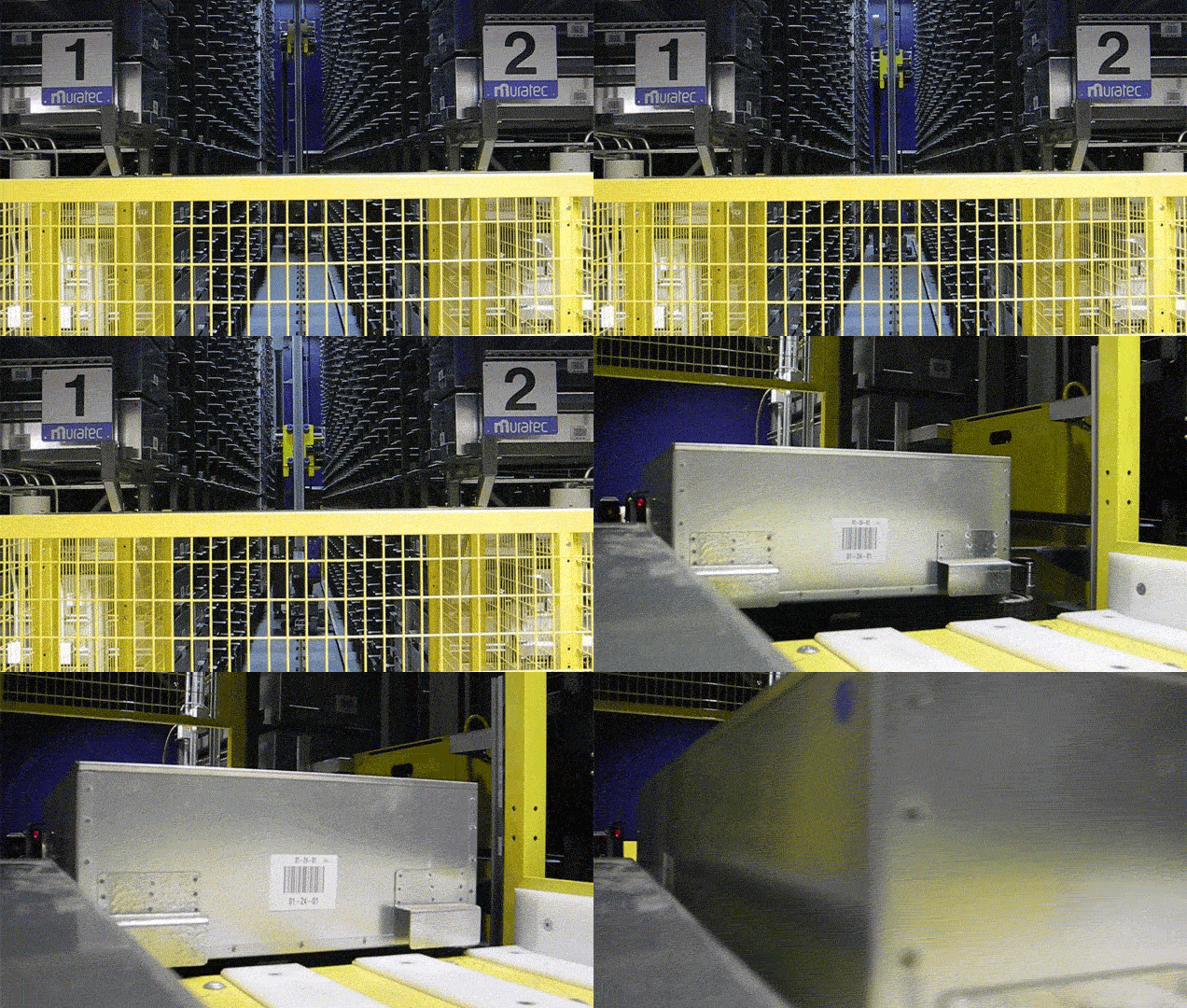
The largest libraries do more than just store books and newspapers on their shelves. When a library collection contains millions of documents, it needs complex and highly sophisticated logistical systems in order to serve its readers’ requests. It needs library robots.
In many libraries, amazing automated transportation and robotic retrieval systems are behind every book you receive from your librarian. Peek far behind the walls of the familiar reading rooms into the seemingly endless rows of stainless steel shelves, data centers, and intelligent servants that deliver humankind’s collective knowledge.
Gifs and more information here.
Friday, May 1, 2015
Ex Machina and BBC/PBS Wolf Hall + Her
Watching Ex Machina and watching BBC/PBS's Wolf Hall aren't contradictory universe experiences.

Ex Machina displays men creating their own perfect female, the AI Ava (meaning Eve). and, further, their unfounded in fact anxieties and terrors about women in generally, and then, when they get her, their perfect female figure in particular.

This is why the conversation in Wolf Hall, between Thomas Cromwell and Anne the Queen, after Anne is confined to wait out the conclusion of her pregnancy, is so far the most telling one (ep 3, "Anna Regina" watched the same weekend as Ex Machina): Anne says, “I was always desired, but now I’m valued, you see? And that’s different.”
As previously stated, knowing what we know, these words are heartbreaking, whether or not we like this depiction of Anne Boleyn or not. It encapsulates the tragedy that is the history of women everywhere, with few exceptions in all times. A woman's value is located soley in her sexual desirability to men, and her reproductive capacity.
A woman's value is not in her personhood, her intelligence and mind. She doesn't have a legal person hood, and in many times and places and even now, she doesn't even have a soul according to the more than one religion in charge of the spiritual dimension of humanity. Lest we forget, Christian theologians famously debated whether or not women were in possession of souls, generally agreeing that even if a soul had managed somehow to infilterate the messy, evil, provocative flesh of womanhood, it was an inferior and untrustworthy sort, not like that of a man's.
Thus, even now in many places, women are are imprisoned by the interlocking systems of religion, economics and law, prohibited from agency and realized personhood. It's probably not necessary to add here that's how slavery in the New World, and particularly the antebellum south of the U.S. operated as well? Women, white women, who were vital components of the anti-slavery movements and organizations of the U.S. before the war certainly recognized their condition mirrored in many ways how the enslaved were kept enslaved.
It seems to me, whether or not the director and writer so planned, Ex Machina is also about these matters.
As was the 2013 film Her -- and that without a body of any kind, flesh or synthetic construction, only Samantha the AI's and OS's voice.
Significantly, all three, Wolf Hall, Ex Machina and Her, seem to me, at least, to be more concerned with the males's desires and disappointments than with the female characters' need for realization. Women always gum up the works by countering their programming. Those female constructs turn bad -- like the very first woman, Eve, leading all MANkind into death.
Whereas the historical Wolf Hall production that is filled with real, breathing human beings who happen to be women dramatizes this consciously -- and they are thone one who dies, not the king who possesses them, and they die so he can possess a new! improved! better! model of a woman -- whereas Ex Machina and Her are not that Ava-and- self aware. In contrast with these two films, Wolf Hall's source material has been provided by a very intelligent, self-aware woman, who knows her and our history.
 |
| Two guys discuss Ava and how she's provided with programmed orifices and a desire to have sex exactly when and how they want. |
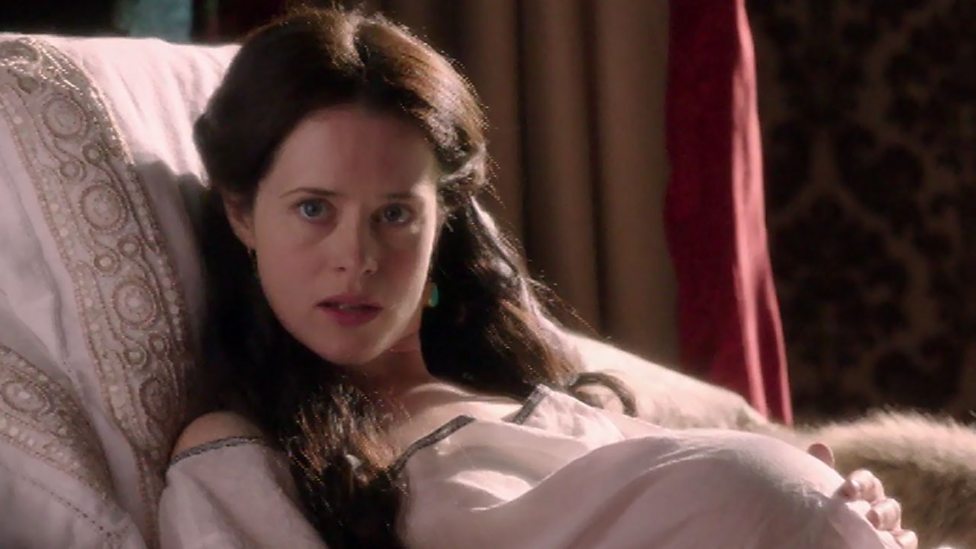
This is why the conversation in Wolf Hall, between Thomas Cromwell and Anne the Queen, after Anne is confined to wait out the conclusion of her pregnancy, is so far the most telling one (ep 3, "Anna Regina" watched the same weekend as Ex Machina): Anne says, “I was always desired, but now I’m valued, you see? And that’s different.”
As previously stated, knowing what we know, these words are heartbreaking, whether or not we like this depiction of Anne Boleyn or not. It encapsulates the tragedy that is the history of women everywhere, with few exceptions in all times. A woman's value is located soley in her sexual desirability to men, and her reproductive capacity.
A woman's value is not in her personhood, her intelligence and mind. She doesn't have a legal person hood, and in many times and places and even now, she doesn't even have a soul according to the more than one religion in charge of the spiritual dimension of humanity. Lest we forget, Christian theologians famously debated whether or not women were in possession of souls, generally agreeing that even if a soul had managed somehow to infilterate the messy, evil, provocative flesh of womanhood, it was an inferior and untrustworthy sort, not like that of a man's.
Thus, even now in many places, women are are imprisoned by the interlocking systems of religion, economics and law, prohibited from agency and realized personhood. It's probably not necessary to add here that's how slavery in the New World, and particularly the antebellum south of the U.S. operated as well? Women, white women, who were vital components of the anti-slavery movements and organizations of the U.S. before the war certainly recognized their condition mirrored in many ways how the enslaved were kept enslaved.
It seems to me, whether or not the director and writer so planned, Ex Machina is also about these matters.
 |
| The purpose for which woman are created are to provide male schlumpolas's sad sack lives meaning and status -- via how others perceive him because he's got the perfect Her. Don't even bother inquiring what the perfect Her could possibly receive from male schlompola. |
Significantly, all three, Wolf Hall, Ex Machina and Her, seem to me, at least, to be more concerned with the males's desires and disappointments than with the female characters' need for realization. Women always gum up the works by countering their programming. Those female constructs turn bad -- like the very first woman, Eve, leading all MANkind into death.
Whereas the historical Wolf Hall production that is filled with real, breathing human beings who happen to be women dramatizes this consciously -- and they are thone one who dies, not the king who possesses them, and they die so he can possess a new! improved! better! model of a woman -- whereas Ex Machina and Her are not that Ava-and- self aware. In contrast with these two films, Wolf Hall's source material has been provided by a very intelligent, self-aware woman, who knows her and our history.
Wednesday, August 6, 2014
Situation Remains FUBAR
Fortunately the weather is more lovely than usual in August in our city. Friends from London are visiting. There is a lot of music to hear, books to read, dvds to watch -- and libraries to go to, where I can do some work. It's not as convenient as working at home. In fact it's very inconvenient, and they are not open on Sundays or at night.
In all our online years there's never been anything like this experience. July 29th and we still have nothing. We spent hours fighting through the same layers over and over to get any answers to anything. Nobody seems to know anything. The latest is: it's not our building per se that has the problem; it's problem in "the street, which might be fixed later this week." In other words TW doesn't have a clue, and will not be honest enough to tell us the truth about the situation.

There's been no storm, no incident of any kind, other than massive building / redevelopment everywhere, which I suspicion is the real cause. Some backhoe chewed up all the fiber optic cables for a block. Not a ridiculous thought, because at the intersection of Spring and 6th Ave. a huge restructuring is going on that is covering a whole block, block to block. Not to mention the huge amount of construction going on on every block all around us, and on our block too. All of them involve enormous amounts of excavation, no matter how small the property.
From the photo you cannot tell, can you, that there is an entrance to a major subway stop, as part of this "redevelopment." At times you are prevented by the workers from going into the entrance as the crane is lifting massive loads upwards.
We've tried to switch then, to Verizon, which is our cell phone service, since our across the way neighbor has Verizon, and she,smugly, is comfortably connected.* Verizon dropped us in middle of the process. When we called back they suggested it would work better to do it online. Moreover, their cable service is not the same company as their phone service. This leads me to think we all are to expect more of this sort of thing, especially as all the ISP cable services seem to want to merge and Have All Of It.
In the meantime, the young who have apartments in our building are in a state of paralysis. They do not call TW, they do nothing. They are furious and very upset but that they themselves might DO something seems contrary to their world view. One had his mom fly in from Chicago to set him up with a new internet provider. One, very young, very pretty girl, is in a constant state of tears because her boyfriend, who does something online as his job, won't come to her apartment now.
Ah well, there it is. I'm again at a library. The corner Bistro, which is not an internet establishment, but a very nice restaurant, with focus on food and wine (no television even), is willing to give us their password, let us sit for while in the back when they're not busy there and internet. But it is not the same, and is inconvenient, in fact.
------------------
* "Smugly" is a wry joke, not a slam of ML, who is a good neighbor. We might be able to piggyback on her account, but she has severe mental balance problems, and I think we doing that would raise her chronic hyper levels of anxiety even higher.
In all our online years there's never been anything like this experience. July 29th and we still have nothing. We spent hours fighting through the same layers over and over to get any answers to anything. Nobody seems to know anything. The latest is: it's not our building per se that has the problem; it's problem in "the street, which might be fixed later this week." In other words TW doesn't have a clue, and will not be honest enough to tell us the truth about the situation.
There's been no storm, no incident of any kind, other than massive building / redevelopment everywhere, which I suspicion is the real cause. Some backhoe chewed up all the fiber optic cables for a block. Not a ridiculous thought, because at the intersection of Spring and 6th Ave. a huge restructuring is going on that is covering a whole block, block to block. Not to mention the huge amount of construction going on on every block all around us, and on our block too. All of them involve enormous amounts of excavation, no matter how small the property.
From the photo you cannot tell, can you, that there is an entrance to a major subway stop, as part of this "redevelopment." At times you are prevented by the workers from going into the entrance as the crane is lifting massive loads upwards.
We've tried to switch then, to Verizon, which is our cell phone service, since our across the way neighbor has Verizon, and she,smugly, is comfortably connected.* Verizon dropped us in middle of the process. When we called back they suggested it would work better to do it online. Moreover, their cable service is not the same company as their phone service. This leads me to think we all are to expect more of this sort of thing, especially as all the ISP cable services seem to want to merge and Have All Of It.
In the meantime, the young who have apartments in our building are in a state of paralysis. They do not call TW, they do nothing. They are furious and very upset but that they themselves might DO something seems contrary to their world view. One had his mom fly in from Chicago to set him up with a new internet provider. One, very young, very pretty girl, is in a constant state of tears because her boyfriend, who does something online as his job, won't come to her apartment now.
Ah well, there it is. I'm again at a library. The corner Bistro, which is not an internet establishment, but a very nice restaurant, with focus on food and wine (no television even), is willing to give us their password, let us sit for while in the back when they're not busy there and internet. But it is not the same, and is inconvenient, in fact.
------------------
* "Smugly" is a wry joke, not a slam of ML, who is a good neighbor. We might be able to piggyback on her account, but she has severe mental balance problems, and I think we doing that would raise her chronic hyper levels of anxiety even higher.
Subscribe to:
Posts (Atom)