LINES OF THE DAY

". . . But the past does not exist independently from the present. Indeed, the past is only past because there is a present, just as I can point to something over there only because I am here. But nothing is inherently over there or here. In that sense, the past has no content. The past -- or more accurately, pastness -- is a position. Thus, in no way can we identify the past as past." p. 15

". . . But we may want to keep in mind that deeds and words are not as distinguishable as often we presume. History does not belong only to its narrators, professional or amateur. While some of us debate what history is or was, others take it into their own hands." p. 153

Silencing the Past: Power and the Production of History (1995) by Michel-Rolph Trouillot

Showing posts with label battles. Show all posts

Monday, March 27, 2023

Back To Madrid - Horses Are Resting

      . . . . As my personal record of this Viaje it is necessary to include more foto notas from Madrid, as Madrid was our first city on the itinerary.  It was an excellent preparation for all that came next, including getting over the worst of jetlag in the comfort of the 5 star Hotel Prado.  Additionally to the comfort, it was location.  The famous Neptune Fountain is in the circle plaza outside, and a few steps away, cross the street, walk through the tipica big Hispanic city leafy, flowered, grass covered with public toilets, cross the street on the other side, and there you are: at the Prado Museum.

At this time at least, Spain is inexpensive,  which is why we could do this trip as 4 and 5 stars -- the dollar is so strong against the Euro.  However, this isn't the case for changing money. Big fees are charged, so we used cards almost exclusively.

Spain was vastly less expensive than anywhere in the US, particularly NYC.  Last night at our local, we had only wine and an appetizer last night at our local. It cost significantly more than any full meal with wine we had in Spain, including the most 'splurge' meal we had in Cádiz, in one of the very best restaurants in Spain, with an international clientele. 

And, ya, the wine last night was not near the quality of the Spanish terroirs; Europe doesn't tax wine and beer to death as the US does, nor must they it travel across the ocean, or even land -- so much of it is made near the restaurants. Many of restaurants have on their wine list wines available only in that particular restaurant-bar-taberna, meaning a special relationship with the vintners.


First Cena (Dinner) in Madrid, a restaurant that specialized in regional wild mushrooms.  Along with the wine, of the Castile Terroir, this may have also been the very best, most delicious meal we had on this journey. The plates and other dishes all had individual regional mushrooms and surrounding plants as their design.

As she cannot go on such a viaji, the bird pin placed on the design was gifted to me by as friend in her place right before we left. She has for a year been fighting cancer, with extraordinarily difficult treatments, who is scheduled for surgery very soon. 

 The pin was always in my cross body bag. Throughout the journey, at different meals, I clicked this Bird of Passage and texted the fotos to her in real time.  She said they picked up her spirits after yet another round of chemo.


Alvaro de Bazan y Guzman (1526-1588), a hero of Lepanto, 33 years as General Admiral of the Spanish Navy, never was defeated.  I was so excited to encounter this monument to him in an enclosed courtyard on our way to visit the 9th C Muslim Wall remains.  The Battle of Lepanto truly was a one of those most significant events in history.  Though almost a draw in terms of lives and ship lost, it did prevent the Turks from moving into the western Mediterranean.  It also increased, not only Spain's, but Europe's anger and disgust with France. She was not at Lepanto. Thanks to Francis I, France was allied, as she'd been for long, with the Turks.  Something we don't hear much of over here in terms of European history. Spain was one of the few European nations to send help to the Siege of Malta against the Turks.  France was begged to, but did not.

Most of all, I think, I was excited because I knew who 
Alvaro de Bazan y Guzman was! I didn't need to read the plaque to find out, I just needed his name. I knew about Lepanto and the Great Siege of Malta!  I felt the same way so often in the Prado, looking at portraits of different Spanish court grandees painted by Goya -- I knew who people such as Godoy and Floridablanca were.


This was the first time I noticed that Spain's historic sites have information plaques in Braille as well as print. It was the same at the 9th C Muslim wall remains.


This is one of Goya's historical interpretation of the battles with the French invasion forces. This one features Egyptian Mameluke Imperial Guard cavalry regiments. Yet another stupidity of Napoleon.  By the supreme Católica God who gave Spain back to the Christians after more than 7 centuries, how could he think the Spanish would passively accept a takeover that centered Muslim fighters?
[This is not my photo, as no photography or recording of any kind is allowed in the Prado.]


This Is Not the White House. The royal palace in Madrid, not far from the 9th C Muslim Wall remains.  This was the weekend, and tourists from near (Spain) and far were present even as closing time was imminent.  No, one cannot go in.  Not sure though, whether the flag meant the king was in residence.  This palace is surrounded by vast gardens that are essentially woods. The Spanish kings were even more insane about hunting than the English and French ones. This tradition has continued into the present: recall the Spanish royal scandal not that long ago regarding members killing elephants.


Madrid, our first Flamenco performance in Spain.  We were seated next to a lovely Japanese American couple from Seattle.  This was their final night before flying home from their vacation, which began in Fez, Morocco.  They liked Marrakesh much more than Fez, and Spain more than that. The wife is a Flamenco aficionado, who takes classes back in Seattle.  El V and I were the only audience members who masked.


Red is Passion.  See those hands clapping that distinctive Flamenco cracking rhythm? Despite the late 19th C Spanish officials and intellectuals, and later, Franco's repressive attempts to stop the prevalent popularity of Flamenco music and dance with foreigners and tourists, it was a failure.  At this time there is no national Spanish music at all, except Flamenco.  It is everywhere.  Students come in droves from everywhere to study in every city in Spain, though particularly in Sevilla and Granada, of course.  No matter where you are, you will hear casual Flamenco clapping as men and even little kids practice, even in train stations.


From my seat I had a splendid view of the dancers' feet.  The dancers are percussionists.  They and the musicians and singers are on a particularly constructed platform called a tablao (pronounced tabl-ow! ow like meow). This platform is actually a drum head, with air space between it and the 'ground' that makes for a resonator, as the belly of a non-electric guitar is a resonator.  'Tablao' is used interchangeably to refer to the stage-platform and to Flamenco itself.


Saturday, June 14, 2014

History Sneaks Up In Huge Footprints: Next Year Waterloo and the Battle of New Orleans Bicentennials


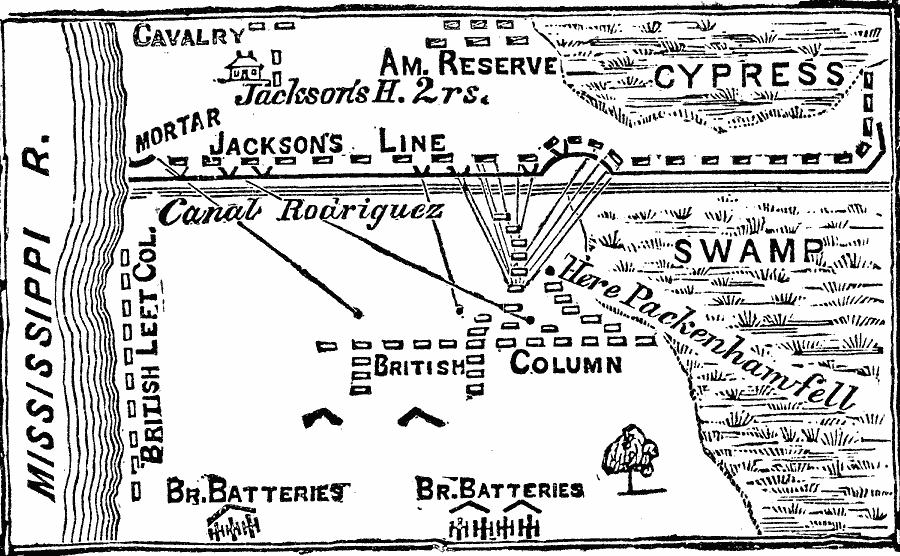
The Battle of New Orleans was January 8th, 1815, after the Treaty of Ghent had been signed December 24, 1814, between Britain and the United States, officially ending the War of 1812. However, as this was some years prior to telegraph cables and steam ships, communications between the Old World and the New lagged far behind treaty agreements.


Waterloo was June 18th, 1815, interrupting the wind-down the Powers of Britain and Europe thought was happening with the Congress of Vienna, in which the Powers (among whom Talleyrand had managed to insert himself as representative of France -- which speaks volumes of what an effective diplomat-negotiator he was!) were dividing up the spoils of the defeated Napoleonic empire.

Louisiana is ready! we are told, with many events of reenactment and commemoration scheduled.

Surely Brussels has much planned to commemorate and reenact Waterloo, a perennially favorite battle of military buffs. Presumably it is Brussels doing the planning and hosting, since Waterloo took place near there, though then what we know now as Belgium was part of the United Kingdom of Netherlands until 1830. Prior to that, the throne of Holland had been occupied by Louis Bonaparte, Napoleón's older brother. And, previous to the Kingdom of Holland the region had been the Batavian Republic. Just this small bit of Europe dramatizes the extent by which  Napoleón redrew the maps of old Europe, almost inventing for the average person a sense of history, a sharp demarcation of before and after, on a scale previously unfelt by an average Brit or European.

There is a reason for thinking of these two battles together.  The Congress of Vienna assembled in September 1814. Lord Castlereagh, representing Britain, possessed with signing power, was seen generally as disappointingly ineffective. Thus the
Wellington on Copenhagen at Waterloo

Duke of Wellington replaced him in the winter of 1815.

In 1814 some in Britain had a vague idea that General Wellington should lead an invasion out of the Gulf (involving a huge number of HMS transports) into the U.S. southlands (the northern New Englanders had never wanted this war, and indeed traded licitly and illicitly with Britain whenever it could) and trounce the miserable excuse of an independent nation as he'd done the French armies in Spain. Wellington wisely declined to lead any invasion into ground he knew not at all and was vastly unlike Europe's. Moreover, he was a ground tactician, not a naval commander.


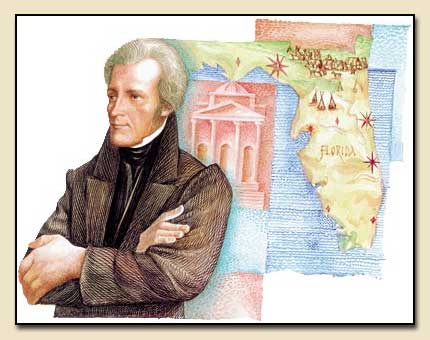
Considering the trackless, tangled landscape he'd have had to hack through, lacking farms, towns and markets, filled with hostile Indians, Wellington surely intuited he would not have done well against Old Hickory, who intimately knew these lands, handled Indians like no one else before or since, who burned with his terrible black fire of hatred for the Brits in general dating back to his family's suffering at the hands of the British army in the War of Independence.

Instead, the Duke joined the Congress in Vienna, which fortunately placed him on the ground, in easy contact with the generals of the other European powers, when Napoleón canceled his abdication and the 100 days began, which were finished decisively at Waterloo.
 

Monday, May 5, 2014

Today We Observe These Events

Bungle or Necessary? As the War is understood in terms of class, and at least as importantly, in terms of military weapons, battlefield, offensive and defensive engagement.


Today the Independent, a long discussive article, in observance of the commencement of WWI.


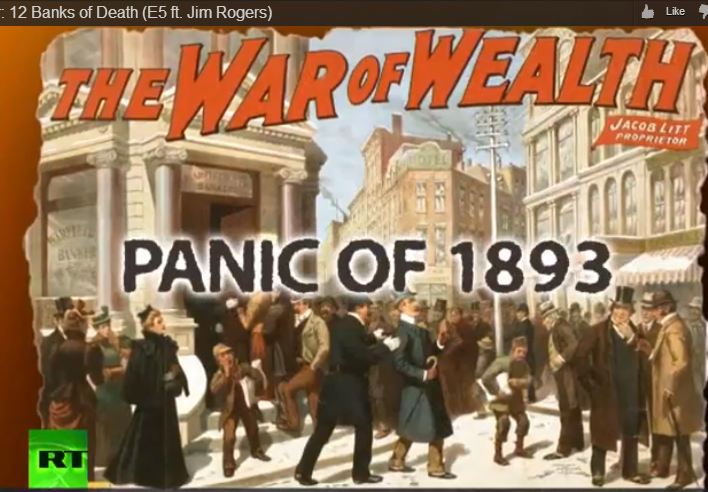
As well, today is the anniversary of the 1893 Wall Street crash.


And, of course, the Cinco de Mayo Battle of Puebla, 1862, in which the Mexican forces defeated the invading French army of Napoleon III (nephew of Napoleón I), hoping to rule through the Austrian puppet, Maximilian I -- and incidentally defy the U.S. and the Monroe Doctrine. He wasn't as successful with this strategy as was his uncle.