LINES OF THE DAY

". . . But the past does not exist independently from the present. Indeed, the past is only past because there is a present, just as I can point to something over there only because I am here. But nothing is inherently over there or here. In that sense, the past has no content. The past -- or more accurately, pastness -- is a position. Thus, in no way can we identify the past as past." p. 15

". . . But we may want to keep in mind that deeds and words are not as distinguishable as often we presume. History does not belong only to its narrators, professional or amateur. While some of us debate what history is or was, others take it into their own hands." p. 153

Silencing the Past: Power and the Production of History (1995) by Michel-Rolph Trouillot

Thursday, August 7, 2014

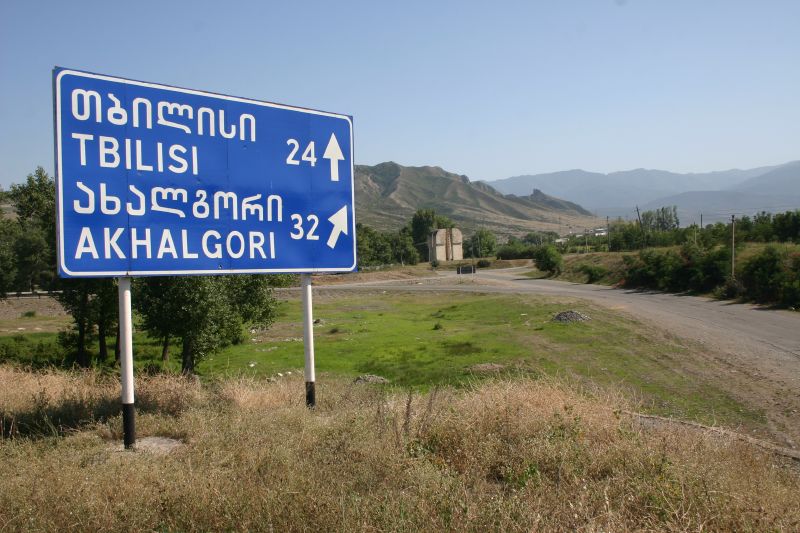
We Went to Georgia -- Tbilisi, That Is + Another Piece of My Heart: The Bert Berns Story

After attending Another Piece of My Heart: The Bert Berns Story again,* with our London amigo and his Brooklyn Girlfriend, we got in a cab and London Host directed the driver to his undisclosed destination.  He said, "We're going to a new restaurant in your neighborhood which I guarantee you've never been to, and haven't heard about."

He spoke truth.  Tbilisi, named by the immigrants for the capital of their natal land, it had just opened.


The next best thing for getting an authentic sense of a place one knows nothing about, after going there oneself, is to have a good friend, who has excellent powers of observation and a good memory, who is bold and adventurous culturally and linguistically, who also has native guides, to tell you about their journey and experiences.  London Host and Girlfriend are all of these.  As well, since he's a music professional, like all musicians, he slides effortlessly into local non-tourist experience.  Music and food are two of the very best ways to get to know a strange place.  They are also the fastest ways -- particularly as they are part of the language of the place.

London Host and Girlfriend had spent some splendid days in Georgia as he conducted a Masterclass in London's Underground Music of the 60's at the Batumi International Art-House Film Festival, Georgia.  He's also doing a massive study of the conceptual underpinning of "world music" thus he has been visiting points east of Europe frequently lately.  That's the story of how we got to this restaurant.

Meat-centric, the menu didn't have the appeal for me that other sorts of nationality cuisines might, nevertheless it mattered not, as it was the company.  The wines are what are interesting, as this region, on the Black Sea, sharing borders with Turkey, has been producing wines since ancient times, while also since ancient times, been on the trading routes among Europe, the Middle East and Asia -- and even Africa, re Egypt. London Host and Girlfriend were excellent guides to the wine menu.

We got home around 1:00 AM.  Lo and Behold, the modem lights were all on.

I'd just about adjusted to being internetless and thinking it was OK -- except I was worried about winter and how cold the walk would be to the library, and would I slip and fall on ice, while carrying my computer?

Nine days.  Will we ever learn the truth of what happened?  After I called TW once again late yesterday afternoon, after several runarounds, which meant starting all over again each time, I got connected to a real person who told me the problem was -- get this -- a scheduled outage, in order to upgrade the cables and wires throughout our neighborhood.  The work for this project was scheduled to be completed by 7 PM last night and our services would all be resumed.  She would call me around PM, when that happened, if I liked.  But I was going to be in the theater, so my phone would be off.

If -- big if -- that was true, why weren't we informed this was going to take place, so we could have made plans and not pulled out our hair and wasted endless minutes of our cell phone service on phoning TW over these last 9 days?

Is the answer because as customers we must, in person, to a real person, demand we not be charged for the days without service?

But -- is what I was told even true?

-------------------------

* It was so much fun to see this show this time in London Host's company, because he too knows why Jerry Wexler is the satan of this tale.  If you know anything at all about American pop music in the 20th century, you know the moment Jerry Wexler appears in the life of an artist or a label, it's the trump of doom for the artist and the label.  What a thug.

This time around JS informed BS's kids, who are instrumental in this jukebox musical getting produced, and are now attempting to raise money to take it to Broadway, that we'd be there.  So we learned when they called out el V by name, and wanted to talk about the show and music with him and with London Host as well.  They are so stoked about this show.  Very nice people.

Their mother, Ilene Berns, hasn't seen it yet.  Bette Midler told them the other night when she attended that their mother is going to shoot them ....  I hope not. The amount of ovarian power in music on that stage, particularly in the second half,


in which the singer-actress, Linda Hart, playing Mrs. Berns, does her let-it-rip blues, "Liar," ought to make her feel redeemed.



Wednesday, August 6, 2014

Still Broken + Alan Furst -- Spies of Warsaw & Midnight in Europe

With broken internets* it's not possible to watch streaming content, but dvds will play.

Thus I'm having the experience of simultaneously reading Alan Furst's latest novel, Midnight in Europe, while watching the 2013 BBC series made from Spies of Warsaw, which has been my favorite of his long series of the historical fiction series set during the European run-up to WWII, mainly through the focus of intelligence gathering, money and arms transfers, traitors, spies and counter espionage.

Paris is the center around which all the characters and actions revolve in nearly all the books in this series. However, this is already a world war as the world knows Germany's going bring the hammer down. All nations from Spain to Greece are featured in the series, as well as all ranks of people -- and even members of stateless peoples; all classes of people, from the highest to the lowest, all professions, from actors to the military.  They know it's going to happen, and in the meantime some of them are trying to put ducks, networks, armaments in place. This means many people are already sacrificing their fortunes and professions in the quest to defeat Hitler; some are already sacrificing their lives.


One of the reasons Spies of Warsaw is my favorite is because it's about Poland from October 1937 to May 1938.  In the BBC series, David Tennant plays the protagonist, Colonel Jean-François Mercier.  I've watched half of it, and BBC production does provide some of the landscapes of Poland that gave the novel so much charcter.


Midnight in Europe opens in NYC, though we're quickly in Paris.  Furst does his usual excellent job of making the reader as terrified to visit Germany in 1938 as she would be in that time.  This time the protagonist is Spaniard -- actually a Catalan -- who, with his family, seeing the writing on the wall, emigrated to Paris before the Civil War broke out.  A lawyer, specializing in international business law, Cristián Ferrar, is with a fine old French firm that has offices in NYC as well. His family are Republicans, as to be expected of those who have always been Barcelonians, with every reason to hate and despise Franco and his fascists, even before the world realized how much he was a front for the Nazis.  He gets recruited to help provide arms to the Republicans -- whose Soviet ties are less than palatable to many in Spain as elsewhere.  It's complicated, tricky and very dangerous enough for anyone. But -- there are always beautiful women and amor, to further complicate, and even cause harm ....

I'm liking this volume so much it will tie with Spies of Warsaw as my favorite Furst.  NYC?  A beautiful woman who works in the New York Public Library?  A very intelligent protagonist who is also a horseman?  What is there for me not to like?

--------------------

*  We were assured at 10:30 AM that we'd be fixed today.  Someone would come to do it between 10 AM and 7 PM.  The person doing it would call us 15 minutes before arrival.  It is now 6 PM.  I am in the library.  Nobody's called, so one suspicions that was an elaborate way to say that they don't know wtf.  El V's called them twice, and each time was told "He is coming today!"  8 days now.


Situation Remains FUBAR

Fortunately the weather is more lovely than usual in August in our city.  Friends from London are visiting.  There is a lot of music to hear, books to read, dvds to watch -- and libraries to go to, where I can do some work.  It's not as convenient as working at home.  In fact it's very inconvenient, and they are not open on Sundays or at night.

In all our online years there's never been anything like this experience. July 29th and we still have nothing.  We spent hours fighting through the same layers over and over to get any answers to anything.  Nobody seems to know anything.  The latest is: it's not our building per se that has the problem; it's  problem in "the street, which might be fixed later this week."  In other words TW doesn't have a clue, and will not be honest enough to tell us the truth about the situation.


There's been no storm, no incident of any kind, other than massive building / redevelopment everywhere, which I suspicion is the real cause. Some backhoe chewed up all the fiber optic cables for a block.  Not a ridiculous thought, because at the intersection of Spring and 6th Ave. a huge restructuring is going on that is covering a whole block, block to block.  Not to mention the huge amount of construction going on on every block all around us, and on our block too.  All of them involve enormous amounts of excavation, no matter how small the property.

From the photo you cannot tell, can you, that there is an entrance to a major subway stop, as part of this "redevelopment."  At times you are prevented by the workers from going into the entrance as the crane is lifting massive loads upwards.


We've tried to switch then, to Verizon, which is our cell phone service, since our across the way neighbor has Verizon, and she,smugly, is comfortably connected.*  Verizon dropped us in middle of the process.  When we called back they suggested it would work better to do it online. Moreover, their cable service is not the same company as their phone service.  This leads me to think we all are to expect more of this sort of thing, especially as all the ISP cable services seem to want to merge and Have All Of It.

In the meantime, the young who have apartments in our building are in a state of paralysis. They do not call TW, they do nothing.  They are furious and very upset but that they themselves might DO something seems contrary to their world view. One had his mom fly in from Chicago to set him up with a new internet provider.  One, very young, very pretty girl, is in a constant state of tears because her boyfriend, who does something online as his job, won't come to her apartment now.

Ah well, there it is.  I'm again at a library.  The corner Bistro, which is not an internet establishment, but a very nice restaurant, with focus on food and wine (no television even), is willing to give us their password, let us sit for while in the back when they're not busy there and internet. But it is not the same, and is inconvenient, in fact.

------------------

*  "Smugly" is a wry joke, not a slam of ML, who is a good neighbor.  We might be able to piggyback on her account, but she has severe mental balance problems, and I think we doing that would raise her chronic hyper levels of anxiety even higher.

Monday, August 4, 2014

Our Internets Are Broken

They have been broken for a week.  It's taken all this time to convince Time Warner to have a real person - technician come to our building and look for the problem.  For much of the time, it was always 'our' fault, and then at the very end They Said, ooooops, outage in your neighborhood.

Then it was, you are all fixed now.  No we are not fixed.


We are still not fixed though the problem was discovered by the real person - technician.  There's a "plate" on our building's roof that is defective, through which the signal comes.  Nobody can fix it until tomorrow.

So, my new computer, which had been acquired the day before the internets broke, is still not set up as it should be; many apps for itunes, etc., for instance, have never been able to be downloaded because of broken internets. First it would go out.  We'd call, then reboot the modem, get pinged, then a few hours later, the same damned thing -- after doing the long song and dance to convince Time Warner there was a problem, and then, the problem wasn't us.

Saturday it went out at 10 AM, and it's never been back since.  No matter what -- though yes, they did call us yesterday afternoon to tell us it was all fixed.  No it wasn't.

I am in a coffee-juice etc. joint on Houston, trying to catch up.  The library doesn't open today until noon.

Work, which entails all this research and searching, has been stopped for days, first with the defective computer, and now broken internet.  Thanx a lot for nothing,Time Warner.  You and ComCast merging will only make these miseries worse, more numerous and extended.


Thursday, July 31, 2014

The Fantasy of General Wellington's Invasion in the War of 1812

One of the persistent myths of alternate history fans is that Lord Wellington was asked by the British government to invade the United States from the Gulf Coast in order to defeat the upstart Americans in the War of 1812. [Example here.]

Whether or not there ever was a formal request made by the PM to Wellington, Duke Wellington supposedly declined, without grace or patience. Thus, it is a speculation without content.  It is so counter-factual, in fact, that there is not a single fact out of the period and location, to fuel such useless speculation.

Nevertheless the speculations continue apace, taking it as a given that this general, who was so good at his work that he defeated Napoleón himself in a battle -- a battle, let me haste to say, that didn't take place until after the first abdication of Napoleón, which concluded the Congress of Vienna, in which the surviving powers were wrangling over the division of the spoils of Bonaparte's empire, and Wellington was a primary player.*  With some level-headed dissenters, war gamers tend to believe that Wellington have quickly cut a swathe through the former colonies and returned them to British rule. This fuels ever more extreme counter-factual speculation as how would change the course of world history.

There is not a single fact upon which to build speculations.  In contrast, however,, there are ample facts that strongly suggest that Wellington showing up on the Gulf coast would have been as much a debacle as it turned out for British army general, Edward Pakenham, and British naval commander, Admiral Alexander Cocherane -- and very likely in the same way.

First he'd have had to defeat Andrew Jackson, who knew his territory, as he proved over and over, from the Floridas and the Gulf, all the way up the Natchez Trace and the Mississippi Corridor to Nashville, the water and land routes both, in this vast Louisiana Purchase territory. Whenever Jackson encountered the Brits in the Floridas and the Gulf, he'd defeated them (and hung some, even though it was illegal).  He'd been doing this long before the Battle of New Orleans.

This wasn't Wellington's geography, or the geography of any regular army, as the British learned in the War of Independence.  They occupied all the cities, but it did them no good (except to give contemporary Americans a silly idea of their own competence and exceptional capacity for success purely through the actions of single individuals, conveniently forgetting the essential roles of France in Spain in the ultimate outcome).

There were no places other than New Orleans to re-supply a Wellington army, and it was very far away from the hinterlands. There were no plantations to plunder yet, but those around New Orleans and Natchez. The land was covered in dense forest, swamps, bridgeless rivers and bayous. The American forces were skilled at living rough and at brigandage.  They'd have been at least as fierce a guerrilla third front as Wellington had encountered in Spain, except these would be working against him.

As intensely as Wellington had put himself through a military education he'd surely read the history of the War of American Independence.  As much time as he'd


spent in Spain, he'd surely have at recall the large role Spain's General Bernardo Galvez played in the Gulf Mississippi Valley in defeating the British back then and there, and how easy it was for him to do so, since the British military were not good on that ground. Moreover, now, in the present of the War of 1812, which in any case, as mentioned, was now over, Spain was Britain's ally.

So, yes, there are many facts that show Wellington, if, indeed he was formally asked to fight in North America, made the right decision to stay on this side of the Atlantic, while there is nary a single one to say he'd have met anything but disaster, whether by water, cavalry or infantry.  His artillery would have been as prone to incapacity by corrosion and mud as anyone else's, especially without roads along which to push them.  The horses would die from starvation, and the men as well.

----------------------

Which was a fortunate circumstances for Britain and the rest of Europe, since Wellington was already on the ground in central Europe, where war was resuming, not sitting around uselessly in the Americas, where that war was over. The Treaty of Ghent had been signed December 24, 1814.

Wellington, where he was,  was perfectly positioned to take immediate charge of the British forces and confer with the generals of the other powers' armies during Napoleón's 100 Days: 20 March to 8 July 1815.

Wednesday, July 30, 2014

Richard Slotkin - Battle of the Crater + Cold Mountain

Commemorating a slaughter 150 years ago, from the NYT's excellent Disunion series, a piece by one of our greatest scholars and historical writers, the estimable Richard Slotkin

My own first understanding of the Battle of the Crater at the Siege of Petersburg, came from reading Slotkin's The Crater: A Novel of the Civil War, published more than three decades ago.  This event has evidently haunted Slotkin all this time, for he published a non-fiction study of this terrible battle in in 2009, No Quarter: The Battle of the Crater, 1864. Today, he observes the anniversary of the meatgrinder for everyone that the Crater was, as well as analyzing the frenzy of massacre in which the confed troops indulged themselves upon the African American troops.

There is another novel I've read, that features the Battle of the Crater.  It's the opening of Charles Frazier's 1997 best-selling novel, Cold Mountain. The senseless horror pushes confederate soldier, W. P. Inman, over the edge. Wounded, Inman deserts, to search for Ada, love, peace, and life, rather than continue killing. The before, during and after of the battle are the opening sequences of the film (2003), directed by Anthony Minghella


It may say something about us (whoever we are), that cold googling images for the film, Cold Mountain, does not bring up a single scene from the battle.  One must specifically request images of the battled from the film, and there are few enough of those.


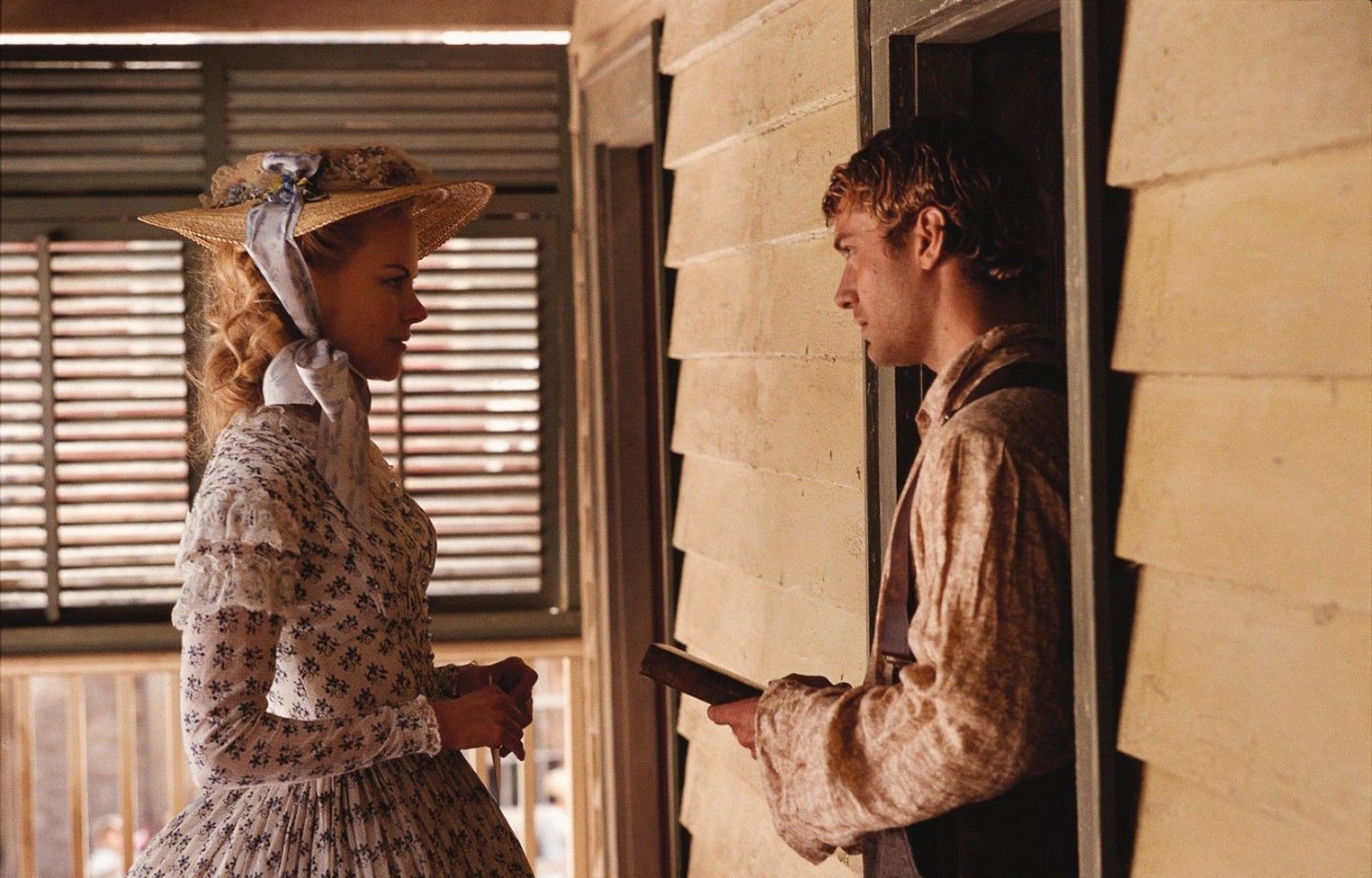
Most of the images are of a feisty Renée Zwillenger with a two-barreled shotgun (in the only good role I could ever stand to watch her as an actress -- even though in the novel her character, Ruby, is a woman of color.  Would that have been changed if the film was made today?), dressed in mens clothing, 


or, in contrast, Nicole Kidman, in frilly southern bell dress.  And, of course, the appealing Jude Law as W.P. Inman.

Disunion
The Battle of the Crater
By RICHARD SLOTKIN    
July 29, 2014 6:33 pm

Disunion
Disunion follows the Civil War as it unfolded.

By the end of July 1864, Union forces were entrenched outside Petersburg, Va., a major city south of Richmond. To break the siege, commanders in the IX Corps came up with a novel idea: A regiment of Pennsylvania coal miners dug a tunnel 511 feet long, right up under a Confederate strongpoint, and packed four tons of blasting powder into galleries at its end. When the mine was touched off it would blow a huge breach in the Rebel lines, through which infantry could attack and seize the high ground that commanded Petersburg.

The so-called Petersburg Mine was an extraordinary technical accomplishment, and its detonation on July 30 produced what was then the largest man-made explosion in history. But federal commanders bungled the infantry attack, which never got beyond the gaping hole left by the explosion. The Union army suffered 4,000 casualties, turning what came to be known as the Battle of the Crater from a spectacular opportunity to capture Petersburg to an unmitigated disaster.

But there is more to the Battle of the Crater than the ironic contrast of technological brilliance with military incompetence. Its real significance lies in its exposure of the depth and complexity of the racial animosities that underlay the Civil War.

Gen. Ambrose Burnside, who led the IX Corps, had planned to use his Fourth Division, which was comprised of nine regiments of United States Colored Troops, to spearhead his assault. Unlike his white divisions, the Fourth had not been weakened by heavy battle losses. Its morale was high, and it would be trained in the maneuvers required to pass the crater and debris field left by the mine explosion and seize the high ground.

Beyond the tactical problems of leading so large an assault, black soldiers and their white officers had to prepare for a combat in which they could expect no mercy if they were captured or left wounded on the field. Col. John Bross, who commanded the 29th U.S.C.T. at Petersburg, told the press, “When I lead these men into battle, we shall expect no quarter, and shall not ask for quarter.”

The Confederate government had declared that officers of the U.S.C.T. would be treated as criminals fomenting slave rebellion, an offense punishable by death. Fear of federal retaliation prevented open enforcement of that policy, but Confederate Secretary of War James Seddon had encouraged field commanders to apply its principles unofficially, “red-handed on the field or immediately thereafter.” Black prisoners not disposed of on the field were treated as slaves: returned to former masters, sold, hired out by the government or set to labor with other slaves on Confederate fortifications.

Seddon’s injunction reflected, and lent official sanction, to the racial animosity endemic to a slavery-based society. If anything, it had grown worse during the war. White supremacy was the social and emotional cement of Southern society, and when internal class conflicts and battlefield defeats shook popular morale in the summer of 1864, Confederate leaders rallied their people by reminding them that a Union victory would enable blacks to break the bonds of subjection that kept them in their place. Black soldiers were the incarnation of that threat, and Southern soldiers affirmed their racial identity by declaring their intention to show no mercy.

Union officers used that fact to their benefit. During their assault training, Fourth Division troops were enjoined to use “Fort Pillow! No Quarter!” as their battle cry. However, for the division’s officers the battle cry was not intended as a command. In the battle itself they took pains to see that their troops did not harm rebel wounded or P.O.W.s. Rather, it was a motivational ploy that reflected their own racial prejudice: They believed that Negroes, as a race, were timid and needed the stimulus of desperation to make them fight hard against white Southerners. That same prejudice would cost the Union dearly when, on the eve of the battle, Gen. George Meade – commanding the Army of the Potomac – forbade the use of the “Colored Division” as the spearhead, because he did not think black soldiers were good enough.

General Burnside went into a funk. Instead of making a new plan, he had the other division commanders draw straws for the mission. Chance decreed that Gen. James Ledlie’s troops should lead – a division unprepared for its assignment and exhausted by weeks of fighting, and whose commander was known to get falling-down drunk when faced with combat.

At 4:45 a.m. on July 30, the earth below the rebel strongpoint bulged and broke, and an enormous mushroom cloud, “full of red flames, and carried on a bed of lightning flashes, mounted towards heaven with a detonation of thunder,” one witness recalled. The explosion blasted a crater 130 feet long, 75 feet wide and 30 feet deep, with nearly sheer walls of jagged clay, “filled with dust, great blocks of clay, guns, broken carriages, projecting timbers, and men buried in various ways.”

The crater itself was an impassable barrier, and there were debris-clogged trenches to either side. The black troops had been trained to avoid the crater and drive for the high ground. Ledlie’s men, abandoned by their drunken general, drifted into the crater and stayed there.

The explosion had killed one-third of the South Carolina brigade defending the strongpoint, but behind it was a labyrinth of communication trenches where rebel infantry rallied. Confederate engineers, anticipating an attack, had planted a ring of artillery batteries on the high ground. They laid down a crossfire of canister shot that pinned Ledlie’s division in the breach. As more federal troops advanced, a terrible logjam formed in and around the crater.

In a last attempt to redeem this disaster, Burnside ordered the United States Colored Troops to attack. After four hours of fighting, the advantages of surprise and shock were lost, and the black soldiers would have to force their way forward through the mass of demoralized whites around the crater. Nevertheless, they accomplished far more than could have been expected: The commanders of the two leading regiments, utilizing their units’ training, improvised a pincer attack that captured 150 prisoners and a clutch of battle flags. The following regiments also worked their way through the mob and (with some rallied white regiments) tried to charge the high ground.

But by now rebel reinforcements had arrived. A brilliantly timed counterattack by Gen. William Mahone routed the attempted federal advance, and most of the federals fled. About a thousand gathered in and around the crater, but their position was untenable: Under crossfire by rifles and artillery, and vulnerable to mortar shells dropped among the helpless, they packed the crater bottom like fish in a barrel. Officers who commanded in the crater testified that black troops were the mainstay of its last-ditch defense, a thin line of riflemen defending the crater berm. One private of the Confederate 12th Virginia gave them the accolade, “They fought like bulldogs and died like soldiers.”

When Mahone’s Confederates finally closed in, the battle degenerated into a combination massacre and race riot. Rebels killed wounded blacks as they retreated to the crater. “The cry was raised that we would all be killed if we were captured among the negroes,” recalled one white soldier; some desperate whites killed their black comrades-in-arms to show they shared the Confederates’ abhorrence of race-mixing.

Finally a call went up: “The Yanks have surrendered.” Confederate troops clambered into the crater, and the first men down, one soldier wrote, “plunged their bayonets into the colored wounded lying there.” Col. John Haskell of Virginia observed, “Our men, who were always made wild by having negroes sent against them … were utterly frenzied with rage. Nothing in the war could have exceeded the horrors that followed. No quarter was given, and for what seemed a long time, fearful butchery was carried on.” Confederate officers eventually stopped the killing, but many black prisoners were murdered as they passed, under guard, through the Confederate reserves. Pvt. Dorsey Binyon of the 48th Georgia regretted that “some few negroes went to the rear as we could not kill them as fast as they past us.” Capt. William Pegram of Virginia took satisfaction in the belief that fewer than half of the blacks who surrendered on the field “ever reached the rear … You could see them lying dead all along the route.” He thought it “perfectly” proper that all captured blacks be killed “as a matter of policy,” because it clarified the racial basis of the Southern struggle for independence.

It is impossible to establish precisely the extent of these killings. In the average Civil War battle the ratio of wounded to dead was 4.8 to one. For black troops at the Crater it was 1.8 to one. Engaged Confederate troops also suffered a two-to-one wounded-to-killed ratio; but those losses include the 278 killed by the mine explosion – an extraordinary loss, beyond what infantry combat could be expected to produce. Thus it seems likely that more than 200 blacks were killed after they had ceased fighting.

Most eyewitness accounts of the massacre were written by Confederates, who saw the killings as something to boast of, consonant with the values of Southern society. Yet at every rank and in every Confederate unit there were also men who were appalled by the murders. Ultimately, moral responsibility for the massacre rests on Confederate leaders, whose racial polemics and military instructions gave official sanction to the motives for massacre, and not those of mercy.

Follow Disunion at twitter.com/NYTcivilwar or join us on Facebook.

Sources: Richard Slotkin, “No Quarter: The Battle of the Crater, 1864”; Bryce Suderow, “The Battle of the Crater: The Civil War’s Worst Massacre,” in Gregory J. W. Urwin, ed., “Black Flag Over Dixie”; Edward Porter Alexander, “Fighting for the Confederacy,” ed. by Gary W. Gallagher; George S. Burkhardt, “Confederate Rage, Yankee Wrath: No Quarter in the Civil War”; Peter S. Carmichael, “Lee’s Young Artillerist: William R.J. Pegram”; Keith Wilson, ed., “Honor in Command: Lt. Freeman S. Bowley’s Civil War Service in the 30th United States Colored Infantry.”

Richard Slotkin is the author of “No Quarter: The Battle of the Crater, 1864” and “Long Road to Antietam: How the Civil War Became a Revolution.” He is an emeritus professor of American studies at Wesleyan University.

Monday, July 28, 2014

Nicola Griffith AsksWho Owns Science Fiction and Fantasy

She does it in an essay here, on Charles Stross's blog, "Charlie's Diary."

It begins:

I’m English. I've lived in the US a long time (in fact last year I got my US citizenship) but I’m still English. You can tell: all I have to do is speak. There's no hiding that accent. In England, I belong. I visit often; I feel at home; I just don't live there anymore.
A few years ago, when William Gibson was inducted into the Science Fiction and Fantasy Hall of Fame, he said: I am a native of science fiction but no longer a resident.2 I understood exactly what he meant.
My most recent novel, Hild, has no fantastical elements whatsoever. It's not set in a secondary world, there are no dragons, no wizards casting spells, no special swords or magic rings. Yet the book has been nominated for three SF awards3. Why?

It's a nice essay, but I do have a caveat. In my judgment, and I'm a qualified judge, one would think,  Hild is not a literary novel; it's historical fiction.  It's not even a literary novel as historical fiction, as is Wolf Hall, for instance.

I can give my reasoned reasons as to why that's my judgment, but am mostly occupied by the hell of New Computer: making it be a computer, not a tablet, transferring, migrating, trying to figure out how to use the *&*&^%%$ thing as a useful machine.  Which also might mean dumping my main e-mail account, as MS dropped live mail in favor of Outlook, which they previously dropped in favor of Live, which so infuriated me I never changed over.  I had liked Outlook Express very much, and never did like Live Mail at all.