After attending Another Piece of My Heart: The Bert Berns Story again,* with our London amigo and his Brooklyn Girlfriend, we got in a cab and London Host directed the driver to his undisclosed destination. He said, "We're going to a new restaurant in your neighborhood which I guarantee you've never been to, and haven't heard about."
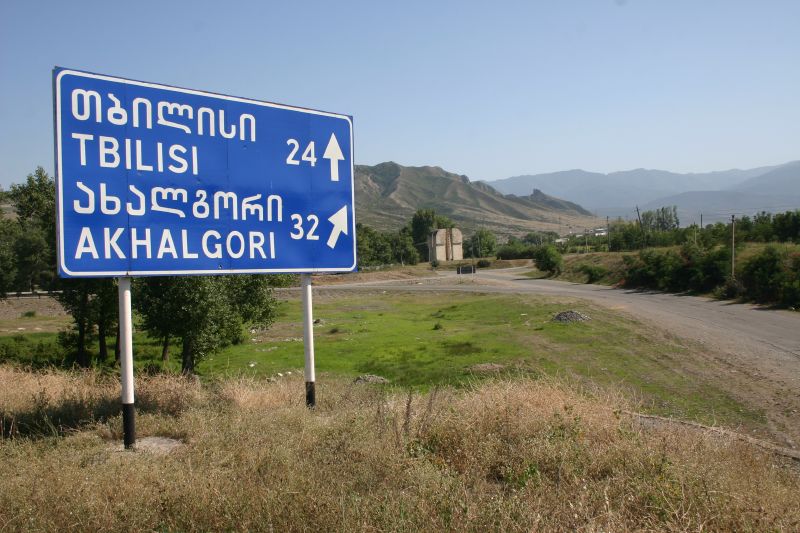
He spoke truth. Tbilisi, named by the immigrants for the capital of their natal land, it had just opened.
The next best thing for getting an authentic sense of a place one knows nothing about, after going there oneself, is to have a good friend, who has excellent powers of observation and a good memory, who is bold and adventurous culturally and linguistically, who also has native guides, to tell you about their journey and experiences. London Host and Girlfriend are all of these. As well, since he's a music professional, like all musicians, he slides effortlessly into local non-tourist experience. Music and food are two of the very best ways to get to know a strange place. They are also the fastest ways -- particularly as they are part of the language of the place.
London Host and Girlfriend had spent some splendid days in Georgia as he conducted a Masterclass in London's Underground Music of the 60's at the Batumi International Art-House Film Festival, Georgia. He's also doing a massive study of the conceptual underpinning of "world music" thus he has been visiting points east of Europe frequently lately. That's the story of how we got to this restaurant.
Meat-centric, the menu didn't have the appeal for me that other sorts of nationality cuisines might, nevertheless it mattered not, as it was the company. The wines are what are interesting, as this region, on the Black Sea, sharing borders with Turkey, has been producing wines since ancient times, while also since ancient times, been on the trading routes among Europe, the Middle East and Asia -- and even Africa, re Egypt. London Host and Girlfriend were excellent guides to the wine menu.
We got home around 1:00 AM. Lo and Behold, the modem lights were all on.
I'd just about adjusted to being internetless and thinking it was OK -- except I was worried about winter and how cold the walk would be to the library, and would I slip and fall on ice, while carrying my computer?
Nine days. Will we ever learn the truth of what happened? After I called TW once again late yesterday afternoon, after several runarounds, which meant starting all over again each time, I got connected to a real person who told me the problem was -- get this -- a scheduled outage, in order to upgrade the cables and wires throughout our neighborhood. The work for this project was scheduled to be completed by 7 PM last night and our services would all be resumed. She would call me around PM, when that happened, if I liked. But I was going to be in the theater, so my phone would be off.
If -- big if -- that was true, why weren't we informed this was going to take place, so we could have made plans and not pulled out our hair and wasted endless minutes of our cell phone service on phoning TW over these last 9 days?
Is the answer because as customers we must, in person, to a real person, demand we not be charged for the days without service?
But -- is what I was told even true?
-------------------------
* It was so much fun to see this show this time in London Host's company, because he too knows why Jerry Wexler is the satan of this tale. If you know anything at all about American pop music in the 20th century, you know the moment Jerry Wexler appears in the life of an artist or a label, it's the trump of doom for the artist and the label. What a thug.
This time around JS informed BS's kids, who are instrumental in this jukebox musical getting produced, and are now attempting to raise money to take it to Broadway, that we'd be there. So we learned when they called out el V by name, and wanted to talk about the show and music with him and with London Host as well. They are so stoked about this show. Very nice people.
Their mother, Ilene Berns, hasn't seen it yet. Bette Midler told them the other night when she attended that their mother is going to shoot them .... I hope not. The amount of ovarian power in music on that stage, particularly in the second half,
in which the singer-actress, Linda Hart, playing Mrs. Berns, does her let-it-rip blues, "Liar," ought to make her feel redeemed.
Showing posts with label popular music. Show all posts
Thursday, August 7, 2014
Sunday, April 20, 2014
Muscle Shoals
Unlike Sun and Stax, and even Blue Note for Jazz, at Muscle Shoals, whether the original Fame Studio or the Jerry Wexler - Atlantic Records steal-way of the Swampers from FAME for Muscle Shoals Sound Studios (memo: never get in bed with Jerry Wexler; guess Rick Hall hadn't paid attention to what happened with Stax) -- there were no women involved at FAME or Muscles Shoals. It was a boys club all the way around.
No wonder that mess happened with Aretha -- those guys didn't know how to treat women.
No wonder the Stones recorded there.
Or that it was the birthplace of we-wave-stars-and-bars Country Rock (the Allmans).
No wonder that mess happened with Aretha -- those guys didn't know how to treat women.
No wonder the Stones recorded there.
Or that it was the birthplace of we-wave-stars-and-bars Country Rock (the Allmans).
Labels:
music,
popular culture,
popular music,
U.S. culture
Sunday, April 13, 2014
The Blues: Recovering Lost History
We've lost so much in that transition between music's prehistory and early recording. Here's the story of getting back just a teeny bit of it.
The article includes listening links that you do not leave the page to hear, video and photographs. It's one of the Times Magazine's efforts at creating authentic interactive journalism. Beyond the content text, this is one hell of a production.
This is one of the early paragraphs:
Outside any bullyingly hyperbolical attempts to describe the technical beauty of the songs themselves, there’s another facet to them, one that deepens their fascination, namely a certain time-capsule dimension. The year 1930 seems long ago enough now, perhaps, but older songs and singers can be heard to blow through this music, strains in the American songbook that we know were there, from before the Civil War, but can’t hear very well or at all. There’s a song, Geeshie’s “Last Kind Words,” a kind of pre-blues or not-yet-blues, a doomy, minor-key lament that calls up droning banjo songs from long before the cheap-guitar era, with a strange thumping rhythm on the bass string.
Via the embedded music that can be turned on or off at the reader's convenience, what Sullivan's talking about becomes clear.
Reading this essay is rather like sitting with Elijah Wald, sharing the research information of our latest projects with wild enthusiasm -- which has been our pleasure to do again this weekend as he's visiting. BTW, EW's having a terrific spring -- The Dozens: A History of Rap's Mamma, his latest book, has sold out already!
As Dylan shows up in Sullivan's piece so he does in Elijah's work-in-progress, which is about the folk music scene of the 1950's and early 60's.
Here's another intriguing paragraph, about legendary, but not so well known Blues collector, Mack McCormick, about whom EW and I talked yesterday, among other collectors who aren't able to write books of their own out of their laboriously created archives (there are several we know in the latin music world, particularly those who have lived their own lives in Puerto Rican music in New York; they are aging, in poor health -- and poor; so much of what they know will be lost -- yet they don't want to let go of what they know, at least to very many people):
It's sort of like the Story of the Egyptian Captivity and Exodus -- which historically never happened. We choose the stories we want rather than historical fact, because the stories we make up, we make up to nurture, to sustain ourselves. Those stories are more essential to our continuing to live this life, out of which none of us gets alive.
He had said he didn’t want to talk about Robert Johnson, for personal reasons and on principle. But his talk spiraled inexorably toward Johnson anyway. The singer loomed over his memory as he had over his career. What he told me took me aback. McCormick said that what he realized, in the quarter century since Guralnick’s book came out, was that most of what we think we know about Robert Johnson — which is to say, most of what McCormick thought he knew — was highly unstable. We’re not even sure, McCormick said, that the man in the pictures we have, the smiling man with long fingers, holding the guitar, is Robert Johnson. Or that he is, as McCormick put it, “the guy who made the records.” He is a Robert Johnson. But according to McCormick, the more he has lived with the evidence, the more he doubts. Of the people he interviewed so long ago, more than one of those who had met Johnson and been present at one of his two sessions in Texas told McCormick, when they were shown the famous photograph, “That’s not the guy.” It didn’t look like him, they said. Not everyone said that, but a few.According to EW, who, obviously, is well versed in many of the matters of the blues, "It's not as though blues scholars haven't known for ages that much is mythology and not historically factual. This isn't new news (as he shows in his Escaping the Delta), it's that didn't matter much to them."
It's sort of like the Story of the Egyptian Captivity and Exodus -- which historically never happened. We choose the stories we want rather than historical fact, because the stories we make up, we make up to nurture, to sustain ourselves. Those stories are more essential to our continuing to live this life, out of which none of us gets alive.
Forbidden City USA
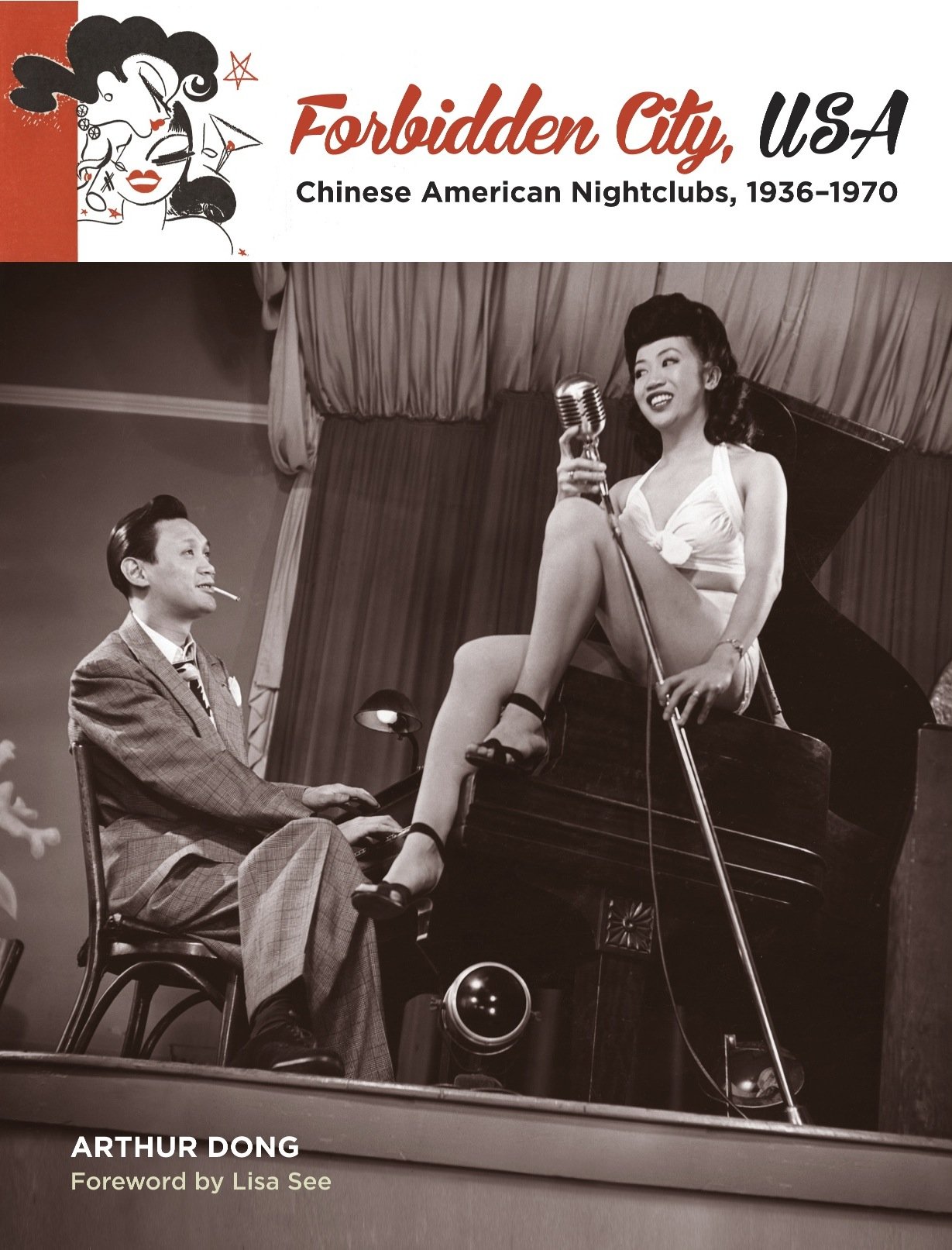
Forbidden City USA: Chinese American Nightclubs, 1936-1970 by Arthur Dong chronicles the Chinese nightclub scene in San Francisco and NYC. The book is published this weekend by DeepFocus Productions.
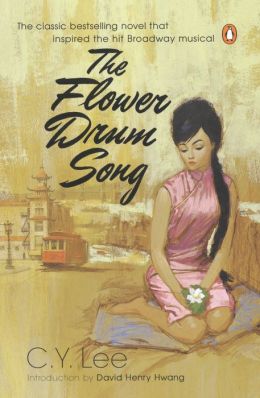
This San Francisco nightclub scene was the inspiration for the 1957 novel, The Flower Drum Song, by Chinese-American writer, C.Y. Lee, which in turn inspired Oscar and Hammerstein's eighth stage and screen musical. They hired Gene Kelly to direct the first stage production (1958; film 1961). From the New York Times article on Forbidden City USA and Mr Dong:
This is a fascinating part of the history of American popular music,particularly the Big Band erea, which hardly any of us know. So we thank Arthur Dong for making it available.
Mr. Dong, whose award-winning trilogy of documentaries about discrimination against gays includes “Coming Out Under Fire,” began researching the clubs while working on his 1989 documentary, “Forbidden City, U.S.A.” “I love the big band era, I love Busby Berkeley musicals,” he said. “And the fact that these were Chinese-Americans doing this made it even that much more exciting.”
This San Francisco nightclub scene was the inspiration for the 1957 novel, The Flower Drum Song, by Chinese-American writer, C.Y. Lee, which in turn inspired Oscar and Hammerstein's eighth stage and screen musical. They hired Gene Kelly to direct the first stage production (1958; film 1961). From the New York Times article on Forbidden City USA and Mr Dong:
Mr. Dong discovered seven nightclubs in San Francisco, as well as a lone outpost in New York, the China Doll, where patrons could indulge in pagoda punches and Tibet coolers “fit for a Buddha.” Owned and operated by Tom Ball, a white stage producer, China Doll played up the Asian angle in ways unseen in the San Francisco clubs, which were all Chinese owned. “At the Forbidden City, you had the Gershwin revue and the Gold Rush show,” Mr. Dong said. “At China Doll, you had shows like ‘Maid in China’ and ‘Slant-Eyed Scandals.’ ”
Mr. Dong also discovered that a lot of the performers at these “all-Chinese” cabarets were not really Chinese. Many were Japanese-American, including the M.C. Pat Morita (“The Karate Kid”) and the comedian Jack Soo, who would go on to star in “Flower Drum Song,” the 1958 Rodgers and Hammerstein musical inspired by the Forbidden City nightclub.
This is a fascinating part of the history of American popular music,particularly the Big Band erea, which hardly any of us know. So we thank Arthur Dong for making it available.
Labels:
books,
popular culture,
popular music,
U.S. culture,
U.S. History
Saturday, April 12, 2014
Memphis is Mississippi
Memphis is really Mississippi, not Tennessee, no matter what the maps say.
Duh.
Memphis, not Nashville, was the economic magnet for the Delta, as Philadelphia was for the upper south, Maryland and Virginia, and even South Carolina, in the colonial era -- until Baltimore, which rapidly took its place. In the southern "west" not Nashville, but Memphis, was the magnet for the working poor, black and white of the Delta. Elvis. Even though, as we see from Wiki, Tupelo isn't the Delta per se:
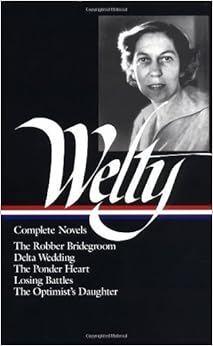
For the more prosperous Delta people, Memphis is where you go to shop for fashionable items and enjoy sophisticated entertainment. You see this in the fiction by the writers who are from this part of the country, as in Delta Wedding, by Eudora Welty, set in 1923, published 1946. The Fairchild's family's mercantile members live and own business in Memphis. Those who live on Shellmound plantation to there to shop, to celebrate and to party.
One way to understand this is to contrast the work of Welty, say, born in Jackson, Mississippi, with that of Peter Taylor, Nashville writer.
As another contrast is what the writing of William Alexander Percy, second cousin and adoptive parent of Walker Percy, reveals. The wealthy and powerful elite of the Delta, are cosmopolitan: sending their sons, at least, to Harvard, then to Europe and New York, with family connection throughout the old confederacy from Virginia and Georgia, to New Orleans and Nashville.
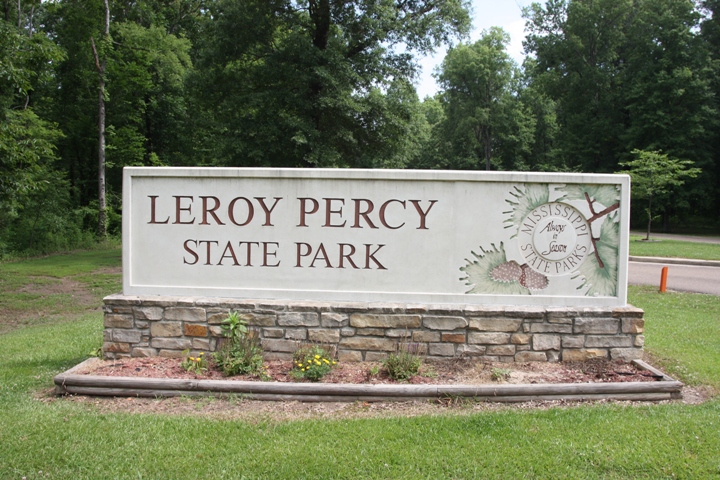
Nashville for this class rather than Memphis, because Nashville was the regional political center. William Walker Percy's father, LeRoy Percy (1860 - 1929), served as a senator in D.C.
LeRoy Percy was a wealthy attorney who became a planter in Greenville, Mississippi (location headquarters for the Coen Bros.' film, O Brother, Where Art Thou), in the heart of the Delta. His plantation of Trail Lake covered 20,000 acres and was worked by sharecroppers. Thus it's not surprising that Leroy Percy died Memphis, the economic and cultural capital of the Delta.
Duh.
Memphis, not Nashville, was the economic magnet for the Delta, as Philadelphia was for the upper south, Maryland and Virginia, and even South Carolina, in the colonial era -- until Baltimore, which rapidly took its place. In the southern "west" not Nashville, but Memphis, was the magnet for the working poor, black and white of the Delta. Elvis. Even though, as we see from Wiki, Tupelo isn't the Delta per se:
Tupelo is the county seat and the largest city of Lee County, Mississippi. It is also the seventh-largest city in the state. It is situated in northeast Mississippi, between Memphis, Tennessee, and Birmingham, Alabama, and is accessed by U.S. Route 78.
For the more prosperous Delta people, Memphis is where you go to shop for fashionable items and enjoy sophisticated entertainment. You see this in the fiction by the writers who are from this part of the country, as in Delta Wedding, by Eudora Welty, set in 1923, published 1946. The Fairchild's family's mercantile members live and own business in Memphis. Those who live on Shellmound plantation to there to shop, to celebrate and to party.
One way to understand this is to contrast the work of Welty, say, born in Jackson, Mississippi, with that of Peter Taylor, Nashville writer.
As another contrast is what the writing of William Alexander Percy, second cousin and adoptive parent of Walker Percy, reveals. The wealthy and powerful elite of the Delta, are cosmopolitan: sending their sons, at least, to Harvard, then to Europe and New York, with family connection throughout the old confederacy from Virginia and Georgia, to New Orleans and Nashville.
![]() |
| ... William McChesny Martin, Walker Hill, and W.B.. Plunkett. Standing: Murray Carleton, Oscar Fenley, F.O. Watts, Walter W. Smith, and LeRoy Percy, from A Foregone Conclusion, a history of the Federal Reserve Bank of St. Louis, serving "St. Louis, Little Rock, Louisville, Memphis." |
LeRoy Percy was a wealthy attorney who became a planter in Greenville, Mississippi (location headquarters for the Coen Bros.' film, O Brother, Where Art Thou), in the heart of the Delta. His plantation of Trail Lake covered 20,000 acres and was worked by sharecroppers. Thus it's not surprising that Leroy Percy died Memphis, the economic and cultural capital of the Delta.
Labels:
American Literature,
books,
fiction,
geography,
Movies,
politika,
popular music,
U.S. History,
writers
Subscribe to:
Posts (Atom)