LINES OF THE DAY

". . . But the past does not exist independently from the present. Indeed, the past is only past because there is a present, just as I can point to something over there only because I am here. But nothing is inherently over there or here. In that sense, the past has no content. The past -- or more accurately, pastness -- is a position. Thus, in no way can we identify the past as past." p. 15

". . . But we may want to keep in mind that deeds and words are not as distinguishable as often we presume. History does not belong only to its narrators, professional or amateur. While some of us debate what history is or was, others take it into their own hands." p. 153

Silencing the Past: Power and the Production of History (1995) by Michel-Rolph Trouillot

Wednesday, April 30, 2014

Happy International Jazz Day!

It is International Jazz Day.

Herbie Hancock created International Jazz Day:

International Jazz Day is chaired and led by Irina Bokova, UNESCO Director General, and legendary jazz pianist and composer Herbie Hancock, who serves as a UNESCO Ambassador for Intercultural Dialogue and Chairman of the Thelonious Monk Institute of Jazz. The Institute is the lead nonprofit organization charged with planning, promoting and producing this annual celebration.
Though, of course, here in Casa Nuestras, a day really doesn't go by in which jazz of some kind, from somewhere, isn't played.

One of la Casa's favorite jazz musicians, Yosvany Terry

Saturday, April 26, 2014

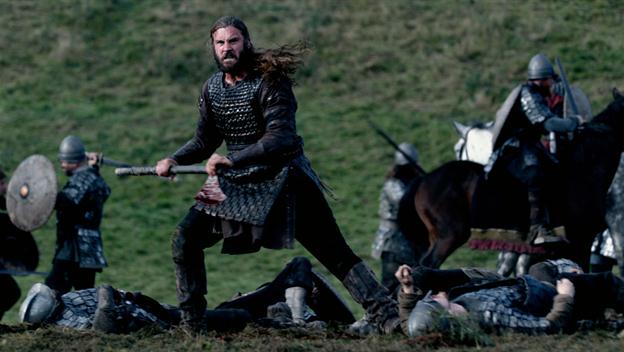
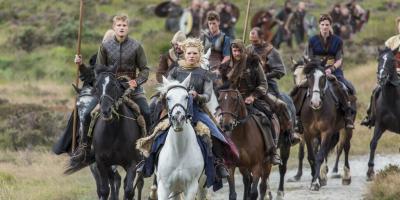
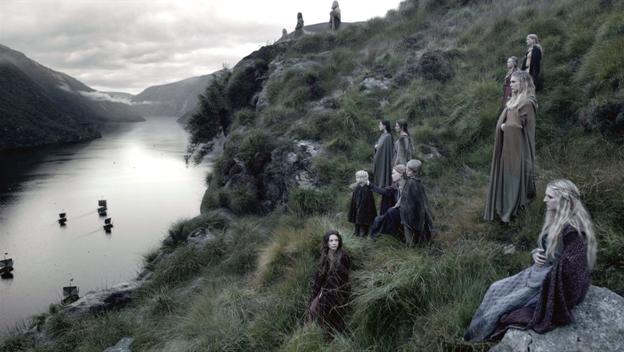
Vikings - History Channel - Season 2 - Ep. 9 "The Choice"

The great battle between Ragnar and King Horik's alliance and the alliance of King Ecbert and King Aelle predicted for this week's Vikings episode, "The Choice," took place.  It was awful


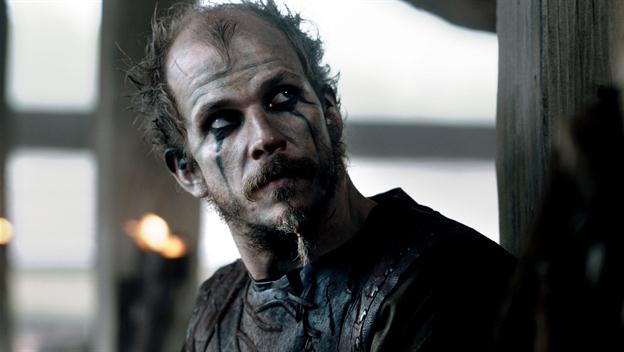
Ragnar -- Horik! because he's an old school sort of warlord, who will not listen to the class inferior but o so cunning Ragnar -- lost.  But this wasn't the most distressing thing that happened, even though the loss included a nearly dead Rollo. It is nearly 100% certain now that Floki's plotting with Horvik to take down Ragnar -- Floki, whose skills and dependable loyalty have been instrumental in the preservation of Ragnar, his people and his lands.

Gods and goddesses' behaviors reflect  the universality of humanity. So, unmotivated as Floki's turn against Ragnar may appear to the audience, it is understandable. Most people share the experience of losing friends, friends who were long-time dear friends, for whom good turns were done when possible, without even thinking about it. All sincere questions to learn if something offensive took place, so an apology can be made and and change behavior are rebuffed. It's difficult not to start thinking these 'friends' were hypocrites all along, who were in the relationship only for what they got out of it, and now they no longer feel there is anything left worth bothering with. There are friends who were there when things didn't go well, but when things started to break positively again, they dropped the friendship. So on and so forth. So Floki, self-identified with the trickster god Loki, is a great addition to the story that Vikings is telling. The sagas and myths are filled with inexplicable betrayals, because sometimes human beings take mean and petty glee in destruction, just as other humans will be loyal through torture and death.


King Horik asks Loki leading questions about Ragnar's first-born son, Bjorn, who is turning into a great warrior.  He compares Bjorn to Baldur. The upshot is the esteem in which Bjorn is held by everyone annoys both fellows no end.  Not for a particular reason -- there's no suggestion that Floki believes Bjorn is unworthy of such esteem, but it persistently annoys him, an annoyance rapidly growing, just as his annoyance with Ragnar's success is growing.  According to folklore, a scorpion must sting something, even if only itself. (One does notice, however, that nobody is esteeming Horik's son -- nobody even bothers to call the toad by name, including his father and Floki.)


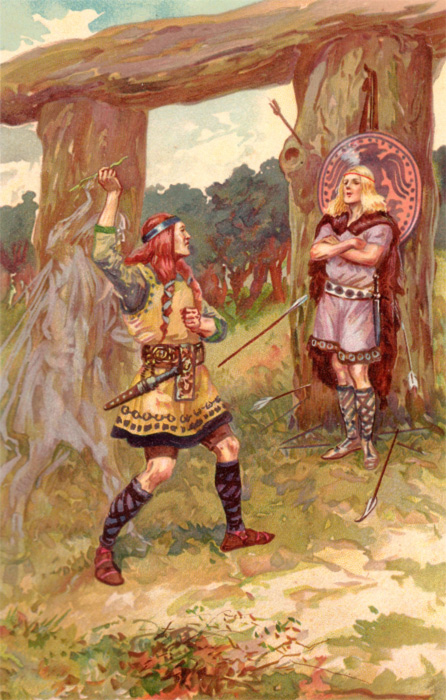
In nordic mythology, Loki's grand inquisition to discover whether there was anything that hadn't sworn not to harm Baldur learned was the mistletoe. Mom Goddess Frigg didn't bother to get a promise from Mistletoe, so insignificant it was. Loki was the one who put mistletoe in the hand of blind Hod, in order that he too could pay honor to Baldur and participate in the game of throwing deadly things, with all the deadly things changing trajectory to not harm Baldur. Sometimes Loki learns of the mistletoe from Frigg herself, and sometimes it's by going through the whole of heaven, earth and hell and asking every damned thing and creature. With myths there are always more than one version.  But it does seem agreed that Baldur's death is the first step on the way to Ragnarok. A foreshadowing of Ragnar's downfall, somehow accomplished through Bjorn?

The Mercian Princess Kwenthrith was even more impossibly implausible this week.  If a woman wants to command an army she doesn't go among hired mercenaries and grab their dicks, in public, under the eyes of two supposedly allied kings and their entourages.*  That she managed to murder her brother strains belief. This woman's too whacko in all the wrong ways to be a successful murderess, much less a successful ruler.  In the meantime King Ecbert and King Aelle have their bargain to partition Mercia between them, so, one wonders if hiring norse mercenaries is part of King Ecbert's long plan to take over Mercia for himself alone, and squeeze out Aelle.  I am thinking of what is in the The Tale of Ragnar's Sons (translation here of the Edda).

In presumably at least one of the choices of the episode's title, Athelstan and Ragnar are reunited;  Athelstand chooses Ragnar and the norse over King Ecbert and Wessex. That's how much Princess Kwenthrith must have scared him last week!

What does Athelstan have that everybody loves him (except Floki)?  He's interested in everyone, and non-judgmental of anyone but himself. Despite becoming an effective warrior, he is fundamentally gentle. Two words say it all: Athelstan is lovable, he's trustworthy, in a time and place that bristles with deceit and betrayal.  I was surprised he went back to Kattegatt with Ragnar, but it's plausible.

Athelstan, Ecbert and Ragnar are all three exceptional men in their age, and exceptional in the same ways.  Athelstan is the bridge between Ragnar and Ecbert. Neither of these two are self-conflicted, whereas, Athelstan is.


Continued from last week, Princess Aslaug made another classy move, worthy of a Princess -- as opposed to Princess Kwenthrith. She freed Porunn.  Moreover she does it right, she gave Porunn some coin and a new dress, so she had the means to support herself as a free person, as slaves have nothing of their own to bring to freedom, even names as slavery was / is practiced in many places -- which allows her to be a socially recognized partner to Bjorn.

Aslaug's been growing up and into the place to which she was born, woman of the ruling class.  Lagertha was an excellent role model for her, as it seems Eorl Lagertha is for so many young women who encounter her now.  It's too bad there were no reaction shots of Lagertha to the news that Princess Aslaug freed Porunn from her status as a bondswoman.  Could this have been some kind of domestic rivalry to show these young women that there are others sorts of power and woman can wield, and freeing worthy young women are among them?  As Porunn wasn't Lagertha's property she wouldn't have been able to free the girl that Bjorn is, at least currently, besotted by.

In fact, this is one way that extended families are made, which also make for kingdoms. Lagertha and her son are still as much a part of Ragnar's clan as Aslaug and her sons.  And it is the two women here, Lagertha and Aslaug, who are making this decision, not Ragnar.  It was another choice, in an episode titled "The Choice."

One of the best aspects of Vikings are the relationships among the women, how their connections among each other shift, change, and develop.  Even Lagertha and Aslaug's relationship which began as rivals in connection with Ragnar, has developed beyond that, which is not about their relationships with Ragnar, per se. Very few movies, novels or television series even think of respecting female characters this way. There's limited menu for roles inhabited by women at all, and women's relationships with each other that don't depend upon the central male protagonist are nearly non-existent.

One more episode to go.  What will happen in the finale?

----------------------


* Did get a kick though, out of King Ecbert's knowing and even amused expression as Princess Kwenthrith acted out as if she were in an MTV video instead of a battle to own her kingdom.  King Ecbert always surprises me, in good ways.  Aelle, one way or another, should be very careful.


Wednesday, April 23, 2014

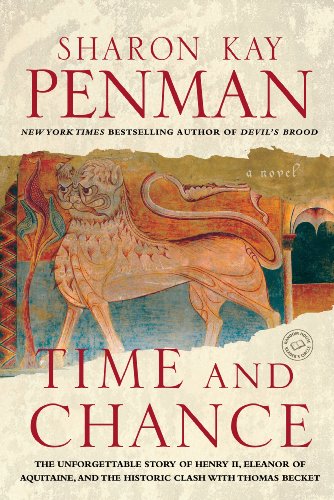
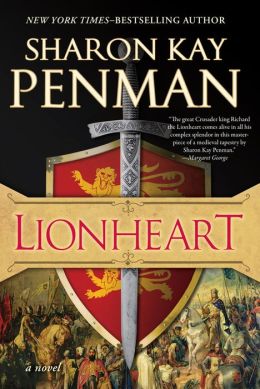
King's Ransom - Sharon Kay Penman - Reading Wednesday

King's Ransom is the sequel to Lionheart, as well as the concluding volume in the chronological series of five historical novels by Sharon Kay Penman, a fictional narrative of the reigns of the first Plantagenets.

1982
By chance Penman began the series with the Last Plantanget, Richard III.

This was followed by what Penman has named "The Welsh Series"  -- Here Be Dragons, Falls the Shadow and The Reckoning. Fictional characters (as opposed to the historical personages such as Henry III,  Llewelyn the Great, Llywelyn Fawr Simon de Montfort) from the Welsh trilogy, and their descendants appear in the Plantagent series. As time rolls on, these figures become an ever looser net of connections among all the novels, until in King's Ransom, the fictional Welsh characters are more name checks than characters of scope within the historical events described.


1995

2002

2008


2011

2014 USA; 2013 UK
This series of meticulously researched novels has been the author's principal writing occupation for twenty years. Penman says there will be no more Plantagenet books.  Perhaps, even as fair as Penman's always been to the youngest of Henry II and Eleanor of Aquitaine's sons, as much as she has worked to understand John, she could not bear to give the disloyal provocateur of the Magna Carta -- who then, like Pharaoh, hardened his heart and attempted to go back on that contract -- his own book?

As the author herself put it, Lionheart, though entirely historically based, was a novel of the legendary Richard II, a fitting figure of courtly romances, heroic ballads and joi d'vivre.  King's Ransom is a novel that focuses on Richard the man, one who may have suffered from post traumatic distress syndrome.

The greater part of King's Ransom is directly focused upon Richard’s adventures and disasters in Europe, after leaving the Middle East. There is a long series of shipwrecks (three!) and other misadventures in his attempts to get back his own French lands after being denied safe passage from what is now Marseilles and the lands of Provence. This forces him into territories ruled by the cold and perhaps mad Holy Roman Emperor, Henry VI.  The King escapes capture by hair-breadths several times, until finally he is captured.  Though readers know how this part of the story turns out -- though it isn't at all the story of romantic ballad and novels like Ivanhoe -- the tale is as filled with suspense and tension as an adventure novel read for the first time.

How he escapes being turned over by Holy Roman Emperor, Henry VI, to his implacable enemy, Philip II of France, for prolonged torture, humiliation and inevitable death, is nail biting.  This is because Penman's deep research tells a very different story from the legend of faithful wondering minstrel.  The reader really doesn't know what will happen.  As it happens, very early, the reviled by high born English churchmen, the Bishop Ely, discovers Richard's whereabouts quickly and informs the intrepid Queen Eleanor.  Nevertheless, it takes nearly three years to get Richard back to Normandy, due to various twists, turns and factional interests that range from the Vatican, to the courts of Philip II, Henry VI and Richard's ever treasonous brother, John. In contrast to those interests, Penman does a splendid job showing just how much it was in the interest of so many -- also beginning with the Vatican -- to get Richard released.  What isn't fictional though, was the enormity of the ransom that needed to be raised -- and the consequences of such an outrageous sum for the empire Richard had inherited from Henry II.

What perhaps is fictional, but it is plausible, but cannot be proven one way or another, is Penman's sense that King Richard I's catastrophic fall from the pinnacle of the medieval world into which he was born, to being a prisoner stripped naked of every royal prerogative, had a permanent effect not only on his physical health but his core identity.

This long arc of Richard's ordeals that begin even before he attempted to sail back to Europe, makes this final volume a more intimate presentation of a medieval monarch than in any of the previous Plantagenet novels. As well,  the cast of characters around the royal protagonist are compelling, particularly, as per usual, Queen Eleanor, who even after her Lionheart dies, still has major work to do, and Richard's sister, the former queen of Sicily, Joan -- who experiences a romance worthy of one of the courtly ones composed back in the courts of her mother as well, in the court of her future husband, the Count of Toulouse.

Though Penman has long made convincing argument out of historical records that Richard was not gay, she still has not managed to solve the question of Richard's marriage to the unfortunate Berengaria of Navarre.  She investigates that the Lionheart's seeming disinterest in his Little Dove (his pet name for his Queen), which made the disaster of no heir of his own body is connected somehow to his experience of being imprisoned.  But again, there is no way to know this certainly.

With the end of Lionheart and Eleanor both, it appears Penman has come to the end of the Plantagents in whom she is so passionately interested that she spent years researching each volume in this series.

The author has left her readers with perhaps the most complete, comprehensible portrait of one of the most fascinating people to have lived, whose life adventures, like those of her son, inspired one courtly romance after another.  There never was a queen again, quite like Eleanor of Aquitaine.

Sunday, April 20, 2014

Muscle Shoals

Unlike Sun and Stax, and even Blue Note for Jazz, at Muscle Shoals, whether the original Fame Studio or the Jerry Wexler - Atlantic Records steal-way of the Swampers from FAME for Muscle Shoals Sound Studios (memo: never get in bed with Jerry Wexler; guess Rick Hall hadn't paid attention to what happened with Stax) -- there were no women involved at FAME or Muscles Shoals.  It was a boys club all the way around.

No wonder that mess happened with Aretha -- those guys didn't know how to treat women.

No wonder the Stones recorded there.

Or that it was the birthplace of we-wave-stars-and-bars 
 Country Rock (the Allmans).

Saturday, April 19, 2014

Vikings Season 2 - HBO History Channel - Ep 207 Blood Eagle & Ep 208 Boneless

As much has been going on in the saga world of legendary Norse warrior Ragnar Lothbrok, his family, relatives, friends, allies and enemies as has been going on over here in real world. In Nuestra Casa, thank goodness, it's been art, scholarship, music and friends


But in Kattegatt, it was cutting out an enemy's lungs, the "Blood Eagle" in the title of last week's episode, while Jarl Borg still lived. If Borg wanted to get to Valhalla, he could not make a sound while this lengthy, excruciating death was in process. One has the sense hope drugs were involved to make his heroic sacrifice possible, for it was in every sense a ritual death, dedicated to Odin, even though it was carried out upon the man who betrayed Ragnar and tried to kill him,  his family, and stole all his lands. When one of Borg's hands slips from the beam simulating an outstretched wing, Ragnar carefully replaces it, to make the sacrifice perfect.  

One sensed that mass of bread or whatever it was brought to Jarl Borg in his prison by Ragnar's son, Bjorn, was not really bread, and the passionate haste with which Borg snatched it was more from relief than because he was famished. We've seen drugs involved in two ritual deaths already, the handmaid who volunteers to go with Eorl Haraldson on his funeral ship was both drunk and drugged, and the sacrifices at Uppsala were given a potion.

King Horik revealed himself the rat we know he is.  Ragnar is skinning and gutting a rat -- evidently just for something to occupy his restless hands -- when King Horik arrives in his Hall.  Horik coerces Siggy, whose choices of powerful men with whom to ally herself have a way of backfiring, to have sex with his son -- while he watches.  He visits Jarl Borg in his cell, bringing him the skull of his dead wife and the mendacious assurance that Ragnar will rescind his Blood Eagle. When Hork enters Borg has been holding a sort-of pet rat.  In both these sequences we know who the rat in the scene really is. 


In Wessex, the rescued Athelstan is King Ecbert's new,favored librarian-scribe-confident and advisor in all things nordic. Athelstan suffers from hallucinations, most of them most unpleasant. Rescued by Ecbert from the cross on which he was hung, while arrows were shot into him, Athelstan could be having post traumatic episodes -- the crucifixion might have resurfaced memories of the terrible scenes of the sacking of Lindisfarne where Ragnar captured him. Then, one does wonder if the hallucinations are Upssala drug-induced triggers, for back in season 1 when Ragnar was going to sacrifice Athelstan there, Floki gave him something psychotropic (on which it seems everyone there was tripping).

So -- two tortures last week.


And there are two weddings!

One in Wessex between King Ecbert's son, Athelwulf -- who seems a good bloke --  and King Aelle's daughter, Judith -- who seems a nice enough girl --  and the other in Kattegatt -- Floki marries Helga, pregnant with his child.  Floki's also pregnant with a non-previously perceived antagonism toward Ragnar.  Like the universal trickster's dark side, as we see with Elegba, Loki or Iago, Floki's dark or twisted side is becoming dominant (and woo, has he imbibed in psyhotropic drugs over the years!).

In any case, one wedding looks like loads of fun and we know which of the two weddings does not look like any fun at all -- though the two principals are old enough, and seem to like each other well enough, which is much better than nothing.  But the one that was not fun was for political and military alliance: not only to fight off viking incursion, but to carve up Mercia, a larger, neighboring kingdom.  Certainly this alliance shall fare no better than the alliance among Ragnar, Borg and Horik has? -- the ways of ambitious and powerful men being what they are, of whatever religion or land, bent as they are on betrayal and back-stabbing.


With the loss of Borg's lungs last week, so were Borg's ships and men. This week Ragnar gains ships and fighting men because Lagertha has become Eorl in the place of her sadistic stupid insane husband.  She brings Ragnar what he needs, including herself among the counted warriors for the invasion of Wessex. I personally believe she's doing this for the sake of her son Bjorn, not Ragnar, but Ragnar's manly self-regard doesn't consider this, seemingly. He's surely believes she still loves HIM even though he threw her over for a royal baby-production machine.  Anyway, he thinks he should be able to have them both as his wives, and what Ragnar wants is how it should be in the devious mind of Ragnar. 

This week's episode, "Boneless", shows Rat's back-stabbing tactics.  It's one way to become king and stay king -- connive to divide your rival from his support network. King Horik scope for this is far greater than poor Jarl Borg's ever was -- all he managed to do was suborn Ragnar's brother Rollo, and that, only for a time. Horik's playing Siggy, Floki -- and even it, seems, Lagertha.Rollo, having learned his lessons (as well as having an historical destiny of his own in the offing) isn't playing the game though.  Besides he knows that Horik has sexed Siggy. Rollo may have forgiven Siggy (they aren't married), but he's unlikely to forget it happened -- certainly no so far as to betray his brother Ragnar again.


Shortly before the gathered invasion fleet sails out of the Kattegatt fjord, Aslaug has another baby, another boy. This one has legs that are withered and misshapen, probably due to the very difficult birth. In the end Ragnar cannot kill / expose the boy anymore than Aslaug would, even though that's the regulation for imperfect babies. Ivar the Boneless.  He too has a destiny.


A previously unknown character invades Ecbert's court, shortly before the viking fleet invades Wessex. This is the Princess  Kwenthrith of Mercia, who, has not only killed her own brother in a civil war, but is Princess of the kingdom King Ecbert and King Aelle have agreed to divide up among them. The watchers are immediately on the team of Ecbert and Aelle to do this because for some reason the writers wants us to be. Not only have they made Kwenthrith a vegetarian, she's witchy, creepy and sexually insatiable. She talk talk talks of her appetites and experiences in public -- raped by her brother when she was twelve! A BAD WOMAN, unfit to rule a kingdom. As unlike Lagertha as you can get, Only one woman at a time, if any at all, can be allowed to be strong and wise and worthy of running things. I'm not believing in her character as presented to us.  Hate this character, in a negative, not good, way. Such frackin' cliche, wildly implausible in her milieu, at least to someone like me for whom this era is not an historical specialty.

Athelstan -- still having hallucinations -- even one about the horrible Kwenthrith -- mattered to everybody in this episode.  Ragnar nearly wept with relief learning certainly that Athelstan is still alive.  This is sort of curious since Ragnar was planning to sacrifice him at Uppsala, until told Athelstan didn't believe properly so couldn't be a proper sacrifice.


Bjorn didn't do much, beyong fight training, continuing to be in lust love with the slave, Porunn and worrying about how he'll handle himself in a battle. There was another thing though about Bjorn -- Lagertha sees him with Porunn.  Fearsome Mother asks, "Who are you?" meaning Porunn.  Bjorn answers, that Porunn is a serving woman, a slave, and "I'm in love with her." He takes Porunn's hands and walks off.  There's the teensiest hint of a smile on Lagertha's mouth.  Why? if there is a smile, is she smiling?  That Ragnar's first born, warrior NOW son, is confident enough in himself to tell his mother that he's in love with a low-born, nay -- a slave and not be embarrased?  When his father chose to throw off his middling born shield maiden wife in favor of a woman born royal, and who gives him son after son (I still blame Siggy -- or the sweating plague -- for that). But I got the sense that Lagertha approves .... (Can be wrong!)

This week's episode was much a set-up episode for this season's last two, in which surely there will be the battles that so many watch for (I'm not one of those -- I've seen how shield walls work now, and I appreciate knowing more now than before). Horik made sure there would be battles. The rat's son reveals himeself to be a creepy toad in his own right, not just as an obedient son doing as his father tells him. 

With all those sons Ragnar Lothbrok has brought into the world, does the world need him any longer?  He's sown his seed adequately. How will all those boys manage with each other as they grow up and need lands, ships and compete for warriors and girls?  

Not that I want to see Ragnar go -- he's a terrific character.  But lately we haven't much seen him being himself -- more as others around him react to the fact of him. All this could go so many ways.  We are content knowing there is a season three already given the go light, so there will be more. 

--------------------

* It's possible that Ragnar is cognizant of what Horik's doing (that rat he skinned and disemboweled last week!).  Ragnar being a cunning sort, may have made a strategy with his family to play along  -- meaning Rollo, Lagertha and Bjorn. And then, gut. Ragnar's got his own men, his ex-wife's men, his son and his brother at his back.  Horik's only got his own creepy son, as well as his own men, of course.

I kind of think Floki's antipathy is real though -- as identified as he seems to be with the Norse trickster god, Loki.

Tuesday, April 15, 2014

Robert Ashley, Whitney Bianniel Performances

Two articles about the performances (in one of which el V is lead, Perfect Lives, in Spanish, Las Vidas Perfectas) published today, in the Wall Street Journal and the New York Times.

Three of Robert Ashley's works are part of this Whitney Biennial.

Though it is mischance, not design or forethought, these are the first posthumous performances of the composer's work. When an artist dies his work is looked at and assessed differently, so these performances -- and their inclusion the Whitney Biennial -- are even more notable for the arc of Bob Ashley's career -- beyond the great desire of the guiding force of  Alex Waterman of these runs -- to, among other objectives, honor the artist that Alex so reveres.
April 8, 2014 11:29 p.m. ET
Extending a Composer's Opera Legacy
Alex Waterman Brings Robert Ashley's Operas to the Whitney BiennialBy Corinne Ramey
and
APRIL 14, 2014
Critic’s Notebook
By STEVE SMITH
Still Sensing the Presence of a Departed ComposerRobert Ashley’s Work Lives On at the Whitney Biennial


The sold-out performances begin Thursday

Sunday, April 13, 2014

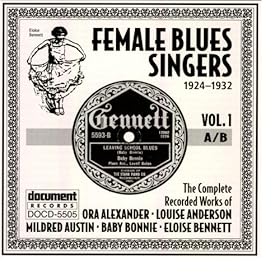
The Blues: Recovering Lost History

We've lost so much in that transition between music's prehistory and early recording. Here's the story of getting back just a teeny bit of it.

This is another New York Times interesting article about earlier American popular music, but this one's in the NY Times Magazine: "The Ballad of Geeshie and Elvie" --  On the trail of the phantom women who changed American music and then vanished without a trace, by John Jeremiah Sullivan.

The article includes listening links that you do not leave the page to hear, video and photographs.  It's one of the Times Magazine's efforts at creating authentic interactive journalism.  Beyond the content text, this is one hell of a production.

This is one of the early paragraphs:
Outside any bullyingly hyperbolical attempts to describe the technical beauty of the songs themselves, there’s another facet to them, one that deepens their fascination, namely a certain time-capsule dimension. The year 1930 seems long ago enough now, perhaps, but older songs and singers can be heard to blow through this music, strains in the American songbook that we know were there, from before the Civil War, but can’t hear very well or at all. There’s a song, Geeshie’s “Last Kind Words,” a kind of pre-blues or not-yet-blues, a doomy, minor-key lament that calls up droning banjo songs from long before the cheap-guitar era, with a strange thumping rhythm on the bass string.
Via the embedded music that can be turned on or off at the reader's convenience, what Sullivan's talking about becomes clear.

Reading this essay is rather like sitting with Elijah Wald,  sharing the research information of our latest projects with wild enthusiasm -- which has been our pleasure to do again this weekend as he's visiting. BTW, EW's having a terrific spring -- The Dozens: A History of Rap's Mamma, his latest book, has sold out already!

As Dylan shows up in Sullivan's piece so he does in Elijah's work-in-progress, which is about the folk music scene of the 1950's and early 60's.

Here's another intriguing paragraph, about legendary, but not so well known Blues collector, Mack McCormick, about whom EW and I talked yesterday, among other collectors who aren't able to write books of their own out of their laboriously created archives (there are several we know in the latin music world, particularly those who have lived their own lives in Puerto Rican music in New York; they are aging, in poor health -- and poor; so much of what they know will be lost -- yet they don't want to let go of what they know, at least to very many people):
He had said he didn’t want to talk about Robert Johnson, for personal reasons and on principle. But his talk spiraled inexorably toward Johnson anyway. The singer loomed over his memory as he had over his career. What he told me took me aback. McCormick said that what he realized, in the quarter century since Guralnick’s book came out, was that most of what we think we know about Robert Johnson — which is to say, most of what McCormick thought he knew — was highly unstable. We’re not even sure, McCormick said, that the man in the pictures we have, the smiling man with long fingers, holding the guitar, is Robert Johnson. Or that he is, as McCormick put it, “the guy who made the records.” He is a Robert Johnson. But according to McCormick, the more he has lived with the evidence, the more he doubts. Of the people he interviewed so long ago, more than one of those who had met Johnson and been present at one of his two sessions in Texas told McCormick, when they were shown the famous photograph, “That’s not the guy.” It didn’t look like him, they said. Not everyone said that, but a few.
According to EW, who, obviously, is well versed in many of the matters of the blues, "It's not as though blues scholars haven't known for ages that much is mythology and not historically factual. This isn't new news (as he shows in his Escaping the Delta), it's that didn't matter much to them."

It's sort of like the Story of the Egyptian Captivity and Exodus -- which historically never happened. We choose the stories we want rather than historical fact, because the stories we make up, we make up to nurture, to sustain ourselves. Those stories are more essential to our continuing to live this life, out of which none of us gets alive.