LINES OF THE DAY

". . . But the past does not exist independently from the present. Indeed, the past is only past because there is a present, just as I can point to something over there only because I am here. But nothing is inherently over there or here. In that sense, the past has no content. The past -- or more accurately, pastness -- is a position. Thus, in no way can we identify the past as past." p. 15

". . . But we may want to keep in mind that deeds and words are not as distinguishable as often we presume. History does not belong only to its narrators, professional or amateur. While some of us debate what history is or was, others take it into their own hands." p. 153

Silencing the Past: Power and the Production of History (1995) by Michel-Rolph Trouillot

Wednesday, August 14, 2013

Meet the Clintons: Card-Carrying Members of the Plutocratic Global Corporate Oligarchy

The Clinton Foundation has been renamed as the Bill, Hilary and Chelsea Clinton Foundation, in preparation for being the organization center of Hilary Clinton's run (again!) to be POTUS in 2016.
For all of its successes, the Clinton Foundation had become a sprawling concern, supervised by a rotating board of old Clinton hands, vulnerable to distraction and threatened by conflicts of interest. It ran multimillion-dollar deficits for several years, despite vast amounts of money flowing in. ....
... efforts to insulate the foundation from potential conflicts have highlighted just how difficult it can be to disentangle the Clintons’ charity work from Mr. Clinton’s moneymaking ventures and Mrs. Clinton’s political future, according to interviews with more than two dozen former and current foundation employees, donors and advisers to the family. Nearly all of them declined to speak for attribution, citing their unwillingness to alienate the Clinton family. ....
Today, big-name companies vie to buy sponsorships at prices of $250,000 and up, money that has helped subsidize the foundation’s annual operating costs. Last year, the foundation and two subsidiaries had revenues of more than $214 million. ....
Yet the foundation’s expansion has also been accompanied by financial problems. In 2007 and 2008, the foundation also found itself competing against Mrs. Clinton’s presidential campaign for donors amid a recession. Millions of dollars in contributions intended to seed an endowment were diverted to other programs, creating tension between Mr. Magaziner and Mr. Band. The foundation piled up a $40 million deficit during those two years, according to tax returns. Last year, it ran more than $8 million in the red.
Amid those shortfalls, the foundation has sometimes catered to donors and celebrities who gave money in ways that raised eyebrows in the low-key nonprofit world. In 2009, during a Clinton Global Initiative gathering at the University of Texas at Austin, the foundation purchased a first-class ticket for the actress Natalie Portman, a special guest, who brought her beloved Yorkie, according to two former foundation employees. ....
Far more here.  The link is to the single page view.


Having seen and heard first hand what the Clinton Global Initiative -- partnered with many corporate oligarchs such as Coca Cola to has done to Haiti -- all of which keep the their wages the established wage floor as the bench for labor not only throughout the hemisphere but the globally --  the planet cannot survive such aid and assistance.

The Atlantic also weighs in on the Clintons' Foundation here.

Monday, August 12, 2013

Why Europe Would Not Ally With the CSA: Repudiation of Bond Investment Debt

What is impossible to understand is why the five states that flat out repudiated that debt to European investors, the heart of secession and the CS, seemed to have no memory of doing this.  So, until the very bitter end, they still expected that Europe would come in on their side against the Union.  Now European nations were not, and did not, recognize the CSA as a nation for many reasons, but this debt repudiation, which directly did great damage to many banks and families in England and Europe, had not been forgotten. This is what they could expect from a want to be nation like the secessionist states. Yet,  DeBow even, with all his spewing of numbers and facts and stats never ever mentioned this huge Southern scandal of the 1840's, to which Mississippi was central.


There are many articles and books on the Mississippi Repudiation of the 1840's, but for some reason not many Civil War historians bring it up.

The primary reason Mississippi refused to repay her debt was that it would mean a tax; at the time Mississippi was the wealthiest state, but most of the white population were slave owning planters -- an enormous part of the population was made up of slaves, who did not own anything.  Mississippi was not going to tax her own.  Let the feds -- i.e. other tax payers -- pay for her debt or the hell with it.

An entertaining account is here.
In 1840, the state of Mississippi defaulted on interest payments on $2 million of Planters Bank bonds and $5 million of Mississippi Union Bank bonds. About the same time, seven other states and one territory (later granted statehood) defaulted on their debts, as did the Republic of Texas (later annexed as a state).
Most states later reconciled with their creditors; for example, they resumed interest payments and funded interest arrears. Not Mississippi.
Mississippi proceeded to repudiate both issues of bonds, and, further, to undermine the private debts owed to its state-chartered banks.
Back then, nations that defaulted on their international debts put themselves at the risk of invasion. In the sovereign debt-repayment literature, such invasions, and threats to invade, are called gunboat diplomacy.
In an 1843 debate between a probond Mississippi Democrat and an antibond Democrat, the antibond Democrat spoke of British cruisers off the state's shore. At this point, a member of the audience spoke:
Sir, in that event I join my countryman who opposes the payment of the bonds. My sword … sir, the last drop of my blood, shall be spent in resisting the demand. My state, sir, may she be always right, but, right or wrong, the state, sacred, intangible and profane, forever.
In the United States, states are sovereign. They are the final authority when it comes to their debts. So, states seemed immune to invasion for nonpayment, since the US Constitution requires the federal government to defend the states. But, again, in 1843, a Whig and former president, John Quincy Adams, offered a resolution in the US Congress that would deny Mississippi the protection of the federal government if the state was invaded by its creditors.
In the event of such a war, the State involving herself therein will cease thereby to be a State of this Union, and will have no right to aid in her defense from the United States, or any one of them.
A hundred years later some of the European creditors were attempting to collect what was owned them.

Sunday, August 11, 2013

I Lived There; And There; And There, Other Places and Here Too

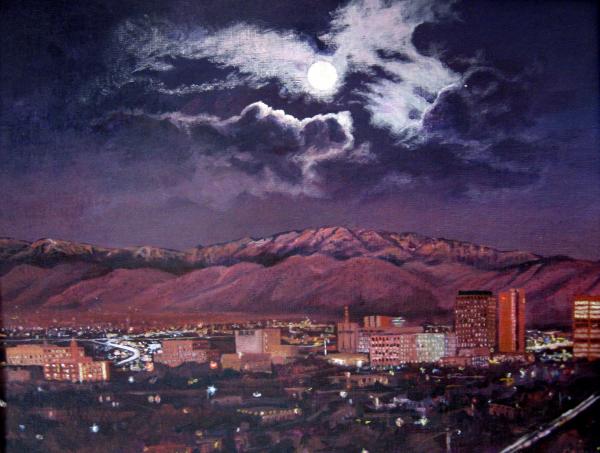
I moved to Albuquerque in the first year of my first adult decade, and stayed until that initial adulthood turned into what should have been the opening of my maturity (it wasn't though -- alas, I matured late ....)

In connection with the final season of Breaking Bad* (a series for which the numbers of non-interested viewers barely break into double digits, and among which I am one), The New Yorker has run an accolade to the city and the state here.

Yes, I miss New Mexico sometimes, because I'm been among the U.S. population attracted to the place for the reasons so many others are, as quoted in the New Yorker article:

Early on, New Mexico’s allure was its exoticism, a patch of America that didn’t feel American.

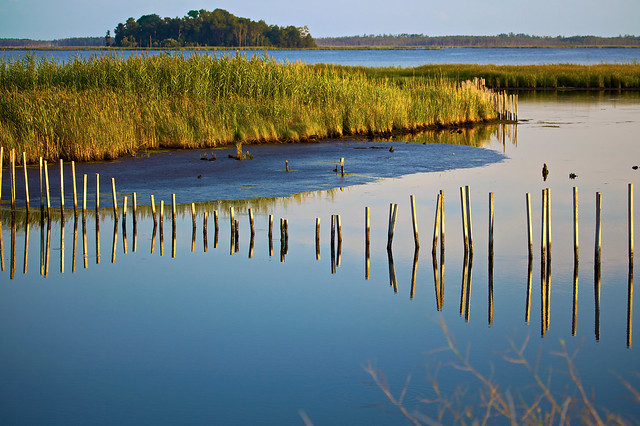
Which is why, like I did with Albuquerque, I love -- and fear -- New Orleans, why I feel so at home in the Caribbean, particularly the Spanish speaking Caribbean (for which latter I can particularly thank the Albuquerque decade, in which Spanish became a natural language, not a 'foreign' language), and love Europe and South America.  It's also why I love whole parts of the South, starting with the Chesapeake's English Eastern Shore.


-------------------------

*  The article confirms that the tax incentives New Mexico provides is likely the reason the Longmire series is shot there instead of Wyoming, where it supposedly is located.

Friday, August 9, 2013

Orphan Black

For many viewers the initial reaction we have to science fiction thriller Orphan Black's first episode, is confusion.  Where the eff are we?  Sarah Manning, who we will learn, quickly, is the central, organizing clone of many, is on a train platform that looks quite like England, but we hear out of the station speakers, something about the next train to New York. This is confusion is most affecting in the early episodes, as we constantly ask ourselves: "Are we in England, Canada or the U.S.?"  While searching for geographic clues, we get over the confusion, or get beyond it, deciding this must be Canada.

So it is, Canada. As this is a BBC America series, Orphan Black appropriately enough is shot and located in Toronto, though the show runners are on record that they didn't want to broadcast any specific locale, rather be so non-anywhere to be anywhere.  I, personally, like watching series set in Canadian cities rather than the default U.S. cities (not that I won't watch a show because it is in the U.S. -- or supposed to be). But two other Canadian shows, Continuum and Lost Girl, are favorites, and now Orphan Black has joined them on the Favorites List. So this is the first thing about this series that reels me in.

The second element that captures me for the entire series is Tatiana Maslany, who plays Sarah Manning:

Sarah Manning, Punk & Grifter
The third:

Alison Hendrix, Soccer Mom
The fourth:

Cosima Niehaus, Ph.d. Candidate in Experimental Evolutionary Developmental Biology

And there are more: more clones -- all played by Tatiana Maslany, and more characters, such as Sarah's foster brother, artist and hustler, Felix 'Fe' Dawkins:


Even more -- the brilliant actress, Maria Doyle Kennedy -- as Mrs. S., foster mother to Sarah and Fe, caretaker of Sarah's daughter:


Then there are the writers. It's jaw dropping to watch the Alison-centered episodes, in which there is very much at stake, yet the eps are actually played as traditional comedy, dating back at least to Roman theater -- characters moving through one door after another, all just missing each other by a moment, mistaken identities, deliberate impersonation, while we in the midst of life-and-death-and-perpetual corporate ownership of one's body, the search for self and autonomy and a life of one's own.  All the time we're on the edge of our seats.

The opening credit sequences are creatively evocative of what Orphan Black is, but some of us at least (me!) need to have watched some episodes in to realize how very well they emerge out of the show itself.  The kaleidoscope design is clean, sophisticated, yet lush and gorgeous as are the molecular divisions that are the foundation of life and creation.


There are the issues of nurture vs. nature, as Sarah herself keeps bringing up in connection with assassin Helena, her twin.  Alison too, contrasting her mother with Sarah's foster mother.

Where the series tends to fall down to a degree, is with the obligatory sex-romance relationships, especially Sarah's -- as if the writers and even Sarah herself, aren't really interested -- as Sarah uses sex to distract one lover - minder from getting too close. The clones, like the writers, seem vastly interested in the young women's other kinds of relationships, including discovery of their own identities, and what it means to be part of a clone cluster.  Of which, then, I approve because I, as a viewer, agree.  It's as if they are on a trajectory to not make the errors of two other recent identity series which failed miserably: Dollhouse and Ringer.

Some of us may be a bit disappointed that the central fact of identity here, in this women centered series, is motherhood -- where do I come from?  I'm not among them, because there are still so many people who identify women, and value them only with their reproduction capacity. As in the days of slavery, for instance, no matter how skilled a woman was, her real value was how many children she could produce, i.e how fast and how much she could increase by her 'natural increase' her owner's wealth.  Here we are confronting the potential, maybe probability of a new neo-slavery for women and their natural or unnatural increase, their genetic material, owned in perpetuity by the corporation that manufactured their existence for its own purposes, financial and beyond.  These are basic issues of contemporary bio-ethics.

Alas we're in culture that laughs at the very idea of ethics. This bodes very badly for women, children, animals, plants and the planet.

Tuesday, August 6, 2013

Testosterone Poison: Hell on Wheels + Philip Kerr's Bernie Gunther series + Hatari!

Hell On Wheels, season 2, concludes with with hoary cliche:  Girl Kisses Guy; Girl Dies.


So the blonde widow and our anti-hero Protagonist on his way to Redemption, after hot-eyeing each other for most of two seasons, get it on.  More, they are in love! She's killed by a religious nutwinger -- a Lutheran Swede, no less, who also hoped to be Angel of Death for the Souix as a White Indian.  She was killed because she was evil slut -- or really, to punish Our Protagonist whose wife and children were killed in the Waw by Union soldiers -- or, more likely, just because he wanted to, because he's a crazy Swede on the prairie.
Actually, the love interest was fridged* to keep Protagonist free of those pesky inconvenient to plot attachments (particularly if attachment be female, because, as you know bhob, We Have No Idea What To Do With A Female except to make her be evile, holy, pregnant and / or a whore) and to provide yet another round of Hunt For Evile Bastards Who Killed My Wife - Mistress - Love of My Life, i.e. story = quest-movement.  How non-creative and lazy writing is that?  Plus Hell on Wheels bites continually from Deadwood in every way, including the music -- not original at all.

Starting with the confederate anti-hero protagonist, with whom we're to identify.
This whole set-up is so manufactured as opposed to growing out real history. And even worse, the characters are always leaving and then they're back!  Again!  And again!  And yet again!  How much failure of imagination can you have in a room of writers?

Though I don't find a lot of good in Hell on Wheels, it does have magnificent landscape shots, some of which are as poetical as anything Terrence Malick did in Days of Heaven. I always get a jolt of delight from scene in which the horses are left to themselves in the lush (Canadian) prairie grass,  while their riders posture and bluster at each other, and plunge ear deep into the delicious stuff, biting and chewing, tails swishing, the very picture of contented equines. And -- it is a western. I do like a good western.


Last couple of weeks my workouts have been accomplished to the audio accompaniment of  Philip Kerr's first Bernie Gunther novel, March Violets (1989), set in 1936 Berlin. Under cover of cynicism (which is certainly a plausible characteristic of a Berliner with a brain during those eras) Bernie despises everyone, particularly gay people and women, interrupted by brief hiatuses when his dick runs him, and when it is over he humiliates the gorgeous female too, because she deserves it.

As well, these attitudes come through as the author's deliberate choices,rather than rising organically from the narrative. Instead they rise organically out of the author's sense of superiority as self-identified with his first person protagonist narrator.

A naked demonstration of plot as men waving their dicks in each others' faces for no reason at all, is the Howard Hawks - John Wayne movie, Hatari, big game trappers.  In the course of the opening scenes, they beat down a rhino in their jeep, followed by a new guy entering a room, and all the men within seconds insult each other and start swinging.  And the girl? What else can writers do with a girl in a John Wayne movie, even if she's Elsa Martinelli?


Testosterone poisoning!  Like Hell On Wheels (and so many more such as the relentlessly ugly masculine grey Boss), the Bernie Gunther Berliner private dick series, this movie is suffocating in the Sea of Testosterone -- and the writers have no idea what to do with women if they aren't being f&cked, f&cked up, f&cked over, or killed

---------------------

* Or could it have been the actress, tired of having nothing to do on this series except quiver posture weakly, decided to move on?

Friday, August 2, 2013

Low Winter Sun -- Another Form of Disaster Capitalism Looting Our Cities

What David Simon wrought -- not that he is to be blamed, for he burned with the holy fire of first-hand, personal outrage. With The Wire and Treme  He cared, he cares passionately, he cared, some might say too much. His templates have been taken over by others, who are not interested in the horror of corrupted morality but in all the sensationalism they can squeeze out of it, the cheap thrill of seeing people behave really badly without consequences -- the expected privilege of  ever-growing numbers -- because, why not?
A dark story in a city falling in on itself might present some audience problems, but Mr. Stillerman noted that the show was opening immediately following the final season premiere of “Breaking Bad,” which has thrived on exploring human pathology.
But now our cities destroyed by neglect and design are golden opportunities for looting and pillaging via showrunner career-building opportunism on all fronts, as this New York Times article on the AMC premiere of Low Winter Sun  * tell us, though perhaps not by design. In order that we don't miss the opportunism here, one of the characters is played by David Costabile, who was in the cast of both The Wire and Breaking Bad.  Additionally, a thug is played by Jay Ransone from The Wire's second season, and who also appeared in a season of Treme ( and Simon's Generation Kill too; at least the actors are getting work, even if the residents of the cities where the series are shot aren't. That's something.) This is about men doing bad things to each other. Surely they do bad things to women, children, animals and plants as well, but women and how they hold things together as best they can when the men don't bother will not be the focus. The focus is Men, choking within their claustrophobic manufactured atmosphere of testosterone poison.

The show is closely focused on Agnew and his partner, Joe Geddes (Lennie James), two homicide cops who commit that signature crime on a deeply crooked fellow detective and then spend time trying to unsolve the crime.
To be sure we don't miss this is about the baddest, meanest, ugliest men in a city, the article is titled "Broken Men, Broken Place."  Besides the adored Albuquerque's Breaking Bad, another recent television series example of this relentless miserable, masculine grey  bleakness of corruption which so often is mistaken for depth and gravity, was Chicago's Boss. One feels confident of what to expect without seeing it first. This isn't a comment on whether the series will be good bad or indifferent, just what the series is planned to be. 

There's no mistaking the relationship between what has happened in New Orleans, and continues to happen, with what is going on with Detroit, as this same New Orleans blogger describes here.  The 'best' of New Orleans is Disney World tacky faux -- the rest can go to hell until they get out and leave it all safe and easy for the corporate looters.  Even the schools and hospitals, ever our first targets in dismantling a decent culture and economy that serves the whole community, not merely the oligarchy of plutocrats.

But it's all service economy now: all the rest of us live to serve the rich, and are to be grated for it.  Mayor Billionaire didn't even bother to disguise telling us so.
"You know, the yelling and screaming about the rich - we want rich from around this country to move here. We love the rich people," he said on his WOR-AM radio show.
"People say, 'Oh, well, you know, if the income were redistributed throughout the system more fairly,' " Bloomberg continued.
"I don't know what fair means. You can argue that if you make more money, you deserve more money."
Rich people generate jobs and taxes with the expensive things they buy and the fancy restaurants where they eat, Bloomberg said - but they aren't making much money as the stock market collapses, and raising taxes on them will just drive them away.
The stock market is having record profits, Mayor Mikey, and we all know it. But that's how much contempt you have for us: you lie to our faces and tell us to suck up your lies. You can't even quite control the laughing in our faces as you pronounced that the only jobs the rest of us can ever expect is servicing the wealthy for less than a living wage, while be taxed at a vastly higher rate, while receiving nothing in return in terms of education, health care or food and home.

Recall, how it was in the glorious days of the ancíen régime, when in France all work was in service to the wealthy, such as lace making (which was one of the businesses controlled by the king)?  You ruined your eyes and your general health, while malnourished and ill-housed, making the rivers of lace that festooned the aristocracy, lace you never wore for you could not afford decent food, much less the luxury product you created, and when you couldn't make it any longer, you were out of a job, left to your own devices to die hopefully sooner and quietly, rather than later, making another burden on the overburdened  malnourished country to dispose of a diseased stinking body.

This, folks, is the economy to which we are returning, at ever accelerating pace, as the global plutocratic oligarchy gobbles everything that generates value.

But in the meantime we have the bread-and-circuses thrill of progressive degradation to make up the loss of our future, all while expressing ourselves in baby talk, pretending to be other creatures, anything other than adult human beings confronting our too terrible to admit realities.

-----------------------
* One does rather expect, that with such a stupid, impossible to remember title, Low Dark Sun  -- ooops! Low -- what it is it? look it up again --  Winter -- Winter! Sun will not go on for long.

Thursday, August 1, 2013

N.B. F. -- Slave Trader, Butcher of Fort Pillow, KKK Grand Wizard

Yesterday, the FB Papers yielded a folder of correspondence between FB and a Memphis lawyer, a close, personal, life-long friend of Forrest, since they were five-year-old boys.

FB asked his correspondent many questions about Forrest the slave trader.  It went fine for a few exchanges, though from the beginning the lawyer objected to FB's interest in Forrest's slave trading.  It was unfair and ungentlemanly to bring up what this man had overcome by his own bootstraps (nevermind that his bootstraps was getting rich by selling human beings -- and by all accounts, perhaps due to his horrid temper, cruelty to his possessions).  Morever this man was in every respect an excellent citizen and valued member of his community.  But soon the correspondence closed acrimoniously on the lawyer's side and snarkily on FB's, over the KKK and Fort Pillow. The lawyer, however, did, no matter how reluctantly, confirm that FB was correct in the details of Forrest the slave trader, right down to the description of where, and how and why he lynched African Americans who earned his fiery ire.

Interesting, that PBS's Antique's Road Show doesn't see slave trading as a stain upon the man's character.* It's not even mentioned. However, Antiques Road Show decrees:
The reputation of General Forrest, under whom Ellen's great-grandfather served during the latter half of the war, has come to be defined by two infamous, yet brief, chapters in his life: his controversial assault on the Union-held Fort Pillow in 1864; and his post-war involvement with the first incarnation of the Ku Klux Klan. So closely is Forrest's name associated with the Klan, in fact, that he is sometimes incorrectly referred to as its founder. If not for these two black marks on his reputation, the ribbons and regalia appraised by Christopher Mitchell at around $10,000 would undoubtedly be quite a bit more valuable. 
It was fairly exciting to run into this sequence of letters.  The whole folder is filled with FB's research correspondence with southerners who were there for it all: the trade, the auctions, the owners, the overseers, the emancipated and participants in the Civil War.

Bruin's Slave Jail
The letter that perhaps most spoke to me, wasn't a letter at all, but an interview FB conducted with a now elderly gentleman in New Orleans, who gave an account of his progressive sales, first from his original Virginia plantation owner, sold again in Richmond, the journey by sea around the Gulf to New Orleans, sale to the jail on Esplanade, to a brick yard owner, and from the owner to his brother-in-law, the whippings, the treatment and all of it, until Emancipation.  There was not a single ray of golden glow to be found in this terrible tale, repeated countless times by numberless people.

But then -- that's what Frederick Bancroft was doing: he was putting numbers to the centuries of this economic system, the numbers of human beings, not the number of sacks of cotton their hands could fill in a single hour.

--------

*  Another instance that demonstrates television, like movies, is absolutely unreliable when it comes to historical truth, accuracy or facts.  Or as el V's put it in The Year Before the Flood: "Movies told me lies, music told me the truth."