LINES OF THE DAY

". . . But the past does not exist independently from the present. Indeed, the past is only past because there is a present, just as I can point to something over there only because I am here. But nothing is inherently over there or here. In that sense, the past has no content. The past -- or more accurately, pastness -- is a position. Thus, in no way can we identify the past as past." p. 15

". . . But we may want to keep in mind that deeds and words are not as distinguishable as often we presume. History does not belong only to its narrators, professional or amateur. While some of us debate what history is or was, others take it into their own hands." p. 153

Silencing the Past: Power and the Production of History (1995) by Michel-Rolph Trouillot

Thursday, May 12, 2016

Genre Mashup -- Thriller + Fantasy

How does a writer reconcile satisfactorily two different genres with different narrative demands?


Peter Higgins writes about the challenges bringing together the colliding thriller genre and fantasy genre elements -- from structure to pacing to fantastic vs realistic in his Wolfhound Century trilogy fantasy modeled on Soviet Russian history.

As an example of what Higgins learned:
I soon realised it wasn’t just the diverse story elements that were in constant creative tension, it was the genres themselves. Fantasy and thriller are two distinctly different ways of thinking and imagining. They stretch and tear and illuminate each other, and I was constantly working to keep them in balance. Thriller wants to press on and keep the tension high, fantasy wants to linger and explore; thriller wants to end decisively, fantasy wants to go on expanding forever. . . . 
Free imagination versus rules and control: that’s one way of conceiving the collision between thriller and fantasy. Thriller is about the logic of conventions: plot, believability, recognisable character types, mysteries that have hidden solutions, resolutions waiting to be uncovered. As a writer of thrillers, you have to follow the rules or it just doesn’t work. Fantasy is otherwise. A fantasy story, once it announces itself as such, can do anything it wants. It can say anything and go anywhere. Bring back the dead. Cure any sickness. Animate any inanimate thing and give it a voice. In fantasy, you can take any pleasure you like from anything you can think of. I found that fantasy wants to break thriller apart: it wants to split the carapace, disrupt the predetermined plot machine and crack open an inexhaustible well of narrative possibility. Refreshing and repurposing, fantasy unlocks the strangeness, plenitude and imaginative wealth inside the thriller world.
Beyond this, however, Higgins goes on to explicate why he thinks these two genres together are successful in his work because the religious, political and cultural history of Russia are by heritage used to the fantastic insertion into the daily mundane reality.  In other words he didn't just go, o wouldn't it be cool to have zombies run around in Elizabeth Bennett's village! Which doesn't work for a satisfying reading experience, but instead is so preposterous as to be stupid -- unlike Wolfhound Century --  because that's not how that culture and history behave -- as Austen herself illustrates in Northhanger Abbey.

The three volumes are titled Wolfhound Century (2013), Truth and Fear (2014) and Radiant State (2015).  Published, I believe, by Orbit UK and Orbit U.S.

Wednesday, May 11, 2016

Reading Wednesday -- The Valley Campaign 1864 + History Channel Roots 2016

There's a great deal to absorb about the initiation of the very worst year of the War of Rebellion, 1864 - 1865, in the Shenandoah Valley -- i.e. the Valley Campaign -- which began there, with D.C. raid and actions against the B&O railroad, invasions into Maryland, and Pennsylvania by Jubal Early's corps.

However, el V's just returned from another 8 days in Havana, and we're getting him ready for a foray to North Carolina for a concert next week, so I don't have time today to go into it.  Alas.

Plus I've been doing a lot of reading and watching around Alex Haley and Roots, in preparation for the interview concerning the new televised series that premieres on Memorial Day (when I'll be at the Gullah-Geechee Festival outside Beaufort, South Carolina).

Here's the official History Channel trailer for Roots, 2016:


Monday, May 9, 2016

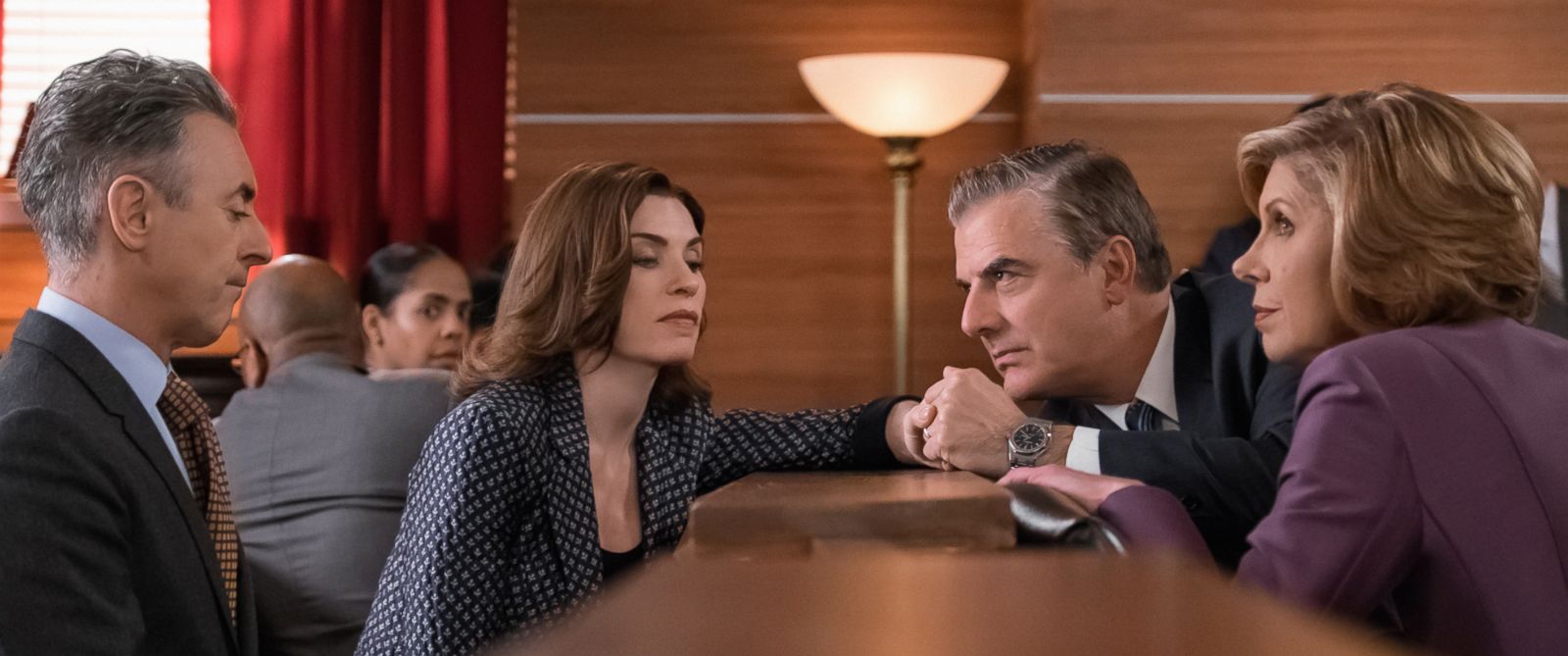
Sad and Satisfied: The Good Wife Final Season Finale Episode - Spoilers

Though perhaps in the minority, "End"  finale of The Good Wife's seven season series, felt just right to me.  It even made me tear up slightly at one point. I am going to miss this series, though it clearly had run its course and it was time, maybe even more than time, for it to wrap.


"End," the season's finale episode's ambiguity, is what many seem to dislike. But then life doesn't run in tidy, structured television arcs and novel narratives.  Many wanted Alicia to end with new love, surrounded by female friends in a successful all female firm.  Most of all viewers seemed to dislike having old love come out of her own past passion and loyalty to give her advice, because he's a he.  She's supposed to do it all on her female empowerment.  But -- her empowerment came directly out of how good a lawyer she's been during all these years.  She got to use and show her capacity and talent and brilliance because her old time love Will, provided her the stage on which to show the scope of her abilities -- they'd been in law school together, as her husband Peter had been.  Will, it turns out, was the heart and soul of that law firm, and when he was murdered, the heart and soul went out of it, confusion and backstabbing took the place of the deep partnership that he had with senior partner Diane.


The almost-this-is-a-dream sense of the last scenes was realistic too, considering how much stress everyone's been under for so long, and in this particular sequence, how sleep deprived. O, did this show on Alicia's bare, colorless face. Only Diane rose above it in the final scene, standing at Peter's press conference in a metal-silver suit that may as well have been a suit of armor. That she bitch slapped Alicia, yah -- and a lot less lethal for them both than a sword or halberd. It's Diane's life that was destroyed in that courtroom case defending Peter from obstruction of justice and corruption.

Diane's life was destroyed by the Florricks standing together for the sake of family and career.  Alicia made the same sort of decision that Diane would have made -- if it had been her husband as client, and Alicia's husband as witness. Nor was this the first time Diane was screwed over by the Florricks (she as supposed to be appointed to the state supreme court, and then wasn't for political convenience) though nothing this emotionally and personally devastating, as making her husband admit to having an affair with another witness in the case. Alicia was fortunate that Diane is so intelligent she didn't use a weapon beyond her hand.

Though, let's be honest here.  Diane had more than once screwed Alicia over when it was to the benefit of her law firm and the senior partners' profit,  or when professionally useful . . . . Nevertheless, the destruction of Diane's marriage by the Florricks for their own sake is merely the canary in the coal mine telling we the audience how many lives along the way have been damaged for the sake of Peter's political ambition.

The worst looking wig ever!

Though, there's this -- never has a bitch slap improved a woman's hair before, leaving Alicia looking much, much better after Diane cracked her cheek. Why o why those hideous wigs for Alicia Florrick all season 7?

The crumbling of all Diane's world was there fo all the world to see in Diane's face when Luca went to cross Kurt. In front of that judge who disliked Diane already.  And he knows and so does everyone else in the courtroom, and soon everybody else too.  While Kurt felt betrayed by her.

Mirroring Alicia's devastation in the first season's episodes, dealing with infidelity's endless revelations: in public.

It's almost as though the real story of "End" is Diane's.  What is she going to do now?  We know Alicia will be fine, option choices already dangling in front of her.  I'd like to see what happens with Diane now.  The actress is certainly more than capable of carrying a show on her own.  Diane Lockhart was my favorite character.

Farewell, Good Wife.  I began watching you in Chestertown, Maryland, back in 2010. The series began on CBS in the fall of 2009, concluded in the spring of 2010. I caught up with the first season via netflix in the fall of 2010 when it began again the fall of 2010, streaming weekly, with breaks, from the network).  As with the ensemble characters of The Good Wife, so much has happened in my life since then.  I'm going to miss you, all of you -- with a few exceptions, hello, Canning!.  But, yah, time to move on.

Thursday, April 28, 2016

Checking In From the Blue Ridge Mountains -- Staunton, VA

Stopped off here to see an old friend* (from Lincoln Ctr.'s sponsorship of Rhys Chattham's hundreds guitars piece, for which El V was one of the diredtors), and visit the Woodrow Wilson Pres. Library.


Wilson is the POTUS who officially instituted federal apartheid for any federal work was born here, though early  his life his Slavery rahrahah Secession minister father moved them to Georgia . . . .

So many places and people, so much history, in so few days.

In the meantime, there's this from Publisher's Publicist:
The American Slave Coast (9781613748206) was referenced and quoted from in an article by Malcolm Harris posted to The New Republic on 4/27/16.

------------------

*  This friend, met while he volunteered and spent some weeks in NYC to rehearse the piece (in el Vs section) also creates the acoustic spectrum tracking hardware and software of planets and stars for the great astronomical telescopes such as Hubble. He love music and particularly guitars.  He also repaired el V's dead vacuum tubes for his classic Fender amp.


Tuesday, April 26, 2016

Columbus plus Slave Coast plus Cuba

Columbus, Georgia is interesting, past and present! I could easily spend lots of time here. It's a good place to live.

This city on the border of Alabama, where the last battle of the Civil War was fought -- after the surrender at Appomattox -- is a wealthy city and always has been.

The Chattahoochie River
 The Chattahoochee River runs all the way down to the Gulf up from high up in the Georgia Blue Ridge Mountains. The river's fall line is here at Columbus.  Thus, with this outlet to the Gulf, the spot was a natural place to establish a market city for the receiving of goods, including slaves for sale, and for sending cotton to market.  The river made dams easy to construct for cotton and textile mills and other industry powered by steam.  As a fair economic anomaly in the antebellum states with manufacture and business, African Americans, slave and many free, were skilled artisans who worked in various industries, not in the cotton fields.  At the outset of the War of Southern Conquest Columbus was one of the few industrial centers in the confederacy. It's mills and factories provided uniforms for the army (never anywhere close to enough), boilers and other iron work for the ships, including the iron clads, and the Slidell ships that preyed on Union mercantile shipping.

Typical Chattahoochie River activity these days.
After the war the city's economy recovered very quickly, and now there's container ship loads of wealth washing about Columbus from Coca Cola (the family who sold it to the Atlanta owners still retain very lucrative interest in the business), Aflac auto insurance (this city is all about servicing automobiles) and the processing of credit card transactions.  However, many of these private very wealthy individuals eagerly and generously give money to the university and many other productive institutions and projects for Columbus -- which makes this a pleasant place to live.

The River Walk below the arts campus of Georgia State University in Columbus. The Dillingham Bridge (1910 - 19120 connects Columbus, Georgia and Phenix City, Alabama.  The engineer of the Bridge was African American.  The bridge's location is part of the site of the last Civil War battle.
Even the weather at the moment is more than pleasant: currently it is hot in the day and sunny, balmy at / after sunset. (In NYC it's miserable, chilly and raining. Gonna be like that there through the weekend. However, in another week or so, it's going to be brutally hot here, so there's that.)

The Slave Coast event today was held one campus -- there are at least two campuses, within walking distance of each other. Working here has to be great, and being a student as well. Due to the wealthy people mentioned above, and hte very many scholarships and programs they fund, there is a large diversity of students and programs.  They are very strong in both the technologies and the arts, both of which are very well-funded.

We were slotted into the main humanities Schwob Library. The presentation was was well attended, by people from the community, faculty and their students, heads of various areas of the library and the history dept. and some friends drove over from Atlanta to hear us.  The event concluded with interesting and smart questions, and a great deal of commentary about the capitalist system, which demanded the shredding historically of the black family, preventing any aggregation generationally of resources, wealth and influence, in contrast with the owners of the black families. The white family networks continued to inter-marry with each other in the southern and northern branches, getting richer, better connected and more powerful in every generation.  This means that whenever an individual family member had difficulties there was a large safety network to hold that person up (which allowed for southern families in these networks to re-establish their positions quickly after the War of Southern Aggression concluded).  Black families did not have this.

We would have participated ourselves more in the discussion if we'd gotten any sleep over the last three nights.

After being taken to lunch we were given a guided tour of the city's history past and present, and the university's history (founded in 1958), past and present.

Less positively, the Georgia governor is about to sign into law the right to open carry on Georgia campuses. Not in fraternities, gyms, housing or anywhere else except -- the libraries and research facilities and classrooms.

The state as a whole didn't want this, but the NRA swooped in with freight loads of money and sponsored 'their' guys in the legislature and got it. 19 states now, where the NRA has done this.

Tonight's going to be an early one thank goodness, as we excused ourselves early from dinner.  We've eaten all too well and too much over the last three days -- southern food and southern company is irresistible, but we had to leave.

We were planning to take a leisurely, winding route back home, but it turns out we have to get back home as soon as possible since Ned's going to Cuba again for 8 days, early on the 3rd, and things have come up over night re TASC, including a request to be interviewed for a new ESPN program featuring -- get this! us!? -- sports -- race and culture, debuting May 17th. The hostess of this new program wants to interview us about Slave Coast issues in connection with the reboot of Alex Haley's Roots, which premieres on the History Channel May 30. She wants to do this interview asap.

We're spending tomorrow night in Athens, as tomorrow we're being hosted for lunch by this fellow: scroll down to "Charles Peters" . . . and having dinner with an anthropologist at the university who has been doing a lot of work with the Georgia ring shout groups.

This means we can't be get home until later, on Friday night. Laundry and other preps for Cuba where Himself's running a conference on Cuban music and it's future and influence in the world at large must be raced through between Sat. - Mon.

Also, I have to watch the whole reboot of Roots by Monday.

Saturday, April 23, 2016

Depictions of Slavery and Slaves on Southern Bank Notes and Other Financial Instruments

Stories are all over the "news" media, featuring this history of depicting slaves and slavery on financial instruments issued by southern banks and insurance companies, and then on the so-called currency of the so-called CSA are everywhere now that it was officially announced that Harriet Tubman will take the place of Jackson on the U.S. $20 bill.

Issued by a JoJaw, bank.
There's a great deal of coverage of this matter in The American Slave Coast:  A History of the Slave Breeding Industry, as well as about how Jackson hated currency, hated banks and therefore, managed an excellent job of destroying both -- as well as the national economy.  Killing the Bank of the United States of America, and replacing it with the "pet banks" that printed notes but had no other backing than land fever inflation set off the longest, deepest economic depression the nation ever saw, up to the Great Depression of the 1930's.

What none of the stories mention, however, which is what The American Slave Coast describes in detail, is that slaves literally were antebellum southern states' money -- which was underlined by the CSA putting slaves on its money -- at least on the front; very quickly the CSA 'treasury' couldn't even print anything on the reverse of the bills.  Since slaves weren't money for any other nation, this had a lot to do with why no European nation would support the idea of the CSA as a nation -- which it wasn't.  It was an army, but it wasn't a nation and performed none of the other duties and obligations toward its people that a nation to be a nation must do.

Tomorrow, early in the AM, we're off to Georgia, to do some Slave Coast events and other things.


Thursday, April 21, 2016

Prince -1958 - 2016

We were just talking of the Minneapolis musician who changed his name so much, whose music I've always liked and el Vaquero never has -- one of the not so many places where our tastes don't coincide.  We were talking of him with Ye Editor who is in town for today and took us to lunch.  Ye Editor also likes Prince's music.


We all went separate directions after lunch, with separate destinations.  I didn't even quite get to our door after my errands when ye phone demanded my attention.  It was Himself, with the news that Prince had died.

So far the cause of death has not been announced.

Supposedly he had been sick with something flu-like for some weeks. This AM he was found unconscious in his home music studio's elevator.  He was only 57.

He was a studio rat, and that's a very unhealthy lifestyle. but -- WTF!