LINES OF THE DAY

". . . But the past does not exist independently from the present. Indeed, the past is only past because there is a present, just as I can point to something over there only because I am here. But nothing is inherently over there or here. In that sense, the past has no content. The past -- or more accurately, pastness -- is a position. Thus, in no way can we identify the past as past." p. 15

". . . But we may want to keep in mind that deeds and words are not as distinguishable as often we presume. History does not belong only to its narrators, professional or amateur. While some of us debate what history is or was, others take it into their own hands." p. 153

Silencing the Past: Power and the Production of History (1995) by Michel-Rolph Trouillot

Sunday, March 5, 2023

Spanish Is A Loving Tongue (A Nod to Great Singer, Joe Ely!)

      . . . .  The word used in Spanish for 'dressage' is 'doma.'

Essentially, it is the Spanish who gave us 'dressage' , which, ya, we all know, but just in case we didn't I thought I'd mention it.  People forget that in the 16th Century, Austria and the Habsburgs were inherited by the Spanish throne, which is why it is called the Spanish Riding School in Vienna. Think about what this all means in terms of the history of the breeding of the horses themselves, who came from Spain in the 16th C. 

Doma vaquera riders usually choose breeds such as the traditional PRE (Pure Spanish breed) or Lusitano (pictured above), Thoroughbred-crosses or Arabians. These breeds are usually brave and calm, yet spirited and able to maneuver with lightning quickness. (Credit: olgaIT)

Here's an interesting piece from Dressage Today, concerning contemporary developments out of the Spanish-Spanish dressage techniques into the New World generally, and particularly the US West, called doma vaquera.  

In Spain, doma vaquera is also connected with the art of bullfighting. Both the work in the bullfighting arena and with cattle requires speed, quickness, agility and a high degree of collection from the horse. Unlike in dressage riding, where riders ride with one (snaffle bridle) or two reins (double bridle) in each hand, doma vaquera requires the rider to hold the reins in one hand, typically the left. The right hand must be free for work, such as holding the garrocha, a long pole designed to distract the bull. The discipline of bullfighting from a horse is called rejoneo. The horse for rejoneo is a doma vaquera horse that performs movements such as piaffe, passage, terre-a-terre, jambette, pirouette on three legs, etc. 

Thursday, March 2, 2023

Not Wednesday, But It Is A New Month, So Here Are A Few Books

     . . . .  Essex Dogs (2023)  by Dan Jenkins is the first in a projected trilogy set in one of my perennial eras of fascination, the 14th century. Jenkins has written many popular histories of the middle ages, many of which I've read, without being impressed; he's also written-narrated on camera quite a few history progammes for Brit tv.  This is his first foray into fiction. 


This first novel follows one very small troop of hired fighters -- the Essex Dogs of the title -- from the 1346 Normandy Beach landing, through this particular French campaign, to its conclusion with the Battle of Crécy.  So, the part of story of King Edward III I’m interested in primarily, the role the Black Death played in the War starting in 1348 and thereafter, particularly how the English monarchy handled the effects of the Great Pestilence, is not here. 

What we've got is the sort of debunking of the chivalry and prowess on the field and leadership with which we are all deeply familiar, at least in fiction, since at least the days of Glenn Cook and Abercrombie. OPn the other hand, let's be honest here: being a monarch, or merely a member of a monarch's family, is to be a monster. It cannot be helped.  Part of this debunking chivalry is the theme of what a twit, turd, and creep is the Black Prince, showing him as a thoroughly horrible youth not in least above raping and further degrading peasant girls. This goes against what contemporaries and chroniclers have written of him:  

"Contemporaries praised the Black Prince's chivalrous character, in particular his modesty, courage and courtesy on the battlefield. According to the medieval chronicler Jean Froissart, after the battle the Black Prince held a banquet in honour of the captured king and served him dinner.

No one can ever say that the practice of chevauchee was ever anything but brutal in the extreme, destroying everything in the path, including ethics, morals, compassion, honor and that phantasm, chivalry:

Even in his lifetime, contemporaries challenged the Black Prince’s heroic image, recasting him as a villain. Criticism focused on his chevauchée raiding expedition [-- Me here: 'raiding expedition' mildly describes the murder, pillage, rape, burning and destroying everything within as 20 mile radius of the army's passage --but never fear, the novel revels in describing these matters, in detail, as Our Dogs do indeed participate.] in France in 1355–56, a brutal affair designed to demoralise the enemy. Starting in Bordeaux in September 1355, Edward moved across France passing Toulouse, Carcassonne and Narbonne. He focused his attention on towns where he could inflict the most damage with the least resistance. His troops looted, burned property and killed inhabitants. On campaign with the Black Prince in 1355, Sir John Wingfield wrote a letter to the bishop of Winchester proclaiming that “there was never such loss nor destruction as hath been in this raid”.

This novel is as gritty as it gets, i.e. gritty for gritty's sake – how many detailed phlegm balls are hawked on every page? It was neither interesting or revelatory.  It may be fiction but we’ve seen all of it depicted in novels many, many times before, and we know this first invasion of France by Edward III was successful, if only by the hair of winning at Crécy. Jones has a Name, has written many books of popular history, and television programs, but there is no fictional narrative drive, pacing or voice to this first novel by a guy who hasn’t written fiction before.  On the other hand, this novel details this “road to ruin for both England and France” as The Spectator’s reviewer labeled this 1346 campaign, the initiation of what became the 100 Years War -- though truly, the war began quite a few years earlier than 1346, at least as early as the Battle of Sluys, 1340 -- or even earlier.

Jones tells us he got the idea for how the book should work from a dinner with GRRM.

It was an interesting experience though, reading the fictional Essex Dogs by night, and three times a week working out to the audio version of  Ian Mortimer's Edward III: The Perfect King: The Life of Edward III, Father of the English Nation (2006).  I've read biographies of Edward III by other authors, who admire him for many reasons, while providing a fair judgment of the shortcomings, or downright evils that may have been committed -- though which is which, contemporaries, posterity and historians do not necessary agree to.

Myself am suspicious of Mortimor’s claims that Edward II wasn’t executed, but lived on as a wanderer for another decade + in Europe. I also admit to being skeptical regarding Edward III's expenditures on luxuries of every kind, including dressing people for the earlier decades' endless tournies being excused as necessary PR for the Crown of England who also must project an aura as the ultimate badass warrior king, rather than as bad for England as well as for the war -- I mean the expenditure is even more astounding than the accounts of what the Queen Mother spent purely on luxurious living, decade after decade, including her racing stables -- every year Queen Elizabeth had to pay off her mother's debts. Mortimer (one wonders: distant relative of the Mortimer family who highjacked Edward II's crown?) excuses his order to behead his uncle, the Duke of Kent, as something he had no choice about – that in particular, I’m not buying, since in a matter of less than a half year Edward III and his supporters arrested Mortimer and executed him.

Alas though, this biography doesn't answer my perennial question, which is how in the world were France, particularly, and England also, keep fielding armies for this war when the Great Mortality returns time and time and time again, crops can't be planted, or if they are the English burn them or steal them so famine stalks France. Where are the fighting men coming from -- particularly when so many French nobles are killed at the same time in such military disasters as Crécy and Poitiers? The plague came back to England too, crops weren't planted and / or the weather destroyed them, yet somehow Edward III manages to keep getting ever increasing taxation passed to fund his wars, while so many die and go hungry.

The writers / historians I've read haven't mentioned the supreme irony that Edward III, the supreme King of Chivalry, identifying himself and his court with mythical King Arthur, chivalry's values, and performative, at least, practices, was the European king to dethrone the traditional  aristo knight in shining armor as skilled swordsman and horse rider, by funding and encouraging in every way projectile weapons, from the long bow to gunpowder and cannon.  They Do Say there were early cannon used at Crécy.

Balancing out some of the lacks as perceived in Mortimer's biography of Edward III, are his frequent citations of the rather astonishing number of successful and effective warrior noblewomen that populate the 14th century, such as Joanna of Flanders.  Isabella of 15th C Spain did not come out of a vacuum.

     . . . . Two other books, one a novel, also written by a successful screen writer and director, as well authentically a novelist, John Sayles, and the other non-fiction as well, but these two are centuries apart:

John Sayles Delivers Epic Battles and Travels in a New Novel

“Jamie MacGillivray” gives readers a sweeping tour of 18th-century history, from Scotland to the American Colonies.

The reviews are quite good.

Then to the 19th century New York City:

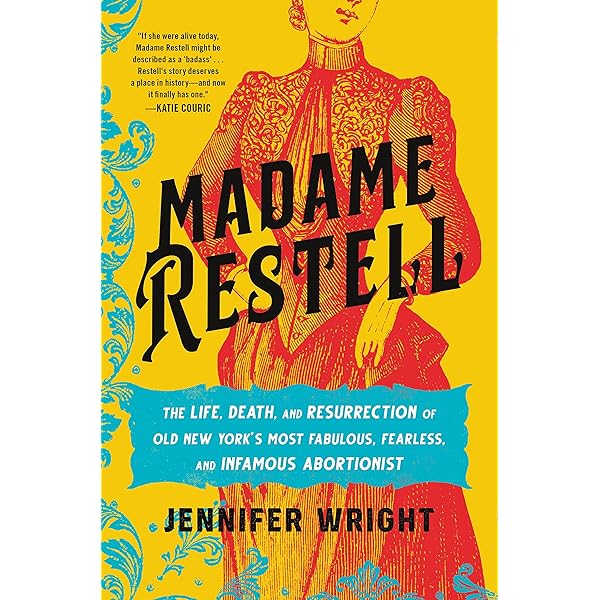
MADAME RESTELL: The Life, Death, and Resurrection of Old New York’s Most Fabulous, Fearless, and Infamous Abortionist (2023) by Jennifer Wright.


The title tells us what we need to know, which includes how pertinent this book is today, as the good people, male doctors killing women giving birth because they thought it cool to go from working with a corpse in a mortuary to deliver a baby, men just generally, of course, but particularly Anthony Comstock, battle to make this woman stop helping women.  Fascinatingly, at the end, when she's to be arrested, she commits suicide.  But, the author asks, "Did that happen? Or did she fake the suicide and escape, as for years her family hinted?

Sunday, February 26, 2023

The Woman King

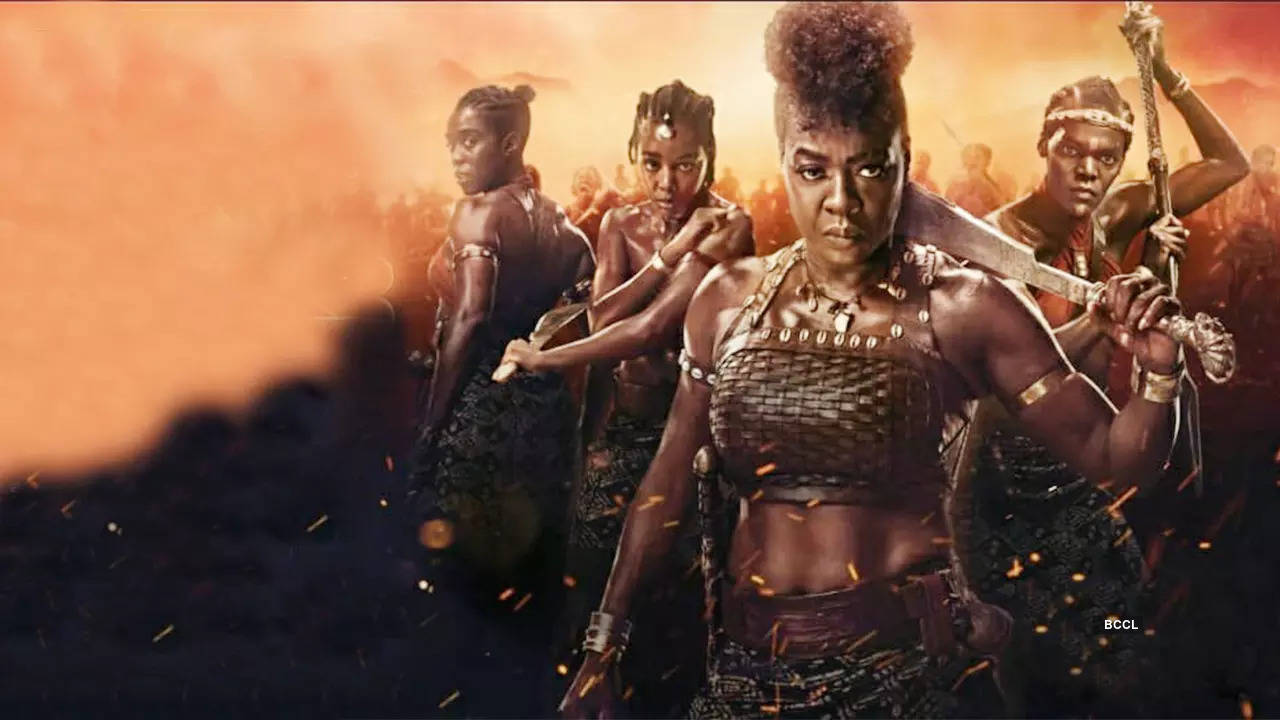
     . . . .  The Woman King (2022) on Netflix. 


The film has been shut out from all the awards and their categories – too womanly. All the criticisms that declared it ignored or distorted Dahomey’s slaving of Africa must be from those who don’t know this history. just heard something somethingv from somebody somewhere. This slave or be slaved history is central to the narrative. That criticism seems to be pushing the relentless attitude that Africans remain ahistorical until white historians inform them of their own history.

The people of Dahomey/Ouida and Oyo knew why this condition was in place, and how it happened, and who was benefiting as well as how much Africans of every group were exploited and plundered as entire peoples. Those who benefited were the  Europeans and USians, as well as the Islamized tribes working in concert, such as the Fulani and the jihad of the time against the Oyo Empire, which too, was all about the riches from supplying the European slavers. 


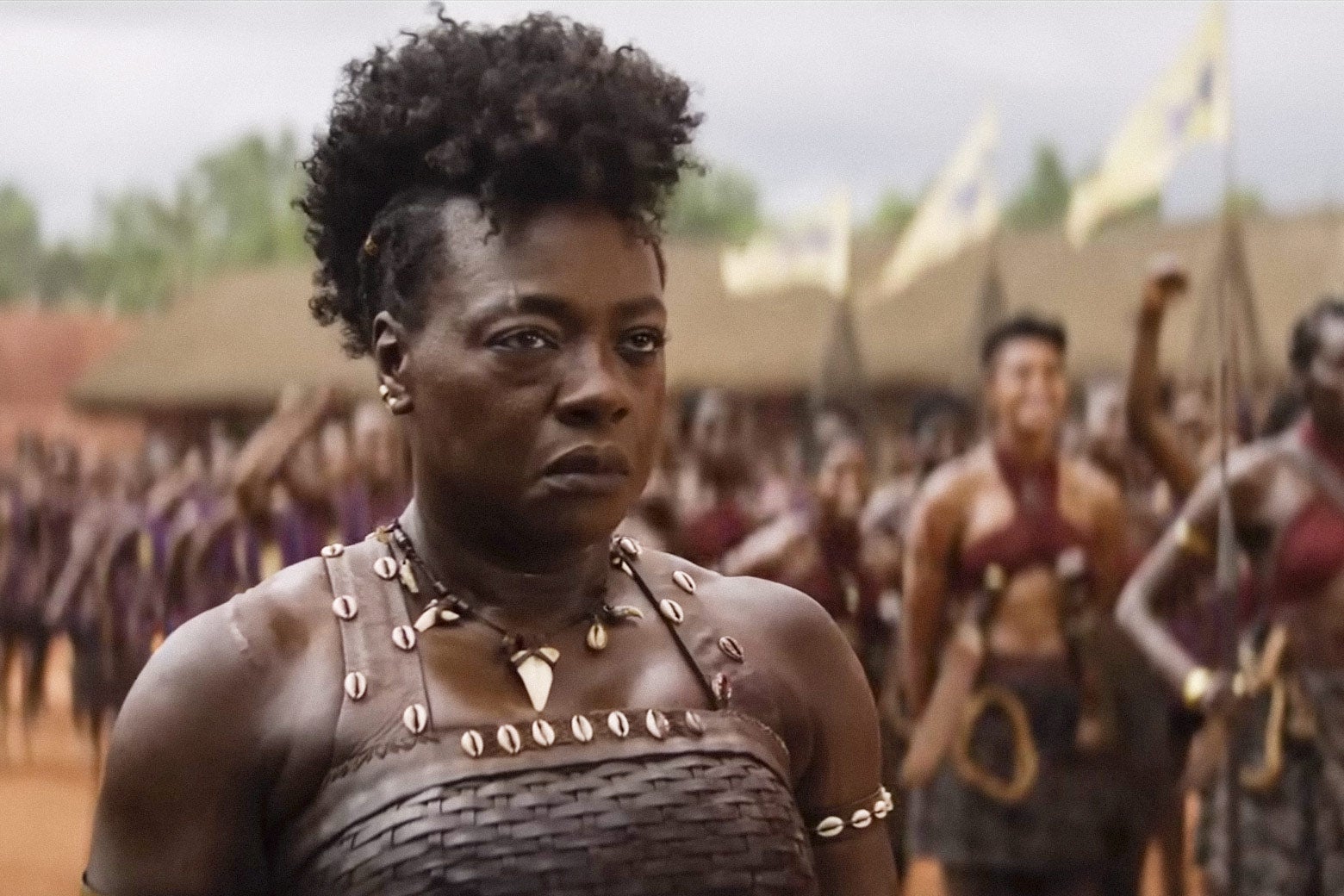
The Agojie commander, Nanisca, played by Viola Davis, is brilliant, as advisor, general and warrior who is at the prime of her strength, but whose body is scarred and has aches and pains from so many wounds, whose heart and mind carries just as many scars and pains. As right hand to the king Nanisca is expected to have wisdom as well as battle skills. And she does; Nanisca sees the future, not only of her own Dahomey, but all of Africa, being slaved and enslaved by the Europeans.  She has this vision, but how to change matters so they – and other kingdoms – stop slaving themselves and each other, and instead create wealth and prosperity through other means. Ah, that is very difficult, not only to do, but to even envision, much less convince others to do, such as the 'nobles' and queens of the Dohomean king's palace.  Slaving is embedded throughout the continent as economy, offense and defense, and status.

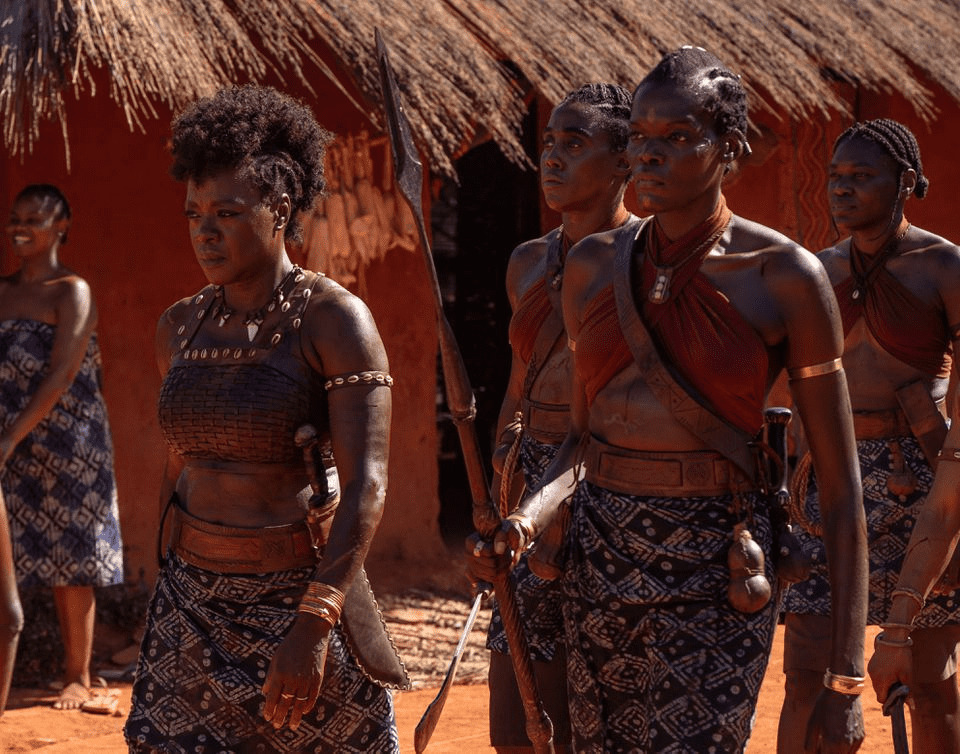
The milieu of this woman army is a fascinating, welcome contrast with both Wonder Woman’s Greek vase and statuary fantasy landscape, superhero comic girlhood training, and with the super hero Afro Futurism of Wakamba. Those superhero comix adaptations are slick, smooth, cheesy and tacky when viewed in company with what we see here, as the film reaches to recreate the dust, mud and natural world of historic reality, including how women are physically, who have been trained from youth to be "Agojie",  warriors who command armies, who fight, kill and are killed – or are captured. Taking a famed Agoji ewarrior is a coup indeed.


As an army of warriors these women claim physical space in a way one never sees women who are to be good, traditional women do.  They claim physical space in the same matter-of-fact, unconscious way that men do. They walk differently, sit differently, move and are still, differently from traditional women. These women are like men, while – and this is what is so brilliant in the acting, one would never mistake them for men, ever.  They are fully womanly, women like all women, but who have all the masculine space and entitlement – except to have partners and children. 

Dahomey's indigenous religion is depicted in a most matter of fact manner.  This is what we know in the US as Vodun, as it was imported via slavery to San Domingue/Haiti, Bahia in Brasil, and to the US, via French slave owners who refugeed to Cuba. and, when Spain and France went to war, to New Orleans.  The altars where our figures meditate and meet on occasion are as much natural parts of their world, as the lands outside the walled city and palace. 

What follows is me interpolating, because I've not encountered this in any of the books I've read. However, presumably, such effective warriors and commanders must be prevented from having their own children because – in the end – even these women must be ultimately subservient to male power – the king.  A successful, brilliant commander, to whom the army is devoted and loyal, a woman with her own children might well be interested in taking the throne herself, or for her children, instead of merely serving a king's wishes and status.*  Indeed, the film includes the oral tradition that at least once Dahomey was ruled by a Woman King commander of an army of women warriors.

There was not, cannot be a happy ending for the slaving Kingdom of Dahomey, despite winning all the battles ... but happiness is allowed. Around the 2/3 point, the story line includes that of a mother and daughter finding each other, in this time when vision tells them both, the world will not get better. Yet, Viola Davis is recognized by the King again, as his chief advisor, no matter what his wives and courtiers want.  She may end her life free and honored, but we can almost sure thing bet her daughter's life is going to be even more difficult than hers, as the French become determined to take out the Dahomey kingdom, and are horrified by the women who go to war.

This film mesmerized me from start to finish, which I can’t say about hardly any film, television series or novel these day

*  There are many instances in history across the world where a ruler's successful military leader has taken power for himself and his family, so one will speculate!

Tuesday, February 21, 2023

Postmambo Sessions presents Afro-Cuban Rare Groove Sessions #1/ For the Funk of It in the rear view mirror

      . . . .  Cut & Pasted From Da List And el V:

Coming this week . . .

==> Thursday, Feb. 23rd, 8 pm Eastern. Postmambo Sessions presents on Zoom:
Pablo Herrera + Alexis El D'Boys: Afro-Cuban Rare Groove Sessions #1.We listen to and talk about selected cuts of digitized vinyl referencing Afro-Cuban and African American popular music connections by Los Zafiros, Orq. de Música Moderna de Las Villas, Wilson & His Combo and more, drawing on Alexis's vast collection of Cuban 33s and especially 45s.
No charge to participate (though we solicit donations), no registration necessary.  You just need the Zoom link.  The Zoom link goes to the other mailing list, [seminar]. If you've been to our previous Zoom sessions, you're probably on [seminar] already. If you're not on [seminar], write me at ned@qbadisc.com, and put [seminar] in the subject line. Piece o' cake. See you Thursday.* * *Today is Mardi Gras. They've been going since before sunrise, since last night, since Kings' Day.Mardi Gras has often been a chilly damp affair, but not this year, with a predicted high of 77 degrees in New Orleans today. It's the first full Mardi Gras since the pandemic. "It's been emotional and intense and cathartic," texts a friend. Me, I'm back home in NYC, more or less decompressed from For the Funk of It, a/k/a the Postmambo New Orleans Music Seminar.I think it was in early 2018, in Cuba, that Randy Fertel said, Postmambo should go to New Orleans. I'd been thinking about it, but I think about a lot of stuff that I don't do, so thank you, Randy. I started working on it seriously in 2019 for March 2020. But then COVID took hold of the world, and we had to cancel For the Funk of It, fully booked, 10 days before blastoff. Ow.Many of the travelers who had signed up for 2020 waited patiently until we could "fulfill the promise," as one traveler put it, this year. I can't tell you how good it feels to have finally gotten to do it. Everybody, including me, seemed starved for live music and face-to-face contact, albeit with masks on a lot of the time.At last we did it. From February 1-5, we rolled through the city (and out to Acadiana) with 40 travelers and a ground team of 6, on our usual immersive Postmambo schedule. The precise dates were chosen by our producer Ariana Hall because they're midway through the Mardi Gras season, the one time of year when all three of the modalities are in effect: carnival parades, second lines, Black Masking Indian practice, but before the full carnival erupts. Perfect for studying the dynamics of festivity.There isn't anyone I'd rather have gone through this four-year process with than Ariana Hall, with whom I first had the privilege of working 20 years ago in Cuba, and who's been a big influence on how I see New Orleans over the years (long story). Over the course of five site visits I made to New Orleans between 2019 and 2023, she always showed me what's new in that city where there's always more to hear. I admit I had a ball checking out as many different music venues as possible.In the face of lockdown in 2020, Ariana said, "I can do it virtual," with the result that in '20 and '21 we did two three-weekend Zoom intensives under the title NOLA Reconnect. Those revelatory sessions allowed us to enter the headspaces of dozens of New Orleans + NOLA-diaspora musicians and other culture makers held hostage by the pandemic. The hours upon hours of interview and performance video we generated constitute a primary document of the city's creative forces at that historic moment, and they served to prepare our 2023 travelers to get the most out of their time on the ground. Our Sunday night closing party on February 5 was played by 79rs Gang, who Ariana turned me on to in the high days of the pandemic. I've had their album Expect the Unexpected (2020) on repeat, and I also like the 2015 Fire on the Bayou album, which is less produced and heavy on trance-like chanting (I'm listening to it right now), but the group's sound has developed since the pandemic and I want to hear what the next album sounds like. Fronted by Big Chief Romeo Bougere (Ninth Ward Hunters) and Big Chief Jermaine Bossier (Seventh Ward Creole Hunters), whose contrasting vocal personalities keep it moving, with album producer Eric Heigle on drums, 79rs come with slamming percussion and a vocal flow that connects New Orleans rap with Indian chants.79rs Gang. Timbal on the left behind Hollywood (Romeo) and Jigga (Jermaine).  Photo: NS I said percussion: after all the different ways Black Masking / Mardi Gras Indian songs have been arranged over the years in pretty much every genre, I'd never heard them locked with a Cuban timbalero until 79rs started working with New Orleanian Santa Claran César Bacaró. What a sound.* * *My book The World That Made New Orleans began as a study of the musical confluences of Cuba and St. Domingue / Haiti in New Orleans, and that was a subtheme in our programming of For the Funk of It. Because it's happening right now! recapitulating in the present day processes that New Orleans music has previously undergone.As our collaborator Dr. Jean Montès said to me in rehearsal, "This is just a taste of what's brewing here." There's been a small but significant flow of musicians from both Haiti and Cuba into New Orleans in the last years, and they've been stimulated by the music of the city even as they stimulate it. But wherever the players in our events were from -- and the largest number were New Orleanians, born and raised -- I repeatedly had the feeling that we were hearing musicians in the process of discovery. During the depths of the pandemic, it seemed to me that the music we were presenting virtually in NOLA Reconnect was urgent. Now that we can get together again, that sense has carried over into the live music. We presented 12 carefully chosen bands / soloists in five days, in spaces around town, in addition to non-musical cultural events. For me personally, the strongest experience centered around two encounters with RAM, the vodou-based band from Port-au-Prince, who appeared in NOLA Reconnect on Feb. 27, 2021. Simply put, RAM couldn't gig in the anarchy of present-day Haiti, and if a band doesn't work it ceases to exist. They've relocated to New Orleans -- eleven people, living in the Lower Ninth Ward -- and in its fourth decade of existence, the band is alive and growing.It's not the first time musical knowledge has arrived in New Orleans from Haiti. RAM's arrival in town is an exciting development. As far as I know, the musicians of RAM collectively represent the strongest corpus of Haitian musical practice to be dropped on New Orleans in one piece in my lifetime. If I'm wrong, tell me when an established Haitian band, known in Haiti for the quality of its drummers, has moved to New Orleans lock, stock, and barrel. They have something to offer, and New Orleans's musical heritage has a lot to offer them. As seasoned a carnival group as you could ask for, RAM's been playing every day during carnival season. One thing about New Orleans -- you may not get paid much, but you play a lot of gigs and you keep your chops and your ensemble communication up. They're warmed up and slamming. Rocking the rara on a four-mile parade? No problem.* * *The first of our encounters with RAM was in an acoustic context, the second electric.The acoustic performance was a site-specific work we created for a little-known historic soundspace in the French Quarter designed by Benjamin Henry Latrobe, the most important architect of the early republic.In New Orleans, Latrobe is less remembered as an architect and engineer than as the accomplished sketch artist who drew the well-known images that document what instruments at Congo Square looked like in 1819 (albeit without using that place name). He despised the music he heard at Congo Square -- a lost-to-posterity music that lives in the minds of New Orleanian musicians, one of the great unrecorded soundscapes of American music, universally spoken of today with the highest reverence  -- writing that "I have never seen any thing more brutally savage, and at the same time dull and stupid than this whole exhibition." But he was interested enough to draw the instruments. Though designed to be a bank (it's also known as the Louisiana State Bank Building), the landmark building at Royal and Conti more recently housed an antique store. It was at one time The Royal Turkish Bath Company for Ladies. It operates today as a event space -- they'll do you a lovely wedding reception -- with the name Latrobe's. Many New Orleans musicians have played in it for one function or another, including, I'm told, Lil Wayne. I didn't know it existed until Dr. Bryan Wagner called my attention to it last fall.This was the last building Latrobe designed, completed after his death in New Orleans in 1820 from yellow fever. It was his only bank, at a time when banks in the South were capitalized with the value of enslaved human beings. It's a rotunda, featuring a domed whispering gallery cognate to the one in the National Statuary Hall of the US Capitol -- which Latrobe also designed. Like all historical buildings in the South, it's a charged space.When I first clapped my hands in there and heard the slaps, my first thought was, the muertos are present. We called the piece A Most Extraordinary Noise, after Latrobe's phrase describing the sound of Congo Square.A Most Extraordinary Noise at Latrobe's. Photo: Jim HannahWhat an honor it was to collaborate on it with Dr. Jean Montès, the conductor of the Loyola Symphony Orchestra and Artistic Director of the Greater New Orleans Youth Orchestras, who knows Richard Morse and RAM from Port-au-Prince back in the day.Dr. Montès couldn't be present to direct at Latrobe's because -- the cloning-yourself problem -- he had to be in Charleston that night to conduct the music of my favorite 18th-century composer Joseph Bologne, the Chevalier de St.-Georges, at the 10th Colour of Music Black Classical Musicians Festival. (That's a performance I would like to have heard.) But what a skilled conductor can do: in one hour of rehearsal two days before the event, directing the musicians in Kreyòl, he put together a half-hour of hushed, soul-stirring music from scratch. Based on Haitian traditional melodies with chorus, tanbou (vodou drums) and vaksins (one-note valveless trumpets that play melodies by hocketing), it was led in performance by his wife and collaborator, cellist Sarah Montès.As the musicians called the spirits, the sound traveled around the space in a way that can't be recorded. When the composed part ended, we channeled our applause up into the dome. It came back as a slapped-back, multi-echo spatialized pulse that flipped the band into rara mode -- it reminded me of the change from dirge to second line -- and suddenly there was an upbeat part two that had not been previously contemplated but seemed inevitable . . . We'd like to do it again, in that room, with the addition of a chamber orchestra.The second RAM manifestation was a post-Krewe du Vieux Saturday night vodou blowout / sacred party like I'd never seen at Snug Harbor, usually a sitdown room for jazz listening, but transformed on this occasion with no tables and an open dance floor, and the partition that separates the back from the front of the building removed. For their performances with us, RAM was joined by the charismatic Haitian-American singer Sabine McCalla, also a Lower-Ninth resident. At Snug, she was in the front line next to RAM's iconic lead singer Lunise Morse. When the full band played, with bass, drumset, and William Morse's super-precise electric guitar in addition to the tanbou and vaksins, it was throw-away-your-crutches music.* * *Everything was a highlight. Our first night closed with an inspired performance from Herlin Riley with his quartet (Max Moran, bass, Oscar Rossignoli, piano, Derek Douget, sax) at Snug Harbor. Our opening event, just prior to going to Latrobe's, was in Preservation Hall -- also a musical-architectural-timewarp experience -- with the Preservation Hall All-Stars, under the direction of trumpeter / vocalist Branden Lewis, with Craig Klein (trombone), Mari Watanabe (piano), Richard Moten (bass), and Joe Lastie (drums). A laid-back rendition of Fats Waller's "Louisiana Fairytale" was a standout, as sung by Mr. Lewis.On an otherwise ordinary Saturday afternoon, we stepped into another dimension with a live-in-the-studio set of high-level musical communication by the Stanton Moore Trio (w/David Torkanowsky, James Singleton) and very special guest Big Chief Donald Harrison. Shamarr Allen. Photo: NSAt Snug Harbor, we heard drummer Gerald French + the Original Tuxedo Jazz Band. At The Rabbit Hole, a new place on Oretha Castle Haley Boulevard with good sound, nice people, and a great patio, Omari Neville + The Fuel brought the funk, followed by a stellar set from a testifying Shamarr Allen (including of course his version of "Smells Like Teen Spirit"), and then the Cuban multi-instrumentalist singer-songwriter-bandleader Yusa -- now a New Orleanian -- with a quintet.  In the course of all this, we encountered one fabulous pianist after another, including, besides David Torkanowsky, Oscar Rossignoli (from Honduras, with Herlin Riley), Victor Campbell (from Camagüey, with Yusa), and Larry Sieberth (my former neighbor in the Irish Channel, with Gerald French).We rode the bus a couple of hours out of town to spend a day with Lafayette-based choreographer / dancer / educator / producer Millicent Johnnie, who produced us up a well-fed afternoon of music and dance at the Bayou Teche brewery in Arnaudville. There we heard Louis Michot's Melody Makers playing a set that Postmamboistically included Louis Moreau Gottschalk's "Souvenir de Porto Rico," Op. 31, in addition to zydeco from Corey Ledet, Cajun fiddle from David Greely, and a dance lesson from Millicent and friends. (Millicent's uncle, Patrick Johnnie, who astounded us all during NOLA Reconnect with his impassioned, extended disquisition on boudin, supervised the cooking.)Corey Ledet and his accordion. Photo: Heather HodgesOn Saturday night we scooped up swag from the Krewe du Vieux parade, with the most X-rated floats you ever saw (unless you've previously been to Krewe du Vieux), and on Sunday morning we were welcomed at Mt. Hermon Baptist Church, known for its music ministry. Sunday afternoon we went on the Treme Sidewalk Steppers second line, then hit Sunday night Indian practice with Spyboy Honey from Creole Wild West at Zony Mash.At the second line. Photo: Jill Stanton.Besides the music, there was Richard Campanella's magisterial Cultural Geographies of New Orleans bus tour that functioned as our keynote address, Milton Carr and Dr. Ina J. Fandrich walked us from the river to Congo Square, and we paid studio visits to two of New Orleans's most important artists, Big Chief Victor Harris, Spirit of Fi-Yi-Yi, and Big Chief Demond Melancon. All in five days. Like the man said, it's just a taste of what's brewing.When's the next Postmambo Music Seminar? you ask.Soon. We've got some doozies in the works. Watch this spot.