LINES OF THE DAY

". . . But the past does not exist independently from the present. Indeed, the past is only past because there is a present, just as I can point to something over there only because I am here. But nothing is inherently over there or here. In that sense, the past has no content. The past -- or more accurately, pastness -- is a position. Thus, in no way can we identify the past as past." p. 15

". . . But we may want to keep in mind that deeds and words are not as distinguishable as often we presume. History does not belong only to its narrators, professional or amateur. While some of us debate what history is or was, others take it into their own hands." p. 153

Silencing the Past: Power and the Production of History (1995) by Michel-Rolph Trouillot

Wednesday, January 31, 2018

Cuba 1 - Adventure Travel

     . . . . Got back about 10 PM Sunday, the 14th, knackered.

A palmetto fan gifted me by a performer, and an orchid double-blossom gifted me by the grower from his yard filled with nearly 300 varieties of orchids. Here it is in the pocket in front of my bus seat.  The orchid survived being carried around all day, and then into the next two days when I passed it off to the woman who ran the Casa where we were staying.  She put it in water, and for all I know, it still spreading its beauty to those who see it.

     . . . . It was a most brilliant trip, but a very hard trip, starting with the schedule which had built in a day of recovery from the travel day itself for me, which never happened due to the storm Thursday (the 4th, when we were scheduled to leave) delaying our departure for a day. This happened to all of us Postmamboist Institute Travelers who are in New York state and city, which were 8, including Our Fearless Jefe, and myself.

The other Travelers, from other parts of the country where the storm wasn't happening, got to Havana on the 4th, even R, in New Orleans, whose flight was delayed due to the plan's being  de-iced.  (New Orleans, like Miami, Mobile and other parts of the Gulf got snow from this storm as well.)  As all the other flights to Havana were delayed too, this group managed to arrive in Havana's José Marti Airport together, where they were met by members of Postmambo's Cuban ground crew, and thus had all the first day events as scheduled, even without el Vaquero -- though they had to buy visas to enter Cuba, as el V had them, and he wasn't there.

Eight of we NYers departed on Friday then, (the 5th ) getting up at 5 AM in 6 degrees, and heading to JFK, which was a shambles. As it turned out, our 8th NYC Traveler couldn't get a flight to Havana until Saturday -- partly due to two planes colliding wings on the runway and everything getting set back again.  She was met on the 6th by Postmambo Cubans (she speaks Spanish, which helped a lot), taken to dinner, given a tour of Havana, and then driven the next day to meet us in Santa Clara, quite far from Havana.

The full story of what has happened at JFK, and which has made air travel a shambles for at least two weeks -- even when we returned on the 14th -- is here on Slate dot com.
Everything That Went Wrong After the Bomb Cyclone Hit JFK Airport
 “People were screaming, ‘Give me the application, I’ll become a flight attendant!’ ”

Under the circumstances, we New York Travelers -- S, C, M, D, J, el V and I got off easy. The second S -- well, she didn't get off easy, but she did get out, finally and join us. At least she was at home, and not having to camp out in JFK -- which doesn't sell diapers anywhere, a previous Postmambo traveler told me, who was there for two days, trying to get to Paris. There were a LOT of babies in JFK . . . .

S2 remained a trooper through it all: trick knee, etc. Cuba is filled with the kindest people you will ever meet. Moreover, their religions don't see disabilities as curses but as gifts of the orishas. They loved S2. Everywhere we went, good looking young Cuban men danced with her, just as long as she wanted to dance -- S2 loves to dance. Everyone loved conversing with her.  She made Cuban friends wherever she went.

This may have been the largest number of Postmambo Travelers on a single tour of professionals who were not musicians, though we did have a professional musician who is also a professional DJ (LCD Sound System) and another pro DJ.  with advanced degrees in anything from anthropology to  law to finance --  all of whom adore music and are experienced travelers. There was a husband-wife with us who could dance Cuban styles fabulously.

And, as per usual, about half way through the trip, I fell in love with everybody on the bus.


Most of of Cuban ground crew.  On the far right is Yosvani, our incredible bus driver.  At one point he even herded cattle with our bus! 

Again, we had the best bus driver, and the Cuban ground crew performed above and beyond.


We were constantly moving and there wasn't even enough time for me to take the kind of notes I usually do.  To make up for it I took far more photos than I usually do, which I haven't begun to sort through. There was no time to go online either, though I had my little travel laptop and wifi was available.  Nobody else went online either.

However, no internet meant we didn't have to see, hear or speak of the unspeakable for this whole time, and all that space that is increasingly taken up by the sheer insanity of this nation, squeezing intelligence sut, got to be opened up, cleaned and breathe fresh air. It helps one to keep going, all right. But I crashed in every way, even before I got home again. The home travel day was excruciating -- and Ft. Lauderdale, where we had to change flights and terminals, was still a wreck, on the 14th. JFK didn't look so good either. The married couple I mentioned above didn't get their baggage, though it did get to Ft. Lauderdale, which we know because we had to re-enter our luggage along with ourselves at passport control to get back into the country.


Anyway, many adventures -- and -- you will not believe this, many excellent meals, of food I'd never think I'd eat in Cuba, in places in Cuba where I never thought even a minimally decent meal would be be had. Lamb! beautifully prepared, presented and served, for instance, in Cienfuegos. How did that happen? This trip is the only one on which I didn't lose weight. Partly from eating so well, but also because it's the least walking on any Cuba trip ever. It was sitting, sitting, sitting, for hours and hours and hours on the bus, and then in restaurants, and most of all at the music events of which there were always at least 3 a day, and often more than that. 

Still, things went so well! The Travelers were thrilled.  Even if things went wrong, which one has to expect will happen, due to weather, humans and Cuba, el Jefe and the ground crew resolved them seemingly effortlessly, and the Travelers were kept comfortable -- or at least a comfortable as possible in the circumstances.

The weather in Cuba was quite unpleasant for Cuba, due to the storms and weather disturbances in the US. What happens in el Norte always impacts Cuba, at least on the northern, Atlantic side.  Havana is only 90 miles from Miami and not that much further from New Orleans -- and both Miami and New Orleans got snow from that storm in the first week of January. As it stayed cold here too, it was cold on the north side of Cuba, relatively speaking.  The people in Havana where it was windy, rainy and down in the 60's in the daytime wore parkas (those who have them) and were certain the end of the world had arrived. The Caribbean, southern side, was, of course, exquisitely warm and sunny, exactly what one wants when NYC is sitting at 8°.

Nor were there any whiners or hysterics.  This has been the case with all the postmamboist trips, which probably explains why I fall in love with the Travelers.  

Almost all of us are not group kinds people.  But we effectively function as a group quickly.  Ya, without traveling with a person, in situations in which things can't always be predicted, including the weather, that person is not known.


We were in Central Cuba, the Cuba least visited by tourists, and with the largest population of truly poor people, because this is the agricultural heartland of Cuba: cattle, chicken (for the eggs principally -- they import a lot of their chicken), pigs, goats, sheep, rice and other cereals -- and, of course, like everywhere in Cuba, sugar cane.


We were in the Caribbean side with the Haitians.  This Haitian traditional dance and drum presentation was one of the trip's highlights for me, not least for the spectacular fineness of the costumes, the very best fabricated of any costumes I've ever seen in Cuba, anywhere, anytime.  They were are fine as those in Guadelupe and the French Caribbean in general.  See all the details -- nothing fussy though, and all with that French chic and care in construction and design.  The madras is traditional fabric for such Haitian dances.

Sugar labor was always black i.e. slave labor, so these are the people who started off already far behind everyone else when the Revolution came -- and they supported it almost to every single person.  But they're still, as a group, not achieving the equality of white Cubans.

And now, we see the Russian billionaires' effect from the last year or so down there in lovely, Caribbean Trinidad -- their yachts are filling the bay of Cienfuegos too. The Casa in which we stayed our one night in Havana was having an elevator installed in the building -- the elevator parts and design are Russian, as is most of the agricultural machinery.  This wasn't the case even up to 2016.  As el V and I have been saying, the unspeakable has handed off Cuba to Putin and Russia by trying to erase what Obama achieved in the reconciliation of the US and Cuba.

Thank goodness the the JetBlue flight from Ft Lauderdale to JFK had a movie channel and it played that truly stupid movie, Victoria and Abdul. My brain power was below even that level, and the film lasted the length of the flight, ending in time for me go to the bathroom and ready myself for descent. Thank goodness we had such a strong cold wind blowing behind us to shorten the flight. Thank goodness el V had booked me extra leg room and the aisle seat. 

Because -- the flight out of Lauderdale to NY was filled with many passengers who are not like Postmambo Travelers, and their horrible children who were too old to be screaming like that. For reasons unfathomable to me, they all wore pink 'leisure wear' that had PINK written all over in black felt or something. Next to me was a person who flowed into my seat. She was a nice passenger though, who, when she kept shutting off my tv with her arm, leaned forward most of the flight. There were also the HUGE football players on this flight, one of whom was carrying a trophy that was as tall and wide as a six year old child. Plus a large contingent of Jewish Orthodox males and their male children who put up fusses about everything, including sitting next to strangers. So sleeping on the flight was out of the question. There wasn't a single seat that wasn't filled.

El V remained behind to do accounting and attend Havana's Jazz Fest and do other business. He also arranged for a big Postmambo Event later this year. He had a wonderful time. He was able to decompress from herding so many people, putting out so many fires and translating all the time.

I was so glad to be back. It was something like 18 degrees and blowing hard when B picked D and me up at JFK to bring us home. The wind was freezing. Yet, I was so happy! Or as happy as anyone in my glazed state could be. Every bit of me hurt and had been hurting for some time, and stayed hurting even at home. I worked out most of it, except for the lower back -- then came down with the muscle aches of the flu.

The first 10 days back I slept most of the time, made chicken-chili-tortilla soup -- no appetite for anything else. (Now with the flu still have appetite for nothing else) Did the alps of laundry. I grazed in James Lee Burke's maybe final novel, Robicheaux, soon shut off the lights and went to sleep instead. There was also a day in there in which it either snowed or rained freezing rain all day and night. Fortunately, I had prepared for something like this before we left. I had everything I needed, including milk in those long shelf-life cartons, so I never even left the apartment until Thursday (returned on a Sunday night). I've drunk gallons of tea, herbal and oolong and green.

If / when I go back to Cuba, I am NOT riding in a bus and rushing from one event and place to another.  I'm staying put and will be there only 4 days maximum!

And I think this is going to happen, sooner than expected . . . .  Some incredible things are in the works.

Tuesday, January 30, 2018

Flu, Nomads, the Eurasian Steppes and Ertugrul, the Brave Man

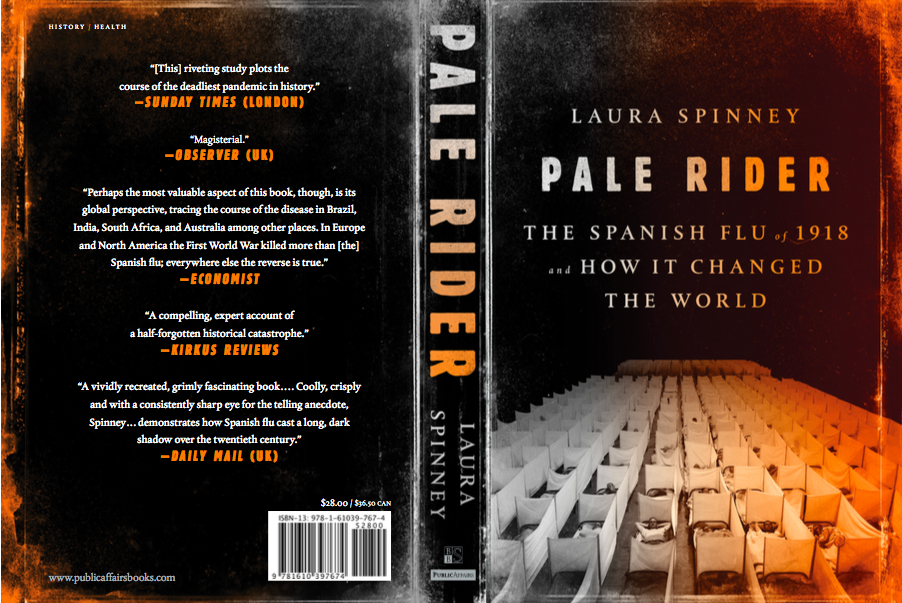
     . . . . Pale Rider: The Spanish Flu of 1918 and How It Changed the World (2017) by Laura Spinney is given a substantial review in the LRB: 


I listened to some Spinney interviews last year,  though I haven't read the book --  I do have the flu currently, alas.  (Yes -- I got the flu shot, back at the start of September, but we know this year was iffy for protection against the Big Mutator.)

With the current flu getting so much news coverage one does think of this book, as well as because this is the centenary of the Spanish flu pandemic. 

I learned from the review, (written by a physician) the three centers from which its global spread probably issued. I didn't know any of this before.

Maybe for me the most interesting factoid I got though -- is that perhaps the first flu epidemic was in 'Asia' 2000 years ago, acquired from horses. Was this the first strike against the rest of humanity by the Eurasian steppes and the nomads. long before the Mongols?


Baiju Noyan is a bad man, a VERY bad man.


I think of such a thing since I am watching the second season of Resurrection: Ertugrul, in which the big bad is the Mongols, and particularly Ogedei's general, Baiju Noyan.

Unlike in Jack Weatherford's histories of the Mongols, they are really eviLe here (though Weatherford pulls no punches when it comes to Genghis's sons, whom he holds responsible for what the Mongols came known for). They are worse by far than the first season's Crusaders. Even the nomad tent and their warriors (alps) say this is so.  Certainly more prone to random acts of cruelty and torture for the sake of it, and bloody on a grand scale. This season is more graphically violent and grisly than the second one, which is only one large difference between the series' season 1 and season 2.

Initially, with the first episodes, I thought the second season was going to retell the first one, merely shifting roles around as to antagonists and protagonists and maybe even recreating the same characters but with different names and tribal membership.

But once I'd gotten a few episodes in, it was clear this season was very different.  The poetry and passion of romance have almost disappeared.  Halime Hatun, Ertugrul's love, to whom he now is married, is pregnant -- the longest pregnancy ever -- but she hardly ever appears except for him to order her "to be patient and wait." (I fear tremendously the Big Bad is going to kidnap her.) Mother Hayme seems to have lost her great wisdom just when she needed it most -- but plausibly so.

This season is far less concentrated on God's will, and the gorgeous mysticism and maybe, even the magic, of Islam.  (However, we have a hermit who appears whenever Ertugrul is in the direst of straits, feeds him, hides him his cave, reunites him with his loyal alps -- some are traitors). Other annoyances of the first season, such as the predictable episode arc of at least one exceedingly lengthy battle scene, and the truly annoying predictable slo-mo, stop action, of horses galloping, have been dropped. Each episode moves faster than in the first season, and seem shorter though they are the same length.

Season 2's Ertugrul (called "Brave Man") is focused in utter desperation on keeping the promised arrival of the Golden Horde from overrunning all of Anatolia -- and perhaps, though much of this is vague, particularly in terms of the years involved, the Persian Seljuk Anatolian Sultanate of Rûm (Rome, i.e Byzantium, though that word wasn't used until the 16th century, while Istanbul didn't come into use until 1923), which borders the lands of Byzantium.

Along with this comes something I really like, the often overlooked aspect of the Mongolian generals' front line operations in the lands they are targeting for conquest. It didn't happen in one sudden, massive invasion.

Cohorts were sent ahead long before the arrival of the Golden or the Blue Hordes -- sometimes years. Not only did they perform terrorist lightning strikes along the borders and penetrate deeply into the targeted territory. They spent years subverting tribal influencers with bribery, kidnapping of family members controlling and using them behind the scenes. 

Yet another aspect was to disrupt the local economies of trade,  herding and manufacture (this is in the charge of women) as much as possible. As Baiju Noyan says, "The only thing I love more than fighting is winning a battle without having to fight it." 

However, the Turkmen Seljuks employed the same tactics themselves when moving out of Central Asia into Asia Minor, with the same devastating effects upon the population and trade as the Mongols accomplished. 
Battle of Köse Dağ; Mongols won, Seljuks lost.


From this I'm picking up that even today the Turks harbor no forgiveness for the Mongols, recalling with hatred their subjection of over a century, which happened after getting clobbered at the battle of Köse Dağ (1243) -- won, not coincidentally one might think, by -- Baiju Noyan.

Seemingly (I don't know -- my ignorance is abysmal) this subjection of the 300 year Seljuk Empire in Anatolia by the Mongols until their own empire fell apart is the reason there aren't histories of the Anatolian Seljuks per se as there are of other Seljuk spheres as in Persia, or the Arab eras, etc.

Additionally, Anatolia was where the Byzantines Greeks and the Ilkhanate Empire (the Mongolian dynasty that took over from Seljuk Rûm) clashed the most, constantly ceding and conquering and reconquering, despite their many alliances. So the region was in state of flux and disruption at the best of times for all these years. 
"The Mongols and the "Franks" [including the Venetians] made many alliances against the Egyptian Mamluks, the wall against which Mongols and Europeans always broke. Also Frankish-Mongol alliances weren't very effective to start with. The Mongols, i.e. the Ilkhanate Empire [see above] were allied with Byzantium -- though that also broke down constantly as well. Despite many attempts, neither Hulagu [brother of Kublai; ruler of the Ilkhanate Empire, including most if not all of Anatolia] nor his successors were able to form an alliance with Europe, although Mongol culture in the West was in vogue in the 13th century. Many new-born children in Italy were named after Mongol rulers, including Hulagu: names such as Can Grande ("Great Khan"), Alaone (Hulagu), Argone (Arghun), and Cassano (Ghazan) are recorded.[27]"
Which reminds me of how often I see the name 'Attila' in the credit rolls of Italian television series -- another legendary hero's name (depending on one's perspective) that never lost in Italy associations of overwhelming power.

OTOH, this perhaps provided the liminal space where flourished the legendary aspects of the Oghuz and Osmans, from of whom rose the origin stories of the Ottomans, and the legendary warriors such as Ertugrul of the Kayi tribe. This season his trajectory has Ertugrul resembling both Christ and King Arthur, i.e. sharing aspects, as mythical figures invariably do.

This is the era when the Mongol conquers in Asia Minor converted to Islam, while also importing vast numbers of Chinese scholars and administrators from the Yuan dynasty back in Eastern Asia. 

What these alliances did do (as with Venice) was facilitate trade routes and exchange between east and west across Asia Minor to China and back -- and across Africa too. 


A reading done by Ifá; versus the Dilogun, produces 256 possible combinations of symbols which define specific combinations of Odu. The Odu are indicted by throwing cowrie shells in the sand tray.


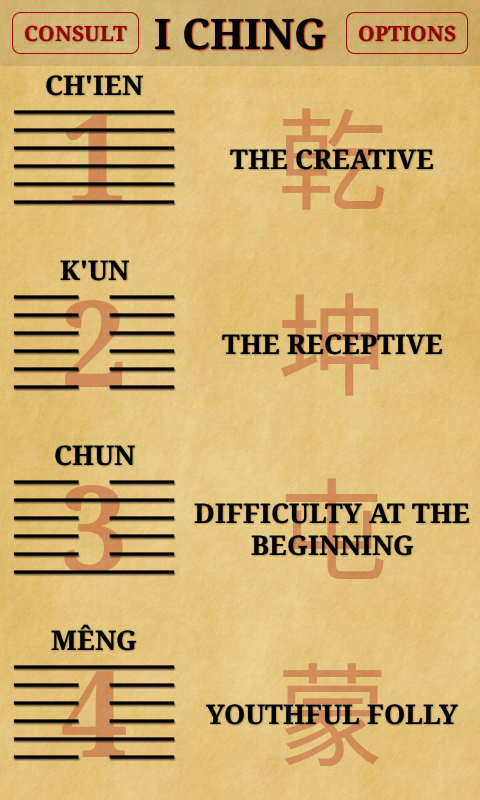
The I Ching advisories are found via throwing coins.
This is probably when Ifá probably came to the burgeoning West African kingdom of Oyo, home of the Yoruba. El V has always believed that the Ifá readings of shells and trays and signature advice was based on the I Ching. By the 13th and 14th century the Yoruba had firmly embedded Muslim counselors from "the North," i.e. Islamic Africa 

El V studied the I Ching when he was taking Chinese classes, and of course he's studied Ifá -- which, it seems not too many, or anybody else, has done both. And now he's got me to bring him the historical trajectory of trade and conquest that made this cultural interpenetration possible. (The Yoruba have always been brilliant at taking something from another culture and transforming it to fit their own expression -- they still do it, as we see in Cuba all the time. Or here, for that matter -- Africans and African Americans are just brilliant at expression, form and style.) 

History is so exciting! I think telling el Vaquero this stuff made him fall in love with all over again.  

Ha! And to think this all is because I watch a Turkish telenovella. At one point a primary character is wearing a robe that I swore had Chinese designs on it. So I went looking at more history again. And by golly, that's yet another historic detail the series has right. It's always all about trade.

We've only resumed treading aloud, now that el V's back from Cuba, Barry Cunliffe's By Steppe, Desert, and Ocean: The Birth of Eurasia.  The maps are brilliant. It's extra exciting when we hit sections that deal with the same peoples I've beeen watching on Qin Empire: Alliance, and Resurrection: Ertugrul, as well as in Jack Weatherford's books on the history of the Mongols.

I've been thinking about the steppes, nomads, Mongolians, China, Islam, and trade for several years now.  But it's so complicated, and I have no grounding in the geography, so it's  hard to grasp this. 

Once again, I understand how impossible it is to deal with history without geography and vice versa.  Ertugrul sends me back to both after every episode I watch, and I think I'm all the more improved because of it.

It's worse than sad though, that we, as USians and Europeans do NOT know this geography and history -- history of actual, long-standing empires that we've never even heard of.  If we did have more than a passing acquaintance, at best, with these matters, maybe the world wouldn't in quite the state it is currently.

Monday, January 29, 2018

Vampire Nightmare -- I Had One Last Night

     . . . . I woke el Vaquero with my nightmare desperation to get to the humidifier, ahead of the vampire. 

Which is why I woke him. I was screaming in my desperation.

The thing is that the humidifier was filled with holy water, but for some reason it was not turned on!

As it turned out, when I woke not only him but myself, the humidifier, though filled last night by el V, had never been plugged in, which is why I felt so awful.  And so did he.  So I had a nightmare.


Puuurfect for Mardi Gras Season -- “George W. Chadwick’s Tabasco: A Burlesque Opera”

     . . . .  In the Smithsonian Magazine online:

"Long-Forgotten Opera About Tabasco Sauce Heats Up Stage Again After Almost 125 Years

Thanks to some musical sleuthing, George W. Chadwick’s ode to the now ubiquitous hot sauce brand has been revitalized by the New Orleans Opera"

Cover art for sheet music from the original Tabasco opera, 1894. (Courtesy McIlhenny Company Archives)

Tonight [January 25th] the New Orleans Opera will revive the 124-year-old production for the first time in over a century as part of its 75th-anniversary season. Called “George W. Chadwick’s Tabasco: A Burlesque Opera,” the already sold-out production runs through January 28  [which was yesterday] at the La Petit Théâtre de Vieux Carré in New Orleans. The tongue-in-cheek burlesque opera promises to bring Chadwick’s artistic vision back to life with a full orchestra, chorus and cast of characters, including the protagonist, a hot-tempered grand Pasha, who threatens his personal chef after taking a bite of his dinner only to find it boring and bland. (A blind beggar quickly remedies the chef’s faux pas by selling him a mysterious liquid that turns out to be Tabasco sauce.)

This is how the opera came to be in the first place -- and it was Boston, not New Orleans that was responsible:
Interestingly, McIlhenny’s company had no involvement in the original making of the opera. In fact, Shane Bernard, the McIlhenny Company’s historian, says that a group of military cadets commissioned the production as a way to raise money to help build a new armory in Boston, and they ended up pulling out all the stops.
“These well-to-do cadets hired an actual composer and librettist to create the show,” says Bernard. “We don’t know how they came up with the idea, but what it does tell us is that by 1894 Tabasco must have been a household word, otherwise it wouldn’t have made sense to everybody and the opera would have needed an explanation, but clearly it didn’t.” 

Friday, January 26, 2018

Pony Can!

     . . . .Vaquero, an avid twitter follower of carefully curated twits, though not a user himself, drew my attention to this teeny video of teeny pony. I watch it several times a day because it makes me happy. 


https://twitter.com/NaomiKyle/status/955994132018749440

I wanna go out and play in the snow! O this is so scary! So hard! How do I do this! O O O! I can do it! I can do it! I can do it! O O O I did it I did it I did did did! Yay me! 
Not to mention the adorable tiny round hooves . . . .

The Le Guin Cat

     . . . .  Pard must notice the Absence.


                                        From ULG's blog on Bookview: Go here.

Thursday, January 4, 2018

Thumbs, Snow, Cuba and Turks

     . . . . A day that was essentially thumb twiddling.  Neither here nor there.  Trapped inside by the blizzard, er, excuse me, the bomb cyclone. 

Downloaded as e-books two works from the NYPL to the little computer. One of them is Jack E. Davis's, The Gulf: The Making of An American Sea, winner of the 2017 Kirkus Prize for Nonfiction.  One can hardly think of a better book to be reading in Cuba. 


The download is on my hard drive, not in the cloud, so I don't need wifi to access the content once downloaded. 

The download reading app from the NYP works very well and is easy on the eyes -- and, of course, one can change the size of the type. What is particularly nice is that all the front matter, toc, illustrations, citations and index are part of the download. Moreover, lighting for reading in the Cuban rooms is always inadequate, this should work out well. Not that there will be time to read, but it may well be I elect to stay in some nights while the others continue to yet more music events. And then the coming home will have a lot of down time. The little computer is much more wieldy for airports and plane seats than the big one. 

Washington Square Park. I didn't take this photo.

     . . . . As predicted, the snow stopped about 4 - 4:30 PM. Central Park reports a bit more than 7 inches. It looks about that much around here too. It was a comfy temperatures in here all day. But soon the temps are predicted to plunge -- down to 9°. That is what I'm to go out in at 5 AM to get to the airport tomorrow -- and not wearing my fur coat, etc. because I can't carry that thing around with me for days and days, and there's no room for it, of course, in the luggage. I will be wearing boots though, and had always planned to. 

For one thing, this huge a$$ snow storm and the freezing temperatures that have brought snow even to Florida is affecting the Atlantic side of Cuba too. It's cold in Havana now -- in the 60's, and getting into the 50's tonight. Tomorrow will be the same. Speaking from experience, 50's and 60's on the island when the sun is down is uncomfortably chilly and clammy. Sleeping can be downright difficult.

So the Qubes are in an end-of-the-world state. Nor do they have the wardrobe to counter it. Going to the airport I'm wearing a  cashmere sweater over a thermal shirt and t-shirt under my rain jacket, and taking the long and wide cashmere wrap - scarf. These all fold up small and comfortably go in the carry-on bag, with my umbrella and fans. (Prepared for chilly, and for rain, and for hot!) 

For the Travelers who did get out of the US and into Cuba today (the non-JFK fliers, even though R, coming out of New Orleans, was delayed because they had to de-ice the plane -- but everything was delayed anyway), will think it is lovely. Particularly L, who came from Bloomington, IN, where the temps are and have been in the range of 12°, and she's already gotten a lot of snow, with more predicted for the weekend. The planned events are going on without us. 


But tomorrow's got to be re-arranged, since it included a small official arts and education 'do' in recognition of the work the Postmambo seminars are accomplishing.  Without el V there, who is Postmambo Studies, there is no point.  We'll still be flying when it was scheduled.  Hopefully, we'll have gotten out and are flying then . . . .

     . . . . So now there's nothing to do except watch episode 9 of Resurrection: Ertugrul, and hope that before I leave him behind for Cuba, he'll get free of those eviLe orcs nazis Mongols, rejoin Halime, and defeat the treacherous shenanigans going on in the Dodurgas, the host tribe with whom his Kayis have taken refuge, because their Bey, Korkut, is Hayme Hatun's brother.  But his new, second wife, she feels only rivalry and resentment toward all the Kayis, and particularly the close relatives of her huband, Korkut Bey.

Hayme Hatun

At least Ertugrul's mother, Hayme Hatun, is still living, though she isn't as strong as she was, after a life of long travails and ordeals, filled with many losses of lands, security, family and friends, most lately her beloved husband.  The actress who is filling this role is brilliant.  I've never seen anything like what she did when her character hear the news that her beloved son, Ertugrul, upon not only her personal hopes and dreams are pinned, but upon whom the entire fate of her husband's nomad tent, the Kayis' is built.  We watch her struggle against herself, to not allow herself to give into grief, fear and sorrow and wild weeping, and just giving up.  This is not an histrionic scene -- that's what makes it is so powerful.  She fights a battle as awful as any of the alps has ever fought, to not be histrionic, hysterical, to show a strong figure of calm leadership to the remnant of her husband's tribe in this terrible time of loss and grief. 

One cannot watch a great contrast in acting capacity than this actress and the one who plays her daughter-in-law, Halime Hatun, who has two expressions from which to choose for any emotion: blank or constipated.  She does have the ability to have a single tear roll fetchingly from one of her gazelle eyes and down her cheek.

Thank goodness, the actor who plays Ertugrul is good and has grown into his character as the series continues.

Hayem Ana Hatun's mausoleum.  Hayme Hatun, also known as Hayme Ana, was the grandmother of Osman I, founder of the Ottoman Empire and the mother of Ertuğrul Gazi, the leader of the Kayı clan of the Oghuz Turks.