LINES OF THE DAY

". . . But the past does not exist independently from the present. Indeed, the past is only past because there is a present, just as I can point to something over there only because I am here. But nothing is inherently over there or here. In that sense, the past has no content. The past -- or more accurately, pastness -- is a position. Thus, in no way can we identify the past as past." p. 15

". . . But we may want to keep in mind that deeds and words are not as distinguishable as often we presume. History does not belong only to its narrators, professional or amateur. While some of us debate what history is or was, others take it into their own hands." p. 153

Silencing the Past: Power and the Production of History (1995) by Michel-Rolph Trouillot

Monday, September 30, 2013

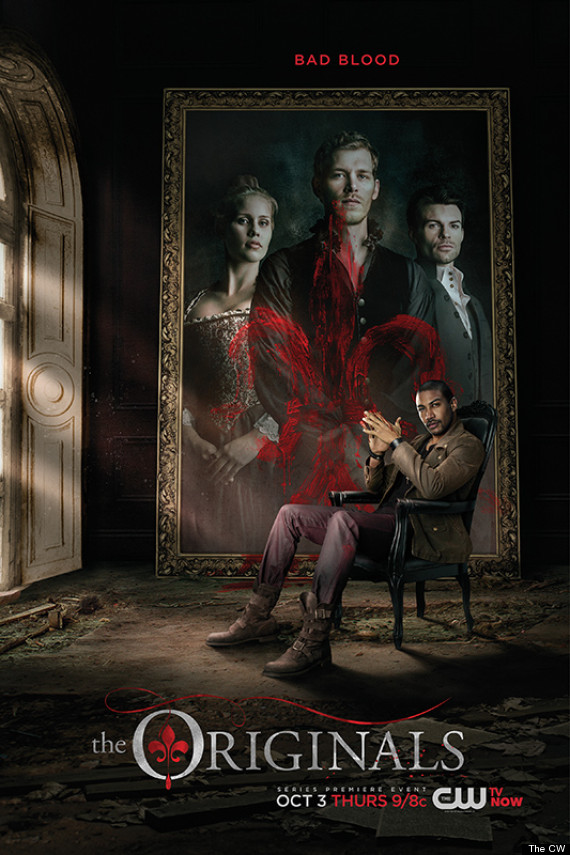
The Originals

Premiering Thursday, October 3, this series spun-off from soapy The Vampire Diaries is set in New Orleans, the supposedly natural home of vampires and other supernatural creatures.  Perhaps more to the point Louisiana provides supernatural tax breaks and other assistance to movies and television productions produced within itself.


In the featured vampire voice-over in the trailer informs us that he and his family owned New Orleans for centuries, and now he is demanding to have it back.

What I want to know then, since he was a New Orleanian from way back, why does he call the city New Orleeeenes?  Nobody born in New Orleans pronounces the name of the city that way, at least no one I've ever met who was born there,  or Louisiana, for that matter.  Not saying nobody pronounces it that way, just that I've never heard it done.

Sunday, September 29, 2013

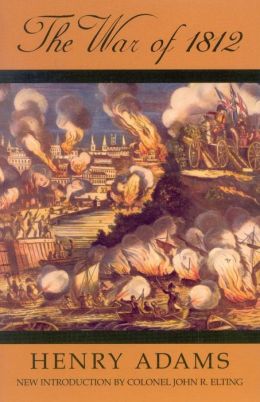
Dusinberre Shows Us How Henry Adams Did It

Part of Dusinberre's study of Henry Adams' Myth of Failure is deconstructing Adams's method as an historian, his influences and his conviction that narrative history must be as much a literary endeavor (recall, Adams also published two novels) as a scholarly one.  Dusinberre shows us how this works in Adams's History.  
[Dusinberre, pp 105-106] " ... Adams set out ... his own -- still primitive -- canons of prose style.  His creed, enshrining force and variety, was stated as explicitly as that of any textbook writer on rhetoric, and one precept might have copied directly from the Anglican bishop:  "Great effects are best produced by lowering the general tone.  Follow Canon I as a rule [the subject should normally precede the predicate], and it becomes easy to make a sensation with Canon III [when accentuation is wanted, begin with the word or idea to be accentuated, even if this is the predicate].  The higher you pitch the key, the harder it is to sing up to it, and the effect no greater." From this elementary tenet Adams progressed during ensuing years to an ever clearer conception of the principles of his craft.  In 1879 he still complained that "the most difficult thing to me is to vary the length of my sentences so as to relieve the attention"; but a decade later, recreating the battle of Bladensburg, he had learned to measure his sentences in proportion to the military force concerned:


Dusinberre then illustrates this rhetorical method of Adams with this bit describing the infamous debacle of Bladensburg from History, 8:140 (citation page will be different in the Library of America edition):
Some Maryland regiments arrived at the same time with [Secretary of State] Monroe.  About three thousand men were then on the field, and their officers were endeavoring to form them in line of battle.  General Stansbury of the Baltimore brigade made such an arrangement as he thought best.  Monroe, who had no military rank, altered it without Stansbury's knowledge.  General Winder arrived at noon, and rode about the field.  At the same time the British light brigade made its appearance, and wound down the opposite road, a mile away, a long column of redcoats, six abreast, moving with the quick regularity of old soldiers, and striking at the American center.
Several short blunt statements that describe the inexperience, confusion and irresolution of the Americans.  What follows is a single extended period that contrasts British experience and organization which allows the conclusion of the British line to flow smoothly through the American defense. Adams does not need to tell us the Americans are disorganized and inexperienced, without even a chain of command.  Adams describes it in the rhythm in which the debacle takes place, within one short paragraph.

We are naturally much concerned with these matters ourselves.  This is particularly so now, that we're so close to concluding this draft of The American Slave Coast in preparation for turning it in next month. * Built up from the first colonial eras through the 1863 Emancipation Proclamation, this narrative study of the domestic slave trade's effect on the making of the national economy -- there's not a nook or cranny of the economy it did not effect, nor any political matter that it wasn't a part of  -- we are deeply concerned the book read as easily and smoothly as possible.  That's what the next round with the manuscript will be focused on, including then, cutting out at least 50,000 words.  This part of the process is in some ways the most enjoyable for me.  In other ways, not -- OUR THOUGHT BABIES!

------

* The reason entries here have fallen way off, as  has reading other people's and commenting. Other than fact-checking and researching I've hardly been online in days.

Saturday, September 28, 2013

Henry Adams: The Myth of Failure by William Dusinberre

In this fascinating, slender volume, Dusinberre tells us something which anyone interested in naval and military history of the United States should know:

The chapters on the War of 1812, separately reprinted in 1944 for use in educating United States Army officers, remain the basis for most secondary works on the military history of the period.

This separate reprint is titled Henry Adams: The War of 1812, edited by Major H.A.  De Weerd (Washington, D. C.) 1944).


Friday, September 20, 2013

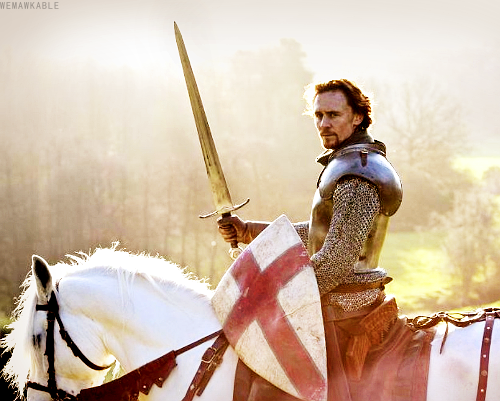
The Hollow Crown -- Shakespeare's History Plays - PBS

This BBC miniseries (2012) received rapturous critical reception when it was broadcast last year.  I've been looking forward to getting to watch them whenever it was possible, whether because they would be shown here or become available on dvd.  Some friends have via a variety of methods saw these as they were shown in the UK, and they could hardly find words to express how much they loved these versions.

Tom Hiddleston as Prince Hal
PBS initiates broadcasting the sequence on Fridays, starting tonight.
The Hollow Crown is a lavish new series of filmed adaptations of four of Shakespeare’s most gripping history plays; Richard II, Henry IV, Part 1, Henry IV, Part 2 and Henry V on THIRTEEN’s GREAT PERFORMANCES beginning Friday, September 20 at 9 p.m. (Check local listings.)
You can see a preview at the linked-to PBS website as well.


Thursday, September 19, 2013

Instead of Writing About the History of Our National Economic Stupidities

Which are making my head hurt as we are repeating, in a different way, but to a degree, for some of the same reasons.  We are preparing an economic catastrophe that will rival the one of 1837 caused by Andrew Jackson and his cronies.*  We didn't really pull out of that one until the War with Mexico 1846 - 1848, followed almost immediately thereafter by the discovery at Sutter's Mill.

The suffering was so great that the entire nation -- at least up north -- experienced serious public disorder and unrest.  This is why you see the northern cities ** establishing in the early 1840's their first official police forces, to cope with the violence and anger in the streets (due to no jobs, no credit, no money, no food, no shelter).

No, I'm not writing about this today, despite the stack brilliant books on the subject I'm re-visiting this week.  My head hurts enough as it is from this blasted cold.

Instead I think about this: Yesterday the Canadian geese arrived for the annual winter on the Chester River.

Last night the Chestertown osprey pair lifted wing along the Chester River moonpath, the start of their journey to their winter grounds in Venezuela.


Kent County is gold with harvest -- great gleaning for the geese!

Last night we mooned our way home in a musical cloud after an extraordinary night of latin jazz at the Jazz Standard, where we bought drinks from a beautiful tourist who works in the Hague and loves jazz, and for a beautiful African American who loves jazz and is having love troubles. None of us had met before.

Nor had the moon fully fattened last night, which it will do tonight.

Additionally, let us think of -- possets as colder weather slinks around the balmy present days of summer's end. Reason #109 for reading newspapers outside one's own region: this article from the online  UK Guardian on the history of possets, what they were, what they are now, and how to make them.

Delft Posset Pot circa 1720
---------------

* Andrew Jackson was perhaps even more ignorant about the necessity and function of banks in a national economy than Che Guevara, which is saying an enormous amount.

** The history of police forces in the south differs substantially from that in other regions of the U.S. For one thing, due to slavery and the militias and patrols that had been in place since the colonial eras, the slaveholding states were virtually police states, which they remained, at least for people of color for decades after the Civil War.

Wednesday, September 18, 2013

Joy and Delight at Absurd Levels

The arrival of an order of Post It Pads always provokes wide smiles, exclamations (sotto voce) and jumping for joy (restrained to tiny hops in respect for my neighbors).


My supply of of the vital Yellow Sticky Pads had fallen to -- two.  I can go through those in a single day of work when cooking with my research materials.

There is a comfy sense of security in having a few dozen pads, in unopened packets among the supplies. Sort of like for food, a filled freezer, bags of rice and beans, sacks of potatoes, a half dozen parcels of pasta from Raffettos (est. 1906!), some boxes and cans of tomato products and several unopened bottles of olive oil. You know no matter what you can get along for a while. :)

Sunday, September 15, 2013

The Voyage of the Frolic: New England Merchants and the Opium Trade

The justly famous Baltimore Clippers were purposed originally as privateers in the War of Independence and the War of 1812.


After the Treaty of Ghent, the Clipper design was re-rigged, so to speak, and many were constructed specifically for the African slave trade, which was, yes illegal.

In fact, the Act of 1794 had made it illegal for Americans to build ships for the international waters' slave trade. In the Act of 1794:
"Congress prohibited the use of any U.S. port or shipyard for the purpose of fitting out or building any ship to be used for the introduction of slaves. The law also prohibited ships sailing from U.S. ports from trafficking in foreign countries. Ships sailing from the United States to Africa, even if of foreign registry, were required to "give bond with sufficient sureties, to the treasurer of the United States, that none of the natives of Africa, or any other foreign country or place, shall be taken on board... to be transported, or sold as slaves in any other foreign place, within nine months thereafter." Penalties under the law included fines ranging from $2,000 for outfitting a ship to $200 for an individual working on such a vessel. The act provided that the ships could be confiscated, and half of all fines given to any informants, thus providing an incentive for ship captains and mariners to monitor the activities of anyone they suspected of being involved in the illegal slave trade."
The most infamous of these Baltimore Clippers for the international slave trade was perhaps The Venus. Under false Portuguese registry, papers, flag and false name, la Duqueza de Braganza,* at the end of November, 1838 she left Lagos, Nigeria with 1,150 slaves chained in that terrible spoon fashion below her shallow decks -- meaning you could not even shift to your other side, unless the entire chain moved with you.  The Venus arrived in Havana, January 7, 1839 with 800 + of her 'cargo' still alive.  Many more died quickly thereafter. Further:
"In 1841, the role of the Venus in the illegal transport of slaves from West Africa to Cuba became the focus of a report by President Martin Van Buren to the United States House of Representatives." p.43, Layton, The Voyage of the Frolic. **
A variety of ruses were quite openly employed to pretend these ships were not what they are, were not owned by whom they were owned, were not going to where they were going (think Prohibition and the transport of liquor into the U.S. from Europe and Canada).  After the Brits abolished the African slave trade in 1807 it got more complicated, and even more so when Britain abolished slavery in the West Indies in the 1830's.  But a large number of respected merchant houses, particularly in Boston, continued to finance the ever-evolving Clipper ships' designs for the incredibly lucrative slave trade from Africa to Havana to Brazil.

This was equally true for the opium trade, which was also illegal for Americans, and equally ignored by the great merchant houses who gained tremendous wealth in the China trade, by shipping opium from Turkey and India to China in exchange for those Chinese goods such as silk and porcelain so valued by Victorians in Europe and America.

It is on the American opium trade to China that archeologist Thomas N. Layton focuses in The Voyage of the Frolic: New England Merchants and the Opium Trade (1997) published by Stanford University Press. The opium ship Frolic's last voyage was from Hong Kong to Gold Rush San Francisco in 1850. Possessed of a faulty chart, her experienced captain's vision confused by low mist that concealed reef and rocks, she wrecked off the Mendocino coast. Through the history of this ship, the Frolic, Layton retells the era of the Baltimore Clippers all the way through to their end in that short period of the Tall Ship Clipper 1850 - 1858, when steam and the U.S. Civil War put a decisive end to the Baltimore Clipper ship yards.

Along the way we learn the history of the U.S. involvement in the African slave trade to Cuba and South America and the opium trade to China.  He links the two trades, both illegal, both incredibly profitable, to the accumulation of northern capital that helped drive further technological, commercial and financial developments of the second half of the nation's nineteenth century.

The Frolic's Captain Faucon, was a second generation Haitian, the Fells Point shipyard where she was built was established by a refugee from the San Domingue Revolution, and Frederick Douglass worked there, from whence, employing the papers of a free black seaman, he shipped north to escape his enslavement. 1850 was the year of the Great Debate over the admission of California into the Union, whether as free soil (which the Americans already there voted to be free soil) or a slave state (some fire breathing slave power plantation owners had moved themselves and their slaves to California in attempts to outvote the free soilers. They failed.  Moreover when they brought their slaves to the gold fields they were beaten by the free soiler miners who would brook no competition in their drive for gold from enslaved labor.) Good friends from pre-Gold Rush, sparsely populated California tallow-and-hide merchant ship days, Captain Faucon and Captain Richard Dana (Three Years Before the Mast) both captained ships for the Union naval blockade of the CSA coasts. So here, in one slim, easy reading, deeply researched book, is everything that will make the Civil War in another ten years.***

----------------------
Typing "the Venus Duqueza" into google provides a google book page of  Parliamentary Papers, House of Commons and Command, Volume 49 that describes the illegalities of the Venus in detail.

** This information becomes more pertinent in light of the trial of the Amistad escapees case of 1841 that now Representative, once President, John Quincy Adams argued --  and that Van Buren (1782 - 1862) grew up in a New York state family that owned six slaves themselves. This is one of those turning points in which it becomes more difficult for USians to be neutral about slavery, hardening opinion for or against.

*** To clarify what was asked elsewhere:  These matters are not in The Voyage of the Frolic per se, but I know of these matters taking place at the same time because I have been studying all this for some years. As well, yes, as anyone who even briefly looks into the Baltimore Clippers knows, Howard I Chapelle is the classic researcher, builder and writer in the field. Everyone who writes anything about clippers acknowledges Chapelle, including Layton.