LINES OF THE DAY

". . . But the past does not exist independently from the present. Indeed, the past is only past because there is a present, just as I can point to something over there only because I am here. But nothing is inherently over there or here. In that sense, the past has no content. The past -- or more accurately, pastness -- is a position. Thus, in no way can we identify the past as past." p. 15

". . . But we may want to keep in mind that deeds and words are not as distinguishable as often we presume. History does not belong only to its narrators, professional or amateur. While some of us debate what history is or was, others take it into their own hands." p. 153

Silencing the Past: Power and the Production of History (1995) by Michel-Rolph Trouillot

Tuesday, April 30, 2013

Perfect Spring Day

Lovely sunshine, no wind, the temperature just about 70 degrees.

I meet el V for lunch at CUNY -- their cafeteria is wonderfully priced, with a variety of choices for healthy, nutritious tasty meals and dishes -- and the most sinful of desserts.  (We split a pecan cheesecake that was the perfect combination of salty crunch -- the pecans and thin caramel crust -- and silky cheese.)

Then came the reason for a lunch date today when there were so many other necessary ways to spend our time on schedule: a lecture on the poet Phillis Wheatley by David Waldstreicher.


As Wheatley does, he brought together so much about her era: Africa, the classics, empire, Thomas Jefferson, slavery -- another way of putting it, is the conundrum of slavery and libery in a world of empire. Empire, in the guise of slavery itself, was a threat to home liberties, which Mansfield (British judge, 1772, who declared in England -- as opposed to the colonies --  property could not be found in persons) saw in the course of coming to his Somerset Decision. (We have long held now, particularly after reading Waldstreicher's earlier works, that the Somerset Decision had a great deal with the Southern slaveholding power elite's determination to force Independence.) Waldstreicher makes the case that Phillis Wheatley, very likely by the very reason that she was a young, enslaved girl from the Sene-gambian region in Africa, and taken at that time, to that place, Boston -- and was, not least, a genius -- understood how the world from which she was taken mapped upon the classics and the world they described and then mapped upon the world in which she found herself -- and consciously directed that for her own good.


Further, Waldstreicker provides the case as to why it was so important to Thomas Jefferson to sneer at her poetry, as "merely religious, not classic." (In fact few if any of the Founding Fathers themselves could read Latin or Greek either, which, at least in Jefferson's case contributed to his angry sense of colonial inferiority -- which he often then, remedied / played out as 'race.'

Wheatley is having somewhat of a revival, starting with The Trials of Phillis Wheatley: America's First Black Poet and Her Encounters with the Founding Fathers (2003) by Henry Louis Gates.

Waldstreicher's approach in his book-in-progress is to see Wheatley seeing herself within the context of the political imperium and the controversy of liberty, slavery and race.

A most stimulating afternoon!

Context Quote From *The World That Made New Orleans*


On The Root, in Henry Louis Gates's column, 100 Amazing Facts About the Negro, in the entry titles, "Were There Slaves Like Stephen in 'Django'? -- Whether So-Called House Slave Betrayed Others in Bondage."

OK, that isn't odd, but finding a quote from The World That Made New Orleans in this context is, as we repudiated the movie upon first seeing the script, but HLG endorsed the flick, as he wrote soon after it was released. The link to the column was forwarded to us otherwise I'd not have seen it.  I do read The Root regularly, once or twice a week.  I would have skipped this installment of Gates's column because he was mostly talking of the movie within this context of field vs house slaves, and Malcolm X labeling Martin Luther King a house slave.

What most interests me as an historian about this column is what Gates doesn't mention in his piece surrounding the Malcolm X - Martin Luther King contretemps.  * Of course Malcolm's characterization of him wounded MLK very much -- but wherever the two men stood in their time, whoever committed the crimes, they both were assassinated for what they believed, one by blacks and one by whites.

Another part that is of interest to an historian is how little was generally known about arrangements among the black populations on the plantations in Malcolm X's time. Both men were responsible for the creation of African American Studies, and changes in the direction of the study of our national history and our social culture.  Along the way it became understood that a large difference between house and field was the constant state of surveillance in which the house population existed -- day and night. House people felt smothered and suffocated, because they never had a single moment out-of-view of their master or mistress. Often that most intimate of body slaves was gifted to the master and mistress when both slave and owner were tiny children. These servants were called 'shadows,"  That's how constant in the presence of their owner they were. I should think, considering the confinement of 'decent' women generally in those times and places, it was worst of all to be a body servant to the mistress. You really could go days without ever being out of her sight, except, perhaps, when she slept. Not a minute of privacy. What would this do to your mind?


Which One the Slave?

A third consideration as an historian is how much since the days of Malcolm X and Martin Luther King is how generally understood now it is is that so many of the accusations of slaves plotting to rebel, slaves murdering their owners, were terrible fantasams erupting out of slaveholders' constant state of anxiety and fear -- because they knew how easy it might be to do -- see above, constant attendance in the most intimate of all circumstances. Shoot, they couldn't even be sure who was white! It wasn't infrequent that a parallel to witch hunts and lynchings would happen in enclosed, temporary communities such as the riverboats -- is that man -- that woman -- at the captain's table really black?  There were many court cases to prove or disprove this accusation.  About half the time the defendant was white, and about half the time the defendant was technically, i.e. legally (i.e. mother a slave made you black and a slave) black.

No wonder this nation even now remains in a state of anxiety -- denial and ignorance -- around that artificial construct, race.
----------------------------
* Do I need to add neither this statement nor anything else written here is a criticism or a negative commentary of what Dr. Gates wrote? Rather, what I write in response to reading Dr. Gate's essay is me dialoguing with myself?

Saturday, April 27, 2013

Happy Birthday, President - General Grant

Born today, in 1813, in Point Pleasant, Ohio.


As president, Grant was a staunch upholder of Lincoln's plan of Reconstruction, defending the full integration of black men into the legal, economic and political institution of the United States. Therefore, since he was also the general who won Abraham Lincoln's war, Grant was a primary target in the South's subsequent revisionism of the run-up to war and the war itself, turning itself into the victim of the war they started, their loss into the Glorious Cause and writing slavery out of the history all together. While turning Robert E. Lee into the contrasting saint, Grant's character was shredded: a drunk butcher of men, enabler of that other butcher, Sherman, dishonorable and incapable. He could never have defeated the chivalrous, brilliant Lee except he had unfair advantages.

Northerners played into that game, starting with Henry Adams, who held a grudge against President Grant. Grant didn't provide Charles Sumner, an old, close Adams's family friend, with the office Sumner wished for. President Grant believed the Senator, never fully recovered from the vicious caning by South Carolinian Rep. Preston Brooks in 1856, and now elderly, wasn't up to it.  Gore Vidal followed the sly insinuations Adams insinuated into his novel of post-war D.C., Democracy. In 1876, the post-Civil War volume in his Chronicles of Empire series, Vidal painted a thoroughly mendacious portrait of Grant as pathetic, incompetent and unpopular.

During his long, painful death from throat cancer Grant wrote Personal Memoirs of Ulysses S. Grant, published by Mark Twain. The Memoirs was organized in two parts. The first section, though it deals only briefly with his early life, is a plain but nevertheless vivid account of growing up in a small Ohio community in the Jacksonian era.  It smoothly segues into his time at West Point. Then he describes his experience in the Mexican-American War, which, Grant states, as well-understood at the time, that he like so many others in the U.S.,  heartily disapproved of this war, for it was an unjust war  made by and for the benefit of the Slave Power, which the nation as a whole had to finance. The Memoirs was enormously successful as a work of history, and as a publishing venture.  In literary judgment it ranks with Julius Caesar's The Gallic WarsThe Memoirs has never been out of print.


Grant's funeral procession became an historical "Pageantry of Woe," as Americans of every class and region flocked to pay respects to the man, who with Lincoln saved the Union, who had exercised particular magnanimity to General Lee at the Surrender at Appomattox. On the day of his funeral, churches in hamlets, small towns and cities everywhere observed special commemoration.

His tomb is in New York City's Riverside Park, overlooking the Hudson River.

Friday, April 26, 2013

‘The Loves of Aaron Burr: Portraits of Corsetry & Binding’

An installation that opens at the Jumel Mansion at the beginning of May, created by artist-designer, Camilla Huey.

Based on the women in the life of Burr — the controversial vice president and duelist who briefly lived in the mansion — the exhibit explores his mother, daughter, two wives and four purported mistresses through the allure of their corsets.
“It is the most intimate of fashions, extremely personal and close to the heart, and it corrects and conceals and stifles and seduces and constrains and thrusts forward form all at the same time,” Huey said.

The feature includes lovely photographs of Huey's corset installations, reflecting the period design and milieu that would be a part of the individual woman's daily life.


I am biased about this show, as the artist and I have shared many conversations about Aaron Burr, his life, his people and his times over the course of some years now.  Huey's interest is from a different angle than mine, but that means we have been able to expand each other's vision and information.

As the photos show, Huey's creations show both imagination and deep knowledge of the time, the class and insight into each of the individuals she's brought back into view from behind the veils of the past.

The fitted females contained within, most of them authors and diarists and letter-writers, were accomplished in their era, but have been all but forgotten in the 21st century, and Huey is elevating them from the footnotes of history.
“I wanted to come close to these women and see what they were really like, and the way I know women is by dressing them and knowing their sizes and personal preferences and clothing and colors and tastes and fragrances,” she said.

Wednesday, April 24, 2013

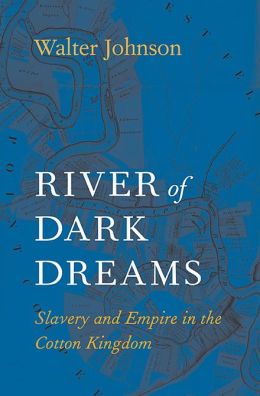
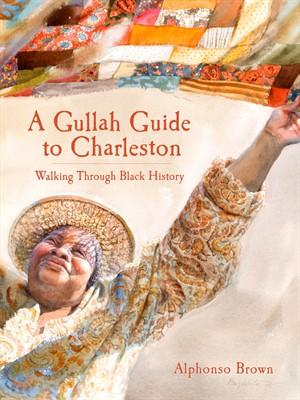
*River of Dark Dreams* *Freedom National* *A Gullah Guide to Charleston*

Arrived via the lovely UPS Person yesterday:

I began reading immediately River of Dark Dreams: Empire in the Cotton Kingdom by Walter Johnson (2013), Harvard University Press. This is the  follow-up to Johnson's essential Soul By Soul: Life Inside the Antebellum Slave Market (1999) Harvard University Press. The focus of River is not on slavery or the slave trade, but on ramifications of King Cotton's reach in the Mississippi Valley, from the technology of steam to the Slave Power's fantasies of global imperialism.

The principal theme of the book is the determination of the powers who ruled the Cotton Kingdom to expand and transform the boundaries of the spaces, geographical, psychological and social, in which all the people within the kingdom of King Cotton were confined. The imagery runs constantly between confinement vs. expansion. When it came to the slaves, one assumes their spatial imagery fantasies ran between confinement and escape.

So far, if I'm understanding Johnson's thesis properly, I'm not sure I entirely buy it.

According to his spatial organization principle, the underlying reason for the Civil War wasn't any of the issues or even the conglomeration of issues we speak of in the lead-up to the Civil War after the Great Debate around California's entering the US as a free state.  These would be the expansion of the Fugitive Slave Act, the roll back of the 1820 Missouri Compromise, the Kansas shooting war, the Dred Scott decision, the caning of Charles Sumner, the righteous urge to abolition, the anger at the Slave Power's determination to expand slavery throughout the U.S. These issues and events sent the Northern abolitionists, particularly those of Boston and Massachusetts, to explore seceeding from the South.  (Recall, that during the War of 1812, New England essentially had seceded from the rest of the country.)

I am far from alone in seeing clearly that the Slave Power was determined to expand outside of the lands won for them by Andrew Jackson, to push slavery and their domination upon every state and territory in the Union. But Johnson sees the goad to do this as not connected to events and devisions within the United States or even North America. That came in retrospect, after Secession and the War took place.  The Slave Power's vision was global, not local.  CSA dreamed a global slave imperium.

In other words, it seems that this historian is, in some ways, in this particular work, dealing in counterfactuals -- what did not happen -- more than in what did happen.

Whether or not Johnson is correct, in the end the military war was fought here, not in the Pacific, not in South America. It was American blood (immigrants' blood in rivers, in the Union forces) that was shed in this  -- starting in Kansas -- not in another part of the world, and fought almost entirely within the geographical "container of the CSA" itself. So in any case, whatever the Slave Power's ultimate goal might have been, it was burned to the ground within its cradle, never to break out, whether north or west, much less to Hawaii, Havana and Honduras.


Which, in history's chronology of these matters brings us to James Oakes' Freedom National: The Destruction of Slavery in the United States 1861-1865 (2013) W.W. Norton & Company.  This tells the story of shifts in emancipation and re-enslavement during the years of the Civil War.  As slaves left the plantations in increasing numbers during the course of the War, free people of color were increasingly forced into taking their place.  Of course, there were not anywhere near the numbers of free people of color to replace the 3,950,528 slaves in place at the outbreak of the Civil War. This book also tells the story of how the Union army attempted to deal with the increasing numbers of contraband negroes, and after the Emancipation Proclamation, inform the slaves of their freedom, as well as other matters. The through theme of this book is that Lincoln, from the moment of his inauguration, began to explore "every political and military means at his disposal to wipe out slavery forever."

You cannot remember the title of this book. Perhaps within Freedom National's pages the reason for this seemingly unfortunate title will be revealed.


In preparation for the upcoming research road trip from the History Press is this conveniently small A Gullah Guide to Charleston: Walking Through Black History (2008), by Alphonso Brown.  Mr Brown is the owner and operator of Gullah Tours, Inc.  We hope to take advantage of his expertise in these matters.


Tuesday, April 23, 2013

BBC: Making of Europe Unlocked by DNA

The story's written by Paul Rincon, on the BBC Science  News "page."


A study of remains from Central Europe suggests the foundations of the modern gene pool were laid down between 4,000 and 2,000 BC - in Neolithic times. ....
"What is intriguing is that the genetic markers of this first pan-European culture, which was clearly very successful, were then suddenly replaced around 4,500 years ago, and we don't know why. 
"Something major happened, and the hunt is now on to find out what that was."


*Jane Austen, Game Theorist* Teaches Games' Theorists

Jane Austen, Game Theorist (2013 - Princeton University Press) is by Michael Chwe, an associate professor of political science at the University of California, Los Angeles.  As one might presume, located in Los Angeles as Chwe is, the spark for this work, as well as his first knowledge that such a person as Jane Austen had existed, is a movie, Clueless (1995), a very loose LA update of Emma. *


Dr. Chwe had a major scientific break-through watching Clueless:

“This movie was all about manipulation,” Mr. Chwe, a practitioner of the hard-nosed science of game theory, said recently by telephone. “I had always been taught that game theory was a mathematical thing. But when you think about it, people have been thinking about strategic action for a long time.”

Which led him to read some of Jane Austen's novels, in order to ca$h in on the Jane Austen + monsters + anything else anyone can think of  to write Jane Austen, Game Theorist because English majors, students of literature, generations of readers of Jane Austen needed to be clued into the news that their admired and beloved author contained more than mere entertainment -- she can teach us lessons about how human beings interact, in order to get the outcomes they desire.  Who knew? 

Chwe organizes his study of Austen around the "Clueless Concept" ** at least judging by this article:


But Mr. Chwe, who identifies some 50 “strategic manipulations” in Austen (in addition to a chapter on the sophisticated “folk game theory” insights in traditional African tales), is more interested in exploring the softer side of game theory. Game theory, he argues, isn’t just part of “hegemonic cold war discourse,” but what the political scientist James Scott called a subversive “weapon of the weak.”
Such analysis may not go over well with military types, to say nothing of literary scholars, many of whom see books like Mr. Chwe’s or “Graphing Jane Austen,” an anthology of Darwinian literary criticism published last year, as examples of ham-handed scientific imperialism.
“These ostensibly interdisciplinary efforts are sometimes seen as attempts to validate the humanities by attaching them to more empirical disciplines,” said Jonathan Kramnick, a professor of English at Johns Hopkins and the author of the 2011 essay “Against Literary Darwinism,” who has not read Mr. Chwe’s book. “But for some, myself included, literary studies doesn’t need to attach itself to any other discipline.”
Even some humanists who admire Mr. Chwe’s work suggest that when it comes to appreciating Austen, social scientists may be the clueless ones. Austen scholars “will not be surprised at all to see the depths of her grasp of strategic thinking and the way she anticipated a 20th-century field of inquiry,” Laura J. Rosenthal, a specialist in 18th-century British literature at the University of Maryland, said via e-mail.

--------------------
* Coincidentally, I re-watched the movie last week, which did not hold up my positive memories from its theatrical release, back-to-back with the Gwenyth Paltrow period Emma, which confirmed that production's lack of depth -- but startled me by including Polly Walker as -- Jane Fairfax!  Can you imagine my dears, HBO Rome's Atia of the Julii as -- Jane Fairfax??????

** Again, note the unconscious but present distorting lens through which LA view everything, for it is highly unlikely a reader will find the word 'clueless' within Jane Austen's novels. She does though, on one occasion, employ 'world-class' , to describe a particularly fine vista.