LINES OF THE DAY

". . . But the past does not exist independently from the present. Indeed, the past is only past because there is a present, just as I can point to something over there only because I am here. But nothing is inherently over there or here. In that sense, the past has no content. The past -- or more accurately, pastness -- is a position. Thus, in no way can we identify the past as past." p. 15

". . . But we may want to keep in mind that deeds and words are not as distinguishable as often we presume. History does not belong only to its narrators, professional or amateur. While some of us debate what history is or was, others take it into their own hands." p. 153

Silencing the Past: Power and the Production of History (1995) by Michel-Rolph Trouillot

Friday, November 11, 2016

Amsterdam News Reviews Symphony Space Slave Coast Live Performance

Because the video advertisement on the page is so annoying, even though it's from CNN and shows thousands of people protesting the results of the election, I pulled the part of about Symphony Space and Slave Coast from the longer article and c&p ed it here.  The article's  author is the Amsterdam News's editor. Amsterdam News is the longest surviving original African American newspaper in New York City. It is the only Symphony Space performance review, of course, beyond the blog pieces written by white jazz music writers. 


The Amsterdam News Building at 2340 Frederick Douglass in New York has been adorned with some funky new murals as part of the #NotaCrime campaign 

The text came from Ned and Constance Sublette’s book, “The American Slave Coast: A History of the Slave-Breeding Industry” (Lawrence Hill Books). The passages were read by the authors; by vocalist Lezlie Harrison; by musician, vocalist Nona Hendrix; by actor, writer Carl Hancock Rux; by actress Kandia Crazy Horse; and by filmmaker Jonathan Demme. 
The music was composed by the saxophonist Donald Harrison and performed by his versatile quartet of guitarist/banjoist Detroit Brooks, pianist Zacci Curtis and drummer Darryl Staves. 
After reading “The American Slave Coast,” Harrison was inspired to write a composition with an intriguing edge anchored in the blues, and at times his New Orleans roots leaped out. 
For two hours the sold-out audience sat in scary silence as the music consoled them in the midst of being tortured by slavery’s agonizing truths. 
Ned stated, “I knew from the beginning this project needed to be performable.”
“The American Slave Coast” is the 2016 winner of the American Book Awards. Slavery, one of the most horrific crimes on the face of the Earth, is a crucial fabric of America. It is this contemplated abomination that has kept this country racially divided over the past 400 years. 
Last weekend the slavery empire built on terrorism and the torture of Black people, politics and economics traveled through time to sprout the heart-wrenching truth through the words of “The American Slave Coast: Live,”
at Manhattan’s Symphony Space. 
Today, one political candidate is using race as a talking point. But ssshhh! He isn’t using that word. He prefers the phrase “let’s make America great again.” Some folks ask, “Why don’t Black people just get over it? After all, slave masters weren’t really that bad.” 
Perhaps the slave masters they are referring to were former presidents Andrew Jackson, Thomas Jefferson and James K. Polk. Regardless of their presidency, these men were white supremacists who profited from and promoted the selling of African-Americans from birth to adulthood. 
“The American Slave Coast: A History of the Slave-Breeding Industry” is one of the most concise, graphic, historically researched books ever written on the subject. This book should be required reading for Americans, particularly those running for any political office.
By now there are 63 64 reviews of The American Slave Coast: A History of the Slave Breeding Industry up on amazilla.  With very few exceptions all the reviews are four and five stars.  I think, though I haven't looked myself, that the majority of the reviews are 5 stars.

Monday, November 7, 2016

As Yet, Project Untitled

      . . . . Harriet Lane is an interesting historical personage What will initially bring her to the attention of a USian historian is that Harriet Lane Johnston was President. Buchanan's niece and his de facto White House First Lady.

She performed all the duties of a First Lady of her time that are now taken on by a dedicated, permanent member of the White House staff.


In Harriet's earlier years, and for many years, she was considered one of the most beautiful, attractive and interesting belles of the age. Supposedly she received an enormous number of marriage proposals, but remained at her uncle's side until age 35, when she married (1866)  Henry Elliott Johnston (1831-1884), whom she had met many years before, and with whom she always remained in touch, whether in Pennsylvania, D.C., New York, or Europe.
In those decades leading up to 1860, such important matters as creating the seating plans for White House dinners, and even making the place cards, were done by the First Lady and her female relatives, and maybe, a close female friend or two.  She already had a great deal of experience. As a belle of D.C. in her extreme youth her understanding of how things worked in socially, culturally and politically in Washington was deep and broad.  She became even more accomplished, as well as sophisticated in London society, when her uncle was minister to England. She was madly popular in London, a popularity that included an authentic friendship with Queen Victoria (at least, so the U.S. newspapers jubilantly reported, overjoyed that an American was included in the balls, hunting parties and banquets with British nobility).

Harriet Lane's life would have been quite different if her uncle Buck hadn't had such a long, successful political career in D.C.. He filled a seat in the House of Representatives, was elected a Senator, named minister to St. Petersburg (by Old Hickory in his second term), appointed Secretary of State (under Polk). and minister to England (by Pierce), before finally achieving his decades' long goal of becoming President of the United States.

Harriet Lane was educated at the Merritt Boarding School in Charleston in western Virginia (no West Virginia yet).  When Buchanan became Secretary of State he transferred her to the Academy of the Visitation Convent School, Washington, D.C. (1847-1849). He wrote:
 "I think of all the places for you, the nunnery at Georgetown would be the best." 
The convent school was part of what now is Georgetown University. Lane was there only a few years after the Jesuits sold their Maryland plantation slaves down south in 1838, to plug the holes in the college's finances, since their tobacco plantations were no longer producing revenue.

A friend of Harriet's, who has yet hasn't been named, whom she meets at the convent school, a girl who also comes to be friends with Thaddeus Stevens's niece or nieces, will bring this up at some point in a conversation. These girls will remain friends as long as both of them are alive. In their class, friendships formed at school were as important in women's later lives as were the friendships formed by boys and young men at their schools.

Harriet Lane Johnston, Grand Dame. This summer in Lancaster, PA, I took a photo of this portrait that still hangs in the Buchanan mansion, Wheatlands, along with many others. 
Buchanan's character will be played straight -- no scenes of midnight London cruising in the Victorian homosexual haunts of that city, for instance.

Harriet destroyed all of Buchanan's correspondence with "Miss Fancy" (Andrew Jackson dubbed Buchanan and his dear friend, William Rufus DuVane King, Miss Nancy and Miss Fancy), just as King's family did with his correspondence. Thus there are is no smoking gun primary documentation that they had a full-blown homosexual sexual relationship with each other -- or anyone else, for that matter. However, the two men were very close, lived together in D.C. during the months government was in session, went everywhere together, were inseparable.

In a family like Buchanan's and that of his fellow Lancasterian, Thaddeus Stevens, in which female relatives played all the public and social roles that wives would have played, and their housekeepers and their families were treated (unusually for the era!) as part of the family -- even unto receiving substantial legacies, dining with the family, etc. -- Buchanan's family would have taken his deep attachment to King in stride. Perhaps they loved King themselves. And certainly Harriet Lane herself was a sophisticated woman of the world -- she was even a friend of Queen Victoria's. She would have understood how the world might have interpreted her beloved uncle's relationship, and chose to protect his reputation in that area -- he is still vilified in both northern and southern quarters for his actions as POTUS.  The north's point of view is that he aided and abetted the slaveocracy and secession, while the south's is that he didn't help them enough. I feel Harriet would have keenly felt her uncle's grief from King's death, and entered into it with all sympathy.

The families of abolitionist Stevens and pro-southern Buchanan lost so many close members, often within short periods, yet another mirror reflection found so often in the matters of the War of the Rebellion, not excluding the White House in D.C. and the White House in Richmond. Harriet lost her husband and her children and then her uncle, in close succession. Yet, most of her life was still ahead of her, and she lived it fully and filled it with accomplishments that signify into the present.


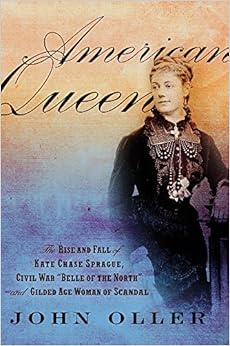
A Matthew Brady photo of Kate Sprague Chase when she was very young.
Ultimately a sad story.  Kate's end wasn't the prosperous one of Harriet's, though they both ended in Washington, D.C., where ultimately they both were most at home.


    .... I haven't seen any thing about this but do wonder if she and Kate Chase ever met?  (I read this biography about Kate when it came out.)  Kate truly shone during the war years in D.C. and Buchanan, being a persona non grata for the Lincoln administration, rusticated at Wheatlands.  But they may well have met in New York after the war, after Harriet married, while Kate was still married.


Saturday, November 5, 2016

Requiem For Thousands of BBSes Gone

     >>> Those who had the experience and those who didn't -- a generational as well as digital divide.

Images weren't possible, which had so much with their demise.

Ah, the GEnie SFRT . . . .
The four Science Fiction RoundTables (the SFRT): the official online home of the Horror Writers Association and the Science Fiction and Fantasy Writers of America before the Internet became popular (SFWA members, who were all published authors, received free access to the SF RoundTables) {J. Michael Straczynski developed the show Babylon 5 while on the SFRT and maintained his e-mail presence throughout the run of the show}

Not to mention the Buffy discussion group!

In The Atlantic, "The Lost Civilization of Dial-up Bulletin Board Systems."


Tuesday, November 1, 2016

Our Remarks for Sunday Night's American Books Awards - Before Columbus Foundation

Dr. Roxanne Dunbar-Ortiz kindly read our words as we could not get to the West Coast within a few hours of the Symphony Space live performance with music event of The American Slave Coast . . .

       . . . .  Dear Dr. Roxanne Dunbar-Ortiz:

Thank you so much for lending your voice on behalf of our work as we happily accept an American Book Award. Your endorsement means a great deal to us.

Please thank Justin Desmangles on our behalf, and of course, the Before Columbus Foundation. We salute the Foundation on the longevity of the American Books Award, whose roster of recipients over the years takes on a historical perspective all its own, and in whose magnificent playlist we are now thrilled to reside.

Perhaps because of the stimulating name Before Columbus, and because The American Slave Coast is squarely in the genre of American history, it took a while for it to sink in for us that this wasn’t a history award but a literary award. Which is particularly gratifying, because we have long read history as literature, and vice versa. Creating historical narratives is inevitably a literary act, and it’s a never-ending task, because people interrogate history differently over time: different moments have different urgent questions, different reference points, different techniques, different sources, different taboos.

Our publisher, Chicago Review Press, published all three of Ned Sublette’s books prior to The American Slave Coast; all four were edited by Yuval Taylor, creating for us a long-term continuity of editor, publisher, and writer that is rare in present-day publishing. This solid editorial support has allowed us to create large historical structures, which goes against the grain of a publishing industry focused on short books and narrow topics. Our book is 265,000 words or so, and weighs 3 pounds in hardback. At first we were apologetic for its length and heft, but in New Orleans a woman said to us, “It takes a book that big to tell our story.”

Quote [from The American Slave Coast's text]:
The American Slave Coast is a history of the United States that takes into account something that everyone in slavery days understood: the workings of the slave-breeding industry, which was a unique creation of Anglo-American entrepreneurship, and which was central to American politics as long as it existed. All of American history looks different once the slave-breeding industry is taken into account, and indeed key events like the annexation of Texas and California are inexplicable without reference to it.

The book became a project in 2010, when Ned was named the Patrick Henry Writing Fellow at the C.V. Starr Center for the Study of the American Experience at Washington College in Chestertown, Maryland, and thanks also to our agent, Sarah Lazin. The argument is a little complicated, but here’s how we tried to explain it in the introduction, quote:

This is a history of the slave-breeding industry, which we define as the complex of businesses and individuals in the United States who profited from the enslavement of African American children at birth. At the heart of our account is the intricate connection between the legal fact of people as property—the “chattel principle”—and national expansion. Our narrative doubles, then, as a history of the making of the United States as seen from the point of view of the domestic slave trade.

It also traces the history of money in America. In the Southern United States, the “peculiar institution” of slavery was inextricably associated with its own peculiar economy, interconnected with that of the North.

One of the two principal products of the antebellum slave economy was staple crops, which provided the cash flow—primarily cotton, which was the United States’ major export. The other was enslaved people, who counted as capital and functioned as the stable wealth of the South. African American bodies and childbearing potential collateralized massive amounts of credit, the use of which made slaveowners the wealthiest people in the country. When the Southern states seceded to form the Confederacy they partitioned off, and declared independence for, their economic system in which people were money. . . .

The conflict between North and South is a fundamental trope of American history, but in our narrative, the major conflict is intra-Southern: the commercial antagonism between Virginia, the great

slave breeder, and South Carolina, the great slave importer, for control of the market that supplied slave labor to an expanding slavery nation. The dramatic power struggle between the two was central to the Constitutional Convention in Philadelphia in 1787 and to secession in 1861.
[End Slave Coast quote.]

      . . . .  For us, writing a book doesn’t end with publication, it merely enters a new phase. In the year since publication, we’ve been on the road when we can be, taking it as many places as possible, and hearing what connections people are making to this history in this age of police brutality, open-carry militias, and mass incarceration. We’ve learned so much about our own book by going around the country during the last year, reading, talking, and listening. We had a tremendous experience last month in Columbus, Indiana, where we spoke to 150 high school students. In doing this, we’ve had the privilege of hearing a cross-section of what people are talking about.

It’s been an uphill struggle trying to get the narrative out there: with a few much-appreciated exceptions, mainstream media haven’t been in a hurry to talk about the slave-breeding industry, but we’ve had wonderful experiences with regional black media, especially AM radio, and independent left media.

Unfortunately, we haven’t been to the West Coast yet, but we hope to remedy that in 2017. We’re at home today, just emerging from our Friday night performance at New York City’s Symphony Space of The American Slave Coast Live, a 2-hour reading of the book with multiple voices and a live score by Donald Harrison and musicians. For two hours, a theater full of people listened and responded to historical discourse. It was cathartic, and we hope to present it in other cities.

At the top of the show’s flyer, we proudly set a banner: AMERICAN BOOK AWARD WINNER. So many people have congratulated us on this award. Our publisher is very happy. We send a profound thank-you to the Before Columbus Foundation, and we feel dumb for not being there to celebrate with you.

Sunday, October 30, 2016

Aquarius -- Sonia Braga French-Brazilian Film 2016


Aquarius is the most perfect film I've seen in many years. By most perfect I mean how very tight the film is in terms of language, beats, story - plot, character and metaphor.  Everything meshes in the way a jigsaw puzzle does when one puts in the last piece. On the surface the film is unassuming, lacking in pretension.  But the more it is looked at, the more a brilliant piece of cinema it reveals itself to be.


Clara, a 70 year old woman in Recifie, the capital of Pernambuco, Brasil, is a breast cancer survivor of over 30 years. She's the single  holdout owner of her apartment in a perfectly fine, lovely old building located barely across the highway from the local beach. The developer  who has bought the building, cannot commence demolition and building a high rise banal, souless luxury rental - condo until gets Clara out. The means stooped to are horrible, but entirely unexpected. Other unexpected things happen.  However, the violent acts the viewers are so trained to expect from USian flix do not take place.

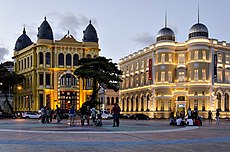
Historical Recife

Tourist Recife

. . . . Do we want a powerful, kick-ass, empowered, empowering, powerful, effective woman of agency in films and television?  A woman who lives on her own terms, in whom we can believe?  We'll have to go a long way, alas, before finding another Clara. O no, she does not resort to being man with t*ts, carrying a gun and doing martial arts -- she's not even her own age-bracket Helen Mirren kind of kick-ass Hollywood female protagonist.  In fact, Clara has only one t*t . . . .  So there.

Aquarius's parts work perfectly and beautifully, because this is Brasilian sensibility, and the music is Brasilian.  Additionally Sonia Braga remains one of the most beautiful women on the planet and one of the best actors.

If the viewer knows something about current Brazilian politics and business and the horrors of what's happening with the rain forests, the perfection of the final metaphor just shouts out.  But it's not necessary to know.

HIGHLY recommended.  How good was it?  El V watched the whole thing and he never watches movies.  He goes with and leaves within 15 minutes almost always.

Nope, we're still not able to do anything today, still dealing with the exhaustion of Friday night catharis of weeks of work for the Symphony Space live reading with multiple voices and music from The American Slave Coast.  We're totally passive.  I am making pasta though and drinking wine while doing so. Music is Bob Dylan's Tempest, (2012)
.

Friday, October 28, 2016

E-mailing When Very Very Very Tired

Which Himself was last night after a long long long day at the theater:

Quote:
here's a nice piece about the show in the amsterdam news today and we got a pick in the times. 
we had a music rehearsal and everything is working . . . 
so, the drill for friday: 
be at symphony space at 1. we'll wear clothes, but makeup and hair can wait until after the run-through.

And here I am, really really really planning to train it up to Symphony Space today in the nude. Dang!

OTOH -- seeing one's book's title in the same slug line as the name Zora Neale Hurston is kinda a kick!  :)

Project Americana looks at American culture, history, and politics through the eyes of leading figures in music, literature, comedy, and more. Thought-provoking, insightful, and oftentimes celebratory, this project sets out to honor America’s deep artistic heritage and to draw connections between the past and where we are today.

The Live Musical Reading Event tonight of The American Slave Coast is part of Symphony Space's Americana series.


Sunday, October 23, 2016

L'autumn Est Arrivé


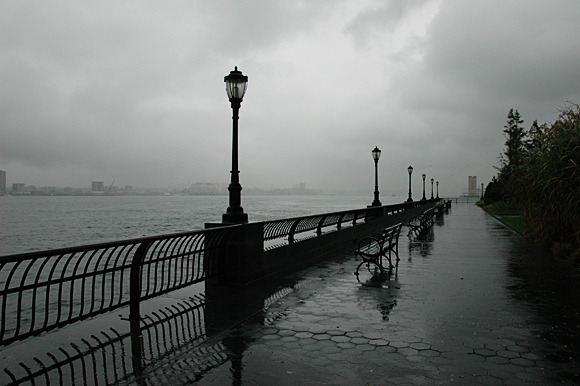
Yesterday I wore my little fingerless woolly mitts for the first time. Carried an umbrella. It was about 45 degrees at 5:30 PM. It had been quite windy and raining off and on for the last day and a half.


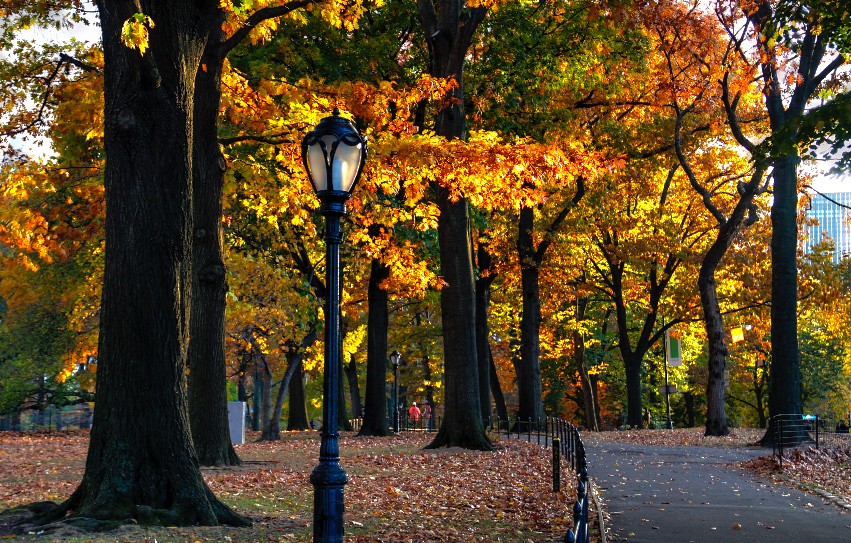
Central Park
Today's bright and sunny, with a high in the low - mid 50's.  Not so windy.

We had rehearsal again.

I have more rehearsal than anyone, because every time el V does a run-through at the time convenience of any of the other readers, I'm there too.

OTO, I need more rehearsal than anyone. But no amount of rehearsal will give me stage presence. This will be obvious surely in the video that is going to be shot of the performance, which, hopefully, can be sent to interested groups and organizations who want to do this in their city.

This was a classic, perfect Sunday afternoon in late October NYC. Just lovely.

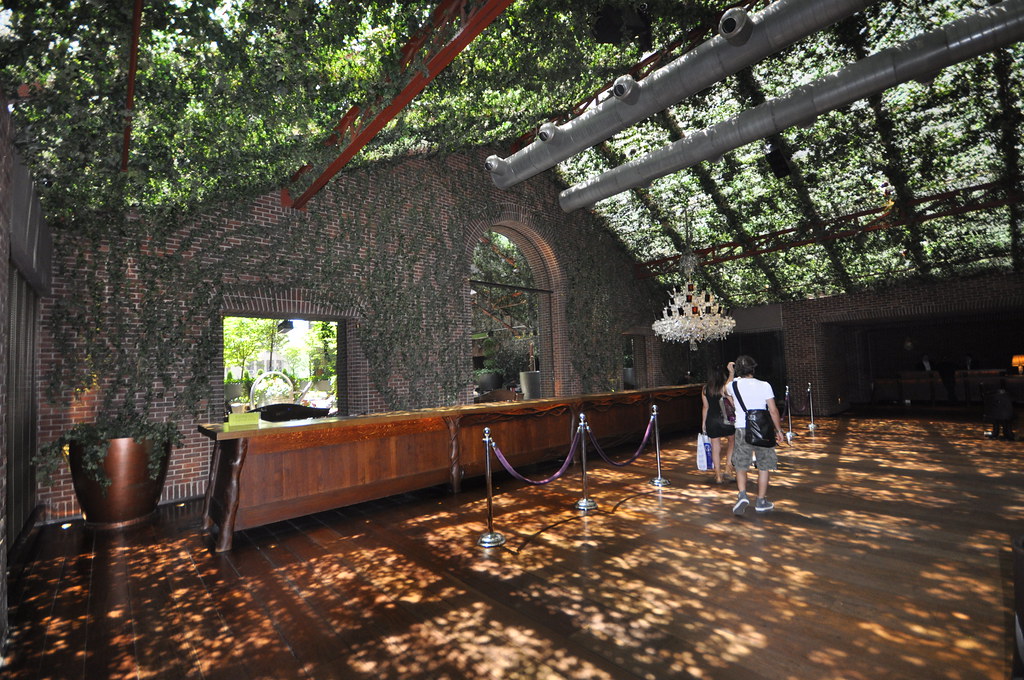
Hudson Hotel Lobby
This afternoon we went uptown, where we met with two of the other readers in one of the Hudson Hotel's spaces to do another through of Slave Coast' s script for the Symphony Space performance Friday night.  It was so pleasant in this hotel where lots of show biz parties get thrown, filled with cheerful tourists and out-of-towners enjoying a New York Sunday afternoon in October.  Both K and L have performed there at different time. We had a good run-through too.

After we broke up, el V and I wandered Central Park. Ended up back down here. Got falafel sandwiches and ate them in Washington Square Park. We haven't done anything like that in years.

During the wanderings nary a sign for either candidate was to be seen anywhere, nor lapel buttons, bumper stickers -- none.  This has never happened here in a presidential election before, methinks.

Relaxing a bit.