LINES OF THE DAY

". . . But the past does not exist independently from the present. Indeed, the past is only past because there is a present, just as I can point to something over there only because I am here. But nothing is inherently over there or here. In that sense, the past has no content. The past -- or more accurately, pastness -- is a position. Thus, in no way can we identify the past as past." p. 15

". . . But we may want to keep in mind that deeds and words are not as distinguishable as often we presume. History does not belong only to its narrators, professional or amateur. While some of us debate what history is or was, others take it into their own hands." p. 153

Silencing the Past: Power and the Production of History (1995) by Michel-Rolph Trouillot

Wednesday, March 23, 2016

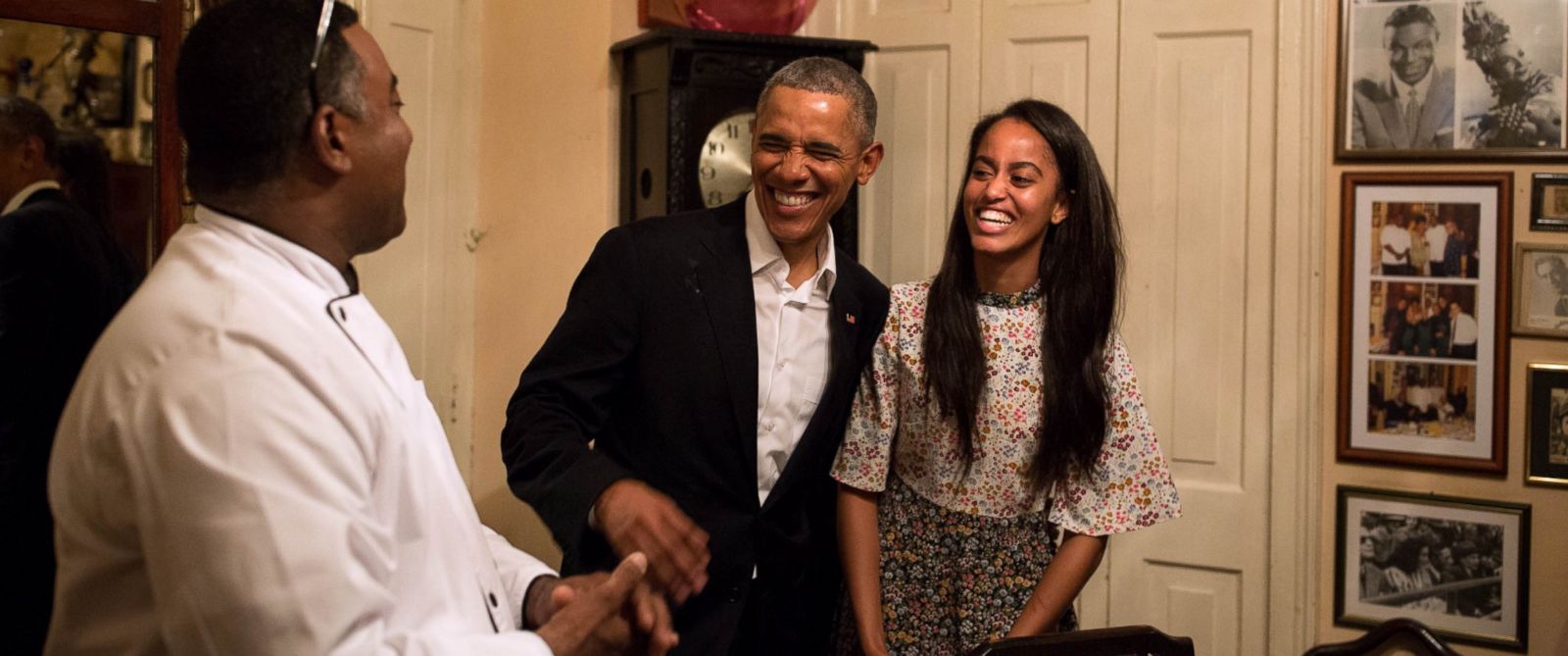
Malia Obama Translates Spanish - English For Her Father and Cubans

This photograph is delightful because Obamas are practiced at being photographed and they are photogenic.

Malia translates between her father and the paladar's chef-owner..

Beyond that, however, learning that Malia has been studying Spanish and is fluent enough to interpret for her father, is very satisfying.

So was his explicitly addressing the problems of race in both the U.S. and Cuba, s pointing out that the U.S. has a black president.  [More to the point, though he was careful and considered not to explicitly state what Afro Cubans have been saying for years that Cuba's public officialdom is almost entirely white, as are those who are able to open private businesses and otherwise work in the lucrative tourism business.]

Obama's addresses in Cuba the last three days show how much he's already positioning himself to be among the global leaders post his two terms in the Oval Office.  Having a daughter fluent in Spanish will be more than useful.  I certainly would love to know who wrote those speeches. Cubans were impressed by his many and appropriate pulls from José Martí.  The historic echos that would come to both USians and Cubans with his use of the word "bury" in this sentence of his television address to the Cuban pueblo was more than considered:
"I have come here to bury the last remnant of the Cold War in the Americas."
A bona fide historical moment.

By-the-by -- those ijiots crying out that President Raúl Castro did not meet President Obama on the tarmac of the José Martí airport:  how often does President Obama drive out to whichever D.C. airport to be on the scene when other nations' leaders arrive?


Also, our First Lady,  beautiful, elegant, and hip, all at the same time, must have just knocked the Cuban people out.  The entire picture of the Obama family is exactly what Cubans recognize and understand: the abuela was present as well!

U.S. First Lady Michelle Obama greets Cuban girls as she arrives for a Let Girls Learn roundtable at the Fabrica de Arte Cubano, in Havana, Cuba, Monday. (Our Cuban family's home is just about next door to the Fabrica, once a food factory, now the hippest spot in Cuba for young, hip, artistic, club-going Cubans.)

The First Lady, her mother, Marian Shield Robinson , behind the POTUS and Malia in habana vieja's Cathedral
Square while the rain pelts down.

On to the Rolling Stones in Havana -- about which we have skin in the game because of various rights to various pieces from the Qbadisc label, so there ya go.


Friday, March 18, 2016

Pepys, Austen, Marriage and Family Webs of Wealth Aggregation Demonstrated

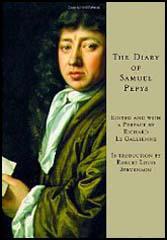
I remain puzzled that I hadn't previously made the connection from the self-revelations in Samuel Pepys's diaries detailing his highly profitable war profiteering in the King's service during the Dutch-English wars,

with the rise and fall in financial fortunes of Jane Austen's characters in the age of the Napoleonic wars.  It was reading The Love of Strangers  that set off that connection -- in particular the bit about the architect who is a Pepys descendant.

p.52 of Nile Green's The Love of Strangers: What Six Muslim Students Learned in Jane Austen's London (2016) --
... in 1809 an imposing town hall was completed on the High Street. . . . it was designed by the fashionable architect Samuel Pepys Cockerell (1754-1827). A surveyor to the East India Company and a descendant of the diarist Samuel Pepys, Cockerell was a leading  player in the orientalizing fashions of the period.

Sezincote House, Samuel Pepys Cockerell's most famous ediface 
Cockerell is direct proof of what it means to have an ancestor who got a place in a royal office. In Samuel Pepys's case it was the office charged with supplying the King's navy with 'victuals', hemp, lumber, sailors' slops -- and even more significantly, the office in charge of the accounts of taxes and borrowing of the funds to finance all the navy's needs.  Samuel Pepys diaries document from the beginning of his landing this place, he take sharp and quick advantages of the many opportunities to collect 'presents' [bribes] from those anxious to get on the gravy train of contracts to service the needs of King and country.

Pepys starts small.  His 'presents' are provided often as gifts of fine gloves to his wife, barrels of oysters, a silver mug.  But as his abilities, devotion to the work -- especially the keeping of the accounts -- his shrewd, assiduous politicking, buttering up those above him,  the good fortune that his social skills and company are excellent -- people generally like him* -- he gathers power and influence with more important and lucrative matters put directly into his hands.  By the 1660's he's no longer receiving appreciation of gloves and pork and dishes, but cash in larger and larger amounts. In the summer before the Great Fire, the sums are approaching 500 pounds.  This in a time when an annual income of 30 - 50 pounds allowed a London middle-class family to live comfortably.

Pepys doesn't feel secure in his new wealth and position, though he enjoys it and wields it sharply to assist his family.  In the 1666 summer the already-poor and less well-off are bearing the burden of manning and funding the badly handled Anglo-Dutch war. There's already been a long period of plague and many others have and / or are dying of famine. Every able-bodied man that can found is impressed on massive scale into the navy and army, further worsening the condition of already desperate women and children. Pepys is very frightened of a future he thinks he sees coming, particularly as the King and his slovenly, useless courtiers are perpetually broke, yet "pay no attention to business," and there's nothing with which to pay wages, finance the navy or run the war.

At times women riot about food.  They also riot in protest of not being paid the impressment money they were to have for husband and son, or their husbands' back pay, which is months and months unpaid. Mobs pour into the naval office's the inner yard. Women, obviously starving, scream at him outside his office windows.  He's also afraid Parliament, in reaction to the badly performing navy, will do him out of his position in the Navy commission. However, Pepys remains mostly happy and content, satisfied that he's acquired so much wealth that, as he and his wife discuss, they can retire to the country and buy an estate and establish themselves well if he loses his place in the naval office.
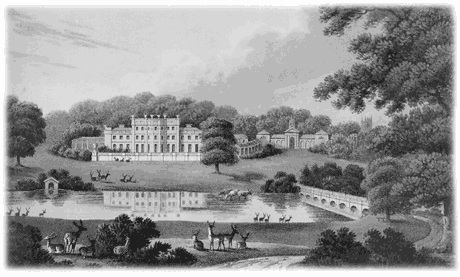
Harlestone House, Northamptonshire, which has some of the elements of Mansfield Park's Mr. Rushworth's Sotherton Estate 

This is the template for a Bingley uncle, a Mrs. Elton's brother-in-law, Mr. Weston's purchase of a 'neat little estate', Emma's personal fortune of 30,000 pounds, Mr. Rushworth, Mansfield Park's buffoon, engaged to Maria Bertram, who is so proud of his landscaping 'improvements'. Undoubtedly in the course of the creation of these picturesque landscapes he has displaced many working people and taken arable land out of cultivation.** As well, in the course of these improvements either what had been a common resource of wood and stream was either destroyed or the access to has been removed for the small farmer and poor laborer.

Additionally this re-read for the first time in decades of Raymond Williams's Farnham chapter in his The Country and the City, further pulled it together, particularly this page (110) quoting Cobbett:
[Williams] What was happening meanwhile to the landowners, and to their social structure, as rural capitalism extended? Cobbett looked very carefully at this, and made a familiar distinction between
[Cobbett] . . . a resident native gentry, attached to the soil, known to every farmer and labourer from his childhood, frequently mixing with them in those pursuits where all artificial distinctions are lost, practicing hospitality without ceremony, from habit and not on calculation; and a gentry, only now-and-then residing at all, having no relish for country-delights, foreign in their manners, distant and haughty in their behavior, looking to the soil only for its rents, viewing it as a mere object of speculation, unacquainted with its cultivators, despising them and their pursuits, and relying, for influence, not upon the good will of the vicinage [another term for geographical vicinity, neighborhood, community], but upon the dread of their power. The war and paper-system has brought in nabobs, negro-drivers, generals, admirals, governors, commissaries, contractors, pensioners, sinecurists, commissioners,  loan-jobbers, lottery-dealers, bankers, stock-jobbers, not to mention the long and black list in gowns and three-tailed wigs [i.e. the legal professionals].  You can see but few good houses not in possession of one of the other of these. These with the parsons, are now the magistrates.
[Williams] . . . . What Cobbett does not ask is where the 'invaders' came from.  Many of them, in fact were the younger sons of that same 'resident native gentry', who had gone out to these new ways of wealth, and were now coming back. Yet, 'native' or 'invade', the pressure on rents, and so through the tenant-farmer on the labourer, was visibly and dramatically increasing.  Cobbett shortens the real time-scale, but then sees what is happening as agrarian capitalism extends. . . . .
Williams goes on to connect Cobbett's journalist's vision, his reporting of the country-side, and his advocating on their behalf, to the coming changes to the novel from the 18th century to what will begin emerging in the 1830's. The 1830's are when the novel begins to be the dominant literary form as well as that of popular entertainment. However, in the meantime:
[Williams] But this change in the novel did not happen in Cobbett's time. Through his middle years Jane Austen was writing from a very different point of view, from inside the houses that Cobbett was passing on the road.  When he was writing about the disappearance of the small gentry he was riding through Hampshire, not far from Chawton.  It was also in Hampshire he made his list of the new owners of country-houses and estates, from nabobs to stock-jobbers.  We can find ourselves thinking of Jane Austen's fictional world, as he goes on to observe:
[Cobbett] The big, in order to save themselves from being 'swallowed up quick'. . . make use of their voices [the vote and their relatives and friends in Parliament and government] to get, through place, pension, or sinecure, something back from the taxes [for the wars with Napoleon, including paying Russian and others not to ally with Emperor.]  Others of them fall in love with the daughters and widows of paper-money people, big brewers, and the like; sometimes their daughters fall in love with the paper-money people's sons, or the fathers of those sons . . . . But the small gentry have no resource.
Nor do the wage labourers and agriculture labourers have the privilege of the vote, friends and relatives in places of influence or any other resource to pressure those who are oppressing them.  So they starve at the sides of the roads running past these great estates.

How thoroughly Austen's novels expose the historic political and economic purpose of marriage as survival and increase or loss of influence and wealth!

The more complete our understanding of that world broadens of which she forged her fictions the better we understand how the same factors of wealth, power, influence and politics are in play in our own times.*** 

Which is one of the aspects that make great works of art endure, yes?

----------------------

* On the other hand. the more time I spend with Pepys, the less charming he becomes.  It's not even his profiteering and infidelity -- it's his sexual abuse in particular that spoils his authentic family loyalty, his joy in music and the arts in general, his curiosity to learn as much about everything in the scientific and technological realms, his genuine hard work and general honesty with the King's property.  The turning point came during one of those riots of starving London women needing their husbands' back pay -- they are all gotten away through force of arms.  However, the prettiest one, he holds back and brings into his office.  He gives her money, dismisses her, and swiftly follows in a his coach, picks her up and takes her where they can eff.  He does this with other desperate women too, exchanging assistance for sex.  He even does so with his wife's maid while his wife is in the house. Nor, of course by the rules of the time's engagement for prosperous men, can she object. This doesn't occur to him.

He lecherously speculates about every black' woman he encounters, no matter how virtuous, just assuming she would be willing to accomodate his sexual curiosity, if the opportunity should arise. (Evidently no opportunity to prove him right or false arises.)  He's also an awful hypocrite, preying sexually on every woman who he can buy or persuade, but furiously anxious that some man will have designs on his wife.

** The very kind of opportunities for creating family webs of generationally aggregating wealth and influence deliberately denied to antebellum slaves by the conditions of the slave-breeding economy and slave selling economy. The bottom line of both depended first upon the perpetual, systematic shredding of the African American family. African Americans have not yet been able to catch up, thanks to the legally embedded racial system of ongoing oppression and repression and various sorts of exploitation that still, as a class, plunders their wealth the economic benefit of others.

*** The most desirable marriagable women seeking the best prospects don't have debut balls or Almack's (though they may, and some do, and these balls are becoming more common again), but compete to get into Harvard and go to ski resorts in Vail on vacation. See current studies that documentexogamic marriage has become increasingly rare, in terms of changing class, with the rise of private education in the pre-unversity years and the soaring costs of both. More than ever, for those already in the families of wealth and influence, practice endogamy. For awhile, in the first half of the 20th century this had changed with the massive influx of young women of all classes and background working in business offices of companies and institutions, where often romance blossomed with a young man with prospect or already established.  U.S. movie romcoms particularly glorified this, in the 30's 40's and 50's.

Which makes the reader understand that in terms of the country and city, Jane Bennett and Elizabeth Bennett would never have been able to meet Bingley and Darcy unless they showed up in their less populated (i.e no wealthy rivals) and less formal vicinage.  In other words, it would be highly unlikely their paths would have crossed in London -- and the competition by more prosperous and better connected women to secure their attentions would have been fierce.

Even more unlikely it would be that Elizabeth might have encountered Darcy in the more relaxed sociability of Bath, as who can imagine Darcy in Bath?

Wednesday, March 16, 2016

"Three Around Farnham" - Reading Wednesday

    A discussion in the UK Guardian got me to dig out my well-thumbed, well-scribbled in copy of a cultural-economic study of English literature, which I haven't looked at in a long time.

"Three Around Farnham" is the title Raymond Williams gave the 11th chapter of his classic The Country and the City (1973), a survey the changing attitudes toward country and city in English Literature.

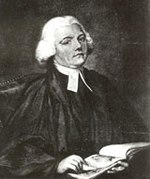
Parson Gilbert White
   The "Three Around Farnham" are writers who lived within the same 30 mile radius around Farnham: Gilbert White (1720-1793). Jane Austen (1775-1817) and William Cobbett (1763 - 1835). What each sees -- and equally significant do not see -- in their shared countryside are vastly different. Williams does a comparison and contrast of these three's vision of the country and its relationship to the city in their time in order to describe the price extracted from the laboring classes.


William Cobbett
  The very food that has been plundered from the laborers, by enclosure of public lands and plunging wages has gone to prop up the prosperity of the higher classes during the consolidation of England's Industrial Revolution and colonialism (slavery)-- and decades of nearly perpetual war and the extortionate taxes in money and kind put upon the poor. However, the laboring, voteless, thus non-represented classes, get nothing back from these extortions of land and cash taxation.  Their betters, however, with a vote and members in Parliament get in return other sources of income from government, the army and navy, the church, the law and opportunities for doing business between all these institutions and the colonies.


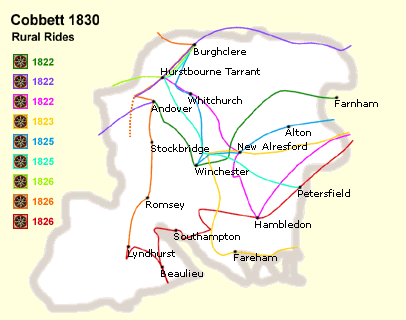
  Read Cobbett's Rural Rides (1830) and look in vain for the country walks of Pride and Prejudice (1813).

   However, the other two knew White's book well, and must have recognized some of what he saw -- White was was a pioneer naturalist / ornithologist. Parson White's The Natural History and Antiquities of Selborne,* or just The Natural History of Selborne (1789).


Cobbett's Rides


While White remains at least a sidebar in most English literature studies that cover the 18th and early 19th century writers now, it was different in the days of Austen and Cobbett.. Austen was a precocious fourteen and living 17 miles away in Steventon the year's White's book was published. Her brother wrote a poem about the book.  On August 31st 1811, when Jane was 36, she dined with White's niece (Rebecca Parker Terry) at Hill House in Alton.

Cobbett, the pioneering social and economic critic of the conditions imposed upon the rural laborer by those who live in the many lovely homes that populate this 30 mile radius around Farnham, refers to White's book in his spoken and written opinions, as can be seen here.

One of Williams's conclusion as to what this means to English literature is expressed by his description of Austen's keen powers of observation, put down in writing within the houses set off from the roads Cobbett rode, observing right on the verge of these same roads that run far off from those houses, the hovels in which the poor attempted to survive rain and cold.

Nevertheless, Williams finds embedded in the familiar texts of her novels, all these social changes, and how the families of all her communities are rising, maintaining, or, as with several figures, as is clearly described in Sense and Sensibility, Pride and Prejudice, Emma, Mansfield Park, and Persuasion, falling.  Those whose fall is staved off, are those whose younger sons find other economic security away from the entailed estates, often in the Church (much like Gilbert White himself), and even the great estates themselves such as Darcy's -- are sustained by other means than the land itself, whether from plantations in the West Indies as with Mansfield Park, or as hand wavium explained in Emma, whose fortune of 30,000 pounds comes "from other sources,"** not her father's small estate itself.

I'd argue further. while Austen tends to be assumed to be always looking inward, and at personal relationships, the relationships themselves are created even, by the social changes that are coming with this consolidation of the Industrial Revolution and imperial power.

------------------------------

Can be found on Gutenberg, here.

**   So somewhere -- and not so long ago in reality -- lands granted by Henry's VIII team in the Dissolution,  a fortune gained from piracy and privateering in Elizabeth's time, or lands achieved during the Commonwealth, or, closer to Emma's era, from manufacture, slavery, or other not so respectable means that about which surely Emma, Tory snob of snobs, would prefer us not to speculate.

Monday, March 14, 2016

Writing Is Not Blogging

Since traveling in Cuba during the first days of the new year my blog-journaling impulse seems to have mostly disappeared. I wonder why, since noting online what I see, read, watch, do had become a normal part of my daily life routine -- kind of like Samuel Pepys and his journal.

I've have done a great deal of journaling by hand in my moleskinne, about our various journeys and events concerning The American Slave Coast, the questions, the interaction with the many wonderful people we've met along the way in the last few weeks again..  This was crowned by the Grad Center's wonderful, packed out even for Slave Coast event on the 8th, with so many brilliant historians and other writers in attendance -- academics and scholars, independents and journalists.  Hearing from so many quarters what brilliant addition Slave Coast is to the history discipline, if we were wanting any more validation or satisfaction for giving 5 + years of our lives to this history, it was poured over us in gallons and gallons.  There wasn't even standing room left in the venue -- people stood out in the lobby trying to hear the reading, the discussion and then the q&a.  For the reading this time we did it together, changing off every few paragraphs.  This was particularly well received, and particularly by the African American historians, who are women.

As pleasing as this is, personally I felt detached from Slave Coast as soon  as it is went out in the world.  I really love the book,  but in the same way I love any of the great books of history that were / are vital to the formation of my ideas and thinking on these still vital matters.

I have been writing though, about books read, movies and television watched too, just not here.  Also I'm very slowly immersing myself in two book projects.


Lee Marvin as Liberty Valance, Jimmy Stewart as Rance Stoddard, John Wayne as Tom Donophin


Over the weekend I started carving out a chapter on John Ford's The Man Who Shot Liberty Valance (1962) for Hollywood Confederacy: Why The South Won The War. But I'm not sure if should be a chapter itself or a part of a chapter. Structure and organization is everything for a book like this, and I'm still trying to figure that out.


I'm looking at this film in the context of Owen Wister's ur-western movie-novel, though the white supremacist novelist's The Virginian (1902) didn't become a movie, oddly, until 1929, and re-made in 1949. It's particularly enlightening to see how and why Ford's film retains all the elements of Wister's novel, while flipping the author's script, yet keeping the western's rules of engagement with utmost faith.

Others have written about Liberty Valance in the context of the man with the gun, and gender too


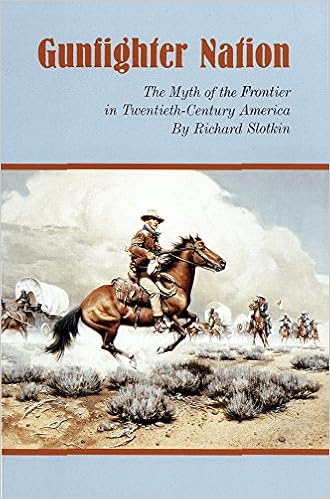
(see Roger Ebert -- though he gets several significant details wrong about the characters -- and Richard Slotkin), though not within the context of southern rebels remaking the country as it should be, in the west, I don't think.  But of course there is subtext -- a bit, and not foregrounded, in Liberty Valance. Ford was one wiley coyote by golly, having his cake and eating it too, via image and the vocal delivery of small, minor roles, as well character. For ex., with "Marshall Link Appleyard" played by Andy Devine -- he couldn't have signaled any more broadly that the law is a fool despite the protag being Jimmy Stewart, a lawyer and a teacher championing reading, writing and American history.

A made-for-television version of The Virginian came out in 2000, and another in 2014, in which the Virginian is renamed "South."  There was a long-running series too, back in 1962 -1971. They Said, back in the fall of 2015, that another movie remake is in the works.

In the meantime it's a wet, chilly, miserable March day here -- typical St. Patrick's Day weather, in other words. Sunday's time change has befuddled my sense of temporality.


Nor have I quite gotten back to anything resembling a routine again since October 1 and all the traveling started. Further off-kiltering my sense of when and where is that  El V's still in Cuba with the second tour group of the year. Until last week he and I have been together 24/7 for months!

 He and the Cuba ground team are thinking of doing yet a third one yet this year, as well as the two 2017 tours they're already organizing. This would be in November, which like March, is a perfect month to be in Cuba.

Mind, though I said this has been a miserable day here, I myself am anything but miserable.

Wednesday, March 9, 2016

Reading Wednesday -- Harry Potter

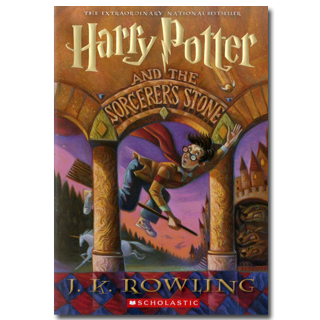
Walking past Scholastic Inc. on Broadway this morning, it occurred to me that the windows of the Scholastic building have never been without a display of Harry Potter books and merchandise since 1998.  Not once.  Not a single day, in now, almost 20 years.


This thought had come to me before reading this story in the UK Guardian this morning about the the cultural appropriation criticism Rowling is currently receiving from U.S. Native American peoples for her first History of Magic in North America set in the history of the Potter Wizard Universe.


I took a Spanish translation of Harry Potter and the Philosopher's Stone, i.e. Harry Potter y la piedra filosofal, to give to a friend's young son on a prolonged stay in Havana 1999-2000.


Saturday, March 5, 2016

Pat Conroy Dies

In some ways his books were my introduction to South Carolina, starting when he began publishing them.  As with so many readers certainly, that


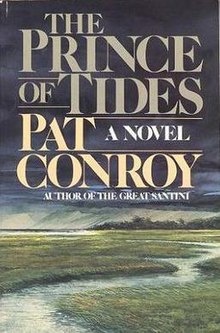
Prince of Tides (1986) contained the ambient charm of South Carolina -- for WHITE readers -- his work provided me with regional and thus exotic description of place and time, particularly that of coastal SC.


I read intently his book describing his experiences teaching on an isolated Sea Island school of all black kids. {c&p from Wiki}:
The Water Is Wide is a 1972 memoir [1] by Pat Conroy and is based on his work as a teacher on Daufuskie Island, South Carolina, which is called Yamacraw Island in the book. The book is sometimes identified as nonfiction[2] and other times identified as a novel.[3]

As this region of the U.S. is the cradle of secession and slavery is God's will by GAWD, it was particularly interesting he was very young then, and it was the Civil Rights and Vietnam era.  I didn't read The Water is Wide though, until I had all that history about SC and the slavery of the coast and the Sea Islands rice plantations. Anyone who possesses this historical information sees  Beaufort (site of what is known as "Secession House" the mansion built by Barnwell Rhett and his fire eating secessionist brothers; there's even an inscription they put on the basement walls that boasts, "in this house the first meeting of Secession was held")  and the Sea Islands with very different eyes than do snow birding tourists,

I'm looking forward to being down there again at the end of May.

Wednesday, March 2, 2016

Reading Wednesday -- Not Finished!

In the last few weeks my attempts to read books -- and even watch television or movies -- has been worse than pathetic.  There hasn't been enough time.  So many domestic emergencies, medical and dental appointments.  Then the traveling, presenting, planning and organizing this that and the other, followed by doubling down to catch up with all the tasks not accomplished while doing these other things.  These other things are also associated, however, let me haste to add, with spending quality time with wonderful people face to face in the real world, so there's little to complain of, really.


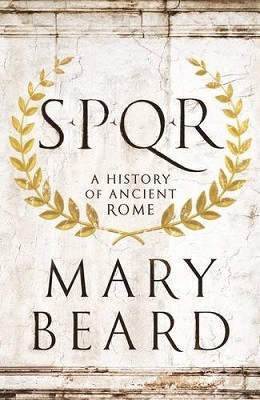
Last week I managed to conclude reading Mary Beard's SPQR.  Once I comprehended that she had a method for writing such a book about the history of Ancient Rome, it began too be a bit irritating in its repetition.  How it goes: she lays out how their own past, events and figures were believed to be or to mean by the Romans themselves, the changes on these views testified to by the variants for various political reasons -- and then, Beard herself weighs in and informs us how all them are incorrect.  The matter itself always remains interesting but the method and structure wasn't.


This last weekend I began to read two new books.  One of these is a history: The Love of Strangers: What Six Muslim Students Learned In Jane Austen's London (2016), by Nile Green.  Among the interesting and important matters Green brings up that Austen doesn't bother covering in her fiction is the evangelical* English version of what in the U.S. was called the The Great Awakening. Austen and her family, so Church of England, like their cohorts, did not approve.  There are many other matters that the author delves into which he states Austen does more to conceal than to reveal, which makes citing Austen as an historical authority of her times a more iffy proposition than Janeites like to think.


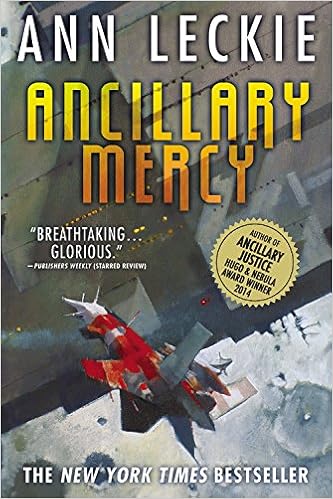
The second book I began is a Science Fiction novel, Ann Leckie's third book in her Ancillary series, Ancillary Mercy.  About a third way through Mercy, I'm finding it a faster read than the previous two novels, as well as -- oddly, considering the threats -- more light-hearted, and even comic in places.  This reader approves of these innovations, though they might not be noticeable unless the reader had already read the previous two.

Looking forward to future reading out of the TBR pile: West of Eden: An American Place by Jean Stein (2016); The Life and the Adventures of a Haunted Convict, Austin Reed -- the recently discovered memoir of African American life and incarceration in the nineteenth century.

------------------------

*   Fiction Austen wrote -- not even realistic fiction -- neither did she write history or\ even journalism, so she gets all the slack. A novelist gets to write what she wishes to write about.  However, these English evangelicals are the ranks from which came the majority of British citizens mobilized against the African slave trade, which is one of the many reasons they mattered so much in their times and eras and the press -- and they were successful in their mission. They also were activists to end slavery, but that took much longer.  They were considered by so many as declasse as well, from the social strata that mattered not to those obsessed with His Majesty's Navy and the Church of England livings in gift and promotion.