From behind the NY Times paywall:
"E-Book Sales Slip & Print Far From Dead"
E-sales of 99¢ and self-pub fiction are doing just fine -- still the best selling content on amazilla.
It seems that once publishers won back the right to set prices for their own e-versions of books -- instead of amazilla selling them for 99¢ -- people went back to buying the print version, since the price difference between them wasn't as great as the $1.99 or $2.99 price the online controller made it previously.
Additionally people are preferring to read e-versions on their phones not on dedicated amazilla readers, which means they don't have to buy everything from amazilla, but can get the content from libraries and so on as well.
Yet it is heartening that print book and mortar stores are doing so much better.
Now, if libraries, particularly research libraries, would only understand this, and put books back on the shelves. The other day we were in Bobst and the entire American history section was gone. Among other thing this means all the collections of Founding Fathers' papers are offsite -- everything! Thank goodness we finished TASC before they ripped out the heart of the history collections.
It seems to me that when libraries went digital, depending on the pay digital databases and for downloading pdfs of many, many books, access to information was severely curtailed. They guard access to those pay digital services more severely than the Secret Service guards entry to the White House. Only those privileged in some way -- often in several ways -- now have access to information that demands serious research. This includes public libraries as much as research libraries.
Wednesday, September 23, 2015
Wednesday, September 16, 2015
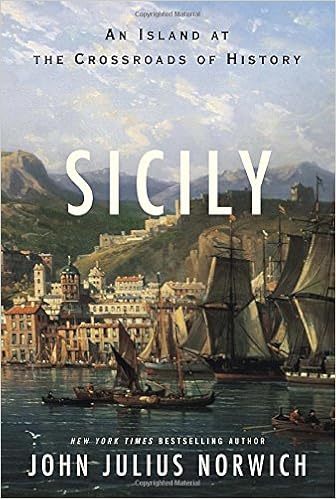
Reading Weds. - Sicily by John Julius Norwich
John Julius Norwich, now in his late 80's, is a distinguished popular British historian with a long bibliography.
The first book of his I ever read was A History of Venice: The Rise to Empire (1977), preparing myself for my first trip to Italy, at the conclusion of which I saw Venice for the first time. That trip to Venice was mightily enhanced by having done so. It was very early in our marriage then, and el V was deeply, and happily impressed at what I could tell him about all sorts of the things we experienced and saw. It was on that early journey in our marriage now of many, many journeys, wandering happy and excited through the deserted galleries of museums all through northern Italy (it was off-season, early winter and we got everything to ourselves) that we realized that we traveled very well together, each of us providing what the other didn't and together making it better than alone.
Norwich has written about Sicily before, but felt he hadn't made the best job of it, having left too much out and having learned more along the years as he returned on occasions to this Mediterranean island between Carthage and southern Italy. His interest in Sicily's history never flagged but only grew. The result is Sicily: A Short History From the Greeks to Cosa Nostra (2015). Surely, if one has never been to Sicily before and can read only one book to prepare, like Norwich's book about Venice, this is the one to read.
Sicily's history is a melange of cultures that are embedded in the Sicilian language. Sicilians, no more than Venetians, speak Italian, but have their own language, with a great deal of Greek, Arabic and Spanish influence, not to mention French from the short era when the Normans held much of Sicily. Additionally the Greek both ancient demotic Greek, as Sicily was their colony, and the Greek of the Byzantine empire.
Sicily's history has always been fractured by violence, conquest and resistance -- it isn't a happy history, but it is a fascinating one, filled with opportunities that kept getting lost or snatched away.
I enjoyed it all the more from having read so much about the era of Nelson and Napoleon in connection with Naples and Sicily. He also manages to make sense for the reader of the inordinately complicated mess things became for Sicily with the competition between the Normans and the Holy Roman Emperor and their heirs, from which the island never really recovered. Moreover the interest for the reader does not flag as the eras roll on. His accounts of Sicily in WWII is as interesting as anything during the age of the Roman emperors.
The first book of his I ever read was A History of Venice: The Rise to Empire (1977), preparing myself for my first trip to Italy, at the conclusion of which I saw Venice for the first time. That trip to Venice was mightily enhanced by having done so. It was very early in our marriage then, and el V was deeply, and happily impressed at what I could tell him about all sorts of the things we experienced and saw. It was on that early journey in our marriage now of many, many journeys, wandering happy and excited through the deserted galleries of museums all through northern Italy (it was off-season, early winter and we got everything to ourselves) that we realized that we traveled very well together, each of us providing what the other didn't and together making it better than alone.
Norwich has written about Sicily before, but felt he hadn't made the best job of it, having left too much out and having learned more along the years as he returned on occasions to this Mediterranean island between Carthage and southern Italy. His interest in Sicily's history never flagged but only grew. The result is Sicily: A Short History From the Greeks to Cosa Nostra (2015). Surely, if one has never been to Sicily before and can read only one book to prepare, like Norwich's book about Venice, this is the one to read.
Sicily's history is a melange of cultures that are embedded in the Sicilian language. Sicilians, no more than Venetians, speak Italian, but have their own language, with a great deal of Greek, Arabic and Spanish influence, not to mention French from the short era when the Normans held much of Sicily. Additionally the Greek both ancient demotic Greek, as Sicily was their colony, and the Greek of the Byzantine empire.
Sicily's history has always been fractured by violence, conquest and resistance -- it isn't a happy history, but it is a fascinating one, filled with opportunities that kept getting lost or snatched away.
I enjoyed it all the more from having read so much about the era of Nelson and Napoleon in connection with Naples and Sicily. He also manages to make sense for the reader of the inordinately complicated mess things became for Sicily with the competition between the Normans and the Holy Roman Emperor and their heirs, from which the island never really recovered. Moreover the interest for the reader does not flag as the eras roll on. His accounts of Sicily in WWII is as interesting as anything during the age of the Roman emperors.
Thursday, September 10, 2015
Longmire Series Rides Again! -: Season 4 Netflix
Longmire was canceled by by A&E after the conclusion of season 3 -- which ended on a cliffhanger.
Netflix, however, bless their hearts! -- picked it up. Season 4's ten episodes became available to stream today. The Netflix production also picks up right where the end of season 3 left us.
However, the continuing mess the writers were making of the portrayal of Walt Longmire's deputy Vic(toria) Moretti's character is right at the very top of the opening. It is more than distressing to see the actress, Katee Sackhoff, wasted this way: she's wearing unbelievably tight jeans and boots with really preposterous heels, has her shirt open almost to her navel, and her hair ironed.
She pecks and pats and preens herself over and over, looking in the mirror, carrying a six-pack of beer, and is just "dropping in by chance" on Walt Longmire -- her boss, btw, and much older than she is. Even her voice is different, higher, all giggly, she wiggles her butt literally. This is wrong and I hate it and so must most of the women who watch this series. It's been strongly suggested that the audience for Longmire are more female than male, which is another reason A&E wasn't keeping it around. Though this article says A&E dropped Longmire even though the audience numbers and ratings were high because -- the audience was too old.
Strong positives for everything else. Most of the original cast of characters are
here, including Lou Diamond as the wonderful character, Henry Standing Bear. As well, streaming from Netflix HD, what we see is sharper and brighter and more colorful than from A&E. It's a beautiful show, set in an imaginary county of Wyoming, but shot on location in New Mexico. The music is better too.
I liked the series very much so I'm glad Longmire is back -- and please, soon, may Vic's character return to the strong, competent and effective deputy with agency and good friend and partner -- not sex kitten -- to Walt Longmire that she was in the first season.
Netflix, however, bless their hearts! -- picked it up. Season 4's ten episodes became available to stream today. The Netflix production also picks up right where the end of season 3 left us.
However, the continuing mess the writers were making of the portrayal of Walt Longmire's deputy Vic(toria) Moretti's character is right at the very top of the opening. It is more than distressing to see the actress, Katee Sackhoff, wasted this way: she's wearing unbelievably tight jeans and boots with really preposterous heels, has her shirt open almost to her navel, and her hair ironed.
She pecks and pats and preens herself over and over, looking in the mirror, carrying a six-pack of beer, and is just "dropping in by chance" on Walt Longmire -- her boss, btw, and much older than she is. Even her voice is different, higher, all giggly, she wiggles her butt literally. This is wrong and I hate it and so must most of the women who watch this series. It's been strongly suggested that the audience for Longmire are more female than male, which is another reason A&E wasn't keeping it around. Though this article says A&E dropped Longmire even though the audience numbers and ratings were high because -- the audience was too old.
Preview of the season 4's first episode:
Strong positives for everything else. Most of the original cast of characters are
I liked the series very much so I'm glad Longmire is back -- and please, soon, may Vic's character return to the strong, competent and effective deputy with agency and good friend and partner -- not sex kitten -- to Walt Longmire that she was in the first season.
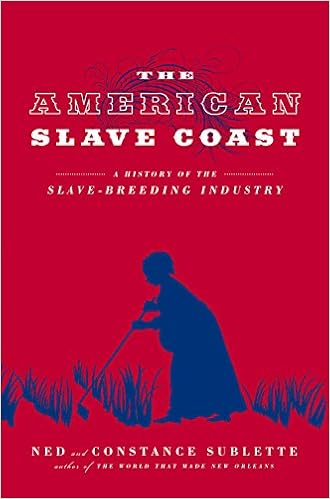
The American Slave Coast: A History of the Slave-Breeding Industry -- Real Book! Arrived!
Two complimentary copies of The American Slave Coast: A History of the Slave-Breeding Industry just arrived.
What a wonderful job the production team and editorial team have made of such a huge book, though the physical book turns out not to be near as heavy as I feared it would be. It looks fine, inside and out, impressive and classy. You look at this book and are told this is an important and serious work of research and writing, a book the owner will be proud to have on her / his shelves, and will keep, a book to refer to often about the many things in our history that it describes and explains.
My eyes are huge.
What a wonderful job the production team and editorial team have made of such a huge book, though the physical book turns out not to be near as heavy as I feared it would be. It looks fine, inside and out, impressive and classy. You look at this book and are told this is an important and serious work of research and writing, a book the owner will be proud to have on her / his shelves, and will keep, a book to refer to often about the many things in our history that it describes and explains.
My eyes are huge.
Monday, September 7, 2015
Labor Day Dinner -- Plum Season!
Plums baked with chicken in the magic cast iron deep chicken skillet turned out very well.
El V loved it -- particularly the plums themselves, which were transformed at least as much by the cooking with chicken as the chicken was infused with plum flavors.
As well there were steamed brussels sprouts, their bitterness balanced with the sweetness of the plum juice, potatoes mashed with butter, non-fat sour cream and skim milk. With butter one doesn't need whole dairy products. But that non-fat sour cream provides a touch of sour that is pleasant with the fruit sweetness, and a silky smooth texture.
I realize baked chicken and plums would go very well with couscous -- plus some almonds and maybe some sort of oranges or citrus too, though of course el V can't have citrus, which is burdensome to me as meal preparation person.
This would have been a splendid cold weather dinner, except in winter there are no fresh plums, and mostly the Farmer's Markets are closed because it's winter.
El V loved it -- particularly the plums themselves, which were transformed at least as much by the cooking with chicken as the chicken was infused with plum flavors.
As well there were steamed brussels sprouts, their bitterness balanced with the sweetness of the plum juice, potatoes mashed with butter, non-fat sour cream and skim milk. With butter one doesn't need whole dairy products. But that non-fat sour cream provides a touch of sour that is pleasant with the fruit sweetness, and a silky smooth texture.
I realize baked chicken and plums would go very well with couscous -- plus some almonds and maybe some sort of oranges or citrus too, though of course el V can't have citrus, which is burdensome to me as meal preparation person.
This would have been a splendid cold weather dinner, except in winter there are no fresh plums, and mostly the Farmer's Markets are closed because it's winter.
Saturday, September 5, 2015
David Lean's Lawrence Of Arabia - The Restored Version
This week I've been watching David Lean's three hour Plus restored screen version of Lawrence of Arabia (1962).
Recall just prior to embarking upon this cinemtographic journey, I had been immersed in reading Scott Anderson's Lawrence in Arabia: War, Deceit, Imperial Folly and the Making of the Modern Middle East (2013). As Anderson refers frequently to Lean's film in the course of his myth-busting history of the Middle East theater in WWI, it felt right to look at the film again, because, naturally, as this is the movies, Lean consciously participated, almost gloatingly, in the mythologizing of all of it.
How could Lean not mythologize when he centers this instead of Arabs? Which, by the way, this is not the real topography of the deserts that Lawrence and his tribes traverse. Endless, dreary gravel and stone, bare of of almost all but thorns and bare mountain outcrops, that's what they traveled over. Not sand.
There's a great deal to think about here, in terms of how movies and other kinds of entertainments cannot deal honestly with history by the rules of their own engagement. Nor evidently could the arrogant, ignorant, incompetent, mendacious men who sent millions into the meat grinder that was WWI, and never learned. Anderson's still furious about them and the sheer idiocy that was the war. But not tonight. I'm too tired from dealing with my own idiocies of the day.
Recall just prior to embarking upon this cinemtographic journey, I had been immersed in reading Scott Anderson's Lawrence in Arabia: War, Deceit, Imperial Folly and the Making of the Modern Middle East (2013). As Anderson refers frequently to Lean's film in the course of his myth-busting history of the Middle East theater in WWI, it felt right to look at the film again, because, naturally, as this is the movies, Lean consciously participated, almost gloatingly, in the mythologizing of all of it.
How could Lean not mythologize when he centers this instead of Arabs? Which, by the way, this is not the real topography of the deserts that Lawrence and his tribes traverse. Endless, dreary gravel and stone, bare of of almost all but thorns and bare mountain outcrops, that's what they traveled over. Not sand.
There's a great deal to think about here, in terms of how movies and other kinds of entertainments cannot deal honestly with history by the rules of their own engagement. Nor evidently could the arrogant, ignorant, incompetent, mendacious men who sent millions into the meat grinder that was WWI, and never learned. Anderson's still furious about them and the sheer idiocy that was the war. But not tonight. I'm too tired from dealing with my own idiocies of the day.
Labels:
European history,
historical fiction,
history,
Middle East,
Movies,
WWI
Tuesday, September 1, 2015
Narcos -- After Finishing
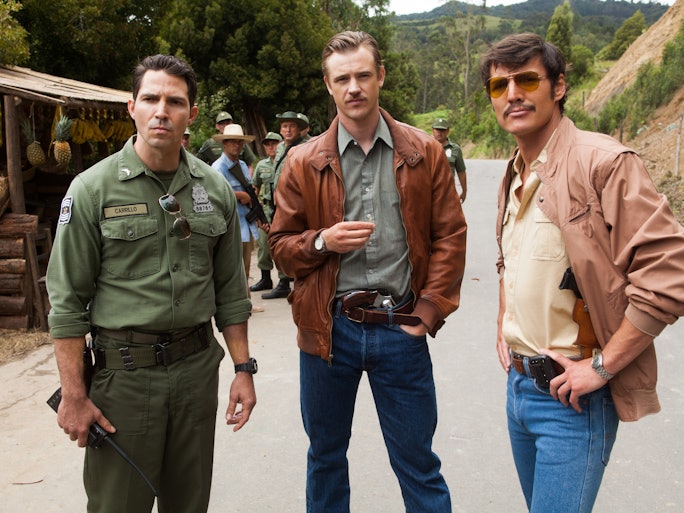
I finished watching Narcos last night.
Excellent, all around.
One of the elements I liked most about the series is what the creators did not do: show any of the figures, whether they were criminals or DEA, as particularly sympathetic, with whom one does heroic self-identification. All around, this is a show about a grubby world, particularly that of the preposterous, over-the-top indulgences of criminals without much education or imagination beyond doing business.
There are some authentic heroes, and martyrs: the first of the two men who campaigned for the country's presidency, centering drug trafficking to the U.S. as an extraditable offense to the U.S.; some of the national court's judges; and one Colombiano cop and the incorruptibles he recruited to fight the narcos' cartells. When have we seen any politician, judge or cop as an authentic hero lately, unless in fantasy series such as Elementary and White Collar?
I also appreciated that the series allowed us some eye-witness reminders how great is the suffering of the nation and its people when criminals overtly war upon all of the legal and political institutions, from the local cops to national courts and the judges.
It also shows how one cannot be immersed in that kind of violence and money, even as the right-thinking, right-motivated force, without it ratcheting up one's own capacity for violence and will to ignore humanitarian and legal systems, because one believes that obeying the laws will let the bad guys operate freely forever. Catch 22 of law enforcement and bad guys. Not to mention if one is the CIA and believes the only problem is commies.
Take-away: a narco state is a very bad thing. The amount of money is unbelievably great -- at one point Forbes Magazine classified Escobar as the 7th richest man in the world -- so there will always be war to control the drug supply and its market. And there always will be large numbers of the innocent who will be sucked into the war, one way or another -- falling in love with the wrong guy, and even just by standing in the wrong place at the right time,
Excellent, all around.
One of the elements I liked most about the series is what the creators did not do: show any of the figures, whether they were criminals or DEA, as particularly sympathetic, with whom one does heroic self-identification. All around, this is a show about a grubby world, particularly that of the preposterous, over-the-top indulgences of criminals without much education or imagination beyond doing business.
![]() |
| Gaviria ran and won Colombia's presidency after Galán was killed; Escobar so escalated his bombing and murders that finally Gavira had to accede to Escobar's demands. He's presently still doing well, as can be seen here. |
I also appreciated that the series allowed us some eye-witness reminders how great is the suffering of the nation and its people when criminals overtly war upon all of the legal and political institutions, from the local cops to national courts and the judges.
It also shows how one cannot be immersed in that kind of violence and money, even as the right-thinking, right-motivated force, without it ratcheting up one's own capacity for violence and will to ignore humanitarian and legal systems, because one believes that obeying the laws will let the bad guys operate freely forever. Catch 22 of law enforcement and bad guys. Not to mention if one is the CIA and believes the only problem is commies.
Take-away: a narco state is a very bad thing. The amount of money is unbelievably great -- at one point Forbes Magazine classified Escobar as the 7th richest man in the world -- so there will always be war to control the drug supply and its market. And there always will be large numbers of the innocent who will be sucked into the war, one way or another -- falling in love with the wrong guy, and even just by standing in the wrong place at the right time,
Labels:
historical fiction,
history,
south america,
Television,
U.S. History,
violence
Subscribe to:
Posts (Atom)