LINES OF THE DAY

". . . But the past does not exist independently from the present. Indeed, the past is only past because there is a present, just as I can point to something over there only because I am here. But nothing is inherently over there or here. In that sense, the past has no content. The past -- or more accurately, pastness -- is a position. Thus, in no way can we identify the past as past." p. 15

". . . But we may want to keep in mind that deeds and words are not as distinguishable as often we presume. History does not belong only to its narrators, professional or amateur. While some of us debate what history is or was, others take it into their own hands." p. 153

Silencing the Past: Power and the Production of History (1995) by Michel-Rolph Trouillot

Friday, January 31, 2014

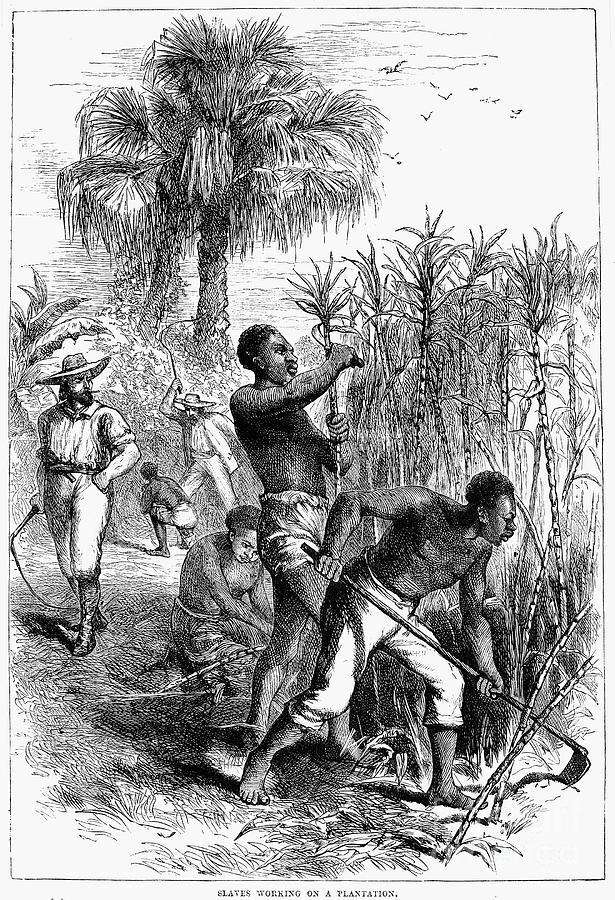
"The Faces of Young White Slavery" - 1864; Harper's

Today's NY Times Disunion column, which runs throughout the current observances of the lead-up, duration and aftermath of the U.S. Civil War highlights one of the strongest incentives in the North for abolition and emancipation prior to the primary shooting war *. White slaves -- the unease, discomfort and nervousness they caused northerners is something that I have been tracking for the last few years as well.  If these white people are considered 'negro' and therefore slaves, what about my daughter?  What about my husband? What about me?


In the south the white slaves also provoked anxiety -- who is in truth actually white and free, and fit to associate with me?  It was getting more difficult to tell with each generation, to where court cases were proliferating in attempts to declare this person and another a non-person, in fact, but black.  The courts -- judges, attorneys, witnesses and jurors -- were having such difficulty in deciding that cases would be tried and re-tried, and finally end, again, inconclusively.


Such an end-point of race-based slavery is inevitable, since the very condition of slavery means no control over one's body, one's very self, so the right to rape is embedded in slave ownership.  Additionally the lighter-skinned the white offspring of the rape -- particularly for the female child -- the more valuable the child in the marketplace.


At the same time, these white-skinned slaves bore public witness in their very existence that directly contradicted the slave power's own propaganda of the morality of slavery and its beneficence for both owner and slave.  Their existence wrote public volumes about the morality and behavior of the individual slaveholder, what he did, when others were politely averting their eyes -- or while they were raping their own slaves.

Thus arose the lie of the intrinsic immorality of the slave woman: lascivious and immoral -- it was her fault that she and successive generations of her daughters, before and after her, were repeatedly impregnated by white men -- she and they -- who had no basis by which to refuse, who were imprisoned by a system that coerced sexual submission as well as submission in all other ways.
... Harper’s Weekly wrote: “to all appearance, she is perfectly white. Her complexion, hair, and features show not the slightest trace of negro blood.” With their fair skin and elegant dress, Rebecca and Rosa evoked for most viewers the “fancy girls” sold in the New Orleans slave market. The fate that awaited these girls as concubines to white men was clear to most viewers at the time. Their tender youth compelled Northerners to renew their commitment to the war and rescue girls like these.
The column on the propaganda campaign that used white slave children to rally a war-weary northern population can be linked to here.

Some of the photographs used in the campaign were included in their original format in the recently past exhibit at the Metropolitan Museum of Art in "Photography and the American Civil War."  This exhibit has moved now to the New Orleans Museum of Art, opening today, January 31.

--------------------------
*  We were shooting each other about the expansion of slavery for quite some time already, notably Bloody Kansas and the Kansas-Nebraska battles.  Another instance was John Brown's quixotic incursion into Virginia. As well, the many attacks and even killings of anyone in the south who might speak against slavery, as well as the constant imprisonment, torture and even killing of any slave who objected to anything, much less being a slave.

Thursday, January 30, 2014

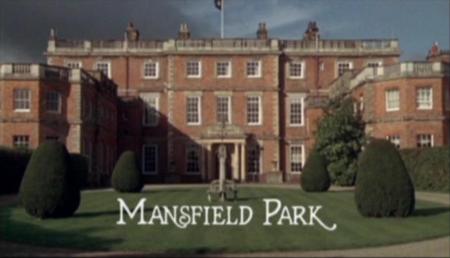
Mansfield Park - The War of 1812 - Louisa Catherine Adams

I had been thinking that while we USians are fascinated with all things Jane Austen, it appears Miss Austen hadn't a particle of interest in the U.S.  The only mentions of the New World, I thought, were in Mansfield Park.


The absentee Baronet Bertram goes, with his heir, Tom, to sort out his plantations in Antigua, which seem to have been badly mismanaged -- which happened with West Indies absentee ownership.


It turns out Mansfield Park also includes a mention of America, meaning the U.S. It occurs after Sir Bertram returns, the amateur theatricals and all its accompanying dramas are put a stop to, and the unwelcome guests prudently depart:

From Chapter XII:
Fanny could listen no farther. Listening and wondering were all suspended for a time, for Mr. Bertram was in the room again; and though feeling it would be a great honour to be asked by him, she thought it must happen. He came towards their little circle; but instead of asking her to dance, drew a chair near her, and gave her an account of the present state of a sick horse, and the opinion of the groom, from whom he had just parted. Fanny found that it was not to be, and in the modesty of her nature immediately felt that she had been unreasonable in expecting it. When he had told of his horse, he took a newspaper from the table, and looking over it, said in a languid way, "If you want to dance, Fanny, I will stand up with you." With more than equal civility the offer was declined; she did not wish to dance. "I am glad of it," said he, in a much brisker tone, and throwing down the newspaper again, "for I am tired to death. I only wonder how the good people can keep it up so long. They had need be all in love, to find any amusement in such folly; and so they are, I fancy. If you look at them you may see they are so many couple of lovers—all but Yates and Mrs. Grant—and, between ourselves, she, poor woman, must want a lover as much as any one of them. A desperate dull life hers must be with the doctor," making a sly face as he spoke towards the chair of the latter, who proving, however, to be close at his elbow, made so instantaneous a change of expression and subject necessary, as Fanny, in spite of everything, could hardly help laughing at. "A strange business this in America, Dr. Grant! What is your opinion? I always come to you to know what I am to think of public matters."
As there are so many Royal Navy figures in Austen's family and her novels this might be thought about a bit. It is generally believed that Mansfield Park was begun in 1811 and completed in the summer of 1813, with a publication in 1814. The U.S. officially declared a state of war with Britain in 1812. *

However, the conditions of war provocation had been place long before 1811, among them the many hostile encounters on the sea between the U.S. and Britain, as part of Britain's high-handed treatment of U.S. merchant ships. The U.S. had no navy, thanks to President Jefferson, who thought without a navy chances for war with Europe were less. Jefferson's administration basically bowed to France -- the U.S. people saw it that way. He embargoes all European trade for the U.S. plunging the U.S. into deep economic depression, particularly outraging the New England mercantile-shipping-banking elite. Ultimately this provoked New England (for the first time, not the last) to attempts organizing secession from the U.S. In the meantime, the west wanted War!  Impressment of sailors from U.S. ships was only a single goad. In most ways the U.S. was in an impossible situation, caught between England and France as both nations demanded the U.S. alliance and support, forbidding U.S. traders to deal with the other or any nation supposedly allied with the other.

The Brits were blockading U.S. ports, as well as those of European nations who wished to trade with the U.S. or France. One consequence as the burning of Copenhagen for trading with the U.S. One of the few nations with whom we could still trade was Russia, where was John Quincy Adams as our minister, who was entrusted to keep that trade open and obtain, hopefully, other assistance as well against England and France. Both France and England felt they needed friendly relations with Russia -- until Napoleon screwed the pooch on that, that is.

In 1812, Madison's administration was pushed by the South and the newer western states into declaring war on Britain: with an empty treasury, thanks to Jefferson's Embargo, no navy, thanks again to Jefferson, no army, thanks to the states' determination to finance their individual militias only and refusal of a draft to make a national army.

So, even before the War began, the U.S. turned to privateering. -- smuggling, of course, went on as it always had.

To the chagrin and shocked disbelief of the Brits, U.S. privateers took numbers of Brit vessels -- even at the entry roads of the Thames and in the English Channel!  (The exact, astonishing large number is enumerated Henry Adams's history of Madison's administrations.)


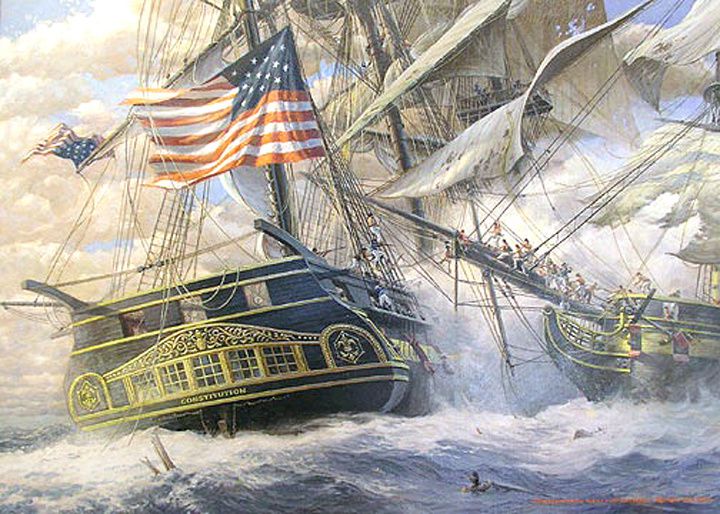
The U.S. ship yards began re-building a navy at a pace the Brits didn't suspect was possible. With the news that the USS Constitution had defeated the His Majesty's Guerriere, there was disbelieving wailing and gnashing of teeth throughout England.


On the shores of the Chesapeake, things were generally better for the Brits (until the Star Spangled Fort McHenry engagement). In August 1814, the Brits fired the government buildings when they took Washington, D.C. (thereby turning the President's Palace into the White House, as the thick white paint of repairs concealed the soot-covered walls) and the destruction of a whole Brit invading army at New Orleans -- which invasion arrives from Jamaica via the navy.

As did France, thus United States filled the English papers while Jane Austen wrote Mansfield Park. a novel that glancingly mentions the War to illustrate another characteristic about Tom Bertram.

In the meantime, Louisa Catherine Johnson Adams was in St. Petersburg, bearing and losing a child, a favorite of both the czar and czarina, while her husband negotiated fishing and trading treaties with Russia. Then in the winter of 1815 she traveled by coach from Russia to Paris, and Napoleon escaped from Elba.

------------------------------

* For a timeline of novel's chronology and that of its composition, go here.

Tuesday, January 28, 2014

Reading Wednesday -- Ebony & Ivy - Not a Novel + 12 Years A Slave, More

Ebony & Ivy: Race, Slavery, and the Troubled History of America's Universities, by Craig Steven Wilder (2013), Bloomsbury Press, is a history I've wanted to read since it came out.  This stupid elbow accident is giving me a window of time, so in I plunged.


This history is a component of slavery, slave-breeding and the slave trade about which I knew very few facts, and those were sketchy.  The largest sense I previously had about how entwined the entire history of North America's earliest academies were with these matters, I had gotten from a friend of mine, whose great-great-great-grandfather had worked at William & Mary -- but she's always emphasized that though he was African American, he was free. She's been writing a novel based on her ancestor's life, which will be a wonderful book.

The four earliest academies in North America are, as many of us know, Harvard,  William & Mary, Yale and the College of New Jersey, which became Princeton.  The depth and scope of their connection to slavery, the slave trade and slave-breeding set me back.  And what is true about them is equally true of every institution of higher learning in the U.S. founded before the mid-1860's, particularly all the Ivies: Dartmouth, Princeton, Brown, you name them, they all profited and even financed these slave buying and selling, even, yes, ships to Africa in the earliest years.


Here is another work of scholarship providing evidence for something we write early in The American Slave Coast: "No matter how awful you learn our slavery system was, it is always worse than that."

The New England states, New York, New Jersey and Pennsylvania have nothing to congratulate themselves for in terms of slavery before the early decades of Independence.  And even then, as we talk about in The American Slave Coast, all of these states continued to make huge fortunes out of the slave trade, particularly the African slave trade.

For another example of the reality always being worse than the record, try this article that describes the experience of a Union soldier from New York, who was on the Louisiana ground where Solomon Northup ended up, with the brutal Epps:

His entry for May 21 condemned the savagery that made a slave of Northup and 4 million other men, women and children in the American South.
“I took the opportunity to investigate this abominable sistem of slavery ... I have examend their instruments of torture the stocks whip and paddle and strap,” Burrud wrote. “Solomans book is true to the letter only it dos not portray the system as bad as it is it is not in the power of man to do it.” In other words, slavery was even worse than what Northup had written in his memoir. It defied description.

Political Jobbing Cats!

Pussy cat, pussy cat, where have you been?
I've been to London to look at the Queen.
Pussy cat, pussy cat, what did you do there?
I frightened a little mouse, right under her chair.


Cats poised to descend on Parliament to help rid Westminster of vermin; see, here.

Larry is Westminster's Chief Mouser.  However, Larry Needs Help
as the Mouse Population Soars.

Larry Meets You Know Who

Monday, January 27, 2014

The Life of Shakespeare - Historical Drama Mini-series

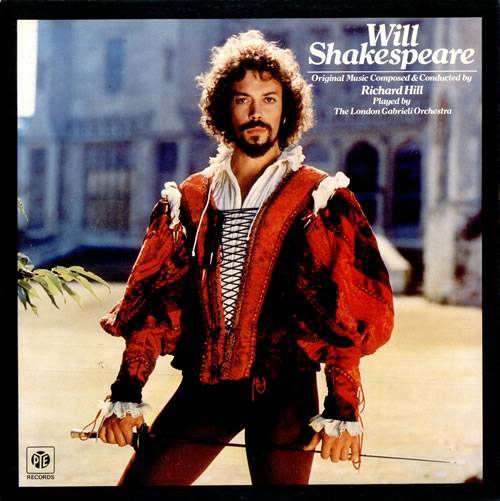
The Life of Shakespeare 6-part series was shown on ITV in 1978.  It was scripted by John Mortimer (he who is responsible for Rumpole of the Bailey and many other things).


 Shakespeare is played by Tim Curry while Ian McShane plays Kit Marlowe. The period London's influential gay population is given parity in this series.  I've only watched some of it so far, but am enjoying it a great deal.  It's lively and energetic.  The costumes are splendid as is appropriate for a series that sets so many scenes within the theater with the costume makers forever chasing Richard Burbage and other famous board treaders about for fittings.  The more the watcher knows about this era of England politics, both power and literary, the more the watcher will enjoy.

The discs were obtained from netflix.  The color values are a lot higher than on many dvds from this era of English television, though it doesn't play full screen.


 The vitality of the period, the place, the London theater. the man and his cohorts are fundamental to this series, and a fine way to observe the splendid fact that my broken elbow is healing well and I feel so much better -- and energetic myself.

Saturday, January 25, 2014

Louisa Catherine Adams, Austen's Young Ladies and the Marriage Business

Is it useful at all to compare and contrast Louisa Catherine Johnson Adams with Jane Austen's characters beyond the cultural gender fact that a successful marriage was the only career for women in their time?  Their fate in life was literally the men they married.  What follows is an attempt to see if there's anything worth considering historically as to what Americans and the English women of a certain rank had in common, if anything, during this era of the marriage business.

Louisa C. Adams was born on the eve of the American Revolution, 1775, to a father who had immigrated from Annapolis to London, and an English mother. When she entered the  marriage market, in London and even on the continent, the French Revolution and the Napoleonic Era had overthrown the Age of Reason. It was in the process of being replaced by the Romantic Era, at least in London and already previously in parts of Central Europe.

Sense and Sensibility is set in southwest England between 1792 and 1797
Like Austen's Sense and Sensibility Marianne, LCA was adamantly on the side of sensibility, as her personal papers reveal.

John Quincy Adams, her husband to be, born 1767 in Massachusetts to Founding Parents of the American Revolution and the United States of America, eight years his wife's senior, was as equally a pure product of the Enlightenment as he was of his puritan heritage. They had in common that they'd lived in other countries and learned other languages in their formative years.

LCA 1821 - 1826  by Gilbert Stuart
After a, for her, frustratingly lengthy engagement they married in 1797 when she was 22 and he was 30. Their marriage was successful, but it was also very difficult, from the beginning until JQ died in 1848. LCA's personal papers are the primary source for learning how tumultuous was the transition between the age that had passed and the age that was coming into being.   JQA was non-communicative, rational, scholarly, cool, withholding and introverted, devoted to duty, while passionately ambitious. She was extroverted, social, depressive, fashionable, dramatic and expressive, and also passionately ambitious, as illustrated by her brilliant efforts in the run-up to the 1824 presidential election.

In the eyes of  Louisa's family the young John Quincy Adams, constantly at their London home, was a most eligible bachelor, or in the more appropriate French which Louisa spoke at least as flawlessly as he, un bon parti. Externally everything was right, even the difference in their age was marriage-appropriate. At that time JQA was even physically attractive though not of the robust variety of manly appeal. He was a successful statesman, with experience already at the courts of Russia and at the Hague. He'd traveled across Europe, lived in several of the capitals including Paris. He was highly educated, with connections of the best. His prospects in American terms were equal to those of Mr. Darcy's station: President Washington himself had named JQ to the Holland post; his father was Washington's Vice President; and before they became engaged, JQ's father became President of the U.S.

What she didn't realize was JQ's temperament was even more difficult than Mr. Darcy's at his worst.  JQ even seems to balked at the final stage of actually marrying.  It took a bit of travel and encouragement from Louisa and her father -- following him to the Hague after a year's engagement -- to get him up to the altar.  As well, Mr. Johnson offered a financial settlement for Louisa. They married, and within days, Mr. Johnson's business collapsed, he went bankrupt and fled with the rest of his family back to America.  JQA was left holding the bag, sans marriage settlement, and with his father-in-law's creditors demanding payment from him. Then, his assignment to the Portuguese ministry in Lisbon got changed to Berlin -- after they'd shipped their household goods at considerable expense, leaving them waiting for the next installment of JQA's salary before they could even leave London. This was a terrible way for a young woman to begin her marriage, already at disadvantage.


At least Darcy knew Elizabeth Bennet had no financial prospects and a financially feckless father before they married.

However, though JQA seemed not to know it at the time, and seems never to have acknowledged it to her at least overtly, he married the perfect woman for the ambitions that burned in him his life through.  It may well have been a different thing for her.

Have only gotten through the historical background, maybe. But now the right hand, arm and elbow are ordering, "No more!"

Thursday, January 23, 2014

Imperial Adventure Fiction -- Is It Historical Fiction?

Robinson Crusoe (1719) is influenced by perhaps mostly true tales and events that took place in the 17th century.

Treasure Island (1881 - 83) takes place in the 18th century.


However, Kim (really all of Kipling's work) She, King Solomon's Mines, The Four Feathers and King of the Khyber Rifles are set in the present in which they were written -- when the sun remained very high in Britain's colonial sky.

Thus it feels incorrect to include works like the top two into a critique of "Imperial Adventure Fiction."

However, it can be useful in a critical way to think of what makes a work historical fiction, since many works of consciously historical fiction are very much adventure fiction too, as opposed to categorized as the author of the linked-to article does, as "imperial adventure fiction."

Further, the author's incorrect when she says that people don't read any of these books any longer.  They've never lost popularity with a certain segment of the public -- that same public that has never lost its passion for Sherlock Holmes.*  That all of these works have been filmed and televised many times would tell us this, with the exception of King of the Khyber Rifles.  Myself have re-read all these titles several times, but never re-read Talbot Mundy -- he's not as exciting a writer as the others perhaps?


For me personally, however, the greatest colonial fiction to come out of the UK is that of Paul Scott's The Raj Quartet (1965 - 75), which as Jewel in the Crown, was perhaps the most popular BBC series of all time. It begins in 1942 and concludes with shortly after Independence.  There is adventure.  It is historical.  But composed so early after the events that are the novels, not historical fiction -- and it does seem to be the very antithesis to the colonial thesis that is Kim.

-------------------

* Would the hardly submerged subtext about Britain's anxieties about her colonial empire and the invasion of the Other (Brasilian wives -- always bad news!) in Doyle's work explain why so many readers who adore the Sherlock Holmes canon, have continued to read these books too?  The only real rival to Holmes might be the character of Kim?