I had been thinking that while we USians are fascinated with all things Jane Austen, it appears Miss Austen hadn't a particle of interest in the U.S. The only mentions of the New World, I thought, were in
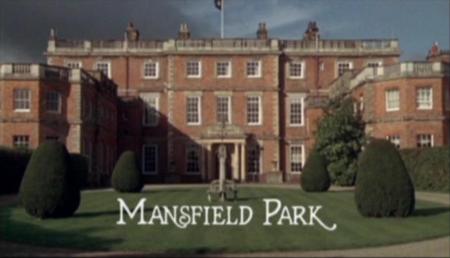
Mansfield Park.
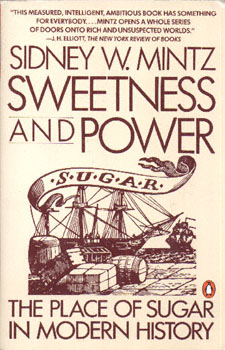
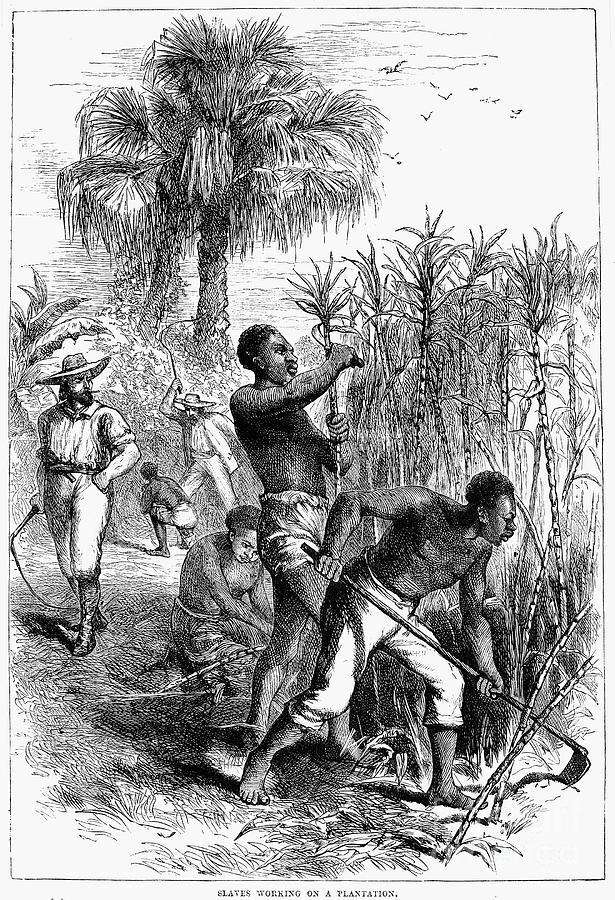
The absentee Baronet Bertram goes, with his heir, Tom, to sort out his plantations in Antigua, which seem to have been badly mismanaged -- which happened with West Indies absentee ownership.
It turns out Mansfield Park also includes a mention of America, meaning the U.S. It occurs after Sir Bertram returns, the amateur theatricals and all its accompanying dramas are put a stop to, and the unwelcome guests prudently depart:
From Chapter XII:
Fanny could listen no farther. Listening and wondering were all suspended for a time, for Mr. Bertram was in the room again; and though feeling it would be a great honour to be asked by him, she thought it must happen. He came towards their little circle; but instead of asking her to dance, drew a chair near her, and gave her an account of the present state of a sick horse, and the opinion of the groom, from whom he had just parted. Fanny found that it was not to be, and in the modesty of her nature immediately felt that she had been unreasonable in expecting it. When he had told of his horse, he took a newspaper from the table, and looking over it, said in a languid way, "If you want to dance, Fanny, I will stand up with you." With more than equal civility the offer was declined; she did not wish to dance. "I am glad of it," said he, in a much brisker tone, and throwing down the newspaper again, "for I am tired to death. I only wonder how the good people can keep it up so long. They had need be all in love, to find any amusement in such folly; and so they are, I fancy. If you look at them you may see they are so many couple of lovers—all but Yates and Mrs. Grant—and, between ourselves, she, poor woman, must want a lover as much as any one of them. A desperate dull life hers must be with the doctor," making a sly face as he spoke towards the chair of the latter, who proving, however, to be close at his elbow, made so instantaneous a change of expression and subject necessary, as Fanny, in spite of everything, could hardly help laughing at. "A strange business this in America, Dr. Grant! What is your opinion? I always come to you to know what I am to think of public matters."
As there are so many Royal Navy figures in Austen's family and her novels this might be thought about a bit. It is generally believed that
Mansfield Park was begun in 1811 and completed in the summer of 1813, with a publication in 1814. The U.S. officially declared a state of war with Britain in 1812.
*
However, the conditions of war provocation had been place long before 1811, among them the many hostile encounters on the sea between the U.S. and Britain, as part of Britain's high-handed treatment of U.S. merchant ships. The U.S. had no navy, thanks to President Jefferson, who thought without a navy chances for war with Europe were less. Jefferson's administration basically bowed to France -- the U.S. people saw it that way. He embargoes all European trade for the U.S. plunging the U.S. into deep economic depression, particularly outraging the New England mercantile-shipping-banking elite. Ultimately this provoked New England (for the first time, not the last) to attempts organizing secession from the U.S. In the meantime, the west wanted War! Impressment of sailors from U.S. ships was only a single goad. In most ways the U.S. was in an impossible situation, caught between England and France as both nations demanded the U.S. alliance and support, forbidding U.S. traders to deal with the other or any nation supposedly allied with the other.
The Brits were blockading U.S. ports, as well as those of European nations who wished to trade with the U.S. or France. One consequence as the burning of Copenhagen for trading with the U.S. One of the few nations with whom we could still trade was Russia, where was John Quincy Adams as our minister, who was entrusted to keep that trade open and obtain, hopefully, other assistance as well against England and France. Both France and England felt they needed friendly relations with Russia -- until Napoleon screwed the pooch on that, that is.
In 1812, Madison's administration was pushed by the South and the newer western states into declaring war on Britain: with an empty treasury, thanks to Jefferson's Embargo, no navy, thanks again to Jefferson, no army, thanks to the states' determination to finance their individual militias only and refusal of a draft to make a national army.
So, even before the War began, the U.S. turned to privateering. -- smuggling, of course, went on as it always had.
To the chagrin and shocked disbelief of the Brits, U.S. privateers took numbers of Brit vessels --
even at the entry roads of the Thames and in the English Channel! (The exact, astonishing large number is enumerated Henry Adams's history of Madison's administrations.)
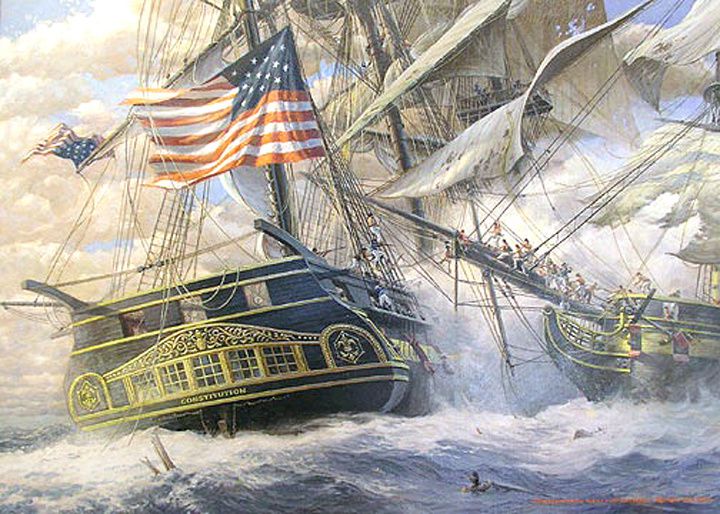
The U.S. ship yards began re-building a navy at a pace the Brits didn't suspect was possible. With the news that the USS Constitution had defeated the His Majesty's Guerriere, there was disbelieving wailing and gnashing of teeth throughout England.
On the shores of the Chesapeake, things were generally better for the Brits (until the Star Spangled Fort McHenry engagement). In August 1814, the Brits fired the government buildings when they took Washington, D.C. (thereby turning the President's Palace into the White House, as the thick white paint of repairs concealed the soot-covered walls) and the destruction of a whole Brit invading army at New Orleans -- which invasion arrives from Jamaica via the navy.
As did France, thus United States filled the English papers while Jane Austen wrote
Mansfield Park. a novel that glancingly mentions the War to illustrate another characteristic about Tom Bertram.
In the meantime, Louisa Catherine Johnson Adams was in St. Petersburg, bearing and losing a child, a favorite of both the czar and czarina, while her husband negotiated fishing and trading treaties with Russia. Then in the winter of 1815 she traveled by coach from Russia to Paris, and Napoleon escaped from Elba.
------------------------------
* For a timeline of novel's chronology and that of its composition,
go here.