LINES OF THE DAY

". . . But the past does not exist independently from the present. Indeed, the past is only past because there is a present, just as I can point to something over there only because I am here. But nothing is inherently over there or here. In that sense, the past has no content. The past -- or more accurately, pastness -- is a position. Thus, in no way can we identify the past as past." p. 15

". . . But we may want to keep in mind that deeds and words are not as distinguishable as often we presume. History does not belong only to its narrators, professional or amateur. While some of us debate what history is or was, others take it into their own hands." p. 153

Silencing the Past: Power and the Production of History (1995) by Michel-Rolph Trouillot

Thursday, September 9, 2021

Martin Walker's The Coldest Case: A Short, Sort Of Book Review


Walker, Martin (2021) The Coldest Case: A Bruno, Chief of Police Novel. The latest installment.

Walker recently won a French literary prize for representation of Southern France and culture to the world.'

I have an additional affection for Walker’s series now too.  I introduced these books to M, back in the summer of 2020.  They helped distract her from the ordeal of cancer tests and treatments, when it was possible to be distracted still, without morphine. She died last month.  I wish she'd been able to read this latest Bruno.


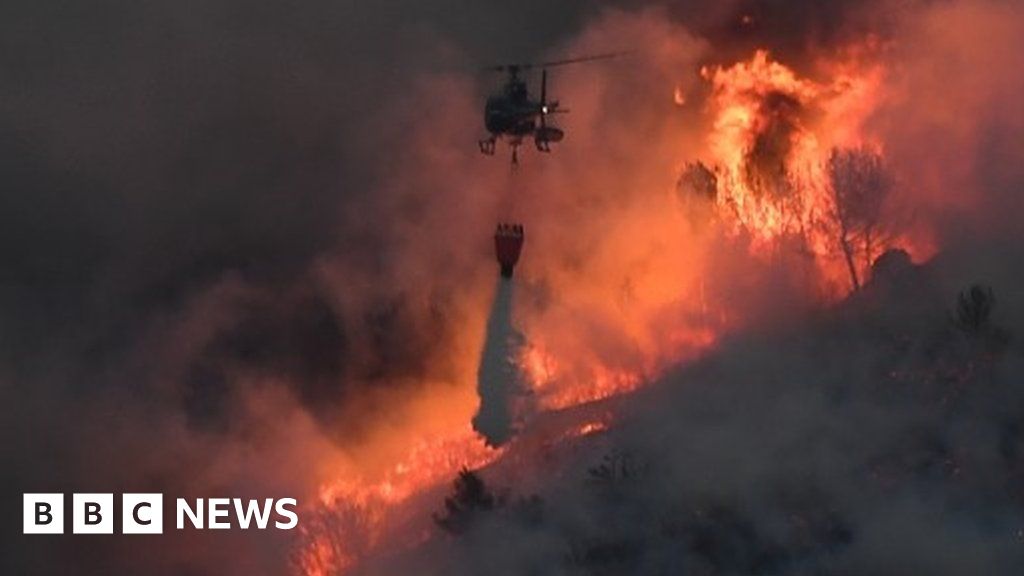
Areas near the French city of Marseille have been hit by a series of wildfires, burning homes and forcing the evacuation of hundreds of residents.


I'd expected the next installment of the Brunos would deal with the pandemic as central to Provencal milieu. But it's the wildfire-drought summer of 2016 - 2017 - 2018 - 2019, or maybe even 2020?  Which year it is, is not specified, but it could be any one of them, or even this summer, except of course the book was going through its production process then. However, since there's no reference to previous drought and wildfire summers, this reader assumes 2016.* There are many references to the dangers to the Dordogne in particular, and the series of caves filled with prehistoric paintings, of which Lescaux is only the most famous, though may be not the most important. Which again suggests 2016, because, though wildfires were not unusual in this region in the summers previous to 2016, the extent of the burning and length of time they burned, was new.  Now, like in California, this is the norm.


Castelnaud-la-Chapelle village with Château de Castelnaud castle, Dordogne, Perigord noir, France

The locals – Bruno’s idea of course – employ (a castle that exists in reality) Château de Castelnaud’s re-created trebuchets throughout a set-piece’s endless night to hurl tonnages of ice and water into the advancing conflagration's front lines, retarding it long enough for France’s military fire-fighting planes to be able to fly (so low they have to go, it’s too dangerous at night in the mountains) and spray water on the front – and, not incidentally, as the series is all about the local,** save the castle.

Holy cow!  A litter of puppies are born!

Plus, for the murder mystery, and the historical elements of the Brunos’ formulae, Stasi surveillance documents and trained East German infiltrators from the 1980’s are central.
There's an attempted rape upon a young doctoral archaeologist by a gendarme, which rape is extraneous to all of the story lines, so the reader wonders if a gendarme assaulted a friend of the author? Or else, since she's essential to the solution of the local mystery, but never gets any page time, or time to spend with the local interlocked powers that be/friends, which is lamented several times by Bruno -- this is how author gives her some recognition? Balzac the Bassett's first sired litter of puppies get much more attention than this young archaeologist. Constant attention in fact, even though nobody’s seen them except on Bruno’s fone. Everyone cares about the puppies. Sadly then, we understand this way just what an Outsider she is to this local influencer network intersecting with others of their ilks throughout France in the police, military, media, education, politics, finance, medicine and law (hmm what does it mean that the Church isn't represented in this group?) -- just as it has been at least since the Renaissance. Nobody cares about the young archaeologist Nobody, unconnected to Somebodies. But they do feel vaguely guilty about it, since the author does.   (How much book are we willing make, if this character recurs down the line, as so many do, it will turn out she's the niece of Somebody?)

On the other hand – puppies! And all our recurring characters, as do we readers, know Balzac since he was a pup, and love him well, while nobody knows the archaeologist, including we the readers. Local social circle-hierarchies are cruel as families to those who aren't really part of them.

This means, though, I can still look forward to a Pandemic in Provence Bruno. Or Pandemic and wildfires in Provence, just like 2020 and 2021.

~~~~~~~~~~~~~~~~~~

  *    We were there in Provence between those of 2017 and 2018.  Wolves had been seen for the first time in decades, if not centuries, in the mountains of our friends' village.  I asked then if it were possible the wildfires had sent them to the region, but no one knew.

**  Which makes this series part of the mysteries classified as "cosies", one supposes?  That this is so contributes no little to its success, one further supposes, as the thriller aspects of the larger plots are often not plausible if one looks at them for one second.

Wednesday, September 8, 2021

I Say, You Say, They Say, All Say "Abbott (Who Needs Costello)"


Why, yes, as we say, say we all, so says AOC

He is not familiar with a female body

Cortez went on to explain the basic biology surrounding pregnancies, and that many pregnancies are often undetected at six weeks. She said: “In case no one has informed him before in his life, six weeks pregnant means two weeks late on your period. And two weeks late on your period, for any person with a menstrual cycle, can happen if you’re stressed, if your diet changes, or for really no reason at all. So you don’t have six weeks.”

Cortez added: “He speaks from such a place of deep ignorance, and it’s not just ignorance. It’s ignorance that’s hurting people.”

Recall the New York woman who waaaaaaaaaaaaaaaaaaaaaaaaaaaaaaaaaaay back in the day said, "If men got pregnant abortion would be a sacrament."? That was Gloria Steinem They (the blobmedia) was determined to tell us, but Steinem said it was Floryence Kennedy who said, she had heard it in Boston from an elderly Irish lady taxi cab driver.


And even further back than that in New York there were Susan B. Anthony and Cady Stanton.  The staging of Gertrude Stein and Virgil Thompson's opera re Anthony, The Mother of Us All in February 2020, was the last time I've been there.  Sigh.

~~~~~~~~~~~~~~

     . . . .  Brain's been in a funk the last several days.  I hope I'm coming out of this state in which I just don't wanna bother because why bother?  A weekend without a hurricane, without a hurricane watch, without a hurricane, all of which were disasters to so very many of our near and dear, after three in row, has helped. El V insisted we Go Out to observe our Carnalversary, which is Labor Day Weekend (why yes, that was a date that lasted the entire long weekend!) helped too.  There's just been so much death, delta, destruction, voter suppression, and all around wickedness in the last few weeks that my processing capacitors seemed to have needed to shut down for a while.  All I want to do is watch old Poirets on Acorn tv and read novels.

Books, we have them.  I brought home two from the library this afternoon.

I'm going to re-read Sharon Kay Penman's second Plantagenet novel Time And Change (2002), now I've finished the re-read of When Christ and His Saints Slept (1995) -- well that one I listened to while working out.  This one I'll read with mine own eyes. Henry II and Eleanor have courted and married, he's become king.  In this second novel Henry and Beckett's alliance-friendship fails in murder; Henry and Eleanor's brilliant erotic, romantic, strategic marriage alliance of equals goes to hell yet with love abiding. Can there be anything more dramatic that that?

The second novel I brought home is The Personal Librarian (2021) by Mare  Benedict and Victoria Christopher Murray. This historical fiction is centered upon the mixed race, passing for white, brilliant woman, who was John Pierpont Morgan’s first librarian, in charge of his magnificent collection in the building that is now the Pierpont Morgan Library.  I've been looking forward to reading this novel since late spring / early summer.

Delivery brought three non-fiction books today too.  

Toby Green's A Fistful of Shells: West Africa From the Rise of the Slave Trade to the Age of Revolution (2019) a history of the African slave trades -- not only the Atlantic slave trade.  I wish we'd had this book back when we were writing the bodies as money sections of The American Slave Coast (2015).  


We received Ada Ferrer's latest book, just released, Cuba: An American History.  We will not be suprised if she gets the Pulitzer for it. She's speaking tomorrow night at a NYPL event, but tomorrow night is Postmambo Movie Night, so we cannot participate.

September 9 and 16, 2021

NOLA Reconnect Sessions and Postmambo Movie Night present
 
Cuba and Africa: Ivor Miller and The Rumba Kings [Some serious Congo Guitar Godding going on' here! ]

The bidirectional flow of music between Cuba and Africa, with Abakuá and Congo perspective

And, a book that can't be more New York if it tried, Reign of Terror: How the 9/11 Era Destablized America and Produced Trump (2021) by Spencer Ackerman. OK, so it's not just about New York, but it is stuffed with what we experienced up close and personal.


~~~~~~~~~~~~~~~

      . . . . As for watching, I'm continuing with King of Boys (2021), Season 1, Netflix Original and the re-watch of The Last Kingdom, 4 seasons, the best 'period' television going. 

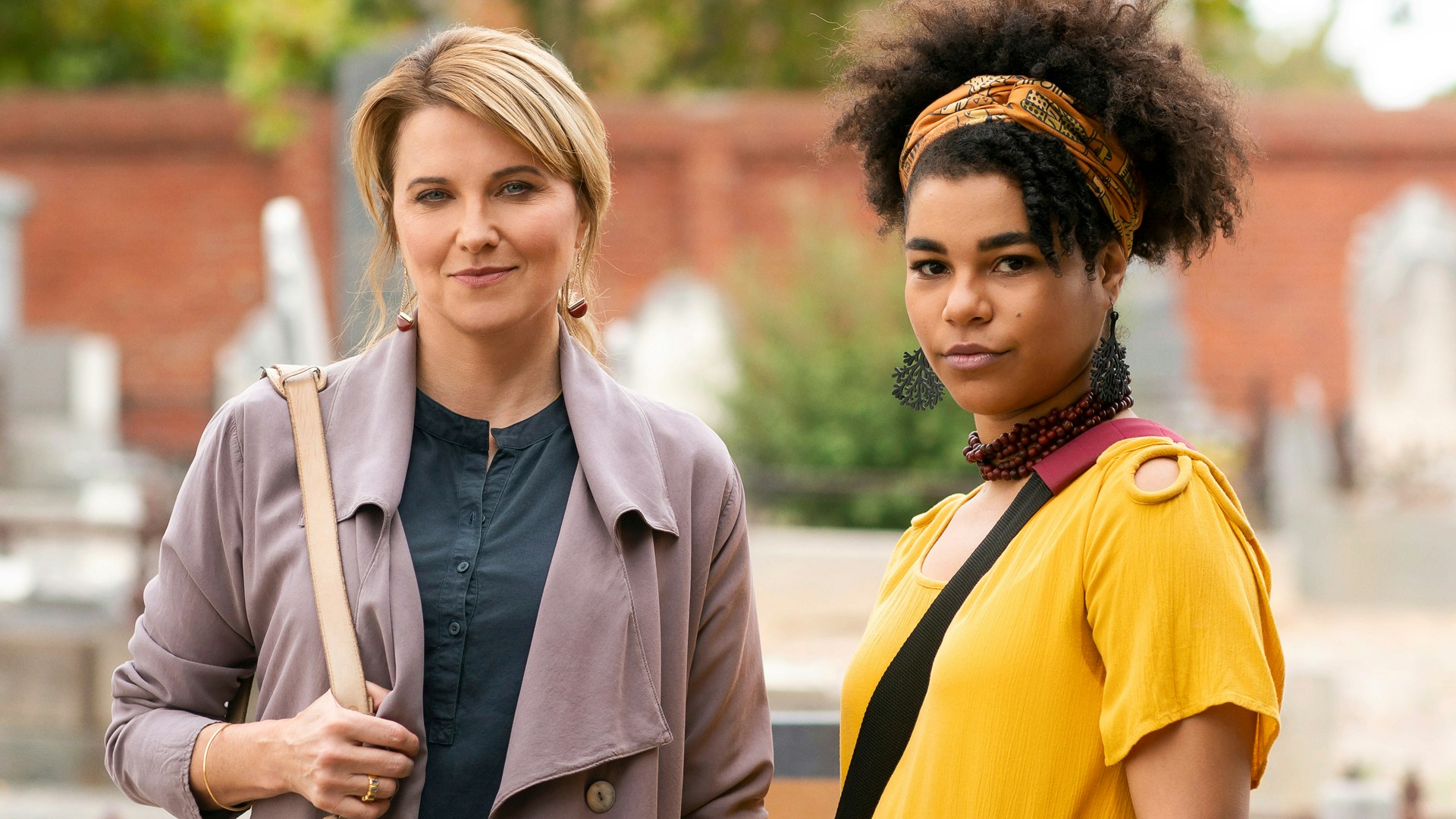
Brain, heart, soul in funk though, so bad has it been, that I missed working out one day last week, I keep wanting My Life Is Murder, season 2 (2021), in sunny, colorful Sydney, featuring Lucy Lawless as police consultant, Alexa Crowe.  In the latest episode we here learn that even if successful enough for Las Vegas, Sydney? New Zealand? drag queens cannot compare to the stunning, talented, spectacular drag beauties we are used to. Also, by time the drag duet was to go to Las Vegas, Las Vegas was closed, but they evidently didn't know that, even though Alexa's assistant, Madison called Vegas to learn for who rooms were booked. 

Thus -- I'm most confused.  Supposedly they are now somewhere in New Zealand ... for ... reasons? Family?  But it still looks like Sydney.

We  learn Alexa has a brother in prison and her father was something of a crook and con man -- just like Miss Fischer's dad!  The bro is played by the dude who plays Sam on Netflix's northern California soap opera, Virgin River. He isn't convincing as an Aussie, New Zealander, whatever.  


Alexa and Madison


They Say that Renee O'Conner will show up in one of the episodes, so Xena fan service, I guess? Alas, only a single episode released per week, just as with Vera's season 11. So I began re-watching the earlier BBC Suchet Poirots too. 

~~~~~~~~~~~~~~~

     . . . . This afternoon I officially began preparing for the long cold winter ahead.  I have discovered REI Co-op, an outdoor activities store.  This means they carry some serious cold temperature kit.  I started with the over the calf heavy duty merino sox, with extra layers on the soles.  I'll pick up more items like caps and more sox, particularly for el V in the next few weeks, as it couldn't be more convenient to do so, located between here and one of the library branches where I pick up ordered materials.

Keep on truckin' all we all!  


Saturday, September 4, 2021

Wednesday, September 1, 2021

Daily Depressions, Reading, Watching

      . . . . Our tiny but sublime vacation was followed immediately by non-stop crises of all kinds, all of them made by those over whom we have no control.  Death was bookended by Hurricane Henri and Hurricane Ida. Ida's hollowed out New Orleans's professional class. With no prospect for the return of power for perhaps months, they left the city.  They have the resources to do so -- Tulane shuts down for 6 weeks, but keeps remote learning going, so the faculty get paid.  You see what I mean?  So in crazy heat and humidity, no power, no a/c, no home, no money, no food, no water -- what do you think will happen to those in New Orleans left behind?  Not a scrap of a FEMA person on the ground has yet been seen.

Though we personally have been spared hurricane crises -- so far, as tonight and tomorrow we get a month's worth of rain wrung from Ida's tattered, passing skirts into our already overflowing reservoirs and saturated earth* -- there are the western wildfires, whose toxin-laden smoke we are not spared. The mid-west is dying of drought, while the Gulf is drowning in flood. The blob that calls itself the responsible media is determined to crucify our President in the name of ... what???? A man in a no-win situation had the guts to let go the wolf's ears (which T Jefferson, referring to slavery, said could not be done -- but then, TJ become quite famous in the South, in Virginia, for his cowardice ....) does so, and some how this is reprehensible, but the Jan 1 insurrectionists are merely mis-understood, and must be forgiven.

Then ... there is covid's Delta variant which relentlessly tsunami's across the country.  In Illinois, Bro says he and his cohorts are calling it the "Unvaccinated Pandemic."  They are not saying this good-naturedly. They are as furious abut this as I am  Then comes more death, not from covid, but from people who can't get treatment due to the Unvaccinated Pandemic taking all the medical resources.  This is not of any personal making on our part, or that of anyone we know.  In the meantime, more voter repression, more war on women's reproductive rights and health. In the meantime too, the non-stop crisis that is Haiti, and now also that of Cuba, keep rolling.

And now, I am staring at the approaching mouth of winter's tunnel, a third cold, dreary winter, pretty much enclosed in this tiny space with one other person.  All we're seeing at the end of this tunnel is more vaccinations, more masks and even more dangerous covid variants. Because of Those Ilks.  Well, even people in my family now believe that is how it is with the rethugs: if They don't get Their way one way, They'll get it by something even crazier, such as killing Their own.  Whatever it takes, They get 'er done. **

So I've not been of much use to anyone outside of what is, again,  a tiny circle of close friends who happen to be physically close by, close enough we can meet informally in one of the neighborhood's small parks.  And I'm good for cooking. We continue to eat very well.  I have a big pot roast in the slow cooker right now, with wine, beef stock, herbs, onion, potatoes, carrots and 'shrooms.  It was a home delivery error on the part of MW's interpretation of what I'd ordered back in the spring. On such a wet day, with night temps for the next 2 - 3 nights going into the 60's and even 60's, it made sense to get it out of the freezer.

~~~~~~~~~

     . . . . Fortunately there is a great deal of good reading, and good watching. Never in my past life could I possibly have imagined there would be an extended period of my in which television would be of the greatest importance! This is the state of reading and watching as of today.

FICTION

Continuing:

Penman, Sharon Kay (1995) When Christ and His Saints Slept.  The workout audio book.  I’m going to re-work my way through the Penman Plantagent series.

~ ~ ~ ~

New:


Walker, Martin (2021) The Coldest Case: A Bruno, Chief of Police Novel. The latest, for which I've been waiting since last September.

Walker just won a French literary prize for representation of Southern France and culture to the world.  I have an additional affection for Walker’s series now too.  I introduced these books to Mary F. back in the summer of 2020, and she loved them too.

NON FICTION

Continuing:

Herrin, Judith (2021) Ravenna: Capital of Empire, Crucible of Europe. This one I read alone.

Sampson, Fiona (2021) Two-Way Mirror: The Life of Elizabeth Barrett Browning. I have only a few pages left. I'd have finished it by now but the author is so irritating as she insists on being in the book, and she is not interesting.

Wickham, Chris (2009) The Inheritance of Rome: Illuminating the Dark Ages 400 – 1000. El V and I continue this aloud every night before lights out. 

~ ~ ~ ~ 

New:

Beran, Michael Knox (2010) Pathology of the Elites: How the Arrogant Classes Plan to Run Your Life.

Clark, Christopher (2013) The Sleepwalkers: How Europe Went to War in 1914.

Raven, Catherine (2021) Fox & I: An Uncommon Friendship

WATCH

Watch for: Vera, season 11, 1st, every Tuesday – BritBox;  Frankie Drake Mysteries, season 4, 3rd – PBS; Midsomer Murders, season 22, part 2, ? – Acorn; Crooked House (2017 film fr, an Agatha Christie novel), NF – 1st; Lucifer, season 6/final, 10th – NF; Dear White People, season 4/final, 22nd - NF; 

Continuing:

My Life Is Murder, season 2, 3rd through the 10th eps, 1st – Acorn -- sundrenched Sydney, Lucy Lawless.  Nuff Said.

~  ~ ~ ~ ~

New:


King of Boys  (2018) season 1, "The Return of the King"; Netflix Original.  I started this 7 episode series last night.

Made in Nigeria, by Nigerians, located in Lagos. Even in the first episode the show is ‘showing up’ the endless traditional internal conflicts, such as Yoruba vs Igbo.  Complicating things further we have a Nigerian version of protestant evangelical Christianity (a prosperity church, you betcha, with all the prosperity going to the head minister, natch), and so much more.

It opens media res within a prolonged party, dancing to live music. Money is being ‘sprayed’ i.e. the guests are “making it rain” – they are shoving, pouring, sticking, thousands of dollars upon the giver of the party and the musicians, a tradition in the Afro Caribbean as well as West Africa. So right away there’s a lot going on with which I have a certain level of long-time familiarity.

It’s as multi-lingual as Lagos is. The show is mostly English, but Nigerian English as well as the traditional languages of Yoruba and Igbo. Subtitles are provided then. Plus there is the local pidgin, for which the viewer might like to take advantage of closed captioning. The characters who know each other long and respect and like each frequently lapse into pidgin, a Nigerian variant of code switching done among friends, in the same way African Americans do this among each other.  There is this too -- 'King' is a woman.  She's addressed as "Oba" which is a male gendered title in Yoruba.  If one knows this right at the start, a whole lot of information is provided just by that.

Vivid, intense and not the USA at all.

~~~~~~~~~

*   Even as I type now, the rain begins. I hear it spraying against the window panes.

** See "The Density Divide and the Southernification of Rural America: The Old North/South Split Lives on in the Urban/Rural Divide"  by Will Wilkinson. Thanks to Lawyers, Guns & Money for tipping me to it.

. . . . One of the puzzles of the 2016 election, and the catastrophe of the Trump presidency, is how populist white nationalism finally prevailed at a time when Americans, taken altogether, were less racist than ever. This is one of the questions I take up in the “Density Divide.” But I left out one of my favorite answers to this question largely because it’s too speculative and I didn’t have the data to prove it. My hunch is that rural white culture, which was once regionally varied and distinctive, became more uniform by becoming increasingly Southern. I call this the Southernification thesis.

In the "Density Divide", I argued that the key to answering “Why did white ethnonationalism finally work to win the GOP nomination and then the White House when it didn’t even get close to working for Pat Buchanan or Ron Paul?” was that residential self-selection on ethnicity, personality, and education had made lower density parts of the country progressively more homogenously ethnocentric and socially conservative, which finally made it possible to unify and organize rural and exurban whites as a single constituency.

I’m confident that this is correct, as far as it goes. However, I think it’s an incomplete explanation without something like the Southernification thesis. Before it could be successfully organized politically, America’s increasingly ethnocentric non-urban white population needed to be consolidated first through the adoption of a relatively uniform ethnocentric white culture.

What I’m still groping for is solid empirical confirmation that the Southernification of white rural America did happen and, if so, how it happened. Now, I have few doubts that it did happen and is still happening. Indeed, it’s hard to think of better impressionistic evidence than the spread of Confederate flags far from the South into all parts of white rural America. But that doesn’t seem like quite enough.

But let’s suppose that it is enough. How did Southernification happen? I’m going to take this up at length in another, even more speculative, post. But here’s where I would start: When I was a kid, the Atlanta Braves somehow became “America’s Team.” Could it be that the media mogul who married Hanoi Jane took the critical first step in bringing non-urban white America together by beaming sanitized Southern culture into living rooms everywhere? . . . .

This is the most cogent explanation for what has happened that I've seen.  Of course, one doesn't see it in the Blob, which is what Lawyers, Guns & Money have taken to calling the so-called media, made up of people who have gotten whatever it is wrong almost every time, but still keep getting paid big money to keep getting it wrong.

Wednesday, August 18, 2021


. . . . Mary Frey-Osmanski, wife of Steve, retired teacher of French and German, a long-time member of a variety of intersecting sf/f writer circles, a mainstay of the Society of Creative Anachronism's Pennsic communities and wars, left us this morning.

She met every new ordeal the course of the disease added to her struggle with courage and gallantry, and the determination to be dealt with by all as a full, living person, whose dignity was not to be trifled with.


I will miss her.  My heart goes out to her husband and her many friends in the Kingdom of the East.

Tuesday, August 17, 2021

Regarding Reizenstein's Mysteries of New Orleans & Cable's Old Creole Days

      . . . . For anyone with serious interest in the history of New Orleans, the history of the South, the history of the United States, American Literature per se, and the history of our literature that hailed from the slave states, this book will be fascinating, and revealing. 


Die Geheimnisse van New Orleans (The Mysteries of New Orleans) by Baron Ludwig von Reizenstein, published serially between in 1854-55 in the Louisiana Staats-Zeitung.  Rediscovered in the 1990's, translated and edited by Steven Rowan, published in 2002. 

From the penultimate paragraph of Mysteries of New Orleans, Chapter 4, p. 34, written in German, by someone who is coming to New Orleans, the South and the United States from outside, i.e. not born here, where all this was so normal people hardly remarked upon it.  Except, that by the time this was published in 1854-54, the red text was being remarked upon with ever increasing anger by ever increasing numbers.:

The person to whom these lines were directed is an old, respectable lady who, besides a few of the minor failings of her sex, has the great weakness of being somewhat obsessed over her aristocratic origins. Whoever violated her aristocratic pretensions even in the slightest immediately lost her favor.  Although she could not really be called rich, she owned three house in Bourbon Street and a volante with two horses.  A mulatto she just obtained through an inheritance completes her half-dozen slaves.  She belonged to that French clique in New Orleans that could still boast of the hereditary titles they brought with them in the period of the emigration.* This considerable clique of French aristocrats, which excludes even the richer Americans from its circle, since they are regarded as not of equal birth, play the same role in the small circle of New Orleans that the grandees of South Carolina play in the whole of the United States . . . .

One can't help but wonder if  George Branch Cable had familiarity with The Mysteries of New Orleans, that this work might have contributed in terms of format and treatment his Old Creole Days. The seven story collection was first published in 1879, which gave him rewarded him with literary renown (and sales!) in the North,  and the South's condemnation, so much so, he had to move North. The book was particularly loathed in New Orleans.


So, like Reizenstein's German language serial, New Orleans and the South labeled Cable as unfit to read, stuffed with dreadful ideas, exposing break after break in the color line via the most intimate of connections, though Cable's work was considered perverse for exposing such things to the eyes of the North -- lies, all lies! -- while Reizenstein'swas perversion, populated with lesbians, gays, cross dressers, etc. of all skin color heritages. Also lies, all lies! doncha know.  These things do not happen in New Orleans and the virtuous South.

* The Napoleonic wars and slave revolution in Haiti, from where many of them emigrated to Cuba, then when Napoleon went to war with Spain, were expelled and came to New Orleans, bringing their slaves with them, particularly their female slaves, as well as their free 'colored' mistresses and children, doubling the city's population in a single year.


Monday, August 16, 2021

Vacation, Friends, Delta, Postmambo, NOLA Reconnect, Books, TV, But In The Beginning We EAT!

      . . . . It's been a long time, so much going on, but in the end, IT'S ALL ABOUT AUGUST, which is all about -- 


CORN ON THE COB & HERITAGE TOMATOES!  Am I right or am I right? Reveling and gorging, with the best pots of beans, salads and sausages.  What a month this has been for eating, which has all been done at home, or even the first week, spent  at our Saratoga's friend's house. Delta made sure of that. We were not then and are not not now though, in the least deprived staying away all together from restaurants again.  So much delight in getting our produce and other foods at the Green Markets (and O! the green markets up Saratoga way!), and then, cooking together, as B and S and I did each day, with much lubrication provided by Host S's wine cellar, B's brought-alongs, local beers from the Saratoga Minogue's Beverage Center, and any and all music anyone could possible desire or have a yen to hear.


     Every second of Saratoga was more than splendid, even while asleep. The nights dropped into the 50's.  We slept with windows open.  The air was fresh and good smelling, any time day or night. The weather was just what one wanted for an August NYC getaway.  Then we came home, to roaring surges of Delta, and fearing yet again They will steal Thanksgiving and the rest of the holidays from us.


Back in the City though, and back in our grooves. Every time we think, "Well, maybe we don't need any more Postmambo Movie Nights, or any more NOLA Reconnect events, because people will be going out now -- well, no.  Our Host S provided such a moving tribute to how important these Postmambo activities and events have been for him in the pandemic.  Postmambo and his dog -- his gf lives in another town, and has a full-time job, so he's alone mostly.  Imagine, being up there, snowed in, blizzards howling round these past two winters.  "Some very dark days," he said, and said nothing else.  It was kind of emotional for me to be watching Summer of Soul from Harlem, 1969 (film July 2021), and Leningrad Cowboys (1993, Helsinki) films in company with him, el V and Ben, people who have attended to many music events together over the years, and now doing it only by screen again, thanx to jerkwaddies who won't wear masks or get vaccinated, and watching in the same place Steve is when doing NOLA Reconnect and Postmambo.

~ ~ ~ ~ ~

READING

Non-fiction

El V and I continue bedtime read-aloud of Chris Wickham's The Inheritance of Rome: Illuminating the Dark Ages 400 – 1000 (2009); I continue for myself with Judith Herrin's Ravenna: Capital of Empire, Crucible of Europe (2021), 


both of which go so well with the content in the review of The Selected Letters of Cassiodorus: A Sixth-Century Sourcebook (2020) translated and edited by M. Shane Bjornlie, in the latest London Review of Books.  Cassiodorus -- bridge between Late Antiquity Rome and the following eras of murdrous kinglets, want-to-be emperors, etc.  Also the surviving literature, with emphasis on 'surviving', as it seems the 5th century is where everything changes and transmutes, assisted later by whatever literary focus Charlegmagne's scriptors possessed, thus what was lost. Reading this is far more interesting to me probably, than reading the book itself, as I'm not a Latin scholar.

Fiction

The Germans of antebellum New Orleans, how much have we thought about them?  Of course Germans arrived in New Orleans in the 1830's and 1840's as they did in so many cities here, such as St. Louis, progressive labor and political activists, bringing the information, messages and means of Revolution -- and then fleeing from the failure to overset the crowns and oppressions of Old Europe's old Empires and Kingdoms.  They also brought their arts and culture, as we see here in this astonishing work, The Mysteries of New Orleans by Baron Ludwig von Reizenstein, translated and edited by Steven Rowan (2002).  It was originally serially published in 1854 and 1855, and then unavailable until 'rediscovered' in 1990. Why did it disappear? From the opening paragraph of the "Preface and Acknowledgments":
This edition began as a whim and ended as an obsession.  The memory of Reizenstein and his notorious book was preserved primarily by J. Hanno Delier. [ftn.1] It has long been known that Ludwig von Reizenstein wrote a book about New Orleans which offended the taste of its time and was quickly withdrawn from circulation; more could not be said. It is safe to assume that the book, Die Geheimnisse von New Orleans, remained unread for more than a century until 1990, when I managed to reconstruct almost of it from the microform files of the Louisiana Staats-Zeitung . . . .
We learned of this work via last week's NOLA Reconnect session which focused on the Spanish language newspapers of New Orleans.  However, as the featured scholar of the non-English newspapers of New Orleans's history further informed us, there were others, not just French, which we expect, of course, and Spanish, which still too few people think about, as for some reason the deep Spanish history and roots of New Orleans remains overlooked by American History (particularly by those who have positioned themselves as gatekeepers as what the narrative of US history is supposed to be).  German and Italian were among those publications in other languages.


As this cover art for the 2002 translation informs us, among the culture and traditions the Germans gifted to Victorian USA, is the gothic manner and sensibility.  Not only did that map finely upon New England's (think, Hawthorne), but so obviously, once one's attention is caught, with that of the most 'gothic' city of the nation, New Orleans. Late nineteenth Century New Orleans author, Lafcadio Hearn, with a tessara of backgrounds, wasn't New Orleans's sui generis. 

Three times a week, I am most satisfactorily re-immersed in the first novel of Sharon Kay Penman I had ever read, When Christ and His Saint Slept (1994).  am not re-reading the novel though, I am listening to it.  Be assured, this is a wonderful book to accompany 2 1/2 hour workouts!


This is a lively novel, deeply researched, which makes understandable to a non-scholar how and why the nineteen-year bloody tragedy, known as the Anarchy, descended upon 12th C England and her people after the death of King Henry I. Since I first read When Christ and His Saints Slept, I have learned a very great deal about everything even remotely connected with these years, and not only in England. I confess this has allowed for an even greater pleasure in the narrative, and admiration for Penman.

As is Penman's manner, the women are half of the principal characters, starting with Empress Maud, also named Matilda, daughter of King Henry I, to whom he bequeathed his crown, and Matilda, the queen of the usurping successor, Stephen, Henry’s nephew, and Maud's cousin. In many ways, as Penman shows the succession of back-and-forth battles, the successes and failures on both sides, this is as much a women’s war as it is that of their lords.  As women, they have to fight on multiple fronts, not only battlefields.

The set pieces of terrible violence make the suffering of the average Englander clear, as, per usual, lords and their ladies are spared the worst, except on the battlefield, and even then they can often be ransomed instead of just killed. That this civil war indecisively juttered on for nineteen years, despite so many furious, grim and grisly military encounters, leads the reader to consider, perhaps, most of the protagonists lacked any talent for strategy or for building coalition.  All of the men appear to be more than competent warriors, but as war commanders and statesmen, maybe not?  This includes Empress Maud-Matilda too. We see at each turn that failures emerge out of character defects of all the protagonists. Medieval nobles and royals were the not trustworthy or faithful to anyone, much less their inferiors, despite chivalric pretense, which was viewed as weakness if / when a figure practiced such behavior outside romances.

The blood of William the Bastard runs fast and thick in the veins of all the protagonists, that wild, fierce, cruel, violent and stubborn heritage, that cannot brook any thwarting of their will from any quarter, that will never compromise or negotiate. With Henry II’s coronation, Henry I’s grandson, and an Angevin – Plantagenet as well, this was the blood that would rule England and remained convinced for centuries their divine right to rule France as well. The more I read along in this novel, the more I see the same kinds of arrogant treachery and punishment, such as a willingness to use starvation and destruction as weapons upon one’s own people England that the Normans wreaked upon the English in the years and decades after Hastings – the plundering, and the theft too. The English did the same in France in the 14th Century during the Hundred Years War. Plantagenets Edward III and his son, the Black Prince, are historically (in?)famous for what came to be called chevauchée, but that sort of warfare was not by any means a new addition to tactics and armaments. It took until the 15th century before that Plantagenet blood was replaced in England’s royalty – though the desire to rule France as well continued through the 16th Century, with or without blood heritage of the Bastard and the Angevins.

One inevitably considers: if in 1066, Harold and his army hadn’t been so exhausted at Hastings, having just fought and won a previous hard pressed bloody battle against the Danes hundreds of miles away, from which they force marched immediately back south to take on the Bastard, mayhap England might have remained firmly within the North Sea and Scandinavian sphere of influence, and not have gotten pulled into those of France and Europe. How much blood and treasure England would have been spared, perhaps, if that hadn't happened. Yes, that would be a big alternate history, That Penman did not write alternate history, but did her best to bring us in a readable narrative what we think we know, I am deeply grateful.