LINES OF THE DAY

". . . But the past does not exist independently from the present. Indeed, the past is only past because there is a present, just as I can point to something over there only because I am here. But nothing is inherently over there or here. In that sense, the past has no content. The past -- or more accurately, pastness -- is a position. Thus, in no way can we identify the past as past." p. 15

". . . But we may want to keep in mind that deeds and words are not as distinguishable as often we presume. History does not belong only to its narrators, professional or amateur. While some of us debate what history is or was, others take it into their own hands." p. 153

Silencing the Past: Power and the Production of History (1995) by Michel-Rolph Trouillot

Tuesday, May 19, 2015

Meandering in History From Daniel Boone to the End of the World

Among the several stanzas in Byron's Don Juan given over to Daniel Boone are


these lines, though Mr. Boone would not have cared for Byron's spelling of his name:

Of the great names which in our faces stare,
The General Boon, back-woodsman of Kentucky,
Was happiest amongst mortals any where;
For killing nothing but a bear or buck, he
Enjoyed the lonely vigorous, harmless days
Of his old age in wilds of deepest maze.

What I like about this statue of Boone at Boone, North Carolina is he's wearing a beaver hat, not a Davy Crocket coonskin or any other kind of fur.  He was adamant about not doing that, despite dressing all the rest of himself as Indians did.  He was appreciative of dogs and they abilities too. Visual depictions of him were more than inaccurate in many ways, even those supposedly made while he was still living.
Even stranger than attempting to hold in mind that Daniel Boone and the signature, sophisticated, cultured, highly educated and cosmopolitan English Romantics had connection is that Gilbert Imlay, who conned Boone of money, land and equipment, was the lover of Mary Wollstoncraft, and fathered a daughter with her, Fanny. As he absconded from the Kentucky frontier and his obligations to Boone, so did Imlay abscond from Mary and Fanny, leaving them alone and penniless. So, then, did Shelly and Mary Godwin, Byron and Coleridge, discuss often a utopian society, they could create in the mode they fantasized would be a Boonian settlement on the banks of some river meandering through the frontier woods that were already long gone.


Daniel Boone was, of course, the model for James Fenimore Cooper's Natty Bumppo - Leatherstocking - Hawkeye.

I've been thinking about Daniel Boone as well as Natty Bumppo, and how both of them react to the wanton killing of animals and birds (such as the heart-rending description of the Passenger Pigeon genocide in The Pioneers (1823) ), and First Peoples, by this news of horror coming out of New Mexico, that the British Barclay's Bank wishes to build a whole city of 100,000 in the desert outside of Albuquerque  that will suck up desperately needed water amid warnings of a future megadrought -- water that is already earmarked and fought over.  This is why I have no hope for the future because irrational and stupid greed always trumps anything merely factual and intelligent.

Where this is

Barclays expects to put this


Saturday, May 16, 2015

History in the Making -Minnesota Orchestra Broadcasting Concert Live From Havana

We're listening to this history-making live-in-concert via streaming. It seemed to be running on Cuban time, meaning things didn't start on time the way surely Minnesotans at least calculate such things.  But for Cuba it began astonishingly on the tick.

 It was 1:01 p.m. Wednesday when Delta Flight 8876 hit the tarmac at José Martí International Airport in Havana.


Habanera ticket holders waiting to enter the teatro natcional for last night's concert.

Last night's sold-out house.
Since there's no direct or compatible digital links to the U.S. the technical end of this has been very complicated.  The signals are being sent to Switzerland first, and then to the U.S.

The Minnesotans have learned the use of hand fans as well, since the Teatro Nacional is only lightly A/Ced.

They opened with the Cuban National Anthem, "El Himno de Bayamo", followed with the"Star Spangled Banner."

The orchestra began the program with classic Cuban composer Cartula's "Danson" , but they sound so gallego! i.e. like saying "Pat Boone has no soul."  Last night they did Beethoven.  Tonight, at least so far, the program is Leonard Bernstein's West Side Story.

This event is, well, astounding.  Here is a description of last night's concert.  One can't help but wish though, that the Minnesota public radio announcer understood Cuba's music culture better and 'got it' that Cuba has brilliant national classical music orchestras -- that this is not the first time Cubans are hearing this music, played by brilliant musicians.


Queer History

Here the countdown is already happening and the annual excitement that is Gay Pride in June is already building.  What used to be a Gay Pride weekend, and then week, has expanded.  Gay couples -- even groups -- from other countries and states are visibly plumping up the usual tourist hordes on the sidewalks and in the restaurants.

Thus this recently published book fits right into the current ambience,  Double Lives – A History of Sex and Secrecy at Westminster by Michael Block.


The many well known Brit politicos who were gay or bi sexual include Winston Churchill.  That was a surprise to me, at least.


From the Guardian's Books section: .
There are now 32 openly gay MPs, but for much of the 20th century many politicians were forced to lead complex, clandestine sexual lives. Michael Bloch tells their stories and salutes their powers of subterfuge. . . . 
As a young cavalry officer, the Old Harrovian Winston Churchill was accused of having “participated in acts of gross immorality of the Oscar Wilde type” with fellow cadets at Sandhurst; but he successfully sued his accuser for libel, and there is no evidence that, as an adult, he engaged in physical homosexual relationships. Yet he was far from being straightforwardly heterosexual. Although he worshipped his beautiful American mother, he showed a lifelong aversion to women. (In Churchill’s only novel Savrola, the obviously autobiographical hero has a purely chaste relationship with the heroine, obviously based on Churchill’s mother.) He seems to have had a low sex drive, and married rather cold-bloodedly, aged 33, for social and dynastic reasons, just after being appointed to Asquith’s cabinet. Though he came to depend on his “Clemmie” in many ways, she was often exasperated by his emotional unresponsiveness and treatment of her as a child-bearer and housekeeper, and more than once considered leaving him. 


Wednesday, May 13, 2015

Reading Wednesday - The Fifth Heart by Dan Simmons - No Spoilers

Dan Simmons is well known as the author of such expansive science fiction and fantasy novels such as the Hyperion and the Endymion series. The list of his novels is long, and almost all their titles a classical references, meaning classical in the sense of Greco-Roman mythology as seen above, or 19th century English and American literary canon, from Drood (Charles Dickens) to Carrion Comfort (Gerard Manley Hopkins) and The Hollow Man (which whether or not in T.S. Eliot it was "Men" still brings the poet to mind) -- and even Endymion, beyond the Greek myth is also a poem by Keats).


Simon's latest novel, The Fifth Heart (2015), mashes together several nineteenth  bold-face names in American and English Gilded Age fiction and history, authors and characters alike. This is a fin-de-siècle era meta novel of genres, a text constructed upon a variety of narrative and point of view modes. *

The tale's hub is the 1885 mysterious suicide of Clover Adams, historian Henry Adams wife. The narrative opens in 1893 with Sherlock Holmes, who is in the midst of his three-year disappearance after the events at Reichenbach Falls;  he's accepted the assignment -- presented to him by whom? --  to investigate what Holmes has been assured was not a suicide but Clover's murder. Though Holmes appears certain from the very beginning of the novel that Clover was murdered, suicide is also a theme from the first pages.

Present from the beginning too, is Henry James, who introduces Holmes to John and Clara Hay, Sherlock's companion, so-to-speak in his assignment, and who narrates in the manner of his own novels, as the detached, but invested observer, such as Fanny Assingham in The Golden Bowl.  However, there other narrations going on in this novel, to which drawing the reader's attention the narrative voice(s?) go out its / their way to do.

Among the historical figures we have the character of John Hay, who was the unpaid second secretary to President Lincoln during the Civil War, serving as assistant to the official secretary, John George Nicholay.  After the war, Hay tried his hand at journalism, worked abroad for the state department, co-authored with Nicholay the ten- volume Abraham Lincoln: A History (1890).  Hay married banking magnate Amasa Stone's wealthy daughter, Clara Louise Stone, in 1874, making a salary moot for the rest of his life. Settled in Washington D.C., he served in various capacities at elevated levels of government, including as Secretary of State for presidents McKinley and Theodore Roosevelt.


Clara Stone Hay by Anders Zorn (1860–1920),

Clarence King on far right. King was an American geologist, mountaineer, and author. He served as the first director of the United States Geological Survey from 1879 to 1881. He also was perpetually broke. Adams and Hays often bailed him out.


Henry Adams, my favorite American historian, invented the discipline of medieval history for academia in the United States at Harvard. He wrote the brilliant multi-volume history of the administrations of Jefferson and Madison, which as great-grandson and grandson of the two Adams POTUSes, he was in the most excellent of positions to do. He wrote copiously for the high end journals of the day and also for newspapers, particularly in the run-up to the Civil War. His quirky, self-embittered Education of  Henry Adams covers a lot of the ground leading up to the Civil War, and the war as conducted abroad, who, as son and private secretory to Francis Adams, a senator and once presidential candidate for the Free Soil party, and the head of the Lincoln's Legation to St. James, put Henry again in the best position to do. He wrote two anonymously published novels, both of which are rumored to have a female figure modeled on Clover Adams.The political novel, Democracy, was vicious about presidents Grant and Garfield.  Some say that Andrew Johnson was also satirized in Democracy -- but it's not possible to satirize the disaster that Johnson and his administration were. As an Adams, with a brother who was very good at making money, Henry Adams was a comfortably wealthy fellow.

Hay and Clara, Henry Adams and Clover, in company with the most manly of them all, Clarence King (King could give Theodore Roosevelt more than a run for the money in the outdoor manliness race), formed the most select of social circle clubs, calling themselves The Five of Hearts. Adams and Hay were such close friends their mansions were built adjacently, on D.C.'s H Street. It was their friend, Clarence King, who, without an abode of his own, presented the Five of Hearts club with the famous five hearts-embossed tea set and stationary. Receiving a summons on that stationary to drink tea on H Street would bring even "a president running barefoot across town in the snow" -- though the White House was just across Lafayette Square from the club's H Street mansions, so such an invitation might not quite as much a heart stopper as the clubbers believed.

The American class system is a strong theme running through The Fifth Heart. Henry and Clover, John and Clara, Clarence King, by the advantages of birth, possess the wealth and power that put them at the apex of privilege.  Henry James, by virtue of his own family's solidly middle-class intellectual affiliations, is among the intellectual and artistic elite, acceptable to the company of the highest-toned aristocrats. However, James lived mostly abroad because the U.S. is too raw for him. Naturally then, it is James who meditates on who is and who is not a gentleman and what a gentleman is and does. Neither is he manly, nor is he rich -- he frets constantly about his lack of financial and popular success. And there's that shifty, unidentified narrator, who keeps drawing attention to -- we presume -- himself, and who narrates extensively upon the others' speculations about who belongs and who doesn't. Finally there's Sherlock, who is no gentleman at all, not even American, and, unlike the others, a character.

Also, Sherlock is tall.

Presumably then, the title itself says that in some way The Fifth Heart is in dialectic with the Five of Hearts club.  We should keep in mind that the average of the combined heights of all five of the members of The Five of Hearts Club was 5 feet 3 inches. These were little people.  Their room for drinking tea with their Hearts tea set was made with furniture and other furnishings scaled to their littleness. They were little in other ways: anti-semitic (Adams), anti-woman (King) and anti-immigrant (Hay). They were snobs, mean with their snobbery, and provincial in their snobbery, for all their traveling in other climes and acquisition of the most rare, expensive and beautiful objects of art and decoration. They could have come out of James's The Golden Bowl, Daisy Miller and The Americans.

This is a novel all of whose elements (except, perhaps Holmes) are of great import to me as an historian, particularly Henry and Clover Adams.  Hay, like Nicholay and Adams, are essential to the understanding of so much American history. For a long time Henry James was my favorite novelists. A novelist who mapped many of his characters directly upon the people he knew. This includes the Adamses, as in his short story, "Pandora", in which the central figure is Henry Adams.

I personally am certain that Clover Adams tragically took her own life.

Melancholia, as the disturbances brought by depression and bi-polarity were known as in those days, ran in her family on the maternal side.  She and Henry were no longer as close as they had been initially. Much of that was Henry Adams's own bitter disappointment that his great historical studies of early America, Jefferson's and Madison's administrations, did not achieve praise and wide readership. It is also hinted the bitterness came because he'd never become POTUS, or even a Senator.  (It was said among various of his contemporaries that born with a silver spoon in his mouth, Henry Adams expected the presidency would be given to him on a silver platter, nothing he had to work to get.) Another contribution was his sense that he was born into a world for which he hadn't received the training to be successful -- something that happens to many people as they age, and the world changes rapidly.

Ultimately a self-centered fellow, Henry didn't, or couldn't, provide Clover the tender attention she should have been receiving -- and as well, schooled in New England repression, she rejected attention, comfort and succor.

That Adams's eyes wandered to other, more happy and lively women -- happier and livelier than himself too -- is not anything for which it seems Clover's suicide should be blamed. It was another symptom of her illness, not the cause of suicide. Moreover there are barely even hints that the very physically fastidious Adams ever was physically unfaithful. If infatuation caused Clover's suicide there would have been few wives left alive in the Washington of that era, including Clara Hay. The historical record shows that in 1887, James Tuttleton wrote:
John Hay fell in love with Nannie Lodge, the beautiful wife of Senator Henry Cabot Lodge. Their affair was conducted by indirections so circumspect, in the gossipy Washington society of the time, that their usually “thwarted assignations” could only have caused them both continual frustration. 
There's also a great deal about both Hay and Adams's later life love affairs in Clover Adams: A Gilded and Heartbreaking Life (2012) by Natalie Dykstra.
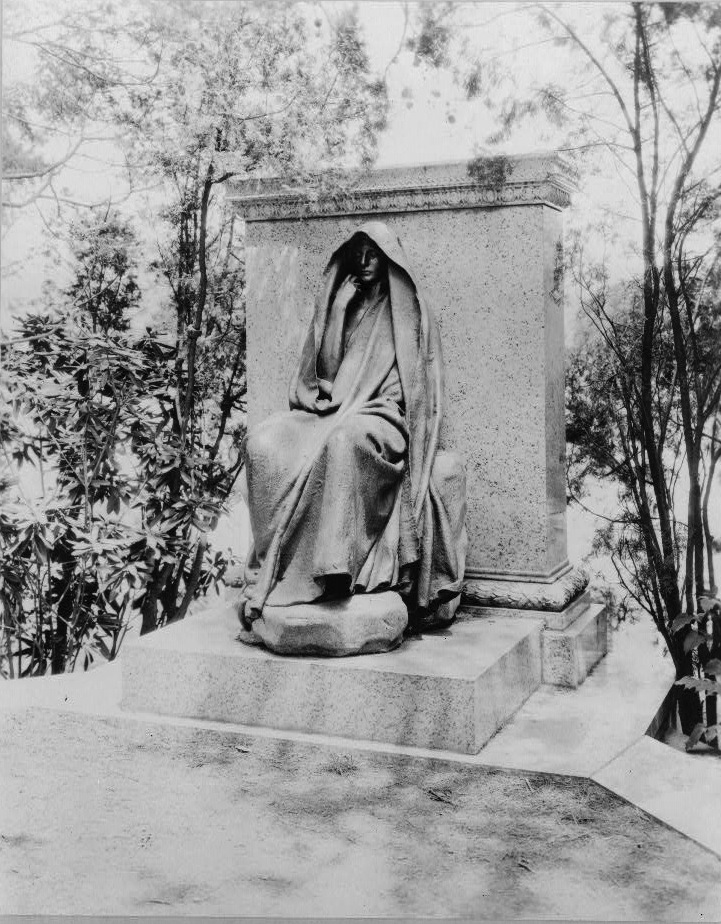
Henry Adams commissioned this mourning memorial to his wife, Marian (Clover) Hooper Adams. 
More than likely the death of her dearly beloved father triggered a deep depression from which Clover never recovered.

I recoil from mash up fiction generally, but this one, with the characters it has, the historical era, was an exception, so much so I went out of my way to obtain a copy.

-------------------------------

*  Just as a great deal of The Fifth Heart's text is built out from the previous works of Doyle and James, and books about them, and the central figures, such as The Five of Hearts: An Intimate Portrait of Henry Adams and His Friends 1880-1918  by Patricia O'Toole (1990).


Saturday, May 9, 2015

Film - Ex Machina - Spoiler Free

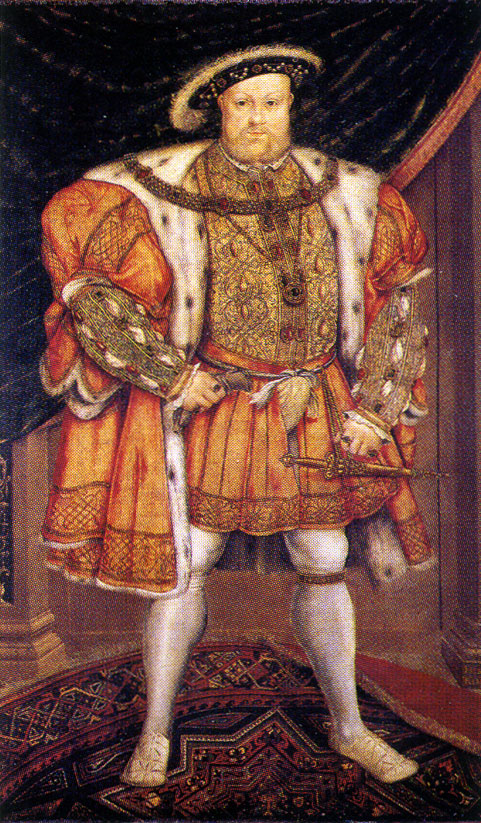
Ex Machina, an sf film that has been touted more than once as the best film to be released so far in 2015, opened here some weeks before last week's national roll-out. I saw it soon after PBS began airing Wolf Hall, with which Ex Machina has more than a little in common with Henry VIII's quest for the perfect woman/queen/wife, who all turn into disappointments, sooner, usually, than later, with the exception of Jane Seymour, who quickly provided the king with a son and then removes herself by selflessly dying.

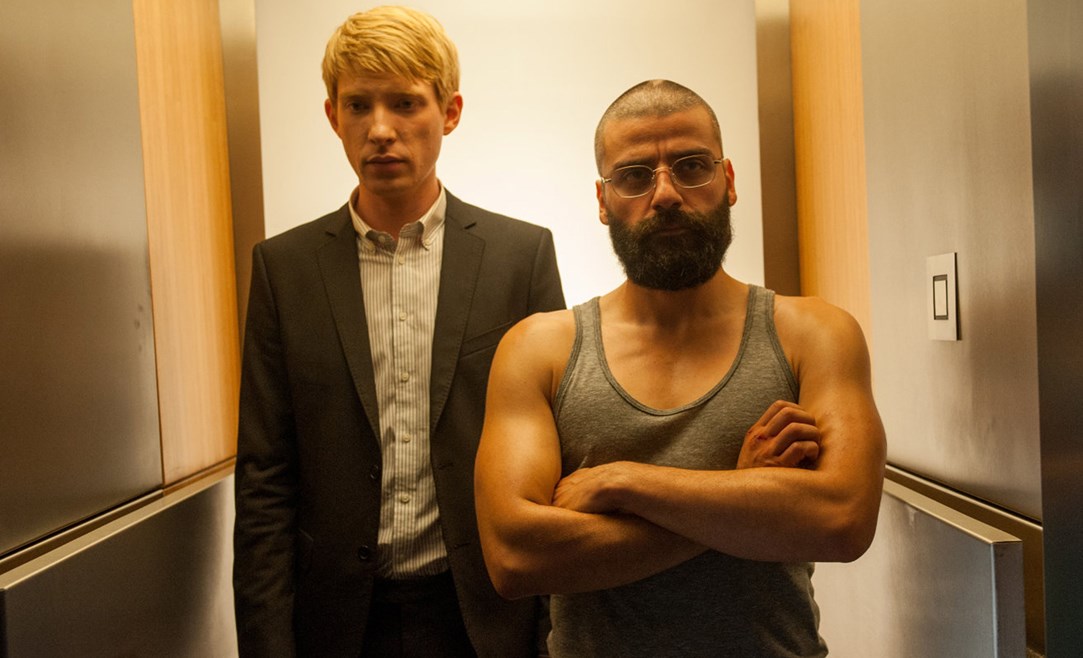
Though Ex Machina's Nathan, king of technology, has a different coloring, his build resembles Henry VIII
Caleb, with his employer, the genius god Nathan. Nathan partly constructed Ava the AI via Calebs porn preferences, which he suveilled and mined, in order to make Ava's Turing Test as complex as possible.
However, Ex Machina and Wolf Hall share another quality, which is male rivals who jostle and jar to prove themselves the smartest, most powerful guy in the room. Wolf Hall's King Henry VIII prided himself on his learning as well as his majesty, and Ex Machina's Nathan, who sets in motion all the action that is the film, as founder-coder of the most successful search engine, the most wealthy man in the world, is arguably much more powerful than a king, and as capricious, entitledly vicious and cruel as any king. Nathan wrote that code when he was 13, and now is obsessed with his AI project. Nathan's brought his younger employee, Caleb, to his Norwegian Fortress of Solitude to perform the Turing Test on Ava (Eve) his latest AI prototype. Is she the AI singularity or not?  Caleb is a different type than Nathan, but he too is very, very smart.

Nathan and Caleb are performing their nerds' version of this.
Part of the film is about the outsmarting game Nathan and Caleb play on each other.

It's also about being God. Nathan, who is an obnoxious though very smart egoist, is enthralled by Caleb calling him God, though Caleb repeatedly corrects his employer with what he actually said, which was that the ability to create actual artificial intelligence would be "like a god, not God." As Caleb is all about the semantics of everything, mechanical and human, this is an essential difference of definition, but Nathan is going with God being himself, thank you, because he's smarter than everyone else.

Which brings us to the title of the film, Ex Machina, from Deus ex Machina, drama's god from the machine . . . .

Does the capacity to create a fully, independently functional, self-aware, artificial consciousness of free will make the man God?  Then we must think, "God is dead," and has been dead a long time before the present of this film.  Our tech-obsessed society killed God, putting the mechanically built God in humanity's God's place.

It is a commonplace that (male) humanity kills its father-God.  But what have females done with fathers and God, other than serve?

Two AIs.  One talks, the other doesn't. One survives, the other doesn't.  It matters not whether the AI has the capacity to talk when they both are programmed to be female.  Like Lucifer, Eve will rebel.
Was it Nathan or Caleb who proved himself the smartest guy in the room?  The answer is irrelevant.  What matters is the next question: what happens now?

Beyond, or below, God, there are many question thrown up by Ex Machina, via the very smart scripting and photography, particularly about what makes up gender, at least of what qualifies as the feminine and the female -- and even, as we see by the still above, ethnicity. These are the questions most critics and reviewers have focused on, though a quick google-through will show they don't all agree on what those questions about men and women are, or what they signify.

Ex Machina, so say the critics, is a movie about ideas, in the best traditions of science fiction, as well as a magnificently constructed and photographed film. So it is, and thus  I went to see Ex Machina again this week. It was a sparsely attended late morning screening; all the audience with the exception of two elderly out-of-town hetero couples and me, were white men between the ages of 20-something and mid-30's.  In the meantime mothers and fathers of all colors and heritages and ages were streaming into the theater down the corridor, young kids in tow, to see Avengers: Age of Ultron.  If anyone were to ask,  I'd suggest instead of Ultron,  Ex Machina, anytime -- if the questioner is older than 11.

Wednesday, May 6, 2015

Reading Wednesday - A Crown for Cold Silver

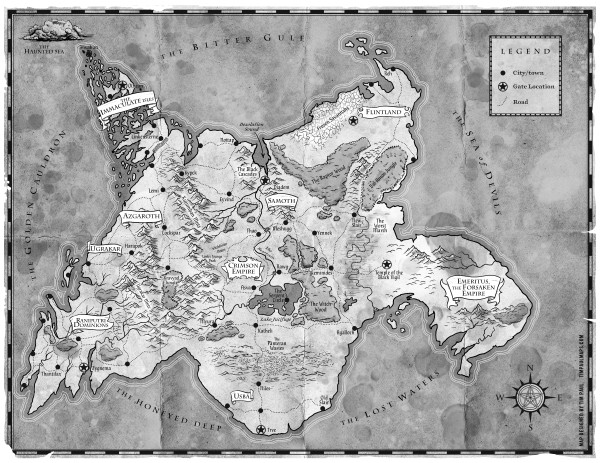
A Crown for Cold Silver (2015 - Orbit) by Alex Marshall (a pseudonym) begins as a comic parody of grimdark fantasies.  Grimdark burlesque, because what else can a reader take away from these lines straight off the first page?

First sentence:
"It was all going so nicely, right up until the massacre."
Second sentence begins with the invocation of the thoughts of a Sir Hjortt, who hollers at an innocent little village:
"I am Sir Efrain Hjortt of Azgaroth, Fifteenth Colonel of the Crimson Empire  . . . "
 yadda yadda yadda. Followed by:
"In the names of the Pontiff of the west and the Queen of the Rest . . ." 
 and somebody called Queen Indsorith.

What kind of name is Hjortt? try it out on the tongue sometime, and dang doesn't it come out as something close to fart? soon followed by a tipica grimdark litany of preposterous mashed-up naming (such as even the title of the book!), titles, places, demons, animals, thrown on the page at random:  Azgaroth, Crimson Empire, Immaculates, weirdborn, Crimson Codices, Chainwitch, owlbats, the Cobalt General, the Five Villains, Fallen Mother, horned wolves, sun knives, etc, as well as every possible diversity of gender and match-up that can be thought of  among a variety of species and demons, religions and


cultures assembled from those in Europe and Asia -- hey, we are diverse! No faux European medieval - Renaissance fantasy for us!  But worry not -- there are no full-blooded characters here either, just the expected grimdark cutout placeholders, who, you know, are subverting the genre.

From the start then, present is the signature grimdark authorial self-congratulation of her/himself's witty cleverness (Some Have Said  author's editor has confirmed Alex Marshall is male).  See! my many references to the names of metal bands!  And like metal bands' "music" arrangements, lyrics and presentation, the text is bloated with faux portent, pretension and self-complacent superiority.

As well, readers see present from the first line, parody or not, the signature of grimdark, which is grimdark protagonists just cannot shut up and their narrators just cannot resist commenting. Protags and narrators talk-talk-talk everyone to death, most of all the reader.  A Crown for Cold Silver's protags and narrator are no different in this than it is in its authorial self-congratulation of her/himself's witty cleverness.

In case the reader misses the joke of parody/burlesque of grimdark self-inflation, the book is tricked out with an epigraph from Goya and his Los Caprichos:
"Friendship is the daughter of virtue. Villains may be accomplices but not friends."
The reader cannot help but connect this epigram to the title's inclusion of "cold silver" which recollects Judas sell-out of Jesus for thirty pieces of silver.  Beyond that too, this is one of the many textual moments that provokes the reader into believing the author keeps falling into being a better writers than s/he intends for this particular work.

None of this will come to the eleven-year-old male mind of a certain sort -- who will  more than likely take this book seriously and love it -- except -- O! NOOOOOOOOOOOOO!  the Cobalt General is an old lady. NO NO NO NO! O, author, so sly, so delighting in "grimdark subversion". . . .

--------------------------

BTW, Cold Silver also mocks Steven Brust's Vlad Tatlos Dragaeran series and the Khaavren Romances. So much to mock, so little time, one imagines Marshal thinking as s/he frantically types so many words: Burnished Chain, dunecroc, Diadem's Central Chainhouse Known as the Dens, Diadem's Jewel, Black Pope, Almighty Matron, godguana and etc.

Question: is it possible to mock what was already a mockery?

Tuesday, May 5, 2015

BBC/PBS Wolf Hall Episode 5 - "Crows"

So. Catherine of Aragon has died, queen in her mind until the end.

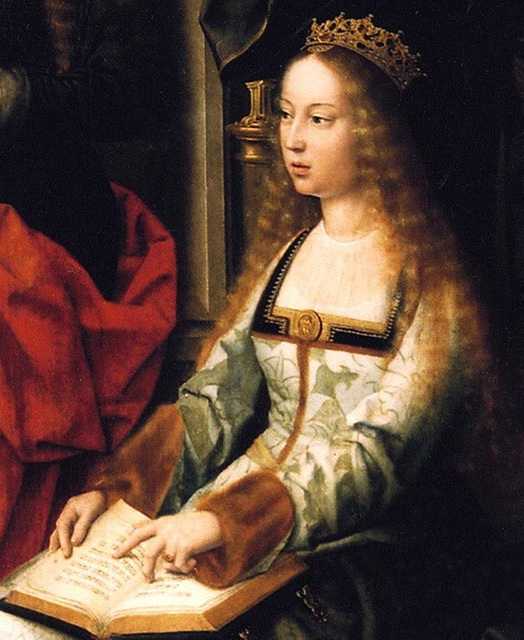
Isabella with one of the books she loved to read.  She fretted from her early years that she'd not been taught good latin. As soon as she took the throne of Castile she got herself latin tutors in order to converse, read and write as an equal in the then lingua france for the international set of rulers and diplomats.  Note that the latin of her husband, Ferdinand of Aragon, was feeble to non-existent.
What a waste of this daughter of Castile's Queen Isabella I, who had all her children, the girls too, and everyone else she managed, superbly educated.

Isabella herself, for a brief moment, seemed fated to become queen of England, to be engaged to either he who became Edward IV, or his brother, Richard, Duke of Gloucester. In the context of Wolf Hall, this factoid prickles my skin because right here we see the the coming history of the wars of religion, particularly in England:
John of Gaunt's daughter by his first marriage to Blanche of Lancaster, Philippa of Lancaster, was great-great-grandmother to Catherine of Aragon, first wife of Henry VIII and mother of Mary I of England. John of Gaunt's child by his second wife Constance, Catherine (or Catalina), was great-grandmother of Catherine of Aragon as well.

No daughter of a daughter of Isabella I of Castile, and her maternal ancestors could ever conceive of rebelling against the Church, much less assenting to it, or assenting to being divorced.  O, Mary, you were so beating against the tide of middle and northern Europe, doomed to be hated by the English, even if you had been more politically intelligent than you were. That's the difference between Isabella's descendants and herself -- she was a political genius.

Jane Seymour, Wolf Hall, episode 5, Wolf Hall -- the new one for whom Henry VIII is ridding himself of Anne.
O, Anne, you foolish woman.  Calling perceived rivals names such as "pasty face" only make you look a pathetic mean girl.  So ineffective.  Isabella would have known better. Ah, the crows gather to pick your eyes, Anna Regina.  As they do yours, Crum, but when it comes to your eyes, they are a bit over soon.

Henry VIII -- his life a true life marriage plot, right?