". . . But the past does not exist independently from the present. Indeed, the past is only past because there is a present, just as I can point to somethingover there only because I amhere. But nothing is inherently over there or here. In that sense, the past has no content. The past -- or more accurately, pastness -- is a position. Thus, in no way can we identify the pastas past." p. 15
". . . But we may want to keep in mind that deeds and words are not as distinguishable as often we presume. History does not belong only to its narrators, professional or amateur. While some of us debate what history is or was, others take it into their own hands." p. 153 Silencing the Past: Power and the Production of History (1995) by Michel-Rolph Trouillot
The largest libraries do more than just store books and newspapers on their shelves. When a library collection contains millions of documents, it needs complex and highly sophisticated logistical systems in order to serve its readers’ requests. It needs library robots.
In many libraries, amazing automated transportation and robotic retrieval systems are behind every book you receive from your librarian. Peek far behind the walls of the familiar reading rooms into the seemingly endless rows of stainless steel shelves, data centers, and intelligent servants that deliver humankind’s collective knowledge.
Watching Ex Machina and watching BBC/PBS's Wolf Hall aren't contradictory universe experiences.
Two guys discuss Ava and how she's provided with programmed orifices and a desire to have sex exactly when and how they want.
Ex Machina displays men creating their own perfect female, the AI Ava (meaning Eve). and, further, their unfounded in fact anxieties and terrors about women in generally, and then, when they get her, their perfect female figure in particular.
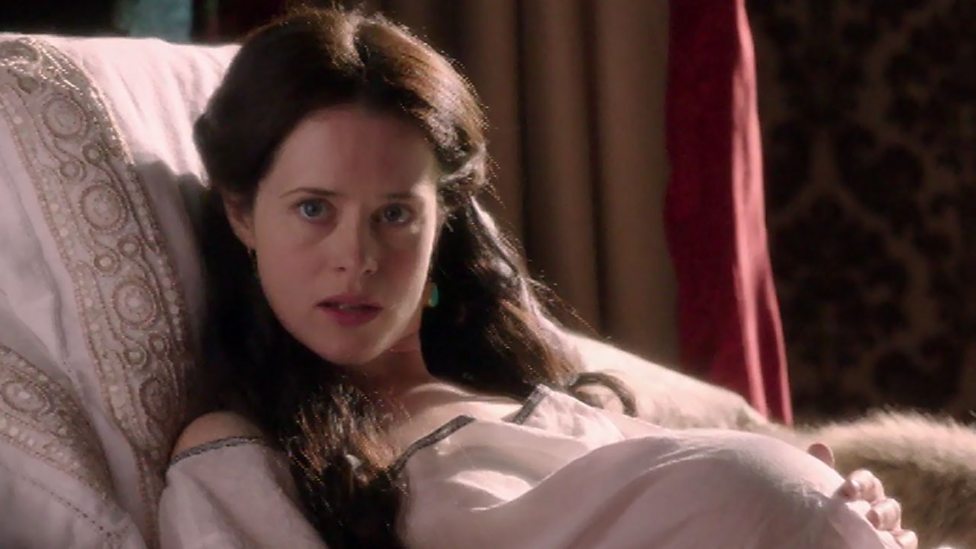
This is why the conversation in Wolf Hall, between Thomas Cromwell and Anne the Queen, after Anne is confined to wait out the conclusion of her pregnancy, is so far the most telling one (ep 3, "Anna Regina" watched the same weekend as Ex Machina): Anne says, “I was always desired, but now I’m valued, you see? And that’s different.” As previously stated, knowing what we know, these words are heartbreaking, whether or not we like this depiction of Anne Boleyn or not. It encapsulates the tragedy that is the history of women everywhere, with few exceptions in all times. A woman's value is located soley in her sexual desirability to men, and her reproductive capacity. A woman's value is not in her personhood, her intelligence and mind. She doesn't have a legal person hood, and in many times and places and even now, she doesn't even have a soul according to the more than one religion in charge of the spiritual dimension of humanity. Lest we forget, Christian theologians famously debated whether or not women were in possession of souls, generally agreeing that even if a soul had managed somehow to infilterate the messy, evil, provocative flesh of womanhood, it was an inferior and untrustworthy sort, not like that of a man's. Thus, even now in many places, women are are imprisoned by the interlocking systems of religion, economics and law, prohibited from agency and realized personhood. It's probably not necessary to add here that's how slavery in the New World, and particularly the antebellum south of the U.S. operated as well? Women, white women, who were vital components of the anti-slavery movements and organizations of the U.S. before the war certainly recognized their condition mirrored in many ways how the enslaved were kept enslaved. It seems to me, whether or not the director and writer so planned, Ex Machina is also about these matters.
The purpose for which woman are created are to provide male schlumpolas's sad sack lives meaning and status -- via how others perceive him because he's got the perfect Her. Don't even bother inquiring what the perfect Her could possibly receive from male schlompola.
As was the 2013 film Her -- and that without a body of any kind, flesh or synthetic construction, only Samantha the AI's and OS's voice. Significantly, all three, Wolf Hall,Ex Machina and Her, seem to me, at least, to be more concerned with the males's desires and disappointments than with the female characters' need for realization. Women always gum up the works by countering their programming. Those female constructs turn bad -- like the very first woman, Eve, leading all MANkind into death. Whereas the historical Wolf Hall production that is filled with real, breathing human beings who happen to be women dramatizes this consciously -- and they are thone one who dies, not the king who possesses them, and they die so he can possess a new! improved! better! model of a woman -- whereas Ex Machina and Her are not that Ava-and- self aware. In contrast with these two films, Wolf Hall's source material has been provided by a very intelligent, self-aware woman, who knows her and our history.
How disappointing was Viking's third season? This is how disappointing it was -- I was disappointed that Ragnar didn't die.
I hoped (though guessed otherwise because protagonist is Ragnar) that Ragnar was dead. With Ragnar out of the way, the incoherent mess of subplots and useless characters who lack any, you know, character, could be jettisoned and the writers could do a do-over in season 4 with intelligently constructed plots, and bring back the focus on a core group of fleshed-out characters about whom, then, we the audience will presumably care about: Lagertha, her son Bjorn who is going to be a king as we know from history, his own son, Aslaug (who had nothing to do this season at all, except to sex up an Odin avatar -- for why?) and her son Ivar the Boneless, who is going to be a great warrior and king, Rollo, who will sire the line of Normans who take over England a century or so down the line.
I cared, a great deal, in the first two seasons, about this core group of people, including Siggy, who was offed for no reason other than nobody could figure out what to do with her now -- especially as Rollo has A (Francia) Destiny. The core group of the first two seasons had feelings, they had ideas, they did things as individuals and as a cohesive, effective ensemble, sometimes needing to work through their conflicts with each other, to reconcile for their own sakes, for the sake of the family, the community, the kingdom -- of such is survival made.
But by season 3 with so many other characters zipping in and out of scenes that didn't advance any story line, filled with unmotivated, gratuitous violence -- such as a dungeon complete with a presumably willing member of the Francia nobility, a submissive nameless fluff. All just to make Count Odo a Bad Person so we can cheer when the Emperor Charles decides to marry his daughter, Gisla, to Rollo the Savage PAGANNOTCHRISTIAN Viking, instead of marrying her to his war leader who saved his feckless ass -- and Paris too, by the way -- more than once. Cheap plotting. Lousy writing. We're never going to see Nameless Noble Francia Fluff again and we know it. Nor had we wanted to see Nameless Nobel Francia Fluff in the first place. But we had to have Count Odo whip her so that we know he's a Bad Man and cheer because she is going to marry the Savage GOOD Viking Rollo instead Yay! Who has, by the way been shown raping women, lusting on his brother's wife, and betraying his family in the previous two seasons
So the final episode, the season's Big Wind Up and Down, "The Dead" felt empty, like so much of the season. Yes, good, even fine moments, but these don't add up to a coherent, well-written, properly motivated, character-driven whole story that stays with you after it's over, to mull over and speculate about. Instead we talked about how yet again there was an episode with going nowhere subplots, time-wasting scenes, repetitions of tricks already pulled.
No more wanted or needed than the s&m scene between aristos in a real castle dungeon, no more do we need or want King Ecbert as an effete cuckholder of his own son, forcing his daughter-in-law to sex him in exchange for her son's protection -- moreover a son who is presumably an historical personage of great import, but whose mother historically was NOT this character. While his son is a terrific person who has done nothing wrong. There is no motivation for any of this, thus it makes no sense, and is pointless into the bargain -- and not even interesting to watch. We keep waiting impatiently for this to be over and for something real to happen . . . .
Rollo receiving a tongue lashing -- not in the good way -- from Princess Gisla. To which he can only respond, "Je vous salue !" Alas, Gisla wasn't impressed. Neither was I, though viwers who are less critical than I love it.
The actors do their best, but the material is poorly conceived, poorly written and badly constructed. It does not hold together -- there is no center.
Once again Vikings's writers show they don't know what to do with female characters, particularly princess characters, like this one, Gisla, or with the Mercian princess,Kwenthrith, who was sexually abused by her relatives and now is a nymphomaniac -- or, more likely, by now is dead, as Wessex annexed Mercia. But that's how much these women matter -- the writers can't even be bothered to inform us of their fates -- like Porunn, once slave, then mother of Bjorn's first child -- she takes off, for no good reason and that's that folks. Because we male writers can't figure out what to do with her now that's she free and a mom.
It's as though this whole season insisted on degrading women instead of writing and plotting -- which means very bad plotting. Shades of that ugly series, Got.
Above we have the Francia Gisla spitting out threats and hate in the worst of stereotype of a couple hating on each other at first, when, of course the audience knows already they are passionately attracted. One hoped that Rollo would pull out his "already baptised thank you" trump card to shut her up. On the other hand Ragnar the fake dead Christian probably spoiled that for Rollo too.
Why o why aren't you really dead, Ragnar? Stab Floki and die fulfilled, let the new generation take over. The writers clearly have run out of their steam for you. Let them get going with Bjorn . . . and a bear?
"The Dead", the Vikings finale, ran on the History Channel April 23. That's how disappointed I was, how little I cared, that I couldn't even be bothered to complain about it until now.
I spent most of the day getting to, waiting around in and coming back from a hospital appointment. The moment I began the trip up to the hospital I pulled the latest Jack Reacher novel, Personal (2014), from my bag and began reading it. It took only two sentences and I ask myself, "Did Lee Childs write this?" Because though the signature pacing of a Childs's Reacher novel was there from the first two sentences, the voice, the tone, even the vocabulary and smart ass cracks, were off the Reacher mark from what my mind's ear had become accustomed over the course of 18 Reacher thriller novels. The timing and rhythm is also just a bit off.
That nagging sense that this wasn't really Childs's Reacher was sustained all the way through the day of reading, and only increased as I reached the conclusion It is pacey!).
It has not been unknown for a very successful writer to employ sub-writers to follow plot and character instructions, and then run it through his own word processing program to put on the finish. I can't help but wonder.
Also, whoever did write the text: be it known to you that women don't say nylons and haven't worn nylons in decades. We say, and we wear, tights, leggings, stockings and / or panty hose. Even female military personnel who wear skirts do not wear nylons these days.
Unless we're church ladies of as certain age in the upper midwest, of whom there naturally aren't that many left, we don't carry purses, but we do carry satchels, totes, even computer bags and cases, or tablet folders, etc. (neither men nor women carry brief cases much anymore since the portable digital device revolution), handbags or bags -- see: handbags, designer.* Go into any place that sells such things and the signs are "Handbags and Accessories."
As well, to write, " . . . she wore good shoes . . . " doesn't tell us a damned thing about the woman's character, but goes along with the writer's ignorance of putting her into nylons.
That kind of block clunk dumb kicks me out of the story. Among other things it broadcasts the male author's underlying contempt for women and the very many women who buy his books. This is particularly evident when it's the male author's male character telling us what a woman is like. Worst of all, all through the books the writer / Reacher makes such a huge deal out of what an authority he is about women, including what they wear, which is part of the reason he's had so many really fine women over the decades (he ages but the fine women he has stay the same age more or less). What he does sound like to a female reader who has ears is an old guy, ogling women 30 - 40 years younger than he is, which, by the way is kind of the situation here. Need it be mentioned that always these women throw themselves at him?
Feh.
-------------------
* See, first paragraph above as first person (anecdotal) proof of this assertion. I wrote "bag" without even thinking about it, without explaining, because just about every person inhabiting the universe that reads Jack Reacher novels knows what I mean. Millions and millions and millions read Jack Reacher novels, at least half of them female.
Human beings have had armed lethal fighting between extensive groups since at least the Neolithic age.
After learning that anything like an organized and directed effort to collect the injured and dying from the battle field only came into existence during the U.S. Civil War in 1863 -- I wondered, why did it take this long? War and battles are ancient human activities and it never occurred to anyone previously that maybe those making the wars owed this to those they sent out to be maimed and killed? And no one ever objected before? Is this actually true? Didn't the Roman armies have something organized in place for their men after the battle, at least if they won, and weren't in retreat or running away?
The Roman armies and the (very extended, contracted) terms of service provided those whose enlistment was up with land and some bounty, as well as whatever the soldier had managed to put together and not drink away, from booty and sales of captives into slavery. This was a way to reintegrate fighters back into civilian society -- am attempt to give him a stake in it. But how many armies did this, even after states became the organizing entities? This, despite knowing that just throwing these men into a civilian condition meant many turned to banditry and other nefarious, plundering, murderous activities to survive?
The NY Times today had a Disunion piece, "When the Soldiers Went Home," focused through individual Union soldiers, who write home with their long lists of anxieties about returning to civilian life after years of war. Could they do it? So it's not as though people were too ignorant and unsophisticated to think of these things until WWII.
So why did it take us so long to think of either organizing care for the injured, dying and dead after battles? Including organized hospitals? Or to think of any assistance to bring soldiers back to civilian life? We've been fighting wars for millennia, so surely someone had thought about these matters, even if they couldn't or wouldn't solve them?
The Battle of Rocroi (1643) -- Thirty Years War. The French won the battle, the Spanish lost it.
There were problems that couldn't be overcome in earlier eras, such as burials had to take place immediately, on the field where the men fell, since there was no way to preserve them. Embalming became suddenly the way of death in the U.S. Civil War, among the Union armies, so the bodies could be sent home via the railroad -- which, unlike wars, was a brand new thing that made it possible to send the bodies homes. Nore were there were states and professional, standing armies, until fairly late in our history. Often the military commander was also the ruler, and he paid the men himself, directly -- and throwing them off when unneeded was sound financial sense from his point of view. During the Napoleonic wars, the armies facing off were so large, and, like with the U.S. Civil War, the fatalities and injured were so numerous, as in the Peninsular War, even when near hospitals and Church hospices, schools, monasteries, convents and so on, there was no room for all of them.
I've gotten very curious about the rituals of the wounded and killed in war, the treatment of the dead. That the soldier was no longer of any interest to anyone once the war was over and he was sent home is a persistent theme in folk music and ballads.
Surely there are many out there who are better versed in these matters. These are the historians of eras about which I know hardly anything, much less the names of the leading scholars who dig granularly into distinct periods and specialize in the warfare. History -- she is so very large!
Willie and Merle released "It's All Going to Pot" earlier this week in honor of both International Marijuana Day and Earth Day. It's adorable.
Nashvilleso needs to have these guys on the series, doing this song. Maybe it could be at a Luke Wheeler sponsored benefit to raise Teddy's bail when the feds finally bust him?
Vulpine, canine, feline, porcine & equine avatars. Gone to heaven Gone to hell Gone to jail Gone to work Gone to school Gone to lunch Gone to bed Gone to bad Gone to pee Gone to earth. Gone Gone Gone. Fox's earth is Blue Gotham City. Shorter sojourns are spent in other, more dangerous, locations.