LINES OF THE DAY

". . . But the past does not exist independently from the present. Indeed, the past is only past because there is a present, just as I can point to something over there only because I am here. But nothing is inherently over there or here. In that sense, the past has no content. The past -- or more accurately, pastness -- is a position. Thus, in no way can we identify the past as past." p. 15

". . . But we may want to keep in mind that deeds and words are not as distinguishable as often we presume. History does not belong only to its narrators, professional or amateur. While some of us debate what history is or was, others take it into their own hands." p. 153

Silencing the Past: Power and the Production of History (1995) by Michel-Rolph Trouillot

Showing posts with label Girls. Show all posts

Saturday, May 13, 2017

Netflix's Anne With An 'e' -- First Responses

     . . . . These are the thoughts after having watched the first two episodes of Anne With An 'e'.


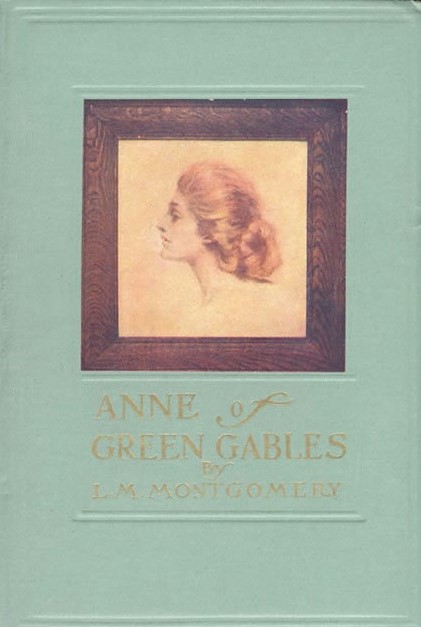
First edition, 1908, initially published in the US -- not Canada --,by L.C. Page & Co. -- of Boston, Massachusetts.  Shades of Louisa May Alcott!* 


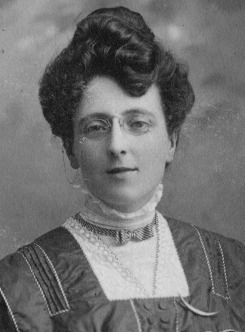
  .... The Anne With An 'e' writers were careful to think out all the aspects of the original text by Canadian author, Lucy Maud Montgomery (1874 - 1942). The series is both as enchanting as an initial read of Montgomery's novel, and appropriately terrible, at least through the first two episodes. The actors are exactly right. The series was conceived and produced holistically, not as separate tasks. This makes it a pitch perfect interpretation in terms of place, time, events and characters.

Some of those who watched this latest translation to screen of Anne of Green Gables on the CBC earlier this spring, or from screeners, have been angry at the changes. However, as I see it, there are no changes from what is in the text.  What has changed is that a part of what is contained in the text is not glided over, as Anne herself skates us over, what is contained in the smooth rush of her relentless vocalizing.


This television series gives space to the terrible life that Anne led before being adopted by Prince Edward's Island's Marilla and Matthew. She was orphaned at three months, without family, friends or any other resources. As soon as she was old enough to do anything at all the orphan asylum hired her out (that is the word always used then and there -- asylum). She was treated as badly as any US antebellum little slave girl could have been. Additional torment was meted out by adults and sister orphans alike, because she was the opposite of a pretty little girl, and worse, a homely child who would not keep quiet, and whose intelligence showed itself at every turn.  There is ample reason for the netflix series to have Anne identify herself with Jane Eyre, one of the many books she omnivorously has devoured.

One of the many brilliancies of the book is that not being a conventionally pretty little girl with pretty clothes, is that she is mocked and the odd one out for that.  But she exhibit neither saintly forgiveness nor a superior ability to rise above the lacks of feature and closet.  Instead these lacks are turned inward by herself upon herself, part of both abuse-induced trauma and self-hatred.  Anne resembles in no way the cliched YA heroine who hates feminine manners and clothes Instead she, like Jo March longs to be pretty, and like Meg March longs to possess lovely clothes.  In other words she is far more real than most YA female protagonists of thirteen.

There are mentions of these extended traumas by Anne, glancing and in passing, in the book's text -- which I first encountered at the same age that Anne is in the book. But the extravagant spillage of Anne's chatter and language, her passion, her instinctive sympathy with Nature, her imagination, keep the reader successfully suspended above these dark, dangerous serpentine, swift currents beneath the bright veneer of her mythos-making that conceals from everyone, most of all herself, that at best, life has nothing to offer her, but bleak privation.

What is brilliant about Montgomery's writing choices is that the closer I was to Anne's character in the first years of re-reading Anne of Green Gables, the less I noticed these dark currents and the slithers of terror in her revelations. I was mesmerized by all the other parts of her that I -- and countless other readers -- saw reflected in Anne of myself: her passion,  love of words, her love of school -- I even attended a one-room school like she did! -- history and fiction, her hatred of her own name and yearning for something more Romantic, a pull toward everything that she, at thirteen, labels as "Romantic," her real grief that she isn't pretty and has only practical, sensible and ugly things to wear -- united with knowing what others around her do not from history and books -- that transforms everything around her and her companions into a joyeous, delightful, beautiful, adventurous and -- yah -- Romantic realm. She could always come up with something new and interesting for her friends to play.

Anne suffers from Traumatic Stress Disorder. She copes by language, not with guns, she copes by turning to self-hatred, a form of self-harm -- for not being pretty.  She also copes by imagining a different primary identity -- Anne, who also plays at a host of other identities, such as princesses and heroines  -- not the abused Ann of beatings, starvation and the constant filth of others that she must clean up. It's not a change from the text, in other words, but an addition of emphasis. In this era it is equally obvious that no one, including herself, knows about this psychological process, in that era prior to WWI.

In that era the condition of orphans everywhere, as in Canada, was scandalously horrific. Changing this was part of the era's Reformist movements objectives. It was anything but uncommon for orphans to be abused physically and emotionally. Death before adolescence or even during adolescence was a common outcome.  No one mourned.

Particularly this was the case for the Irish orphans left in Canada from the ship loads of immigrants attempting to flee the Irish famines. The ships arrived with death voraciously aboard in the form of typhoid, cholera and other contagious diseases. Instead of attempting to care for the ill, The coffin ships, as they were called, were anchored off shore -- often without adequate medical attention, food or other supplies provided while the diseases raged aboard. **

I didn't know any of this when first encountering Anne at age twelve, As we see from her name, Ann Shirley, her "poor as church mice parents" were Irish. The Irish were treated even worse in Canada in that era than in the US, and we were awful enough.

As to be expected there are viewers who resent this emphasis on the backstory of Anne of Green Gables. They believe giving it a larger place in the story today is sacrilege to the 'true book'.  They want the Anne of their childhood memory, a comic adventure, perpetually sunny Red-Haired Girl, as she's known by myriads of Japanese tourists to Prince Edward Island. We North Americans want the Anne played by Megan Follows***  in the 1985 CBC version, followed by a Disney sequel.**** All of these reject the abused orphan Ann, who, for our sake and her own, has masked herself in swathes of language and dreams -- they want that one to be the only Anne.


However, the text makes clear always there were at least two Anns -- Ann and Anne.  Anne was made possible by Marilla and Matthew, who could appreciate this friendless child's only armor and weapons for survival and making her way:  her passion, strength of will (which includes her fiery temper), imagination, and intelligence. They saw the abused child as well, and had the sympathy -- Anne's word! -- which is one of the forms of imagination -- Anne's word too! -- to understand that this would indeed make her behave differently from the conventional expectation of a child's behavior.  That this could indeed have her 'act out,' as we call it now, but that her acting out was to overtly dramatize, not be 'bad.'  They saw that her core was was, in the language of the time, pure and good -- and honest -- and that her innate goodness and her outer Anne could blossom with proper nurturing -- i.e. in the language of the time, the influence of a good Christian home.


Having ordered a boy orphan and gotten Anne instead, Marilla says she must be sent back, but she sees that Matthew is reluctant.  What good can a girl do for them with all this farm work as they grow old, Marilla asks. Matthew's response is, "Maybe we should ask what good we can be for her."  He well knows his sister's piety is authentic.  This is what a Christian should ask in this situation.  These two are at least as brilliant creations as Anne herself.

----------------------------


* We may perhaps see some of Montgomery's own imagination at work here, according to this article about Irish orphans.  But Canadian novelist, Margaret Atwood, among others, have employed this historical event in her fiction.  That abuse and mistreatment of orphan children, and poor children, or just children, was rife in Europe and North America are no myth, however, as the historical and even legal records show here, here and here.

**


 Anne has generally been vastly dis-serviced on the screen in the same ways and approaches as has Louisa May Alcott's Little Women. Which reminds me that  An Old-Fashioned Girl,  Eight Cousins and its sequel, Rose in Bloom, should be purrfect for television series, set as they are within the wealthy Boston mercantile families in the era after the War of Southern Aggression, in what is called the Gilded Age.  Need I say I still have all these books, and more, as well as my copy of Anne of Green Gables?

***   Megan Follows most recently has been applauded in the role of Queen Catherine d' Medici, mother of Henri IV, in the historical travesty soap opera, Reign. -- mostly filmed in wintery Canada and Ireland!  However, there is a fiction writer part of me, as opposed to the historian, who believes staunchly that Anne with an 'e' would glory in in Reign, and play-act all the roles herself, not least that of the Queen Mother who is -- sometimes and sometimes not -- so cruel to Princess Mary.  There are enough princesses and beautiful clothes to even satisfy Anne of Green Gables! Moreover many of the important locations were in wintry Ireland and Canada. What goes round comes round, and Anne would know that.

* * ** Both, but particularly the Disney sequel, were so cloying for this watcher that I gave up on them after a few scenes.

Thursday, November 6, 2014

Coaly-Bay, The Black Stallion vs. My Little Pony

There are so many pop culture obsessions and interests about not only am I entirely ignorant, but don't even know exist.  Here is another one, "My Little Pony."  Is my ignorance due to not having little kids of my own and / or not having grown up on television? Our rural community's households didn't get connected for television until I was about eleven. As well, during summers the television frequently quit on us, and my parents refused to get it repaired until after school resumed.

I spent part of this morning in bemused reading of this essay in New York Magazine, by Lisa Miller: "How My Little Pony Became a Cult for Grown Men and Preteen Girls Alike."  It's very long by NY Mag's standard. 

A pull from the essay:


If you’ve heard of My Little Pony, you’ve probably also heard about “Bronies,” the zealous (and somewhat suspect) brotherhood of adult male fans. But to focus too closely on the Brony phenomenon is to wade in shallow water and pretend to know the ocean. My Little Pony is a worldview, and a way of life, for millions of non-creepy people who find the show entertaining and amusing, yes, but who also say it provides them with the personal guidance, moral ­lessons, and comforting perspective that previous generations used to find in places like church. Fans refer to the show itself — 91 episodes in four seasons, with a fifth to come in 2015 — as “the canon,” and over at Equestria Daily, the largest fan site, they participate in something like midrash, avidly hashing over references, meanings, and inconsistencies. But there’s also a whole world of apocrypha — art, video games, music, T-shirts, and fiction — created by fans and based loosely on the canon but jumping off in unorthodox directions. It’s not unusual to find online Pony versions of other cults: Super Mario Pony, Minecraft Pony, Dr. Who Pony, and, my favorite, My Little Game of Thronies.

This is what in the essay really grabbed me, and kept me reading to the end:


. . . . In the final moments of the premiere, Twilight’s glittering anime eyes widen as she realizes that the Elements of Harmony are right by her side, the five flesh-and-blood friends she has made with her mentor Celestia’s help. Applejack represents honesty; Rarity, generosity; Flutteryshy, kindness; Rainbow Dash, loyalty; and Pinkie Pie, laughter. Twilight herself possesses the magic that binds them together. In Equestria, this friendship is a superpower; it safeguards the world. And it is a superpower wielded entirely by females.

My daughter noticed when she was approximately 3 that adventure stories were for boys. Magical powers are bestowed upon certain special, deserving boys — Peter Pan, Peter Parker, Harry Potter — while other boys (Luke Skywalker, King Arthur, the boy-esque Bagginses) inherit potent tools that aid them in their fight for right. Some boy-heroes work alone (Superman, Spider-Man), others in teams (X-Men, Avengers); the girls, if they’re there at all, feel obligatory, ancillary, like sidekicks. But Lauren Faust’s career tracks closely with a sea change in entertainment for girls, starting with the makeover of the movie princess, who no longer cools her heels, locked up or asleep, as she attends to her prince, but outfights and outshoots her brothers (Brave), defies convention (Maleficent), heals the sick (Tangled), and copes with the existential consequences of supernatural gifts (Frozen). At this very moment, dissertations are being written (“Hermione Granger and the ­Heritage of Gender”) about the magical Muggle-born who bravely claims a place for girls in worlds — of wizards, of English boarding schools — that were formerly hostile to them, and Pixar is putting the finishing touches on Inside Out, to be released this summer, which unfolds inside a girl’s brain. The YA shelves are filled with girl vampires, girl warriors, girls who can fly, and orphaned sisters destined for greatness. There’s Wicked, of course. And for my money, the most exquisite indicator of the ascendancy of the underage superheroine is Broadway’s Matilda, a musical adaptation of a Roald Dahl tale, featuring a cranky, sensitive, brainy girl with a finely tuned sense of justice, who, when pushed past her limit, resembles the Hulk more than any little girl in the history of myth.

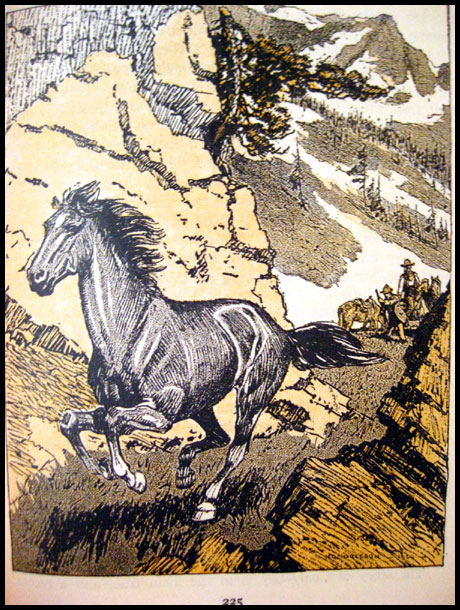
As a child and girl and young woman I was possessed by horses.  I read everything I could find about horses, looked at horse art and illustration, gazed for hours at horses in the pastures, played with horses, played horses, write stories about horses.  I fantasized long, arch stories featuring horses; while trapped in the very many boring conditions of my mundane life in the backseat of the car, a church pew, hoeing weeds in the garden, hanging clothes on the line, waiting to fall asleep, etc.


"Coaly-Bay The Outlaw Horse", one of my childhood's favorite
stories, in Volume 7 of The Animal Book (1938), by Ernest
Thompson Seton
. The story, with Seton's own illustrations,
can be read here
.

By-and-large my horse fantasy world was without human beings entirely, even without me.  I wasn't my visually impaired, clumsy, homely self, I was The Black, I was Coaly-Bay.


So, it seems, despite My Little Pony's world being called Equestria, this universe has little to nothing to do with horses as horses.

But maybe it has a lot to do with having power and agency?  However, judging by some of the comments responding to Miller's essay, a lot of people think it means quite the opposite -- a desire to never mature, grow up and take on adult responsibilities and deal with the global messes that we've created.

One might think too, that in this day and age, this --


Once upon a time, in a mythical, magical, distant past, Equestria was ruled by two sister pony princesses, one black and one white, hybrids of a supernatural kind — “alicorns,” my daughter whispered authoritatively. Celestia, the white princess, was in charge of the sun, and Luna, the black one, ­controlled the moon. The sisters reigned harmoniously until Luna began to notice that the ponies of Equestria frolicked and played under her big sister's watch, but under her own, they did nothing but sleep. Jealousy turned Luna into the monster Nightmare Moon, a villainess who threatened to plunge all of Equestria into perpetual darkness. To save Equestria, Celestia was forced to take a stand against her sister. Calling upon her most potent magic, she invoked the mysterious “Elements of ­Harmony” and cast a spell that banished Nightmare Moon to the moon.

making the goodie white and the baddie black is, at best, uncreative, at worst, a bad choice of character stereotyping for a world that is supposed to inculcate friendship, tolerance and happiness.


Sunday, December 9, 2012

Your Heart Breaks


A teenager in Pennsylvania knows why she's poor and is fighting with every fiber of her being to break out of that trap. But where is the help going to come from? She works so hard on all fronts, and she's got nothing, nothing at all. As the article states at one point, "...not even a $50 savings bond inherited from an uncle." I.e. that is what makes poverty, the lack of resources to create a surplus that you can hand down to the next generation. You are born poor, you generally stay that way. For a while in this country many people who did make sure they got a high school education, worked all the time to get that education, could then find a way to go to college, and get further education that opened better paying jobs. But that is pretty much gone now, and higher education is so expensive you can't even get loans to go to school when you're that poor, and if you do get a loan, you're in debt peonage for life -- as there aren't the jobs at the end of the degree that there once were.

What is she going to do? She enlisting. Good luck with her hopes that she will get a college degree with her VA benefits, and a job afterwards.

I cannot tell you how many of the homeless on the streets of NYC are vets. I've taken to talking to the homeless who are asking for a bit of help, and finding out their story, if they want to talk. Expecting the homeless veteran to talk to me because I gave them a couple of dollars is awfully arrogant though, I feel. They have earned so much more.

And what seems to be coming through -- though I am not a professional at all in these areas, and have no training whatsoever -- is that these individuals enlisted much as the girl in this article is doing, from dead-end poverty, without any advantages of any kind, and thus none of the experience or training or the resources to figure out what to do next, once they complete their enlistment, and they end up dead-ended again, except older and more damaged. Particularly the women, who suffer endless sexual harrasment and threat.

Please read this story in the Washington Post magazine online, "In Rust Belt, a teenager’s climb from poverty ..."

Though this is a different part of the country, and not fiction, Tabitha reminds me so much of Ree in Winter's Bone.

Sunday, August 9, 2009

Girls, Guitars, The Crimson Grail-Damrosch Park, Lincoln Center

Now I know what 219 guitars and basses look like. It is a sight that is much more extensive than one might have imagined. I saw it before the house was opened, so the vastness of the musical enterprise that is The Crimson Grail, the largeness of the space in which the music was to be heard, was forcefully absorbed. This was an orchestral work, not a rock band work, yet, still, this was larger than a symphonic orchestra. All the sonic timbres and levels that the variety of instruments in an orchestra provide were brought to musical life by guitars and basses in The Crimson Grail.

Two rows of musicians, their instruments and amps, stretched forever around Damrosch Park on three sides. There were four conductor stands (Vaquero was one of the conductors; his was the first section, far from the bandshell stage, at the back). Above them on the bandshell stage, the composer - primary conductor, Rhys Chatham. The lighting was crimson, that beautiful shade and tone of red I hardly ever see anywhere except as the finest clear red lipstick coloring a lovely, youthful Chinese actress's mouth in a Chinese film.

I don't know how many chairs were inside the venue -- more than a thousand, but fewer than two thousand. An even larger crowd stood at the back; there were many more than that crowd who never were able to get into the fenced off venue at all. This was An Art Event.

The musical cues were signaled by Rhys, which cues had to be seen by the sub-conductors and conveyed to the musicians of their sections. Thus the cues had to be as large, and as plain, as possible. The technical and musical logistics of performing The Crimson Grail are mind-boggling. This wasn't something simple, a 'beautiful mess of noise' put out by non-musicians, as Rhys's music used to be characterized. As Vaquero put it in rehearsal, "If you cannot count forwards and backwards throughout, you can't do this." I got caught up at times by the musicians' counting; they were encouraged to verbalize their count, to express the count physically, and many of them did. I could see on their faces the joy they were feeling, having this life-time memory musician experience of making a piece as an orchestra (an experience that guitarists don't get much). It was an orchestra that was playing a very particular piece with specific objectives, which were reached, by everyone working very hard at doing it right. It was very beautiful.

It was also transcendant, judging by the audience which could not remain seated by the last movement. It had a touch of the trance inducement that I'm so aware of from African and African heritage music, but it didn't -- couldn't -- quite go there.

The composition of musicians wasn't 50 percent women, but there were at least 15% women, including Rhys's 17 year old daughter, who doesn't speak English very well, and has wild, long blonde dreads. They didn't do as well with musicians of color: perhaps three black people and a few more Asians.

Vaquero and I discussed the why there were so few musicians of color who applied for the experience. It surely wasn't because the guitar isn't an instrument of interest in these communities. Africans were playing prototypes of guitars long before they brought what became the guitar to Spain. Listen to any African or Afro Latin group and there are guitars all right. So it had to be outreach.

One of the women in Vaquero's section, is Valerie Opielski. She's one of the volunteers at the Willie Mae Rock Camp for Girls that takes girls from 8 to 18. The camp is named after Willie Mae "Big Mama" Thornton, a blues and rock performer/songwriter who was one of the first women to play the music that came to be known as "rock n' roll. One of Opielski's groups is playing at Lincoln Center outdoors free later this month.

Girls do love to play guitar.

Edited to add a review of the show just went up on The New York Times.