LINES OF THE DAY

". . . But the past does not exist independently from the present. Indeed, the past is only past because there is a present, just as I can point to something over there only because I am here. But nothing is inherently over there or here. In that sense, the past has no content. The past -- or more accurately, pastness -- is a position. Thus, in no way can we identify the past as past." p. 15

". . . But we may want to keep in mind that deeds and words are not as distinguishable as often we presume. History does not belong only to its narrators, professional or amateur. While some of us debate what history is or was, others take it into their own hands." p. 153

Silencing the Past: Power and the Production of History (1995) by Michel-Rolph Trouillot

Monday, February 27, 2012

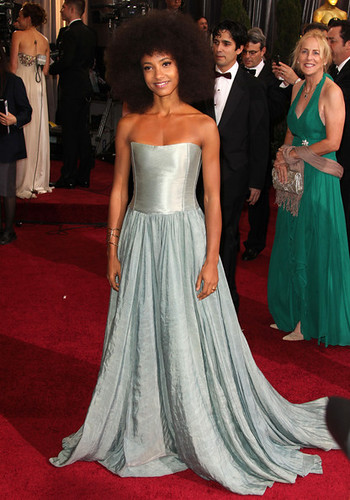
One of the Two Best Presentations

esperanza-spalding-84th+Annual+Academy+Awards+2012+Arrivals+Group+j_ayFo-DU55l by foxessa09

In case you don't know, this is Esperanza Spalding, jazz bass player and vocalist.  We've seen play more than once, with Big Chief, Donald Harrison.  He's a mentor.

One of the Two Best Presentations

Gwyneth Paltrow by foxessa09

*The American Slave Coast* Introduction


snip word cloud by foxessa09
I did a word cloud for the Introduction. It's an experiment. Will word clouding a section of your text tell you whether or not you have a focus and are supporting your points?

Hmmm.  Unfortunately the right edge of the word cloud has gotten cut off by the layout.

Thursday, February 23, 2012

Amazon Pulls Over 4,000 Kindle Titles

Including THE BOOKS, thereby significantly reducing our revenue stream.  But how can you allow them to set the price so far below what you can afford to let a book go for, after all the years of uncompensated work that allowed you to be in a position of knowledge necessary to write the book in the first place?

They are still available in other venues, including B&N, and for their Nook.

-----------------------------------------------

Bits - Business, Innovation, Technology, Society
February 22, 2012, 5:37 pm
Amazon Pulls Thousands of E-Books in Dispute

By DAVID STREITFELD

Mark Lennihan/Associated Press

Amazon.com removed more than 4,000 e-books from its site this week after it tried and failed to get them more cheaply, a muscle-flexing move that is likely to have significant repercussions for the digital book market.

Amazon is under pressure from Wall Street to improve its anemic margins. At the same time, it is committed to selling e-books as cheaply as possible as a way to preserve the dominance of its Kindle devices.

When the Kindle contract for one of the country’s largest book distributors, the Independent Publishers Group, came up for renewal, Amazon saw a chance to gain some ground at I.P.G.’s expense.

“They decided they wanted me to change my terms,” said Mark Suchomel, president of the Chicago-based I.P.G. “It wasn’t reasonable. There’s only so far we can go.”

With each side unwilling to yield, Amazon pulled the plug, and all of I.P.G.’s books for Kindle disappeared. The physical books were not affected. A spokeswoman for Amazon declined to comment.

The dispute quickly reignited fears in some corners about the power Amazon enjoys as the shift to e-books accelerates. Amazon is dominant in both the physical and electronic markets for books.

“This should be a matter of concern and a cautionary tale for the smaller presses whose licenses will come up for renewal,” said Andy Ross, an agent and a former bookseller. “They are being offered a Hobson’s choice of accepting Amazon’s terms, which are unsustainable, or losing the ability to sell Kindle editions of their books, the format that constitutes about 60 percent of all e-books.”

Amazon’s decision to remove the digital titles was its most drastic such action since it briefly removed the physical books and the e-books published by Macmillan in a pricing dispute two years ago.

That time, Amazon eventually blinked, ceding to Macmillan and the other major publishers the ability to set their own e-book prices. This time, by selecting a group with less leverage, it may get its way.

“Presumably, this is a move Amazon is planning to make with other distributors and publishers as their contracts come up for renewal,” said Lorraine Shanley, a publishing consultant. Unless there is an outcry, she said, Amazon will not be likely to retreat.

The dispute underlines the escalating struggle between Amazon and publishers and distributors over control of the e-book market.

Margins with physical books were traditionally low, which meant that bookstores, publishers and distributors often did no more than scrape by. When Amazon began, it sold books at deep discounts but still had to depend on the good will of publishers.

With e-books, the situation is more fluid. Readers expect them to be cheaper, which Amazon has been able to encourage because it is now a publisher as well.

Traditional publishers, however, have their own modest margins to worry about. They worry that if e-books are priced too low, the public will devalue their worth, and the publishers might wither away — something, they fear, that would suit Amazon just fine.

The only two essential parties in the reading experience, Amazon executives are fond of saying, are the reader and the author. Middlemen like I.P.G. — one of Amazon’s three “distributors of the year” in 2008 — are seen as dinosaurs in this framework.

Among I.P.G.’s 500 clients are the American Cancer Society, Aptly Spoken Press, Bees Knees Books and Change the Universe Press. Until this week, I.P.G. had 4,443 titles available on Kindle.

Mr. Suchomel said the publishers were solidly behind I.P.G. “They were almost unanimously positive, saying, ‘Don’t change your terms,’ ” he said.

I.P.G. is trying not to inflame the dispute. It declined to say precisely what terms Amazon was seeking, although it told its publishers a deal would have “substantially” affected their revenue. On the home page of its Web site, it referred to the issue briefly and discreetly.

On Amazon, the Kindle button for the I.P.G. titles is gone. The classic groupie memoir “I’m With the Band” by Pamela Des Barres was listed as being available only in paperback and an audio edition. But in what might have been a sly message from Amazon, there was a button to click to tell the publisher you would like to read the book on Kindle.

I.P.G. told its publishers to immediately begin stressing that their books were available in other electronic formats, including from the Amazon rivals Barnes & Noble and Apple. It also told them to contact their local independent bookstores and point out that they could now sell something that Amazon would not.

“They’re trying very hard to look on the bright side and make this a David and Goliath situation,” said Ms. Shanley, the consultant.

Mr. Suchomel said that the next step was up to Amazon. “We’re not going to go back to them and say we changed our mind,” he said.
Monday, February 20, 2012

Presidents' Day

Last week the WaPo ran a poll for readers to send in their assessment of the most underrated POTUS.

By all accounts Grant was unassuming, decent and easy to get along with, in almost all situations and conditions, other than on the battlefield, when he did what had to be done, and that was that, no ifs, ands, buts or maybes. Most people liked him, he was someone they liked to spend time with. Lincoln was one of those who enjoyed his company. If their son hadn't been ill, the Grants would have been in that Ford Theater box with the Lincolns.
It would be an interesting project to dig into what began all the exaggerations and outright lies about Grant. It seems to have begun as soon as he came to Washington D.C. as POTUS,. It came as much from those who had been Unionists as much as from the Confederate side. Both Henry James and Gore Vidal, whose Americn Chronicles series took much direction from Adams's writing, particularly his novel of D.C., Democracy, had nothing but venom for Grant -- as someone who didn't belong there, out of his league as well as his depth, who didn't understand how things worked.

In Democracy, whose author was the consumate D.C. insider, already the romantic lead is a Virginian who had a brother die in his arms in the Battle of the Wilderness. So the hostility toward Grant, the determination to belittle him went in partnership with the revisionism of the history and causes of the Civil War, and it was immediate.

Saturday, February 18, 2012

Remedial Course: How Free Market Capitalism Works

To refresh our memories as to exactly how free markets operate on the level playing field of capitalism and government staying out of these matters, let us enter the Way Back Machine to the 18th century. We shall land in the era of what is popularly known in the history text books as the French and Indian War in the New World, and the Seven Years War in Europe. This is roughly 1754–1763, though the struggle of France and Britain to control North America and various parts of the Caribbean, India, etc. was nearly a century-long conflict all together. We are in 1762, in British occupied Havana. Several times during these wars the British also occupied Martinique and other of the French Antilles.


The British re-made the Cuban economy during the very short time they ran things, turning it into a highly competitive slave plantation agricultural mono-economy of sugar. Martinique, Guadeloupe, San Domingue were already sugar plantation powerhouse suppliers -- indeed, San Domingue was the greatest wealth producer in the New World, funding the excesses of the French royals and nobles until their own revolution.

Now to the government staying O-U-T of the free market. The Jamaican and other British sugar plantation power elites of the Caribbean lobbied with every resource they had the members of both houses of Parliament to force Britain to return these islands to Spain and France. These islands' sugar production was now also being shipped to England, creating such a supply that the price plummeted. This was equally true for rum of course, and on a somewhat smaller scale, for coffee and tobacco. Their quality tended to be higher as well, and this was NOT FAIR to the original English sugar barons of the Caribbean. This competition was eating their fine wines, fine homes, fine paintings, fine horses, fine finer finest everything because the competition made their product so cheap they were no longer achieving the magnificent fortunes they were accustomed to whipping out of the lives of endless coerced labor from Africa to their mostly absentee landlorism-administered Caribbean plantations.

In the Treaty of Paris Cuba was given back to Spain (in exchange for the Floridas -- which Andrew Jackson would take in turn in approximately another four decades), and so were the French Antilles returned to France in exchange for its North American (New France) territories.

That's how government makes an even playing field for the free market to do its business fair and square for the ultimate benefit of the consumer.

This was laid out with such clarity of detail at the New York Historical Society's exhibition, "Revolution! The Atlantic World Reborn." We spent most of my birthday afternoon in it, breathless, taking notes like mad, since unlike most museum now, the NYHS still doesn't allow non-flash, digital photography. This exhibit is one of the results we're starting to see of considering the American, the French and the Haitian revolutions as sections of a single wave of historical movement instead of them being considered as separate events with little if anything in common, other than the desire for "liberty" ignited in the "citizens" in France, in an imitation of the real thing that was the "revolution' of the British middle North American Atlantic colonies.

This exhibit has many surprising items that perhaps we might not consider together, at first thought. The second floor galleries of the exhibit proper are many and dense with information and objects. However, there are deeply related off-shoots on the main floor, for instance, including the original written document of the 13th Amendment signed by Abraham Lincoln -- allowing for the final, long-resisted step in the consequences of the San Domingue revolution, recognition of the nation of Haiti by the United States. I admit to feeling a great deal, viewing this actual document on loan from the LOC.

Upstairs the second gallery, "Where the Empires Ended," begins with the various trades going on between the North Americans, particularly those from Rhode Island, with the focus on Paramaribo, Suriname and Haiti, in the late 17th and 18th century. We viewed "Sea Captains Carousing in Suriname," the first genre painting made by a North American, John Greenwood (1727 - 1792). You can take a look at it here.

It was as though we'd gone on vacation, threading our way through these dimly lit galleries, where the real light was focused only on these exceedingly well-chosen objects dramatizing the connections between the slave trade, slavery and trade generally in the New World, colonization and then revolution. Among other things on the main floor were slave badges, that were worn by southern slaves, dating from the 1820's to the latest dated 1860. That says everything about the connections among all these things. We did not have a full revolution here until the Civil War. That was the revolution that changed the way things were done. (Up to a point, at least, and not enough then either, as Slavery By Another Name made so clear.) We felt we'd gone someplace else.

Tired, but exhilarated, we stopped at the NYHS's very nice restaurant and bar (no television! no sports), for wine and appetizers before meeting K and C and P and K for dinner at La Paella. Our barista was very good looking, and an actor, of course, a young fellow born and bred in Yonkers. He asked to be put on da List. He had an audition for another television commercial yesterday -- he's been getting one or two commercials a month lately, so he's a happy man as well as personable, friendly and a very good barista.

It was pouring rain most of the day, but it felt soft -- like a day in the first week of April, thus the silvery rain light of afternoon, the hazy street light of after dark, and the shapes of bare branches of Central Park's trees made it all heart-breakingly lovely.

It was a lovely birthday, one that took us both far away from the classroom. Now, tonight, we all head uptown for salsa in da Bronx.