LINES OF THE DAY

". . . But the past does not exist independently from the present. Indeed, the past is only past because there is a present, just as I can point to something over there only because I am here. But nothing is inherently over there or here. In that sense, the past has no content. The past -- or more accurately, pastness -- is a position. Thus, in no way can we identify the past as past." p. 15

". . . But we may want to keep in mind that deeds and words are not as distinguishable as often we presume. History does not belong only to its narrators, professional or amateur. While some of us debate what history is or was, others take it into their own hands." p. 153

Silencing the Past: Power and the Production of History (1995) by Michel-Rolph Trouillot

Wednesday, November 27, 2013

Reading Wednesday: The Love Affairs of Nathaniel P; The Pursuit of Love; Longbourn

I read two whole novels!

The Love Affairs of Nathaniel P is a new novel (2013), while The Pursuit of Love (1945) is older than I am. I've also read Pursuit more than once before.  I'll say it right here at the top that I enjoyed very much reading the older novel again, while feeling rather bored by the new one, despite how self-consciously Adelle Waldman is heiress to narrative techniques refined by that contemporary of Nancy Mitford, Virginia Woolf.

I'll begin with the new one.
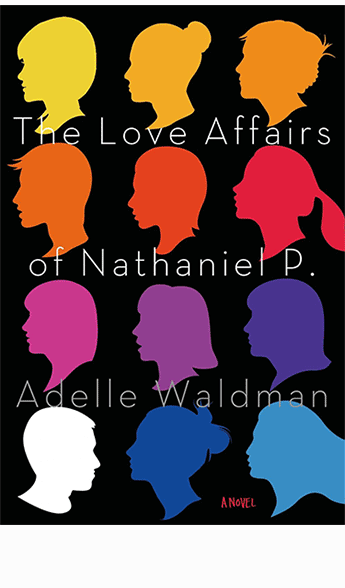
Natty P is the narrator of this description of a group of  New Yorkers maybe three of four years ahead of Lena Denham's cohort.  Natty P's people rotate in various degrees of intimacy within the larger constellation of the intersecting publishing vectors: reviewers for online zines like Gawker, editorial assistants for magazine like Vogue, novelists with first contracts. All of them intend to be published authors.

One and all they have graduated from programs at no lesser institution than George Washington University (though Harvard is by far the top of the list to name-drop as alma mater, and is name dropped on every page; Natty P graduated Harvard). Often they were recipients of prestigious literary prizes awarded by a program at that institution like this one.  Yet even the poet of the novel, winner of a Stanford undergrad poetry prize, cannot find a job in NYC's publishing world worthy of her. The job market into which they graduated is unfair. Whether there were ample entry level jobs out there or not, these individuals do not think they should have to be in them. Those positions are for those who didn't go to Harvard.

One and all name check Italo Svevo (James Joyce who?) as their benchmark when assessing the brilliance of new acquaintance, or deciding someone might be worthy to have sex with. As well as quantifying the endless varieties of their brilliance, they minutely categorize everything else about themselves and each other -- including the toilet paper, and, toothpaste they buy and why.  (Fascinated by them yet?) They hold in solidarity the conviction of personal exceptionalism, yet  they are consumer driven lemmings, dashing in waves here and there according to what the media market orders them. They don't seem to have any fun other than on occasion feeling they've out-mot juste-ed a friend.

Described in detail as it may be, they aren't interested much in sex either, other than as score-keeping. This is the saddest part. No matter how well suited a woman might be for Natty P, he will soon see her physical flaws, and that's it. No one is physically perfect enough in their eyes for sex and love, including themselves. They are dreary, predictable and dull, hypnotized by the surperficial markers corporations have told them are identities. 

Note: not a single character of color or anyone of any other class (such as those who don't go to Harvard) inhabit this world or enters their consciousness. Occasionally they see a poor person or a hardworking immigrant in the cold and they examine their vague feeling of guilt, and that takes care of that by providing them a sense of themselves as sensitive and compassionate. All of them have families well-heeled enough they can always go back home. Nevertheless they carry with them a sense of being victimized by society.  For example one of them carries a chip that he doesn't like to examine much, but does like the tongue going to an infected tooth -- that he wasn't born a WASP.  Yet he feels he is infinitely superior because WASPS are shallow and boring.

It's a beautifully written novel.  However I cannot tell whether the author's intended take-away of these people is what I did take away: useless creatures, who are neither provocative or entertaining, with whom I'd never want to have a beer or a flute of champagne. I may be out-of-step generationlly though. Perhaps like Lena Dunham's writer character Hannah in Girls, who thinks she might be "the voice her generation, or a voice of a generation," Adelle Waldman is the voice of her generation. Waldman's generation thinks so, having declared this the greatest novel so far of the 21st century, and the shoe in for the  fiction Pulitzer and National Book Awards. 

After that meticulous assault in granular detail by the most minutely trivial of the terminally predictable it was a joy to sail upon the astringent waters of  the old book's characters forthright self-regard. They came up in a hard, hard school.  


One of the primary differences is that while the characters of Natty P are mediocrities who strive mightily to believe in their genius and  uniqueness, the incestuous communities of Mitford's Pursuit are fascinating and entertaining (at least, at a safe distance). Monsters some of them are in the habituation of their generationally inherited comfortable complacency about their class privilege. But their steely determination to do what they mean to do, damn the torpedoes, the public opinion of their peers, or the Nazis, are figures who lead lives larger than the average. Compared to the Natty P pipsqueak generation, there were giants walking the earth in the days of the Mitfords.

Making up an untitled trilogy, The Pursuit of Love was followed by Love in a Cold Climate (1949) and Don't tell Alfred (1960). All three novels are narrated by Fanny, a cousin of the semi-fictional Alconleigh Radlett family. The first two are set after WWI, and run into WWII. Don't Tell Alfred is set mostly in France, after the war. Mitford's splendid at committing in print what some of her contemporary writers called the "posh aesthetic" -- a cold cruelty of which the era's Bright Young Things were enamored.  It's the sort of thing the Natty P literary lights so aspire to toss off, but they fall so short as to not be on the playing field.

Current novel reading-in-progress is yet another Jane Austen - Pride and Prejudice spin-off, Longbourn (2013).*
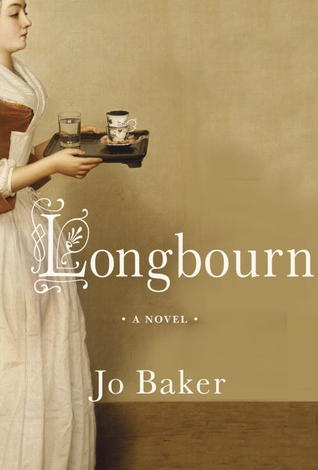

This one is a cut above of the usual attempts that bite Jane Austen's superlative works.  It focuses the working class, particularly the female servants who empty the Bennets' chamber pots, launder their menstrual napkins, scrub their mud-caked petticoats and skirts. They do this in winter, with chilblained hands, in thee summer in sweat soaked bodices. They cook, clean, listen to the whines, cater to the tantrums, and serve, twenty-four hours a day, seven days a week. They cannot expect better either, not in this world of too many women (due to the wars), few jobs and less opportunity for upward mobility.

There is a melodramatic secret in the center of the book, which the reader sees coming from very early on. Since I've identified the looming secret, know its solution too, there isn't much incentive to keep reading. I already know what it would be like living below stairs in the Bennet household, having read many histories of the condition. Indeed, I thought of it even before reading such works, a farm girl imagining that house filled with women having their periods at the same time, and what this would mean for laundry ....   Language usages and ways of seeing and thinking from our own era creep into the text more often than the author seems to have noticed too.

-----------------
* Earlier this month I tried to read Joanna Trollope's Sense and Sensibility (2013), the first in the series by famous authors to write contemporary versions of Jane Austen's works.


It was a ridiculous effort -- yet I have read many of this author's own novels with pleasure.  It's just not possible to recreate in contemporary terms the dilemmas facing women of the English class-based early 19th century.  I wish They wouldn't do this.  But Jane Austen makes money, so let us come up with every permutation to wring dollars / lbs out of her, since few contemporary novels sell as well as Austen's do.

There's a reason for that.  Austen wrote novels out of her own mind, creation and experience.  Most writers now are biting what came before or what someone else is currently doing.  Imitation of a novel does not a novel make.

Tuesday, November 26, 2013

Tonight - Tuning Into Treme With Special Guest Eric Overmyer

The final, truncated season of Treme opens (HBO) this comming Sunday, December 1.

I hope the frightful weather advisory doesn't keep us or anyone else away.

Here are the details of the event, held at the National Jazz Museum in Harlem.


Sunday, November 24, 2013

Robert McCrum's 100 Best English and American Novels: #10

This week is number 10, The Narrative of Arthur Gordon Pym of Nantucket by Edgar Allan Poe (1838).  Last week, number 9, was Thomas Love Peacock's Nightmare Abbey (1818). McCrum is progressing chronologically in his list, starting from the earliest to the latest.  His first title then was Pilgrim's Progress (1678).

This is the first American novel on his list and it is Poe's only novel. That seems to be the only reason McCrum picked this one for the honor of being the first Yank title. One thinks this because the below-pulled quote from McCrum's column cites almost entirely poets, who admire Poe's poetry -- and lordessa help us, supposedly Poe's dipsomaniacal, tubercular, impoverished peregrinating (short) life.

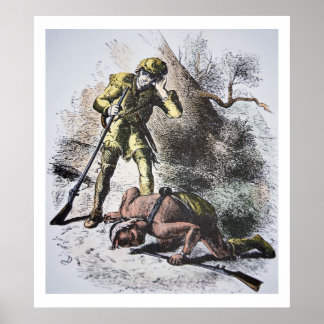
James Fenimore Cooper's The Last of the Mohicans was published in 1826. One can argue that Last of the Mohicans and its sibling work featuring Natty Bumpo the white forest runner - scout, sharpshooting friend of Indians, had at least as great influence on contemporary and subsequent writers both in the U.S. and Europe. This continued through the 19th century, into the 20th, and today, at least continues in Europe. Unlike Poe's short fiction and poetry, outside of other writers, literary historians and critics,


Poe's The Narrative of Arthur Gordon Pym of Nantucket is little known, and less read. I read it as part of my self-directed education program in the history of the novel, but I've had no urge to re-read it since.  I never even bother to think about it unless involved again with some aspect of literary history, such as defending the greatness of Moby Dick, whereas I refer in my thinking to Cooper constantly for so many reasons, from the history of the nation regionally, politically and culturally, to the history of the movies and television.

He begins his argument with this:
But it was Edgar Allan Poe, born 1809, who signals the beginning of what would become a great Anglo-American literary dialogue. Poe was original in ways that Irving and Fenimore Cooper never were. As well as being the first American writer to attempt living exclusively by his pen, he is also the archetype of the romantic literary artist. Henry Miller, Jack Kerouac, William S Burroughs, and even Hunter S Thompson all owe something to Edgar Allan Poe. His nomadic, boho style and tortured, exigent career continue to exercise a powerful allure on any young American writers who see themselves as outsiders. In Britain, among later Victorian writers, Wilde, Stevenson, Swinburne and Yeats all responded to his unique imagination.
However, Cooper and Irving were making a living entirely by writing before Poe failed spectacularly to do, thus I'm not swayed by his arguments. Even so, I find them, like the weekly column thought provoking about the novel.  And I really enjoy having this opportunity to explore contrasting viewpoints about the history and influence of the novel in the U.S. and England.

Friday, November 22, 2013

David Simon Blogs 12 Years A Slave

David Simon blogs his thoughts about 12 Years a Slave, after his first screening, and, after his second screening, of this film that deals honestly with the condition of the enslaved in the U.S. south for 350 years. It's after the second screening that he addresses the political aspects of this nation that allowed slavery as an institution, and then the accompanying financial engine of the domestic slave trade, to exist at all.

He articulates this way, what is one of the themes of The American Slave Coast:
Anyone who acquires the narrative of 12 Years A Slave and finds it within his shrunken heart to continue any argument for the sanctity and perfection of our Founding Fathers, for the moral wisdom of their compromised document of national ideal that begins the American experience, or for their anachronistic or historically understandable tolerance of slavery — they are arguing from a desolate, amoral corner.
If original intent included the sadism and degradation of human slavery, then original intent is a legal and moral standard that can be consigned to the ash heap of human history.   Hardcore conservatives and libertarians who continue to parse the origins of the Constitution under the guise of returning to a more perfect American union are on a fool’s journey to decay and dishonor.
Simon speaks of the good things in our Constitution, particularly as it is amended, but, he says:
.... But for anyone to stand in sight of this film and pretend to the infallibility or perfect intellectual or moral grandeur of a Washington, a Jefferson, or a Madison is to invite ignominy from anyone else sensate.  Slavery was abomination, and we, in our birth of liberty, codified it and nurtured it. 


Moreover, the secessionists insisted they'd corrected the flawed Constitution, the one that allowed the international slave trade until January 1, 1808, that spoke to democracy and consent by voting -- a whole lot of issues.  In the Constitution of the Confederacy slavery as the way of life, the economic institution forever and everywhere, the contraction of who has the right to vote and to hold office, are clearly stated all the way through.  None of this business of majority voting for them.  They also use the words slave and slavery, which our Constitution coyly avoids by speaking of "certain persons," -- the only legal document probably that uses persons for slaves, but it didn't mean it that way, that was clear.

Look at 12 Years a Slave and recall that the horrors and misery up on that screen were deemed by the fire eaters (the term Barnwell Rhett and his cohorts were known by, in south and the north, as they advocated 24/7 hanging, shooting, enslaving abolitionists, secession and going to war) who made secession and the Civil War, to be all most Americans, of any heritage, any tone of skin, were worthy of: America and all her future conquests was to be ruled by a very small, wealthy elite -- to whom the rest of us were to be subservient in one way or another, whether as out-and-out slaves or a feudal underclass. That was the dream dreamed by that elite, and the convinced through a variety of lies and circumlocutions to get the whole south to dive off the suicide cliff with them.

It's particularly difficult to not see contemporary developments in the light of this national past.  Our constant surveillance of everyone state; stop and frisk -- what are these other than the same old militias pre-Independence to keep slaves on the plantation, the paddy rollers doing the same in the antebellum south, the KKK and associated orgs in Reconstruction and Jim Crow to keep everyone in their rightful place.

Thursday, November 21, 2013

Gone With The Wind - Or - The Scorned Novel

Attempting to understand her pre-adolescent obsession with Mitchell's novel, the writer of this NY Times Op-Ed piece writes:

... in the world of “Gone With the Wind,” romantic thinking trumps everything, including war, civility, morality, starvation and childbirth. The book amazed me with the grandeur of its delusion.
It also made me guilty, perhaps above all because reading “Gone With the Wind” made me feel that a part of myself might be like Scarlett, that I, too, might be capable of caring about the wrong things in life, so long as I was loved by a man.
Then as a divorcing mom she has this insight about her middle-school Gone With the Wind obsession:
And so I forgot about “Gone With the Wind.” Until recently, when I was talking with a friend about our daughters (now in middle school themselves), and their fascination with impossibly lengthy, endlessly repetitive supernatural romances. I casually mentioned my romantic epic of choice, and it occurred to me that “Gone With the Wind” was in fact the ultimate young adult novel. The choice between two starkly different lovers (one gentlemanly, one roguish) appears, for the very young, to be a choice between two utterly distinct potential identities, two possible roads through life.
Still, what is the most insightful, interesting bit she writes is in that first sentence above, "that romantic thinking trumps everything, including war, civility, morality, starvation and childbirth. The book amazed me with the grandeur of its delusion."  She also in another part of the essay includes that this romantic thinking trumps slavery too, about which as a child reader she felt, vaguely, guilty.

Bulloch Hall, Roswell, GA, (1924 View) Family Plantation Home of Theodore Roosevelt's Mother,; Thought to be Margaret Mitchell's Inspiration for Tara

One of TR's Uncles Shot and Killed His "Little Shadow" the Slave Given to Each Bulloch Child at Birth, in a Fit of Bad Temper; This Same Uncle Played a Principal Role in the Confederacy's Attacks on Union Merchant Ships, and Financing Iron Clads for their Navy

Whereas I never liked romance fiction, for a host of non-romance reasons I did like Gone With the Wind very much. Like so many women, I encountered the novel for the first time when very young.  To this day I still believe Mitchell's portrait of Scarlett is brilliant. Scarlett's a character that stands without being put in the shade by Thackeray's Becky Sharpe, and -- dare I say? even Jane Eyre. She's the antithesis of a romance heroine, and I'd never before encountered such a woman as the center of fiction: selfish, mean, vital, hard, non-spiritual.  Shoot, this girl who grew up on reading-and-writing Jo March of Alcott's Little Women had never encountered a heroine who hated to read!  I was fascinated.

The essay's writer and the many commentators to what she wrote point out that the Gone With the Wind novel and the Gone With the Wind movie are quite different in their focus.  The movie is about nothing but the romance.  The novel is about much more. Much of that much more is wrong-headed and forged directly out of the Georgia versions of the Glorious Lost Cause.  But her portrait of post Civil War Georgia and Atlanta is broadly vivid in scope, created out of the personal reminiscences of her relatives and other members of the community.  Scarlett herself, because of the kind of woman she is -- hard-headed, good with figures and good at making money, not particularly maternal -- she fits among the antebellum women of her world no more than she does in the Reconstruction and Jim Crow south.  But the very destruction of the world into which she was born allowed her to exercise all those functions, which, because regarded as non-feminine, were prohibited before the war for women (yes, by law as much as by society), her incredible energy to do, to make, that was in her.

But the film leaves out all this.  I've watched it perhaps three times, once upon a restoration print on a huge urban film theater's screen -- and didn't care for it, for this very reason.  As well, the casual racism and white supremacy, whether it is period or not, is even more unacceptable to today's viewer, one would hope anyway, since there's not a hint anywhere in novel or film of how the formerly enslaved and the emancipated members of their community feel -- other than tremendous love and loyalty to "their white folks."  Yes, some still did, but there were far more who saw all of it very differently.  It struck me hard, even upon first reading of Gone With the Wind, that Scarlett's judgment on the wives of the Yankee officers stationed in Atlanta who showed some interest in the dynamics of how there were so many light-skinned former slaves all around them.  How dare they be so vulgar!  Scarlett, sitting in judgment on vulgarity is a joke by itself, but that the curiosity is worse than the practice that resulted in so many white or light-skinned negroes is -- well not funny at all.

That non-inclusion is the great failure of Gone With the Wind, which, if it were present, might have made it a great novel instead of a great romance novel. Neither Margaret Mitchell nor Scarlett can recognize that slavery was an institution of rape; that slavery was a cruel, unjust, and evil legal economic system. No matter whether some slaveowners were kind of kind, no matter how many of them there might have been through 350 years of slavery, those owners cannot make up for the brutal evil of the system, which has brutality as coercion and as practice built into it.

Which makes one wonder further, why a another re-release of Gone With the Wind is taking place during the sesquicentennial of the Civil War, the war that was fought about whether slavery would be extended throughout the United States, North America, the Caribbean and South America, or ending slavery once and for all.

Saturday, November 16, 2013

A History of Slavery and Genocide Is Hidden in Modern DNA


Genetic testing of people with Caribbean ancestry reveals evidence of indigenous population collapse and specific waves of slave trade


Modeling their DNA data with these assumptions built in, the researchers created a portrait of Caribbean migration and population change that stretches back to before the arrival of Columbus. One of their most interesting findings was just how few Native Americans survived the arrival of Europeans, based on the DNA data. “There was an initial Native American genetic component on the islands,” Martin says, “but after colonization by the Europeans, they were almost decimated.”
This decimation was the result of European attacks and enslavement, as well as the disease and starvation that came in their wake. The DNA analysis showed that the native population collapse of Caribbean islands happened almost immediately after the arrival of Columbus, within one generation of his first visits and the appearance of other Europeans. The gene pool on the mainland, by contrast, shows a more significant Native American influence, indicating that they didn’t die off at the same rates.
What replaced the missing Native American genes in island populations? The answer reflects the conquering Europeans’ solution to diminishing populations available for labor: slaves kidnapped and imported from Africa. The DNA analysis showed a heavy influence from characteristically African SNPs, but notably, it revealed two separate phases in the trans-Atlantic slave trade. “There were two distinct pulses of African immigration,” Martin says. “The first pulse came from one part of West Africa—the Senegal region—and the second, larger pulse came from another part of it, near the Congo.”
This corresponds to written records and other historical sources, which show an initial phase of slave trade starting around 1550, in which slaves were mostly kidnapped from the Senegambia area of the Mali Empire, covering modern-day Senegal, Gambia and Mali (the orange area in the map at right). This first push accounted for somewhere between 3 and 16 percent of the total Atlantic slave trade. It was followed by a second, much heavier period that made up more than half of the trade and peaked during the late 1700s, in which slaves were largely taken from what is now Nigeria, Cameroon, Gabon and the Congo (the red and green areas). [colors reference map at the above-linked site]

Anyone who has read my blog regularly has been seeing me beat this African diaspora patterns forever, of course, so this may not be news.  But again, we now have statistical forensic evidence as well as oral, linguistic, and business and other text documents for these assertions.

Thursday, November 14, 2013

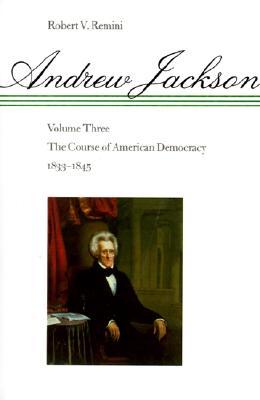
From Robert Remini's Preface to Daniel Webster: The Man and His Time

I identified with what he wrote in the Preface to his massive Daniel Webster: The Man and His Time (1997).  Before this work Remini had published three large volumes of the life and times of Andrew Jackson,


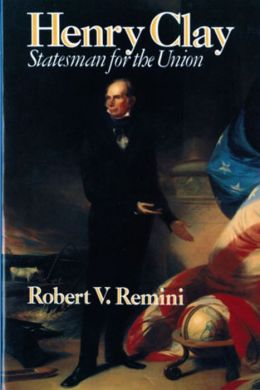
a biography of John Quincy Adams, a biography of Henry Clay, and many other works.  There are so many that any bibliography is merely a "selected" bibliography.  Even from these works an outsider can surmise that Remini as historian owned the Jacksonian era.


Professor Remini also served as the Historian of the House of  Representatives (2005), held several distinguished university positions, and received many awards and honors.  He deserved all of them. The amount of work he did, the value of his work to the historical record of this nation cannot be overstated.


During the years I spent researching and writing my biography of Henry Clay I was constantly amazed to discover how few Americans knew who Clay was.
"The greatest Speaker in the history of he United States House of Representatives," I ventured in an effort to help.
"Really," came the reply.
"The Great Compromiser," I continued, hoping it would stir a memory of something learned years ago.
"Is that so."
"The Missouri Compromise," I offered in desperation.
"Sorry."
After I completed my Clay biography and decided to attempt the life of Daniel Webster, I was delighted to get a better response from friends and acquaintances when they asked about my next project.


"Daniel Webster! Oh yes I know him."
"You do.  That's great."
Yes, he wrote the dictionary!"
Alas. Noah Webster is someone vastly different from Daniel Webster, although they were contemporaries [but 24 years older than Daniel, to whom he was not related].
So few Americans really know the history of this nation and the men and women who figured prominently in its development -- except for Presidents [a few of them] notorious criminals, and other exotics [and most of what most Americans think they know about those figures is wrong -- see Jesse James as one example].  Such important individuals of the early nineteeth century as Clay, Webster, John C. Calhoun, Thomas Hart Benton (not the artist), and others are slowly disappearing from the country's collective memory, and it's a great pity.
However intensely I identify with these words, I also recognize how difficult it is to be familiar with these giants who dominated the national stage during their whole lives.  Ten years ago I didn't know any of them the way I know them know, not even Andrew Jackson about whom I knew the most.  It took more than ten years of constant, systematic study to feel as comfortable with them and their circles as I do now.  We aren't taught about these fellows in grade school, high school or college, even as history majors.  There is so much to know. When I was a child, even Eisenhower was unimaginably distant from me in time.  So I cannot blame people for not knowing who these fellows were, what they did -- and they did so much.  I can only feel unspeakably humble and grateful that I got the opportunity for this extended, extensive, vast in scope study into the history of this nation.

These are some of the best stories you will ever find, in fact or fiction. Calhoun, Clay and Webster were known as the Great Triumvirate. When comes to enduring fascination and national effect they are not in the backseat to the First Triumvirate of Ceasar, Pompey and Crassus.  What men this nation produced.  Moreover, Calhoun, Clay and Webster were born in the same year -- along with many other wildly talented, wildly ambitious, wildly brilliant men, who, mostly, rose from far more modest circumstances than Ceasar, Pompey (even though Pompey was despised as being low caste -- i.e. his family was not Roman) or Crassus. The difference is that in the U.S. Webster -- who could lord it over others like nobody's business -- was never looked down upon by his peers from coming out of genuinely modest background.