LINES OF THE DAY

". . . But the past does not exist independently from the present. Indeed, the past is only past because there is a present, just as I can point to something over there only because I am here. But nothing is inherently over there or here. In that sense, the past has no content. The past -- or more accurately, pastness -- is a position. Thus, in no way can we identify the past as past." p. 15

". . . But we may want to keep in mind that deeds and words are not as distinguishable as often we presume. History does not belong only to its narrators, professional or amateur. While some of us debate what history is or was, others take it into their own hands." p. 153

Silencing the Past: Power and the Production of History (1995) by Michel-Rolph Trouillot

Showing posts with label Cultural Identity. Show all posts

Wednesday, April 2, 2014

Reading Wednesday, Mostly Dragons, Some Africa

A fantasy series* set within a secondary world much modeled on Victorian England and Europe, featuring a lady explorer-natural philosopher, recently had its second installment published. Having read the first volume in the series with mild enjoyment, I rather looked forward to volume two, as often, once an author has established her character(s) and world is a large improvement over the first book.


The second novel wasn't as well-written as the first one though.  It's flatly written in a self-conscious attempt to ape what the author believes is a Victorian lady's style of writing. The narrative is a dull mash-up of African cultures rendered in the single-dimension cliches of Africa and Africans, despite the author's claiming to having qualified as an anthropologist.

Despite what the author seems to think, what she mashed up are not dead museum cultures and places, nor are they quaint museum spiritual practices. These are people, families and communities who still have their cultures and languages, and still believe in their spiritual practices, despite the very well-funded fundies of several outside religions actively demonizing them.

Then the actively missing music ....  When reading anything that is taking place in Africa, whether fiction or non, and there is no music, that is a sure sign the author never got a toehold into what was / is going on. O wait -- this is fantasy, so how do I know this is Africa?  After all, the word is never used.  But a whole of words that come from some particular African languages are used -- though not always correctly.

For a novel, though, worse than mashed up geographies and vocabulary challenges, is that the narrative is static and the plot is unsurprising from start to finish. The characters, including the narrator and first person point of view, are equally flat and predictable.

With no reason to finish this book, I did not do so.

Think the Temeraire series by Naomi Novik; however, instead of a Napoleonic era secondary world, this is Victorian. There is authentic passion contained the early Temeraire volumes, as the dragon Temeraire and his beloved Captain William Laurence discover each other, and, together, the Whole Wide World. With Temeraire, Lawrence, other dragons and characters, the readers feel how enormous are the stakes of their choices: personal, military, political and social. Perhaps this is a large part of the problem with the Victorian series, that it is too much an imitation -- and an imitation of materials that the author doesn't understand herself well enough to spark and fizz a reader's sense of shock and awe?

 This one follows the well-patented arc of feisty lady against her social strictures, presented in a single voice flat as the notes in a creaky piano whose strings have been tuned one too many times. The perils are expected perils while the reader knows, via the First Person Herself that more books are coming, thus Our Heroine is not in peril. Then there is the problem that despite what we expect, Our Heroine is dull, or at least her voice is.

 Perhaps the ur fault is Author's choice to plagiarize emulate Mary Kingsley's mode -- and even trajectory -- in her novel?

The opening paragraph to Kingsley's
PREFACE TO THE ABRIDGED EDITION OF TRAVELS IN WEST AFRICA.
   When on my return to England from my second sojourn in West Africa, I discovered, to my alarm, that I was, by a freak of fate, the sea-serpent of the season, I published, in order to escape from this reputation, a very condensed, much abridged version of my experiences in Lower Guinea; and I thought that I need never explain about myself or Lower Guinea again. This was one of my errors. I have been explaining ever since; and, though not reconciled to so doing, I am more or less resigned to it, because it gives me pleasure to see that English people can take an interest in that land they have neglected. Nevertheless, it was a shock to me when the publishers said more explanation was required. I am thankful to say the explanation they required was merely on what plan the abridgment of my first account had been made. I can manage that explanation easily. It has been done by removing from it certain sections whole, and leaving the rest very much as it first stood. Of course it would have been better if I had totally reformed and rewritten the book in pellucid English; but that is beyond me, and I feel at any rate this book must be better than it was, for there is less of it; and I dimly hope critics will now see that there is a saving grace in disconnectedness, for owing to that disconnectedness whole chapters have come out without leaving holes.
 Almost word-for-word ....


Think the Temeraire series by Naomi Novik; however, instead of a Napoleonic era secondary world, this is Victorian. There is authentic passion contained the early Temeraire volumes, as the dragon Temeraire and his beloved Captain William Laurence discover each other, and, together, the Whole Wide World. With Temeraire, Lawrence, other dragons and characters, the readers feel how enormous are the stakes of their choices: personal, military, political and social.

This other series follows the well-patented arc of feisty lady against her social strictures, presented in a single voice flat as the notes in a creaky piano whose strings have been tuned one too many times. The perils are expected perils while the reader knows, via the First Person Herself that more books are coming, thus Our Heroine is not in peril. Then there is the problem that despite what we expect, Our Heroine is dull, or at least her voice is.

Perhaps this is a large part of the problem with the Victorian series, that it is too much an imitation -- and partly an imitation of materials that the author doesn't understand herself well enough to spark and fizz a reader's sense of shock and awe?

The Temeraire series itself is a secondary world fantasy inspired by Patrick O'Brien's Captain Aubrey - Stephen Maturin novels of the Napoleonic era -- Maturin a noted biologist. It has been much commented upon that the O'Brian series was an inspired Napoleonic era modeled upon the Jane Austen regency mode.

Perhaps there are so many layers of inspirations and influences upon this Author's mashup that the consequence is by the second volume already her literary efforts have been mashed flatter than an alluvial plain?

Instead, I picked up a collection of papers from 1978 by and also edited by Brit historians, P. Hair and Anthony J. Barker on the African slave trade, when all the scholarship in the field was starting new approaches, partially sparked by what had been going on in the USA with the Civil Rights Movement.  It was an exciting collection of papers; the historians' excitement came through their academic structures, and that they were aware they were just crossing a threshold not previously gone over.
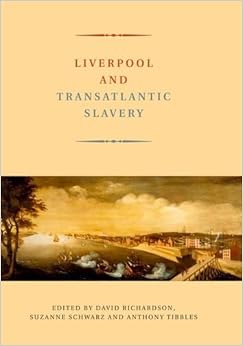

Additionally, it was exciting to compare and contrast that collection of papers with another collection on the same subject: Liverpool and  Transatlantic Slavery (2010) a collection of papers presented at a recent conference in Liverpool.  How far we've come since 1976!

-------------------

*  Title / author deliberately omitted because my response to the work is negative and thus, for Author's sake, do not wish it to influence others doing a casual web search.

Tuesday, December 3, 2013

Treme - Season 4 - Yes We Can (ep. 32)

When too long away, returning to an intensely love place, filled with friends and family, it's homecoming.  But there's this disorientation, as though everything's just out of focus. That's because, as much as they are the same, the place, the people and yourself have changed. It takes a bit of time to re-adjust, re-orient and bring it all back together.


It's Election Day,New Orleans, 2008.  People are fired up.  The musicians, including our friend John Boutté, are donating their talents to entertain the long lines of voters thrilled to cast their vote for the first black president of the United States and against the party that screwed New Orleans so royally in 2005

Kermit Ruffins Stokes the Crowd
2008 was a long time ago from now, 5 years later, the end of 2013, arguably the worst year for President Obama of either administration. 2005 was a long time ago from 2008, but New Orleans remembers 2005, as they will for all their lives.

Big Chief Albert Lambreauax and  LaDonna Batiste-Williams;
Albert Being Albert Did Not Vote;
LaDonna Did Divorce Larry
2008 was when everything changed again, as change has come for everybody in the series. This appears to be signaled by the change in the opening title sequence -- which are terrific!

Sonny Is Still Happily Married to His Vietnamese Wife;
Even Playing a Few Gigs Again
Davis is Uncharacteristically Subdued;
Antoine, Despite A Bit of Bucking is More Responsible

It is unbelievable how much got into this episode. This is meant in the very best way.  Back when el V and I were young and first married, living here in NYC, there was a weekly public radio station program that charted the history of black music and civil rights.  We would shut off the lights, snuggle up in bed and listen. The program was only 60 minutes long, but every week's program took us on a journey that spun us through decades, cities and history -- political as well as cultural -- that took us so far from ourselves and where we were, into places new, marvelous and terrible, and, because of the music all it so familiar at the same time.  By the time the program concluded we been very far away for a very long time, a journey that continued as we dropped into dream.

That's what it was like, watching the first episode of Season 4 in Treme. I'm so glad to be home again.


Saturday, June 16, 2012

Interview With Neil Marshall - Director of Blackwater Episode - Smoking Gun

You can read it via links and the discussion of rape-porn it provokes on Abigail Nussbaum's blog, Asking the Wrong Questions, the entry titled, "From the Horse's Mouth."

Some may consider this a smoking gun, quote:

[ " The weirdest part was when you have one of the exec producers leaning over your shoulder, going, "You can go full frontal, you know. This is television, you can do whatever you want! And do it! I urge you to do it!" So I was like, "Okay, well, you're the boss."

This particular exec took me to one side and said, "Look, I represent the pervert side of the audience, okay? Everybody else is the serious drama side. I represent the perv side of the audience, and I'm saying I want full frontal nudity in this scene." So you go ahead and do it
.

(The original quote is in a podcast. Here are two text reports, both of which seem quite cheerful about HBO courting the pervert demographic.) " ]

Monday, May 21, 2012

Eusebio Leal -- Last Tuesday Night's Speaker at the NYPL

The concept is excellent. With all the parts of extensive non-tourist urban daily life going on in habana vieja, and the twisty calles wide enough for carts and pedestrians only, it's the most intense, authentic time machine experience you can have -- and there are several eras into which can travel back.

I've also had the privilege of going on tours of habana vieja led by him, and others led by his students.

[ " All these years later, at 69, Leal’s mad passion has made him a beloved figure in Cuba and a globally admired hero of the historic preservation movement. With the unlikely title of city historian, he has rescued hundreds of landmark buildings in Old Havana — Habana Vieja — the colonial section of the city founded in 1519. He devised a mechanism to use tourist dollars to fund preservation, making the city more attractive to visitors — thus begetting more tourist dollars and more preservation.
He did it while taking a stand against gentrification, and against the theme-parking of history, by insisting that real people must continue to live, work, study and retire amid the historic plazas, palaces, museums and boutique hotels. " ]

Full feature article here.

Thursday, May 10, 2012

Hyperparasitism (From a Charlie's Diary Discussion)

Charlie's Diary here.

Regarding the hyperparasitism *: Right at this very moment our public radio station's 10 - noon talk show is featuring a woman who treats clients for Facebook stress disorders, including "How to get your FB experience work for you," and "How to leave Faceback." Yes, she gets PAID for this:

[ "In our 20s: My Life Should Look Better on Facebook"
Each week in May, Meg Jay, clinical psychologist discusses, as: why twentysomethings think their peers are doing better than they really are."
]

This is a call-in show, so every 30 seconds or so they take a call from someone eager to discuss their fb experience, frequently be-moaning how inadequate they feel compared to their friends who post about their brilliant lives on fb, and thus they've been forced to leave fb, and now are so lonely, or they want to leave fb but don't know how.

I did not make this up.

* hyperparasite

Friday, January 20, 2012

*New York Diaries: 1609 - 2009* ed. by Teresa Carpenter & Dwight Garner

New York Diaries: 1609 - 2009 ed. by Teresa Carpenter and Dwight Garner (2012); Modern Library.

On May 20, 1948, Jack Kerouac is waiting to hear from a publisher about his first novel, The Town and the City, during which he thinks about the cultural difference between New York and other parts of the country as he's known it:

No word from Scribner’s. Their silence and businesslike judicious patience is driving me crazy with tension, worry, expectation, disappointment — everything. And the novel is yet unfinished, really, and the time has come to start typing it and straightening it out. What a job in this weary life of mine, this lazy life. But I’ll get down to it. The news that Jesse James is still alive is very thrilling news to me, and my mother too, but we’ve noticed that it doesn’t seem to impress the New York world at all — which does bear out, in its own way, what I say about New York, that it is a heaven for European culture and not American culture. I don’t get personally mad these things any more, because that is overdoing things in the name of culture and at the expense of general humanity, but still, I get personally mad at those who scoff at the significance of Jesse James, bandit or no, to the regular American with a sense of his nation’s past.”

Monday, January 16, 2012

Why We Have Martin Luther King Day

Smoky Robinson, Def Poetry Jam:


From an amigo in Maryland:

[ "Martin Luther King Jr. expressed a view that black Americans, as well as other disadvantaged Americans, should be compensated for historical wrongs. In an interview conducted for Playboy in 1965, he said that granting black Americans only equality could not realistically close the economic gap between them and whites. King said that he did not seek a full restitution of wages lost to slavery, which he believed impossible, but proposed a government compensatory program of $50 billion over ten years to all disadvantaged groups. He posited that "the money spent would be more than amply justified by the benefits that would accrue to the nation through a spectacular decline in school dropouts, family breakups, crime rates, illegitimacy, swollen relief rolls, rioting and other social evils".[77]:365–7 He presented this idea as an application of the common law regarding settlement of unpaid labor, but clarified that he felt that the money should not be spent exclusively on blacks. He stated, "It should benefit the disadvantaged of all races" " ]

Wonderful Martin Luther King birthday party yesterday, Uptown.  Five different gumbo, from five different contributors, each one distinct from the others, each equally delicious.

Among other highlights of this wonderful gathering, we met the daughter of one of the song writers for Harry Belafonte's album, Calypso.  Note, this is the first album to ever have sold a million copies.  He was also the first sex symbol to emerge from the folk music trend.  El V had memorized all the music and the words on Calypso by the time he was five.  History.  It lives.  We speak with it every day.