LINES OF THE DAY

". . . But the past does not exist independently from the present. Indeed, the past is only past because there is a present, just as I can point to something over there only because I am here. But nothing is inherently over there or here. In that sense, the past has no content. The past -- or more accurately, pastness -- is a position. Thus, in no way can we identify the past as past." p. 15

". . . But we may want to keep in mind that deeds and words are not as distinguishable as often we presume. History does not belong only to its narrators, professional or amateur. While some of us debate what history is or was, others take it into their own hands." p. 153

Silencing the Past: Power and the Production of History (1995) by Michel-Rolph Trouillot

Saturday, January 30, 2016

Went Walk About -- Ran Into A Bernie March

Here's a YouTube of the event:


One used to run into the welcome, random unexpected event or action all the time just walking around town, but no so much these days.  So this was all the more welcome on a chilly, but sunny, day.

The marchers were trying to get out the word to vote for Bernie in the April primary.  For the most part they were young, excited, cheerful and everybody loved them.  Even the police escorts seemed to find this an enjoyable experience.

Friday, January 29, 2016

Back in Tour State

So dehydrated when we left the store. Jittery from all the talking, all the emotion. Hungry, not having eaten since lunch. We didn't get to the restaurant until some time after 10 PM. (Our dear, extremely patient friends, hanging about, waiting, until the last book was signed, the last exchange of thoughts and ideas took place.)  We didn't get home until long after midnight as the trains running between where we are and Harlem don't run so often, particularly after midnight.  So, since one wishes to sleep, one didn't eat much at all, hoping to fuel up at brekkie.

The big difference is that I did not need to arise at a ridiculous hour, scramble desperately for caffeine of whatever kind and quality, pack and drive for hours to do it all over again tomorrow, or rather, yes, this is also how it goes, today. With a pod cast, radio interview, something else also today before hitting the main event. Feeling sick and sore until the adrenaline kicks in.

Those morning-after sensations out of the way  (it's currently quite cold here, with some snow predicted, which promotes the soreness), the event was fabulous.

The place was packed out. People brought in Slave Coasts they'd already been reading to be signed. There were friends there -- who didn't bring their books to be signed because we've already signed them. And friends of the friends.   Importantly, for the store and publisher, the stacks of TASCs sold through. Quite a few African American history teachers, yay! And many others of all kinds of people.

As per usual at such events, the real stars were those who attended and asked questions, made comments and observations in the q&a, during the signing, and the general mill-around at the end, while the employees patiently wait for the last lingerers to leave, and they too can find dinner and home.. Having one's work come back at oneself this way is indescribably valuable. These are important teaching moments for us. These audiences already, in one way and another, know all what's in the book.

It felt so -- well, we were starting it -- i.e. touring to get the word of TASC out -- all over again and I wasn't quite sure where / when I was.

The community couldn't have been more welcoming, more appreciative, more humbling than it was. Harlem. Malcolm X Blvd. The AME Church around the corner. African American history all around us. NYC African American history.

This is a local audience that gets to know about things first and foremost by word-of-mouth.

What was clear from talking with so many of them after the presentation that someone else they know had already known of the book / read the book and told them they had to read it too. It's exactly like what happened and continues to happen with The World That Made New Orleans, which is then, hopefully, will keep going for years to come.

Walking into Revolution Bookstore last night and seeing title after title of all the books we've read and admired published on slavery and U.S. History in the last 5 years, and TASC prominently among them -- that was an experience.

We got asked about reparations, in a lengthy, well-thought out, sensible, well-informed historically, inquiry by a young African American man. As with some other matters that come up in non-academic venues where the audience is predominately a community audience, this is the kind of question one should expect. There are also questions that can at times indicate a divide, to a degree, between a sense that too much attention is being given to 'feminist' issues of slavery and breeding and not enough to what these horrors have done to the black man.


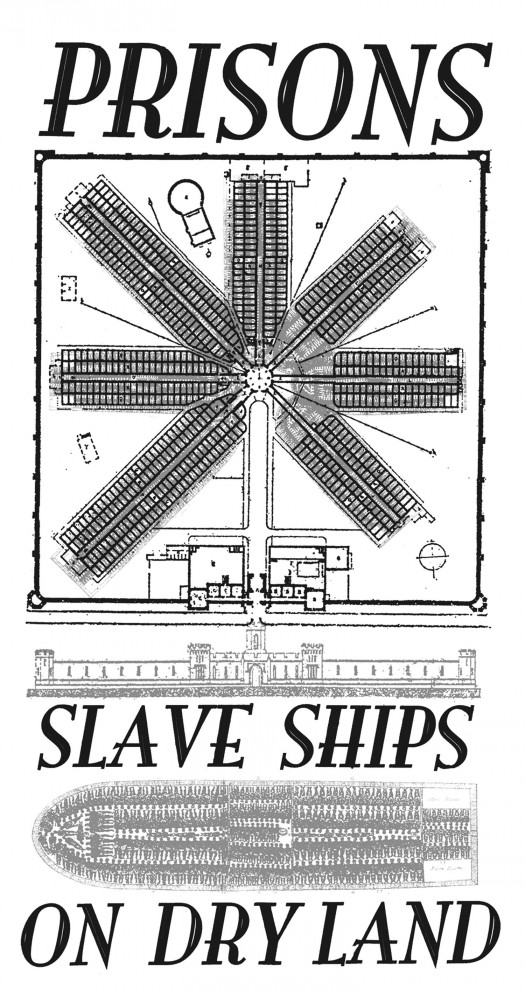
However, it remains abundantly clear, that in these local, non-academic contexts, the community itself understands the antebellum south, and then the neo-slavery of Jim Crow, was a police state, the plantations, whether worked by slave labor or sharecropped labor, were vast prisons.

The communities know all too well from long family experience, what slavery,  Jim Crow, and now this latest incarnation of it in the police-prison industrial system, has done to the black family.  They know how this has systematically denied them from the moment of Africans setting foot on this continent, the means by which to strengthen the family, expand the family network into other areas of wealth and influence, aggregate personal and family wealth, while white families were able to do the opposite, and at the expense of the African American family.

This, which make no mistake, allowed the slave-owning class, which was the sole political class of the south, who made secession and rebellion, to get back on their economic and political high horses within a generation -- if not even within a year or two after their defeat in the War of Southern Aggression.

These are burning questions in communities all across the USA -- what are we going to do to change this?  What can we do?  How do we get to an equal playing field when we've been denied even the right to have a father for our children?  How indeed, when for hundreds of years we were denied even the right to have our own children, when we want them, and to keep them once we had them?

I do not have the answers.  I hope this nation can come up with some, and soon. Really good answers, for the sake of the nation, and most of all, for the sake of the continuity of this planet as a place that is good for plants, small animals and children.

Thursday, January 28, 2016

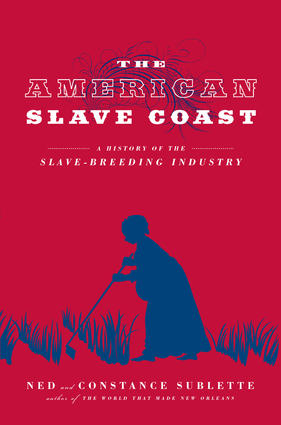
Tonight: Revolution Books - The American Slave Coast

We will be appearing tonight (Thursday, 28) at 7 p.m. to talk about The American Slave Coast at Revolution Books, 437 Malcolm X Blvd/Lenox Ave., New York, NY 10037 (Take the 2 or 3 train to 135th St.)

Photo: opening ceremonies of Revolution Books opening in November 2015.


We're just getting going.  A spring tour is slowly, belatedly coming together. If you want to host an event for The American Slave Coast in your town in the next few months, let me know.

Additionally, I missed seeing the Smithsonian Magazine's editor's blog last month for which he included The American Slave Coast  among his top ten history titles of the 2015 -- along with -- be still mine own beating heart to be part of such illustrious company, Mary Beard's history of ancient Rome, SPQR!

And this week, meanwhile, this review has made some noise, and more to come:

* * *

"A Future History of the United States"

In 'The American Slave Coast: A History of the Slave-Breeding Industry,' Ned and Constance Sublette offer a radical re-interpretation of American history. It’s brutal and uncompromising, and, for better or worse, it’s how we should understand the country.

Malcolm Harris
Jan 26, 2016

The American Slave Coast is a big book, both physically (over 700 pages including citations) and conceptually. From the colonial period to the postbellum, the authors Ned and Constance Sublette cast slavery, and the slave-breeding industry, as the center of American history. It’s a provocative and nightmarish thesis, so distant from conventional ideas about America’s history that it feels like a dispatch from an entirely different time and place. If America had lost the Cold War, maybe this is how kids would be learning the nation’s story.
There’s an important fundamental difference between the history of slavery in the United States and a “history of the slave-breeding industry,” as The American Coast is subtitled. Slavery, in simplest terms, was unpaid labor. Slaves were shipped from Africa to the American South, where they cultivated tobacco and picked cotton and served owners but didn’t get paid and couldn’t leave. Slowly, reformers and abolitionists chipped away at the institution, first banning the Transatlantic trade, then fighting a civil war to eliminate human bondage. Freeing the slaves destroyed the South’s pseudo-feudal economy, ending the region’s economic dominance. That’s the story.
But to think about American slaves merely as coerced and unpaid laborers is to misunderstand the institution. Slaves weren’t just workers, the Sublettes remind the reader—they were human capital. The very idea that people could be property is so offensive that we tend retroactively to elide the designation, projecting onto history the less-noxious idea of the enslaved worker, rather than the slave as commodity. Mapping 20th-century labor models onto slavery spares us from reckoning with the full consequences of organized dehumanization, which lets us off too easy: To turn people into products means more than not paying them for their work.
One of the central misconceptions the Sublettes seek to debunk is the subordination of American slavery to the transatlantic trade. Conceptually locating the center of the slave trade offshore is good for America’s self-image, and it’s an old line. The Sublettes quote Southern slavers who blamed English firms for forcing the barbaric mode of transportation on America. In schools, the 1808 ban on capturing and shipping slaves is taught as part of the end of slavery, but the Sublettes re-frame it as simple protectionism: Domestic producers wanted to lock out foreign competition.
Slaves were, to slavers, worth more than everything else they could imagine combined.
In fact, most American slaves were not kidnapped on another continent. Though over 12.7 million Africans were forced onto ships to the Western hemisphere, estimates only have 400,000-500,000 landing in present-day America. How then to account for the four million black slaves who were tilling fields in 1860? “The South,” the Sublettes write, “did not only produce tobacco, rice, sugar, and cotton as commodities for sale; it produced people.” Slavers called slave-breeding “natural increase,” but there was nothing natural about producing slaves; it took scientific management. Thomas Jefferson bragged to George Washington that the birth of black children was increasing Virginia’s capital stock by four percent annually.
Here is how the American slave-breeding industry worked, according to the Sublettes: Some states (most importantly Virginia) produced slaves as their main domestic crop. The price of slaves was anchored by industry in other states that consumed slaves in the production of rice and sugar, and constant territorial expansion. As long as the slave power continued to grow, breeders could literally bank on future demand and increasing prices. That made slaves not just a commodity, but the closest thing to money that white breeders had. It’s hard to quantify just how valuable people were as commodities, but the Sublettes try to convey it: By a conservative estimate, in 1860 the total value of American slaves was $4 billion, far more than the gold and silver then circulating nationally ($228.3 million, “most of it in the North,” the authors add), total currency ($435.4 million), and even the value of the South’s total farmland ($1.92 billion). Slaves were, to slavers, worth more than everything else they could imagine combined.
At the same time, slave owners could not afford to rest. “Rebellions existed wherever there was slavery, in every era,” the Sublettes write, “because everywhere, always, the enslaved were at war with their condition.” Owners counted them as capital, but slaves were living laborers, too, with their own rosy myth: When the spell of indenture was lifted—an event they imagined often—their power would be gone, and they would be left running for their lives. Call it The Haiti Nightmare. In 1775 and again in 1812 the British offered freedom to slaves who fought against their owners. Spanish and British threats to colonial and then national independence were understood as threats to slavery; black Spanish soldiers in Florida, decked out in full military regalia, were particularly unsubtle. Preserving slavery was a central motive in the American colonies’ fight for independence.
Americans first learn about slavery as children, before adults are willing to explain finance capital or rape. By high school, young adults are ready to hear about sexual violence as an element of slavery and about how owners valued their property, but there’s no level of developmental maturity that prepares someone to grasp systemized monstrosity on this scale. Forced labor we can understand—maybe it’s even a historical constant so far. Mass murder too. But an entire economy built on imprisoning and raping children? One that enslaved near 40 percent of the population? Even for the secular, only religious words seem to carry enough weight: unholy, abomination, evil.
The Civil War, as part of the American myth, cleanses the nation of this evil. The nation tore itself apart, but in the end slavery was gone, the country re-baptized in an ocean of fraternal blood. It’s a compelling, almost Biblical narrative, with Abe Lincoln looming like an Old Testament patriarch. But, as the Sublettes make clear, the full renunciation of slavery never really happened. White Americans didn’t want a revolution; in the North, they wanted to suppress the secessionists and maintain national continuity, which meant continuity with the slave power. A reader need only recognize the surnames of slavery profiteers—like “Lehman,” as in “Brothers”—to see that we never truly broke this continuity.
The nation’s failure to break with the slaver class is best embodied in the figure of Nathan Bedford Forrest. An orphan by 17, Forrest built a fortune on inequity. As a wealthy planter, slave dealer, speculator, racist, and murderer, he was a classic “self-made” American of the mid-19th century. As a Confederate cavalry commander, Bedford ordered the massacre of hundreds of black Union soldiers at Fort Pillow. But when the South surrendered, the war criminal Forrest received a presidential pardon. When Forrest’s fellow Tennessee volunteers formed a paramilitary organization dedicated to white terror, they turned to the former lieutenant general for leadership. The “Wizard of the Saddle,” as Forrest was called, became the first Grand Wizard of the Ku Klux Klan.
The book directly addresses personal beliefs and behavior of presidents and other founders, but not as mere disturbing factoids that reveal heroes as villains. The authors indict the American ruling class as a whole, and in so doing they recast the fathers as, first and foremost, members of their class. The Sublettes don’t draw a line between political and economic history; legislation and state policy emerges directly from slaver class interest. America has always been run by millionaires, and by the time of secession, two-thirds of them lived in the South, with human beings composing most of their wealth.
To see the founders as first and foremost slavers is to see them as evil, but not necessarily in an epic or dynastic sense: The slaver class was paranoid and mean, petty and small. Contrary to the myths of American meritocracy, the country elevated the worst while terrorizing, torturing, and murdering the best. George Washington is introduced as the hapless jailer of Ona Judge, a 22-year-old slave of his wife Martha who escaped and “managed to avoid falling prey to the attempts at re-capture that George Washington attempted against her until he died.” The country’s great narratives, from independence to manifest destiny, the authors suggest, are all better understood as maintenance work on history’s most sinister asset bubble.
From rapist Jefferson who gave away his own daughter as a wedding present, to Andrew Jackson driving slaves shackled at the neck for Spanish gold, to Ben Franklin personally selling slaves on consignment as a newspaper publisher, to James Polk overseeing his brutal plantation from the floor of Congress, to young Woodrow Wilson at his father’s side while the latter preached the Christian virtue of white supremacy, there’s no end to the vicious degradation of Africans as America’s very foundation.
The idea that America is therefore doomed to uphold the legacy of slavery has gained mainstream credibility of late. Ta-Nehisi Coates has become the country’s most-recognized intellectual just as his work on slavery reparations and ongoing white predation has pushed him toward this sort of pessimism about the national project. It’s possible to pay reparations, and it’s possible to change signs and re-name buildings and print new money and issue posthumous pardons, but would such a place call itself America? This type of symbolic purge comes after a revolution where the flag burns, not after incremental reforms that magically redeem it.
One of the book’s most striking examples of America’s slave-centric history is the National Anthem. Francis Scott Key is best remembered as the song’s author, but he was also Washington, D.C.’s rabidly white-supremacist district attorney in the 1830s, where he prosecuted abolitionists for pamphlet possession and let anti-black mobs run wild. He also co-founded the American Colonization Society, which encouraged the self-deportation of free black people. In his younger days, Scott Key had been, in addition to a racist, an amateur poet. We take the Anthem from his War of 1812 poem “Defense of Fort McHenry” but we usually leave out the verse about slaughtering the slaves to whom the British had offered freedom for allegiance:
No refuge could save the hireling and the slave
From the terror of night or the gloom of the grave
Oh, say, does that star spangled banner yet wave
It sounds like a 1960s parody, a pointed joke from a time when anti-Americanism was an American political position. But it’s not—it’s the original. It’s not a historical quirk that Americans pledge allegiance to slavery before every baseball game, not any more so than the slavers’ names on our monuments and money, our schools and street signs. The class that rules America was built on securitized bondage, and, as history teachers declare with strange pride, there hasn’t been a revolution since. Just as Scott Key pledged, as long as that star-spangled banner waves, there will be no refuge.

Wednesday, January 27, 2016

Reading Wednesday -- Our Man in Charleston: Britain’s Secret Agent in the Civil War South

Our Man in Charleston: Britain’s Secret Agent in the Civil War South (2015) by Christopher Dickey.

Journalist and author Christopher Dickey
The title is misleading, as spying is not the point of the book.

What the book details is the diplomatic relations -- or attempts to establish diplomatic relations by the secession CSA slavocracy with the British government.

This never happened, and could not happen since the CSA was not a nation.

None of the world's nation-states, whether in Europe or elsewhere, ever accepted the CSA a nation-state, and indeed, could not do so, for then they would have had to declare the United States a non-state, and this no one was willing to do. Thus the CSA could not have a diplomatic, negotiating relationship with nations.

Somehow too, Charleston and South Carolina, cradle of secession and the War of Southern Aggression, conveniently forgot how long Britain had attempted to negotiate a roll-back of that evil law that permitted every kind of cruel excess, chicanery and extortion, of jailing every black sailor of every ship of every nation that came into its port (South Carolina was not the only southern state with this law) until the ship departed again, with the ship's captain having to pay for the jailing and other costs.  (Probably it's not necessary to say that many a black sailor went 'missing' -- i.e. sold for somebody's profit, free or not, or that young ship's boys and female stewards and cooks were raped in these jails.)  South Carolina and the south would not repeal these laws.

A very interesting review of this book can be found here, in an issue of the Charleston City Paper from last summer.  Here's a pull quote from the review:

The book also, however, offers a head-on view into not only the abject horrors of slavery and the transatlantic slave trade, but also the sickeningly bankrupt morality of 19th-century Charlestonians in particular, and Southerners in general, for whom slavery was an institution to be preserved and expanded at any cost — even, as we all know, the cost of war. In light of the recent Emanuel AME church shooting and the conflict around the removal of the Confederate flag from the S.C. Statehouse grounds, Our Man in Charleston is, sadly, a highly relevant look at the society that started the War Between the States.
The fact that preserving slavery was the reason for South Carolina's secession is not news to anyone who has studied the Civil War academically, rather than buying into the pervasive mythology that glorifies the Confederacy as a bright beacon of independence and states' rights while smoothly glossing over the slavery issue as if it were just a mild unpleasantness. But let's be honest: most of us haven't really studied the Civil War. The majority of books on the subject tend to be geared toward military buffs, while even those for a wider audience — Tony Horwitz' Confederates in the Attic comes to mind — do little, if anything, to show just how central slavery was to the cause of secession, especially in South Carolina.

When reading this review last summer I kept thinking of the secession era Charleston Mercury, owned and published by the most fire-eating of the fire-eating secessionists of Charleston and South Carolina, and how he must be howling in his grave even now to have such sentiments as above published in 'his' city, where in his day, by gum, anyone who spoke, wrote or even suspected of thinking such things would be attacked violently, tarred and feathered and even lynched.  It was illegal to think or speak or write such things in the days of Robert Barnwell Rhett.

So radical was Rhett that his paper was the anti-Jeff Davis, anti-Robert E. Lee paper (as well as highly critical of just about everyone in the CSA administration and armies), in contrast to the pro-Jeff Davis paper, the Charleston Courier.

Rhett's Charleston Mercury ceased with the Union occupation of Charleston, resumed publication in 1866, then permanently closed in 1868.


Tuesday, January 26, 2016

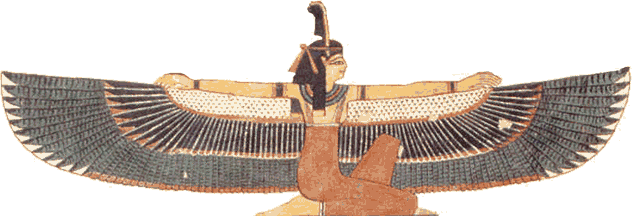
Eternal, Immortal Egypt

Ancient Egypt is eternal because they had the best make-up and design and had it first and had it longest.

That's my opinion and I'm sticking to it.


Plus, the Ancient Egyptians seem to be the first to understand  the fundamental feline character


is divine.


They also dressed sensibly for their climate, in clothes woven from sensible textiles.

However, Himself and I got into a long discussion at dinner Friday night, after leaving the museum: he seems to believe in Egypt the Eternal and Unchanging. I cannot understand how he could, after the very many times we have walked through the galleries of the old, middle and new kingdoms of Ancient Egypt, in the Met, the Brooklyn Museum, the British Museum and some others.  The dynamics of art and design change over the centuries and millennia, so other things do too.

Sunday, January 24, 2016

Why Book Panels NEED Cheap Wine in Cheap Cups

Have any of us not encountered all these?  And more often than one would like, all four at the same panel?   Plus ineffectual and even bad moderator?

"Four Personality Types That Will Derail Your Literary Event," described here.

What it takes to be a good moderator.  Hint: it requires more than just showing up. A lot more . . . .


What isn't covered in the brief article is the effect of those dispiriting airless rooms in which conferences and conventions take place, whether academic or commercial.  When all the participants are male, it gets even more depressing.


Saturday, January 23, 2016

The American Slave Coast WSJ Review

The American Slave Coast is reviewed today in the Wall Street Journal, by Fergus Bordewich, whose work we so admire!

His book, America's Great Debate: Henry Clay, Stephen A. Douglas, and the Compromise That Preserved the Union (2012), the history of the year that D.C. shut down in the argument over California entering the U.S. as a free or slave state is splendid history -- and also a terrific read.  It's as exciting as a novel, with a vivid cast of characters. I recall equally vividly working my way through America's Great Debate that summer when el V was in Angola and Mbanza-Kongo, babbling happily to him over Skype about this great book.


The review has quibbles, including Bordewich is not entirely convinced there was a system of slave breeding, though, yes, certainly, slave-breeding went on.  He also thinks River of Dark Dreams to be superior to ours.


But he does us the great compliment of saying the book reads easily and quickly, and that our curiosity reveals often unexpected and interesting things.


Woo! Great thing to happen on this storm shut-down day, facing probably, at least two more days of shut-in due to 20" of snow, more or less, covering the entire region, including us.  Oops.  Update just now: the governor's office says that accumulation will quite surpass 20" and hit more likely 30".  This does indeed paralyze the city.