LINES OF THE DAY

". . . But the past does not exist independently from the present. Indeed, the past is only past because there is a present, just as I can point to something over there only because I am here. But nothing is inherently over there or here. In that sense, the past has no content. The past -- or more accurately, pastness -- is a position. Thus, in no way can we identify the past as past." p. 15

". . . But we may want to keep in mind that deeds and words are not as distinguishable as often we presume. History does not belong only to its narrators, professional or amateur. While some of us debate what history is or was, others take it into their own hands." p. 153

Silencing the Past: Power and the Production of History (1995) by Michel-Rolph Trouillot

Thursday, November 2, 2017

Still Feeling Xalapa: ¡Gatos!

     . . . . I introduced The Young of Xalapa to the concept of "herding cats."

El Azuzul Jaguar Statue. Museum of Anthropology, Museo de Antropologia, Xalapa.

Jaguar statue, Oaxaca.
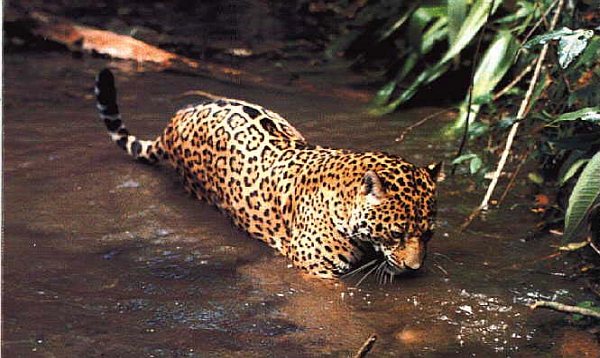
Olmec Twins & Jaguar: the twins are divinities also. Here they are facing off to the Jaguar God, in the posture of respect, which, we note, is one of the postures common to cats of all kinds.


Due to loss of habitat, jaguars are endangered species throughout Mexico, Central America, South America and Brasil.  It is revered by the cultures in all these regions.

As all of my young friends are more than fond of cats, appropriately as they are descended from people for whom the Jaguar is a divinity, they immediately got it.

In Xalapa they term such a concept as "Xalapeñear."

Saturday, October 28, 2017

Xalapa Siete - Hangin' with los Muertos

     . . . . Our official work is concluded, so we're trying to relax and see as much of this city and state as we can before leaving.

This is the weekend before el día de los muertos (November 1), which is in full swing festivities aleady, making traffic worse, but making every blink of the eye filled with something interesting and fun. Even so, last night, after all the long day of Slave Coast events, I fell out and slept for nearly 12 hours last night.  When last did I do that when not sick?

But awesome el V, after a 45 minute nap, went to work, reviewing essays of his NYU students, and then attended Donald Harrison Jazz Symphony, with himself and his group playing with the Xalapa Symphony Orchestra.  Then, he went to the reception afterwards.  He got in about 1:30 AM.  I never heard him, even though I'd been sleeping for hours already by then.

So much has happened, and so much continues to happen, all this, running in parallel with the city's ever intensifying Day of the Dead celebrations. 

Today is cool and a little rainy. El V and I went to a Day of the Dead tamale festival, where I found cool regalos for mis amigas, including lots of items made out of chocolate (which grows here, btw) and are formed into images that roll with el dia de los muertos. Since I get back Monday, I will be able to give them out on Halloween, most appropriately.  There were many groups of dancers and bands from all over, performing, one after another, including some splendid flamanco, one of my favorite forms of dance - music.  This is going on everywhere!  Actually, it feels like the week of Mardi Gras in New Orleans.  Donald thinks so, and he ought to know.


El V bought local artisan cervezas.  He also ate several different tamales -- and then we went to lunch with Donald and the guys.

Tonight there's a very large Day of the Dead parade, that passes right by our Hotel Clara Luna, so I have a spectacular view of it from the second floor window overlooking the street. 


Tomorrow we are going to meet with an historian and anthropologist, whose study is the African cultures in the state of Veracruz.  She is the aunt of one of the tremendously talented volunteer organizers who has been herding all the gatos who are the talent of the festival. (Like everyone else doing the actual work, she hasn't slept in days, so I feel a real wimp-fool for my 12 hours fall out last night. El V is particularly excited as Dr. Sagrario Cruz-Carretero is very famous at the CUNY Grad Center among our anthro friends there.  He says, "How envious they will be when we tell them!"

I have uploaded yesterday's and today's photos, but I'm too tired right now to post any of them. But they are colorful!


Ooo, I am hearing the squeals, yells and screams from the people in the street already as the parade begins!  And now I hear the bands!

Xalapa Seis -- Post Slave Coast Performance

     . . . . Considering the sheer talent and the number of dedicated professionals who have been working since late last winter - early spring on the live American Slave Coast performance with Donald Harrison and musicians, it does seem surprising that last night at the State Theater "Gral. Ignacio de la Llave" was a success.

In any case, everyone involved is happy, pleased and satisfied as to how the centerpiece came off and was received.

Two of our new friends, the Ph.D. candidates who guided us through the Museo de Antropología de Xalapa, made two observations that particularly struck me:

1) "After learning all this about los negroes in the United states, I think I am even glad that it was the Spanish who conquered us and not the British";

2) "This is where all this jazz, these Blues, all this music that we are celebrating here in Xalapa has come from -- tragedy.  We had no idea of any of this."

Now, interviews.  Then the academic presentation.  

Woo -- this altitude is really kicking me.  I feel exhausted all the time, no matter how early I get to sleep and how many hours spent sleeping.


Thursday, October 26, 2017

Xalapa Cinco -- Rehearsal, All Time, Slave Coast Performance

     . . . . So many rehearsals!  But none of them with the music.  But last night that happened, and it is good.  Alas, one of the actresses seems to be getting sick with a respiratory thing.  This truly, truly matters as she's the one who sings "My Old Kentucky Home." Pobricita.  She's worked so hard to get the song down right -- it hurts me on her behalf that this might go wrong for her.  Plus, she has another big performance tomorrow for another event as part of the festival.

Tech rehearsal at 2 PM.  I don't need to be there for that, as I'm audience tonight, pure and simple.  El V, however, is directing as go-between for the musicians and the actors, as the musicians don't speak Spanish, so he will be helping them know when the music windows arrive.  He is also running the slide show accompaniment to the delivered text.  He's put Spanish commentary with them, to help the audience further understand the significances of what it is hearing.  So he's got a lot to do.

Performance at 7 PM.  Yah, I admit to being excited to see the performance of Slave Coast.  I never did in New York, as I was on stage.

So far though, it's still impossible to believe that our adaptation for live performance from The American Slave Coast -- which totally dominated our lives for the five years of writing and nearly two years of touring --  is really being performed, live, on stage, with Donald Harrison and his musicians, and these wonderful actors, here! in Mexico! in Xalapa! something we've been thinking about for nearly a year now, and never able to actually conceptualize because we could have no idea of either location or the people involved until we ourselves were on the ground.  Now the time for it is nearly here, and every indication we've received is this is going to be a wonderful performance.

It's turned a lot cooler here.  We're both going to need sweaters, so while they are rehearsing, I will go shopping.

BTW, we can hear roosters in the morning.  I could live easily in Xalapa.   It has everything I need, including bookstores and libraries, food shopping is easy, cooking would be fun, the people are wonderful, my Spanish would get really good, and it is very beautiful.


Wednesday, October 25, 2017

Xalapa Cuatro + Reading On Wednesday

     . . . . Yesterday was a four-hour text rehearsal of "The American Slave Coast: A Reading of History With Music, as it is billed here.  This morning we did another four hours.  We'll finally get to have a rehearsal with the musicians, beginning at six this evening.  So that will go, who knows how long.

We're waiting at the moment to have lunch delivered to us in the hotel room because at four PM we have to do a "Conversation" at the university, with Donald Harrison and someone else I do not know, on the musical history connections among Veracruz, Cuba and New Orleans.  We're still working on the slides that go with the Slave Coast theatrical presentation tomorrow night, and trying to prepare for the 4 PM event.  We also have another one, specifically on the history of Slave Coast on Friday.

Navigating between Spanish and English, the Spanish translation and our English version, all of us -- the Director, the actors and el V and me -- attempting to get the words just right, etc., has left me feeling as though my head is filled with heavy rocks, very many very heavy rocks.  Among other trip and fall spots is that our Spanish tends toward the Cuban, and there are locutions and words and pronunciations we are used to that simply don't exist in the Spanish here among the Veracruz intellectual, artistic and university educated -- and vice versa.  Then there are the trip and falls that have to do with English into Spanish and Spanish into English.  It's been a cooperative effort, everyone from the original translator of our text, to the director and the actors and now us, to make it as fresh, lively and accurate as possible.

Everyone is giving at least 110% to our work. And even more. C, the actress who does the "Letter From Virginia", the heartbreaking, accidentally preserved letter to the infamous slave trader, R.C. Ballard, has memorized it.  She's presenting this complicated text as any actress would expect to.  In truth, it is an incredible role for an actress.  (When we did it at Symphony Space in New York a year ago, the readers were musicians, not actors -- and me who is no performer of any kind.) 

Virginia Boyd was light-skinned slave used by the slave trader and his cronies, passed around among them, literally as a sex slave, and by whom she had children.  Something happened -- we don't know what -- and she, who had had a relatively physically decent life, was no pregnant, which was causing trouble for some big white fella, and she's been sent away from the upper south, is now in a Texas slave pen waiting for auction.  She writing, begging to be spared this fate of being sold away with her children where she knows nobody at all -- and to what? a Texas cotton field?  Because she's now past her first beauty's bloom . . .  We don't know what happened.  It's only by an accident of history that this letter exists for us to read, for her name, Virginia Boyd, to be preserved, and for us to speculate about her.

It's incredibly painful to read.  The actress delivers the content in her native Spanish, and all of the terror, anger, incomprehension -- all of it comes through.  My Spanish isn't good enough to follow the words literally, but the actress's skills are so good that I can follow the feelings.  As mentioned -- this is one hell of a juicy opportunity for a professional actress -- which, of course, we'd never thought of previously -- so yah, she wasn't going to waste that opportunity.  Still, its one hell of a thing to see and hear.

     . . . . Not much reading this last week -- we arrived in Mexico last Wednesday!  It was late, and even later when we got into our hotel -- which had lost power, which had made it impossible for the cab driver bringing us from the airport to find it.  That was our first adventure . . . .


The only book I brought with me is Diana Gabaldon's Voyager, which is where the Starz third season now is -- also the volume after which I stopped reading the series.  The caricatures of non-euro people and the preposterous religion and history that takes over -- the author's ignorance of same, is why.  How the television series will handle this -- I hope better than the author did!  But the earlier sections of Voyager -- 1059 pages long, why yes that is correct, the novel is one thousand and fifty-nine pages -- are perfect get-out-of-where-one's-head/back-is escapism.

ETA:  Returned from the 4 PM conversation at 6 PM.  I am missing the music rehearsal of Slave Coast, because my spine went splah with pain in the chairs provided.  Need to sit stretched out now, with feet up and recover, to get through tomorrow's very long day's work and then the performance.

It also turned cold here today -- down into the 40's tonight and as the Conversation was semi-outdoors, despite my jacket, I got chilled.  Nevertheless, I did my best to follow along in the discussions of the 'negros' and their music in the Caribbean and here, in Veracruz and New Orleans in the 18th century -- which is the era in which the principals of Voyager arrive in this part of the world, leaving Scotland behind forever, maybe.

However, in this original time travel romance, it is impossible not to notice, that as long as Claire stays in her own time, Jamie's life reaches equilibrium.  The very moment she arrives back in the 18th century, it's rapine, murder and chaos, and ooops, on the run again!

~~~~~~~~~~~~~~~~~~~~~~~~~~~~~~~~

Fats Domino has walked to heaven.  1928 - 2017.

We learned of this just prior to leaving for the Conversation.

Our guys, playing the Slave Coast music, are all New Orleans musicians who all knew him well.


Monday, October 23, 2017

Xalapa Tres

     . . . . The artists for the jazz festival started coming in last night.  But too many had horrible journeys here, due to Houston shutting down the airport and canceling flights yesterday due to intense rain.  The guys coming from New Orleans began at 3:30 AM, and didn't get into their beds until 2 AM today.

I began learning all this at lunch, which began sometime after three PM.  And soon I'll have to get ready for tonight's inaugural dinner and party.  I have no appetite . . . .

Because of the theater performance of the translated Slave Coast text with Donald Harrison and his group doing the music, I am in with those classified by the festival as "artist."  So far it seems I am the only woman!  Anyway, I was the only woman sitting at lunch.  (In Xalapa I am not only taller than everyone else, I am the only blonde I've seen.)


☆☆☆☆☆☆☆

As mentioned this part of Mexico feels more like Spain than some other places.  Yesterday, duh! ya, figured out why, duh!

Veracruz is where Hernán Cortés de Monroy y Pizarro Altamirano, Marquis of the Valley of Oaxaca, set up the first Spanish shop in New Spain - Mexico.  He'd already helped do so for Cuba back in 1519, but he and the Cuban governor didn't get along, so into the Gulf of Mexico and to the mainland he sailed, despite the Cuban governor telling him to stay put.

Rio Huitzilapan (Hummingbird River) down a bit from Cortés's compound.


Horses are honored here, at the spot where they were landed to conquer the Aztec Empire for Spain.


Ceiba trees and their roots are everywhere in Cortés's palace compound ruins.

Coral from the Gulf was used with the basalt and mortar to make the walls of Cortés's compound, as well as the walls of fortification at San Juan de Ulúa.
Perhaps this is the oldest church on the mainland, built originally almost 500 years ago, part of Cortés's compound.  Nothing original remains, but this church in Villa Rica de la Vera Cruz still has congregants (little girls in their Sunday dresses were everywhere around it yesterday) and holds services.


It was in la Villa Rica de la Vera Cruz where Hernán Cortés first landed his armaments and men via the small barcos from his ships anchored in the Veracruz bay, up the Rio Huitzilapan.  We saw it!  and the ruins of his personal palace compound.


The prison at San Juan de Ulúa, reached by a bridge called the Bridge of Sighs, just like the bridge in Venice that prisoners walked to their incarceration, from which very few ever emerged.  Note the contemporary port machinery and technology everywhere.


The official administrative and military center was at what became the port of Veracruz -- begun 498 years ago at San Juan de Ulúa, a small island in the Gulf there.  We toured that fortress as well, which compound is enormous -- and now entirely surrounded by the present day port facilities (petroleum and petroleum products from the fields here, as well as many many other goods manufactured in this state including automobiles) and contemporary Mexico's naval yards and other military facilities. It's so extensive and complex that it is impossible to show it in an entire spread with any kind of camera.  Keep in mind, it was from this fortress that the Spanish beat the butts of Hawkins and Drake in the 1568  Battle of San Juan de Ulúa -- much to their shock and surprise.

So this is why the state of Veracruz feels so intensely Spanish-Spanish -- there's even Arabic language elements in signage and naming of places and things and people here. This is where the conquistadores came first to the southern hemisphere mainland, which soon they'd claim all of for Spain.  This is part of the great colonial territory that made the Spanish Empire an empire.  So many of the men who did this had little prospect of advancement, riches and prestige back in Spain, particularly since the conclusion of the Reconquista -- so to the New World they came, searching for fame and particularly fortune.  And it is the Caribbean and Mexico where they first found both.  Cortés died happy and rich, at home, in Spain, with a Spanish wife and children -- while historians continue to debate what happened to Malinche, his Azteca translator-concubine and the son he had by her, in his palace compound by the Hummingbird River.

As the festival begins now, maybe the sightseeing is over.


La Lucha!

     . . . .  Vaquero now has his own freestyle Mexican wrestling mask, so he too can become a superpowered wild man any time he wishes.

This happens every Sunday night in Xalapa, to the pounding of Rock, techno and other energetic forms of music.  It's a kind of martial arts ballet-acrobatic thing, intensely energetic and theatrical. It's a family affair, with mothers as enthusiastic about verbally abusing and killing the opponent they don't like as their little boys -- who are in heaven, wearing their own masks, of course, whether painted or pulled on.  A little later, little girls joined in then antics in the ring before and between bouts. Lots of cerveza is sold and drunk.

By the way, the number of emporiums in Xalapa selling comix, old and new, and that particularly advertise the availability of superhero books, is very high.


el Luchador Vaquero