LINES OF THE DAY

". . . But the past does not exist independently from the present. Indeed, the past is only past because there is a present, just as I can point to something over there only because I am here. But nothing is inherently over there or here. In that sense, the past has no content. The past -- or more accurately, pastness -- is a position. Thus, in no way can we identify the past as past." p. 15

". . . But we may want to keep in mind that deeds and words are not as distinguishable as often we presume. History does not belong only to its narrators, professional or amateur. While some of us debate what history is or was, others take it into their own hands." p. 153

Silencing the Past: Power and the Production of History (1995) by Michel-Rolph Trouillot

Showing posts with label US Culture. Show all posts

Sunday, March 28, 2021

lil nas x: montero

       . . . . This is high on the list of "Wildest Things I've Seen Lately".  I am particularly fascinated by the Pole Dance Descent Into Infinity! 


How different from his previous, massive, international hit of 2019, "Old Town Road."


    . . . . April showers seem to have arrived early -- yet, it is Palm Sunday, as well as Bro's birthday. Bro got a big, layered ice cream birthday 'cake' instead of cake-cake, which suited him all the way down. One thing every member of this family agrees on (the only thing), it's ice cream, every single one of us, love ice cream.  My niece who turned 1 back in January, already loves ice cream too.

Because of the general damp I made brunch -- it is Sunday, after all.  Therefore experienced the great joy of toast, real toast, because el V got me a new toaster this week.  I've been without all pandemic because right at the start of StayHomeAloneWithEachOtherOnly he managed to set my toaster-oven on fire.  Not a short or anything like that.  But set the bottom of it, on the outside, on fire.  He's gotten a lot more acquainted with the stove and oven , and how they actually operate, in the months since.  

So ... Friday coming is Good Friday, which means then Easter Sunday, and the tradition that used to be to watch The Ten Commandments, which has morphed into watching the Taylor-Burton Cleopatra, because Heston . . . .

It also means a week later I get my second vaccination.  I'm somewhat regretful that the second appointment doesn't come soon enough to spend Easter with our friends, but not yet, not quite yet.  But SOON!  We are already confident enough that we invited Ben here for Saturday night Jazz and Pasta (he's fully vaccinated, and has been since Inauguration).


Thursday, January 23, 2020

Gerwig’s Little Women Part 2 -- Looking for Alcott

Warning! Spoilers Here Abound!

Louisa May Alcott’s Jo March Isn’t a Good Enough Jo March,  So Gerwig Turns Little Women Into Herself and Additional Thoughts

     . . . . The first Little Women novel concludes with Father March coming home from the hospital in D.C., Beth recovering from Scarlet Fever, Jo and Laurie, best friends, nodding at each other's reflections in the hall way mirror. And again, as at the beginning, it is Christmas. 

This is the novel that sold so well, another volume was demanded, in which everybody got married. But in the film both novels become Jo's first book, her first published novel. Though Gerwig Jo doesn't, Alcott's second half of Little Women, has Jo publishing a messy, unsuccessful novel. 

Nor is this Gerwig Jo March's Little Women publishing experience Louisa May Alcott's. Alcott was invited to do a book of interest to the young women's market after she'd become lauded as a writer to watch. This happened while an account of her Civil War nursing in Washington D.C. was published serially as Hospital Sketches, in the abolitionist magazine Boston Commonwealth. Edited by family friend, Franklin Benjamin Sanborn, advised Alcott  to edit and to slightly fictionalize her experiences, nursing wounded soldiers, union and confederate, in a D.C. hospital. She was advised to change  people's names,  create vividly detailed "sketches" rather than a tightly structured thematic whole. she clearly was a master composer within this reader-pleasing formula.

This is the formula for all her many best sellers, from the first volume of Little Women, to Little Men and Jo's Boys,  to An Old-Fashioned Girl -- which was two parts / volumes too, like Little Women -- Eight CousinsRose In BloomUnder the Lilacs, and many others that aren't so well known. 

These are real novels written by a real writer, not imagined meta novels within Little Women. Changing this is as pernicious as another screen adaptation in which Beth doesn’t die. 
~ ~ ~
     . . . . Next to consider is that the readers couldn’t have had Little Men without Professor Bhaer.  He is a very particular character who can make this very particular marriage -- and he isn't a character in the first volume of Little Women.  Film Bhaer is entirely a creation of Gerwig, not Alcott's. Film Bhaer has no place in the second Little Women volume or in the subsequent March Family Chronicles, or in Alcott's life -- or perhaps there is a version?* 

Gerwig ends the film with a sexy, young, handsome Professor Bhaer viewed through a gauzed lens. Gerwig professes this marriage of Jo and Bhaer is fictional, inserted into the fiction of a fictional novel that Little Women’s fictional author, Gerwig's Jo March, writes, that we are to take as the actual Little Women novel written by real world novelist of the post War of the Rebellion era author, Louisa May Alcott.

In order to do this, not only does Gerwig change Bhaer's appearance and age, she omits to include the two young nephews whom he is supporting, caring for, and educating. Emil and Franz play with the daughters of the boarding house proprietor, Mrs. Kirke; the girls are the reason Jo is at Mrs. Kirke's and in New York City.  She's been hired to teach and care for the little girls. It's a job, one that pays a little, isn't onerous -- unlike the variety of jobs real Louisa May Alcott and her mother had to do. Mrs. Kirke's friendship with Jo's mother means Jo is further well-treated, including time off and time to write.

However, Gerwig has Her Jo do what a woman like Gerwig can do, go on a young, privileged woman's after college walk-about to NYC, to find herself, and become a pro. And thus there the film begins, in NYC, with Jo leading a bohemian life-style of the later 20th century privileged white girl who has a prosperous family to go back to when / if things sour. This is not Jo's entitlement, or even Alcott's. It leaves out what Alcott's Daily Volcano's editor says Alcott's Little Women, Vol. 2, about Alcott's writer Jo -- "Poor but proud.  She'll do." Meaning, she can depended to deliver the required column inches on time and for little cost.

The chapter titled, "Jo's Journal" describes Jo's and Professor's growing friendship and respect within the context of the boarding house and through the children. The first time Jo notices Bhaer, he takes a coal scuttle from a little scullery girl to carry up the stairs himself. "It goes better so. The little back is too young to haf such heaviness." She is so impressed by this she describes him and the scene to her family via the letter-journal.

She and Professor see each other frequently, informally, within a domestic context, his and hers. The house's little scullery girl, at the bottom of the social - financial scale, far below either poor Professor Bhaer or poor governess-minder Jo. Over the winter Jo learns as well as kind, the Professor is intelligent, much liked and respected for his learning with academic and intellectual circles. This is the sort of man that a woman like Jo, with her upbringing, would see worth living with, not a rather glamorous, but slightly weak, slightly  flibbertigibbet, Laurie, right?

So -- within the novel Jo very much wants to marry the kind, learned, cuddly, older, stout, perpetually rumpled German professor. A writer from and of the multi-chambered heart, Alcott’s much too wise a writer to create a fake relationship for her characters, whether or not she may have preferred to write a novel about boys or women who poison their rivals.

Examine this within the context of the following two March novels, Little Men and Jo’s Boys. In Alcott’s March family universe, Jo does write a novel that is described as a few sketches of Jo and her sisters growing up, and made her, as Alcott describes it, "accidentally" rich and famous. Notice, this book is written years after Jo and Bhaer marry, not written by a far too attractive, bursting with energy, young Jo March. It is a book written by a woman who has experienced all that Jo March has experienced of pain, loss, insecurity and illness, as well as fun, joy and great affections and love. 

The information about this fictional book of Mrs. Jo, as she is called, comes in "Jo's Last Scrape " Chapter Three of Jo's Boys." Here the narrator describes for "insatiable" readers, what a day of a famous, lionized writer is like.

This best seller was written during a period of financial desperation for the Bhaers and Plumfield. While the causes of this financial crisis aren't sketched, one is given the sense it had to do with a loss of pupils to keep Plumfield (which now is a thriving, co-educational college) -- just as Bronson Alcott's school had to close due to loss of pupils for including a free child of color in his classes. Alcott significantly writes that Laurie and Amy would have helped them, but were in Europe, didn't know about the plight of the school, and were not informed. It is also implied that the start of funding to turn Plumfield into a college, with buildings and a student body far grander than the small boy's school of Little Men comes from that best seller, and Jo's subsequent best selling writing and famous name -- plus, of course, backing, presumably by the Lawrence and March names and others -- Jo's father too has become a rather renowned figure, lecturing on philosophy.

Best of all, this upholds that great American foundation of all faith: If we keep persevering and working hard and are good we will succeed! We don't believe Alcott believed that either, but saying so made her rich indeed. It leaves out what Alcott's Daily Volcano's editor says about Alcott's writer Jo in Alcott’s Little Women vol 2 -- "Poor but proud.  She'll do." Meaning, she can depended to deliver the required column inches on time and for little cost.

It's in this chapter we can see Gerwig's Jo March / Bhaer / Mrs. Jo, just as we see Gerwig's Jo in Alcott learning her formula from Hospital Sketches.

Additionally consider, with Jo's own children much older than they are in the halcyon Plumfield days described in Little Men, and no 'little men pupils' to care for, further, due to illness, Jo must spend her recuperation -- doctor's orders -- resting, in a room by herself. Jo has the time and space to write again!

This is the story of so many women who wish to write or pursue an interest that isn't just a paycheck and / or with families whom they very much want and love, who even have written and been published. But the need to support oneself and one's family, and care for that family leaves no time and no space to write. If Virginia Woolf, who wrote A Room Of Her Own, had read the March Chronicles, she'd immediately recognize how significant it is to this book.  In fact, the point of this chapter in Jo's Boys is how everyone thinks a writer can always be interrupted, everyone, from family members to perfect strangers, who, often, because they're fans, believe they have the right to do so.  Deadline approaches and fans are interfering with making money! Writing has become a paycheck too!

As well the narrator of Jo's Boys could be presumed as speaking as herself, Louisa May Alcott, the writer of The March Chronicles, at the conclusion of "Positively the Last Appearance," the final chapter of the final March novels. The narrator heartily wishes that a catastrophe would be allowed. Here follows the final paragraph of "Positively The Last Appearance" --
It is a strong temptation to the weary historian to close the present tale with an earthquake which should engulf Plumfield and its environs so deeply in the bowels of the earth that no youthful Schliemann could ever find a vestige of it. But as that somewhat melodramatic conclusion might shock my gentle readers, I will refrain**, and forestall the usual question, 'How did they end?' by briefly stating that all the marriages turned out well. The boys prospered in their various callings; so did the girls, for Bess and Josie won honours in their artistic careers, and in the course of time found worthy mates. Nan remained a busy, cheerful, independent spinster, and dedicated her life to her suffering sisters and their children, in which true woman's work she found abiding happiness. Dan never married, but lived, bravely and usefully, among his chosen people till he was shot defending them, and at last lay quietly asleep in the green wilderness he loved so well, with a lock of golden hair upon his breast, and a smile on his face which seemed to say that Aslauga's Knight had fought his last fight and was at peace. Stuffy became an alderman, and died suddenly of apoplexy after a public dinner. Dolly was a society man of mark till he lost his money, when he found congenial employment in a fashionable tailoring establishment. Demi became a partner, and lived to see his name above the door, and Rob was a professor at Laurence College; but Teddy eclipsed them all by becoming an eloquent and famous clergyman, to the great delight of his astonished mother. And now, having endeavoured to suit everyone by many weddings, few deaths, and as much prosperity as the eternal fitness of things will permit, let the music stop, the lights die out, and the curtain fall for ever on the March family.
 “I hated Alcott’s choice of Jo’s marriage. Fixed that marriage for ya. Ain’t I the clever one.”

Dusts hands.

The End.

Yet there was so much more in Alcott's Jo and Joe's  Professor.***
~~~~~~~~~~~

*      More about why Jo March loves Professor Bhaer and can marry him in Part III.

**    Can't do that because it would kill her golden goose.

***  See the current Jane Austen travesty running on PBS – Sanditon.  Wasn’t Death Comes To Pemberly bad enough for them?

Monday, January 20, 2020

Greta Gerwig’s Little Women Part 1

No Spoilers

     . . . . The best part for me was seeing what supposedly are the authentic interiors of Orchard House in Concord, where the Alcotts lived for some years.


It’s impossible for me to watch this without comparing every detail with the details of Alcott’s life and her works.

This mad love for Little Women as a feminist text has been manufactured to a great degree by a very slick PR machine. Previously, even now, in most social circles who have members who read books. the book was dismissed as sentimental, religious, preachy, moralizing and dull -- by women as well as men. But mostly, even men who read hadn’t heard of it. In my experience / hearing / reading, these include many of the women who dismissed The Handmaid’s Tale when it came out (and Margaret Atwood the writer) as Paranoid in Tin Foil — it can’t happen here! not now! not in this day and age! — and not sf! Anyway! But then it’s a hit on tv and suddenly they all forgot that they had even actively dissed it – and had dismissed Atwood as no real science fiction writer, who moreover didn’t know what sf is, so was guilty as charged of Wrong Thought.. But, by the time it hit tv it was happening here, and the war on women, like the war on everything sane, has only has gotten more critical for women and all of us since then too.

Nevertheless, that the Little Women film would be dismissed during this annual pre-Oscar manufactured frenzy is par for the course for women in the film industry, especially when in a cycle in which women again see themselves as mattering, with the right to speak about themselves, for themselves. I’ve watched this go down before, in the age of Thelma and Louise, Boyz ‘n the Hood, and Daughters of the Dust, hearing male film people muttering on NPR about how relieved they were that “all women and blacks” getting all the attention was over and they could return to being the masters of the film universe — and sans faux-apologizing for it any more.

The push back to the industry’s #MeToo cycle cannot be underestimated among rank and file and those who make up the juries and judges. Part of this current stream is caused though by Noah Baumbach's Marriage Story. This film played at the prestige art theater here, The IFC!but Little Women did not. Marriage Story was the delight of male critics for reasons I cannot fathom beyond Baumbach being a (White Male) critics’ darling, going way back to The Squid and the Whale – which is also a domestic, middle-class, white family treatment, and which I haven’t watched either because I have developed a violent antipathy to such works as entertainment, particularly when made by white men. It’s as though nobody ever did a film about a marriage and divorce before, as if Kramer vs. Kramer and War of the Roses never happened, not to mention a list of others. This is billed as the domestic film, in possession of the best writing, acting, directing, casting.

Men can love Marriage Story without feeling girly because a man made it, directed it, and a Real (White) Man, Adam Driver, acted in it. We know Adam Driver’s a Real (White) Man because he’s in sf comix franchise flix (Star Wars) — and so is Scarlet Johanson (as Marvel universe’s Black Widow). Marriage Story has all the power of the Netflix money to promote the shyte out of it, as does The Irishman** — and we can see it on Netflix streaming too.

But the really odd thing about all this is — Baumbach and Gerwig are real life partners!

https://www.hollywoodreporter.com/news/noah-baumbach-greta-gerwig-marriage-story-director-roundtable-1264219

Both have done relentless, constant promo of their films this year. But it’s Marriage Story that got the award noms this fall.

So the two domestic dramas a/k/a known as soap operas are pitted against each other, making in some  circles for some serious meta film commentary indeed.

~~~~~~~~~~~~~

* This is now moot as both films have been knocked out by the Real (White Man’s) Movie, a war movie of WWI, 1917.  Everything else will go that other Real  (White Man’s) Movie, Once Upon a Time in Hollywood, whose title moreover, steals blatantly the title of another Real (White Man’s) Movie, Once Upon A Time In the West (1969) by that most real man’s movie maker evah, Sergio Leone, starring Real Reel Men such as Henry Fonda and Charles Bronson! Not to mention another Sergio Leone Real (White Man’s) Movie, Once Upon A Time In America (1984,) starring such real white men as Robert De Niro and James Woods. This latter, btw, has one of the most horrific, on screen sexual assaults of the sort called date rape. By the protagonist, whom we all care about so much . . . .

** The Irishman is now the only other Real White Man Movie left to challenge 1917 – gangsters vs. war! The true Real (White Man) Movie subjects.  Guns and Robert De Niro and Joe Pesci and Al Pacino.  It’s hard to be more Reel White Man that that!

Wednesday, January 15, 2020

An Amiga and I Talk About Sanditon

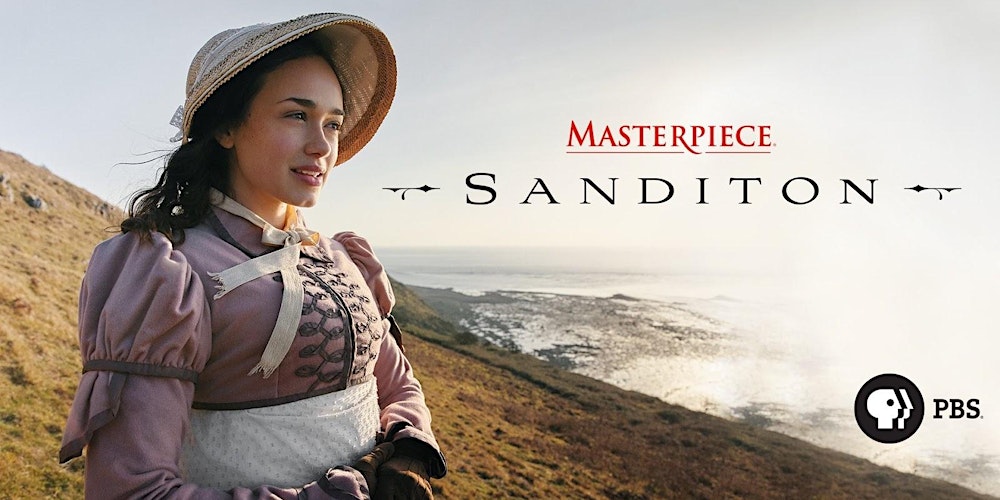
       . . . . . Sanditon (2019) ITV-PBS.  8 frackin’ episodes!  How can there be that many 48 minute tv episodes from a unfinished novel that only had 12 chapters?

It premiered in the US this past Sunday night on PBS, showing the first two episodes, not just the first one. So much has been lifted whole out of other Austen novels for this series, mostly, of course, from Pride and Prejudice, particularly in the dialogue, and scenes repeating or at least referencing the 1995 BBC Pride and Prejudice.

And people talking about a second season, though ITV said it cancelled the series as not enough viewers / unenthusiastic - hostile - derisive reponse.  The UK reviewers at least, really didn’t like it – dull and tedious. Out of what could they fashion a second season anyway? 

The UK viewers also strongly objected to the depictions of sexual behavior that departed so sharply from the 
Austen universe as Austen depicted. The writers for Sanditon felt they MUST give us as villains, a sexually transgressive half sister-brother duo.  The bro’s a serial, violent seducer-rapist. There’s a strong suggestion of the two of them doing what even half sibs should not do, while living mostly within a room in their crumbling mansion frescoed with naked men doing ... what exactly? Really, Austen was able to show schemers determined to get All the Stuff without going that far. 

My favorite Mansfield Park, BBC 1983

Henry Crawford


Mary Crawford

The splendid Crawford brother and sister pair of Mansfield Park -- they created havoc and crossed boundaries -- certainly the brother did! -- but we see how their charm, likeability and worldly joie de vivre -- even their sophisticated sense of the comic and absurd -- allowed for their seductions, without rape and violence of that sort. These two are as interesting to the reader as they are to the the characters of Mansfield Park.

Even the way the writers did it, the pretext to get a lively but moral ingenue to this sea-side resort in the making, was hard to believe.  Really, even in those days? Responsible parents like the Heywoods would allow their adolescent daughter to go off to stay with the Parkers, people they’ve known for, o all of 5 minutes?

Even if Tom Parker is played by Kris Marshall!?* whom last I knew as the detective on Death in Paradise, who left the fictional Caribbean island of Saint Marie after two seasons, to marry his love back in London. I saw Marshall first in Love Actually (2003) as the horny Brit kid trying to get laid who travels to the US to do it. Remarkably, one of the three midwestern babes who helps him out of his virginity was January Jones, who played Betty Draper, the unpleasant first wife of Don Draper on Mad Men.  Gotta say this for Marshall the actor -- he does get around some beautiful women, over and over and over again!*

A friend writes to me about Austen's Sanditon vs. ITV-PB's Sanditon after she too watched these first two episodes on offer:
 ... Reread Sanditon. [What Austen wrote] almost fills up the first ep. The ball sequence and everything follows is invention ... also kind of Northanger Abbey ... it's [NA's] Catherine Moorland, Not Charlotte Heywood. [Austen's Sanditon's]CH was a sensible young woman of two and twenty, ie, a bit too long on the shelf but not at all a husband-hunter. It's only a fragment. but that ball sequence is PURE Catherine Moorland.
Here's the thing about Charlotte Heywood - she is an observer figure. She stands apart and judges the other characters but doesn't enter into their lives. She exhibits no romantic interest in them. (This might have changed if the book had been finished - or maybe not. It would have been an unusual and rather progressive narrative strategy.)
But this Charlotte Heywood has been buried in the TV series.
My response:
     This is all true -- and playing Charlotte as Austen wrote her would also be a most interesting acting challenge, and worth watching.
But the actor playing Charlotte isn't up to that any more than the writing is up to Austen. Writers: NO WE MUST HAVE ROMANCE! WE MUST DO ELIZABETH AND DARCY ALL OVER AGAIN ALL THE TIME BECAUSE THAT’S ALL THE LADIES ADORE AND THAT’S ALL THE LADIES KNOW.

Especially the tv Darcy and Elizabeth of 1995, which itself took some serious liberties with Austen’s Pride and Prejudice text, like Gerwig does with Alcott's Little Women. Which mostly means, at least for this Sanditon, we must squeeze in as much nekkid men as the screen can hold.
The ghastly Pineapple luncheon though, in terms of how things surely were and, tragically, the way things still are right this minute, was remarkably on the money: consider what's going on right this minute with Meghan Markle:
https://www.huffpost.com/entry/exclusive-meghan-markle-targeted-by-hundreds-of-racist-and-sexist-tweets-amid-plan-to-step-back_n_5e1f5b28c5b673621f6f7965
Plus there are so many more racist comments and actions that can rather more subtle than these and the way the hideous person Ann Reid is playing shows so well (like, that member of the royal family / court? who to meet the Duchess to be, wore a blackamoor pin). Reid's performance is far and away the best thing in the piece. The actor playing Charlotte, I saw last as the vapid Princess Clode in the last season or so of the ridiculous, non-historical period series, Reign, in which we see Mary Queen of Scots host a run-way fashion show in her Scotland castle.
~~~~~~~~~~~~~
Woo! does that resort on the coast of England broadcast cold!  And the actors had to get in the water!  But it looked almost equally cold out of the water and inside walls.  All the actors who have played the detective on Death in Paradise have talked extensively of how difficult it is to do this series in the climate of Guadeloupe. So it was probably more pleasant for Marshall to shoot in cold England. 

Monday, January 13, 2020

Screen Time

     . . . . Did anyone watch the first episode of Sanditon last night on PBS?


The Brit reviews when it played there last year were fairly unanimous that this was dull and tedious, lacking any sizzle or wit.

I can stream it, but am reluctant without some recs from people who have seen it.

     . . . . It's shame that Hustlers and JLo got shut out of #oscarssowhitemen. Additionally, Hustlers is the Little Women for our time. Four principals, diverse in background and skin tone including J Lo as Marmee as well as Jo, they are the March sisters we all need, reflecting our Reel Amurica!


Four Sisters Who Aren't the Marches, Praise the Lord!

The Irishman was a great film.  But I honestly feel that Hustlers was its superior according to all the criteria by which we judge these matters. The exception is the screen interpretation and record of the history and culture of the USA. As historical and cultural commentary The Irishman and Hustlers are equal.

Friday, August 11, 2017

Black Nerd Problems GOT + Slavery Fanfic - Make Alternative America Great Again!


     . . . . This recap of Got's season 7, episode 4 is wonderfully funny. It goes beautifully with Leslie Jones's hilarious "Game of Jones Thrones" with Seth Meyer.


 Link to Jones Thrones -- The G-OT- Is MEEE is here.
Brienne asked her how she learned that shit, and Arya hit her with “No One.” I wasn’t ready, fam. I just wasn’t. Also, NEITHER WAS SANSA. My god, Sansa look like she just showed up to the city wide science fair with a potato clock. That shit was rouuuuugh. Jon got fucking murdered, but became King in the North. Bran got paralyzed, but became an Omega Level Mutant. Arya has had to run to every corner of the continent and lost her sight to become Agent 47. And Sansa was betrothed to not one but two monsters, got brutally assaulted, and gained a stalker so that she could fill out TPS reports on grain inventory. That’s fucked up man. Everybody else went away to college and became experts in their field while Sansa rotted away at a terrible MFA program and left with a degree she ain’t gonna do shit with and even more student debt. Life ain’t fair, yo.


What Black Nerd says about D&D's HBO slavery fanfic is penetratingly wise, rather than comic.  It goes well with Ta-Nehisi Coates' piece on Confederate in the Atlantic and the radio interview with the #noconfederate activists -- links to both these are here. 


Let’s not stand on ceremony here: as great as Benioff and Weiss are as visionaries, their blind spots as two cis white men shows up too often for me to be comfortable for a show with slavery as a major component of the story. The gratuitous display of sexual assault (well past showing how brutal the world is), and the reluctance of having any pivotal POC character or venturing into the very natural lines they have drawn around color (the Unsullied army is almost, if not all, POC as former slaves, but is only explored as a class differentiation) gives me little confidence that this will be a new awareness taken on with this new venture. There aren’t many scenarios I see this working: 
- Slavery is minimized and a smaller part of the plot: So… we minimizing slavery now? Yeah, no.
- Slavery is more than just Black people in this alternative world: So… we just minimizing Black slaves as a narrative on some all slaves matter stuff? Nah.
- The flip of that being Black people or other POC own slaves as well: Sigh, come on, man.
These are all alternatives to the possibility that it’s not just a continuation of slavery from the very real world brought into a modern era. Even if these cats have the tools to do this, then Game of Thrones has been a terrible dress rehearsal because we haven’t seen it.
The only way this holds any significant interest for me is if there is a slave revolt in the first episode and the third civil war is about the Black people taking over the America. Das it
. Make Alternative America Great Again. 
. . . . this has a lot to do with agency. About who gets to tell who’s stories. Would I feel differently if Black creators were behind this show? Probably. Not like, Lee Daniels though, but still. These stories can exist in the world, either based on real life narratives or alternate universes, but the voice and the trust in the identification of the producer counts for something. Handmaiden’s Tale, Underground, shows like those, where the writer reflected the identity of the marginalized people in those stories, relays a faith that those characters will be handled with a caring and understanding befitting the human portrayal we expect. Game of Thrones is excellently written and thematically beautiful, but it is also spectacle. It is decapitations and rape and little girls burned alive. I’m fatigued on stories of a time period (or time period carried over, in this case) that attempts to justify racism and racial violence as a tool of the day, but I’m also fatigued on the spectacle of “back in the day” racism. There’s no reason to have confidence this won’t continue under Benioff and Weiss, and they have had several years with the highest visibility prove otherwise.

Thursday, July 27, 2017

Emily Dickinson, Poetry is Not A Quiet Passion

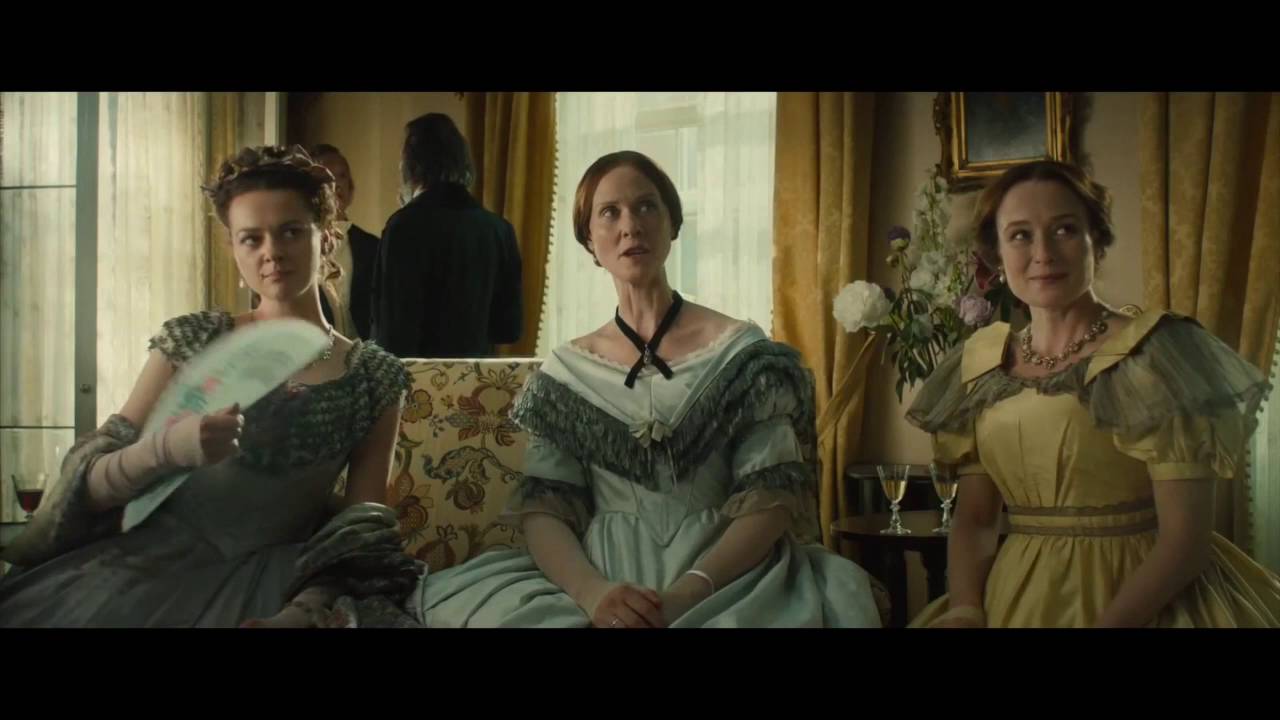
     . . . .  The film, A Quiet Passion (2016), is a psychological biography of the poet, Emily Dickinson. 

There are many Emilys in this film, as she, like Whitman, contained multitudes. The first one we meet is the schoolgirl Emily, steadfastly refusing to declare religious conversion and a born again, saved, experience. This Emily is played by Emma Bell, who, then, in a subsequent sequence of family portraits subtly ages and becomes Cynthia Nixon, who performs the star turns of acting as the adult Emily Dickinson. 


Cynthia Nixon as Emily Dickinson and Jennifer Ehle as her sister Vinnie.
I saw the film months ago but the thoughts it provoked about the poet and the times in which she lived, the people among whom she passed her passionate, and often painful life -- exterior and interior -- remain riverlets winding through my ongoing mental preoccupations.

A Quiet Passion is an exquisite film, with the exception of allowing Mabel Todd Loomis to actually see the poet, which she never did.  But here the meeting is, in a terrible pitch of highest plausible drama, a moment when Austin, Emily’s brother, is discovered by her in – not flagrante, exactly – but in a passionately incriminating intimacy -- in hers and Vinnie's home! This is so many violations simultaneously that the infuriated Emily literally spits out the words (not the first time in this family drama, in which all members can and do give as good as they get, when these terrible moments blaze up between them.  This is not Austin's house, he's betraying Susan, her sister-in-law, whom Emily and the whole family love tenderly, and -- Austin has fallen from the place of  perfection and moral arbiter where Emily and the family had so fondly placed him.

Emily's life is so much about family.  The Dickinsons are tied and bonded as closely in affection and intelligence as a family can be. As we know, not all is smooth all the time. The fallings out are passionate and the barbs thrown are cruel and to the exact bulls eye, just because they do know and love each other so well, and are such equals in passion and self-knowledge.  Yet, except for Austin's Grand Treachery, whenever the members fall out, once the poison has erupted, they are horrified, not with the person toward whom the violence was directed, but at themselves.  They are horrified by themselves, and see where they are unfair, and wrong, and always apologize sincerely, at once, and are ashamed.  The apologies are always accepted.

These days I miss that old puritan tradition of constant examination of soul, the authentic desire to be honest with God, to care at least as carefully for the soul as the bank account, and that death and the after life are always in mind. Abigail Adams was fully possessed by this, but like Emily, it never interfered with her sharpness of intelligence and commentary.

In this film the trajectory of the poet's mind is beautifully evoked over time. Death takes one to God, who is the beloved passionate anonymous Byronic lover eagerly awaited, but whom never quite enters the bedroom, the father, the Brontëan brother, like life, death, infinity and heaven, merging one into another. The Brontës' novels, Wuthering Heights particularly, and Jane Eyre, with whose narrator, Emily closely identifies, painfully convinced that she, like Jane, is unblessed by the beauty and charms that attract men's love, while passionately desiring it -- and equally, believing that love is death for a woman -- are deliriously invoked with delighted consciousness of committing female transgression at every turn in these women's earlier lives.

Vryling, Emily, Vinnie, happily making fun of men who take themselves so seriously while knowing nothing.
Some have evaluated the dialog in the earlier parts of the film as too much admiration for Jane Austen – which writer, importantly, unlike the Brontës and George Eliot --  Dickinson did not like. or admire. Thus, intelligently, throughout the film,  admiration of the Brontës is expressed by many of female characters. Perhaps these critics got it wrong -- they are English after all, and there are areas of the trans-Atlantic mind that seem to remain forever veiled to their sight. All these sharp, quick quips and ripostes among Emily, her sister, Vinnie, and their friend, Vryling Buffam, are accompanied by continual happy prolonged laughter. They are happy young women, thoroughly in love with each other’s intelligence, personalities, characters and language brilliance. Their pleasure in each other is so gracefully expressed by the actors (the cast is splendid even beyond the tour de force that Cynthia Nixon achieves), that the viewer participates equally in their pleasure.

After Buffam's marriage vows; Emily does not join the other guests outside the church congratulating the newly married couple.
This joy begins to fade with death of friends and relatives, and particularly the marriage of her beloved friend Vryling Buffam's religious conversion, and her subsequent marriage a pastor. Thereafter the friendship, as Emily feared, disappears entirely. It may be Emily deliberately disappeared the friendship, as she was as passionately convinced that marriage had to destroy the only kind of friendship that she could sustain, that of passionate intimacy. Now too disappears the laughter, as her partner in transgressive wit enters the grave of wife and motherhood.  Her terrible loneliness begins to manifest, chosen as deliberately out of anger with the world she's been given, her place in it as a woman, as an artist with a soul as large as the universe, physical maladies and pain, and -- a mind that cannot be contained within a single world, much less house and garden, and which possesses an intimate, passionate relationship with God.

I do wish the film had included the witnessed incident of Emily drowning unwanted newborn kittens in a bucket of water. I had to make due with another acclaimed incident of her father, while waiting to be served his dinner, calmly complaining his plate is not quite clean, and she calmly picking up the plate to smash it into pieces against the table. She explains,  “Now it does not matter.”

Most of all though, I wish the film makers had resisted and not manufactured an event between Emily and Mabel Todd Loomis, her brother's adulterous lover, and the woman who took over Emily after her death and created out of whole cloth all the phony mythology of the eternal Maid of Amherst, and herself as the only intimate of the poet.  Loomis never saw Emily in the flesh, never exchanged a word with her, and never got a glimpse of her poems.  She stole them from Emily's sister, Vinnie, then went on tour 'acting' Emily, and reading her poems, which bowdlerized to fit better with her phony Emily.  Which is a 19th century tale in itself!

Nevertheless, in terms of Emily herself, and her family, these decades of the 19th century from the 1830's to post the War of the Rebellion, the picture of the finest and most progressive and liberal minds of New England, and thus of our nation, and just how much passion and imagination fueled such minds -- there's never been a film like this.  It is joy to watch from the first scene, to the last.

Though all the actors are superb, in the end, such a film succeeds or fails according the actor who is Dickinson.  Cynthia Nixon is magnificent.  No one can doubt that the poet would be in heaven to see herself as Nixon has portrayed her.  Poetry is anything but a quiet passion.