O'Donnell's style may be a bit too breezy for certain gatekeepers of Roman history. The sort of contemporary tone he often employs tends not to age well over the decades, particularly his choices for metaphors or similes for certain issues, behaviors or events between now and the 3rd, 4th, 5th, 6th and 7th centuries -- particularly the Middle East and the Dubya regime. Nevertheless, beyond that, for me, not a scholar or specialist of Roman history, O'Donnell has provided new knowledge and understanding regarding what both he and Mary Beard would probably now call the 'fake news' of s-called barbarian invasions of Italy and Gaul. All parts of this history are enthralling history, whether connected to the histories of the schism of the Christian Churches into east and west and the proofs that the Roman empire definitively did not fall until the 15th century. His argument provides specific context and rebuttal to the long-standing dogma provided by Gibbon that Rome fell in the 3rd or 4th or 5th century, and nothing but chaos remained, i.e. the Dark Ages. He bases his own argument in the tax and trade bases that supported both Rome and Constantinople for centuries longer, because specifically taxes and customs supported the military on the edges of the empires.
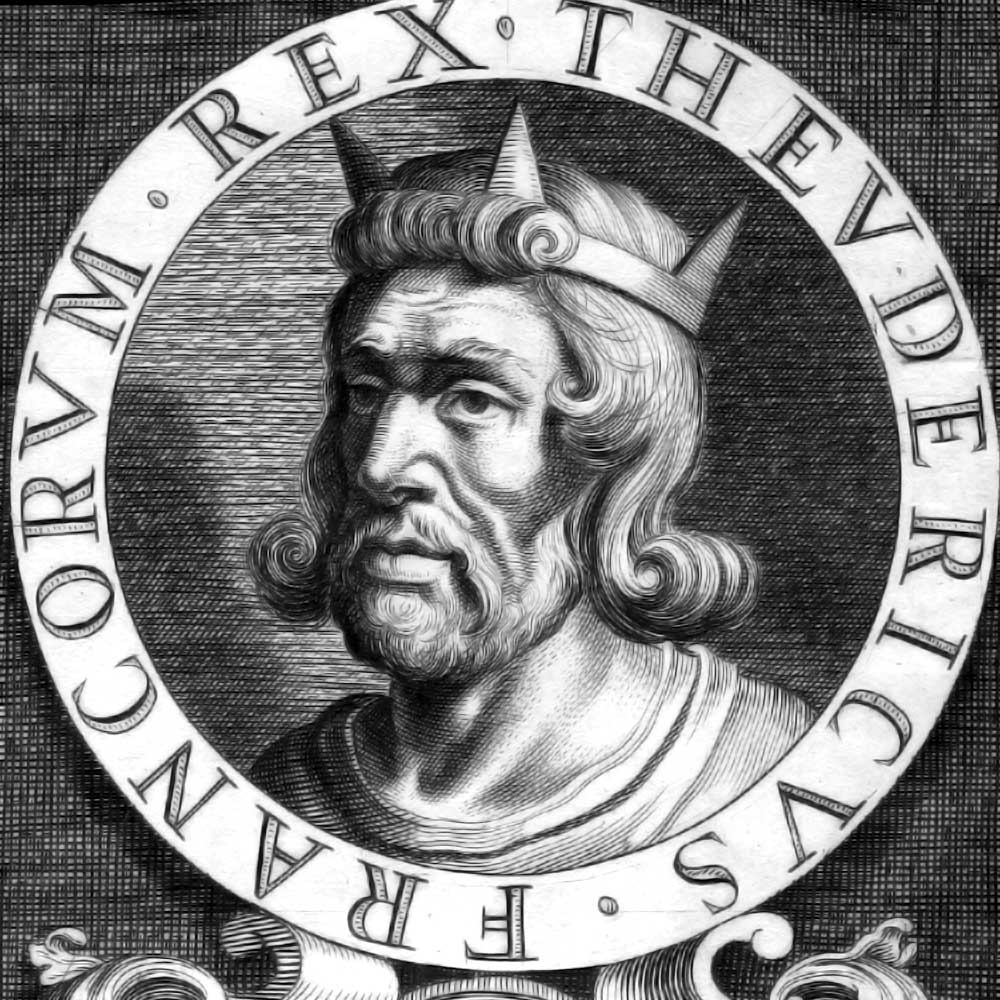 |
| King Theodoric the Great Called the Synodus Palmaris to Deal With Two Rival Popes |
It was particularly within the tax and military structures that the so-called barbarians became Roman, and continued with little or no change those same structures and customs. O'Donnell illustrates this effectively with the details of the reign of his central character, the Ostrogoth Theodoric the Great ( king of the Ostrogoths (475–526), ruler of Italy (493–526), regent of the Visigoths (511–526), and a patricius of the Roman Empire). Theodoric, raised and educated at the court in Byzantium, ruled Italy longer than any Roman emperor other than Augustus. He held it together even during the period when there were two popes simultaneously. His period was much more prosperous and peaceful than old Rome's second century C.E. It was the last western era of religious tolerance.
After him the disasters are looming. This is when the real Christian prosecution by emperors and their representatives took place -- done to Christians by other Christians. Backed by the uneducated and not terribly bright Justinian, his religious counselors determined that all the empire must worship and believe in the same way, and the conviction that identity was now the same as religious practice and the state came to rule.
It is no surprise that the forces of religion, driven by short-sighted and ignorant men who refuse to admit the reality of the regions' diversity that always had (and probably always will) worshipped and believed in a variety of ways.
Shades of how the Europeans partitioned and reshaped the Middle East during and after WWI. We are dealing at this moment, past the middle of the second decades of the 21st century, with both the effects of the religious foolishnesses of the centuries subsequent to Theodoric's reign and the redistricting of the the 20th.
 |
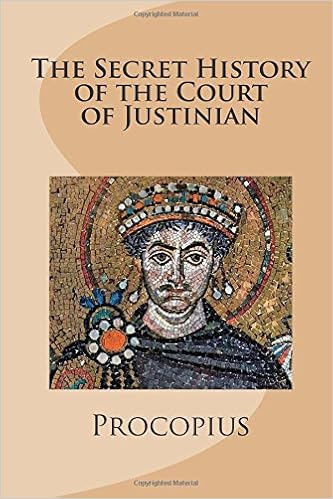
| Empress Theodora, wife to Justinian, former entertainer and / or sex worker. |
O'Donnell is particularly enlightening on Procopius. As with so much of the content of this work, such as barbarian invasions, Roman emperors feeding Christians to the lions, etc. he warns the reader to discard everything everybody knows about Procopius. Procopius was not a highly regarded court historian of Justinian's among other things. However, this reader at least, does wish that the author didn't push his metaphor of Justinian as Hamlet and what a terrible king Hamlet would have made if he'd survived to the throne, as it doesn't actually enlighten anyone attempting to think her way so far back in time in which these teeny religious differences and weighty discussions were of such burning interest to fairly dull intellects such as Justinian's. He just wasn't that interesting a human being, at least after he became married to Theodosia and emperor -- unlike Theodoric, King of the Ostrogoths, at least.
Side notes:

- I'm finally learning something about the background that produces Clovis, Charles Martel and the Merovingians, climaxing with Charlemagne -- or at least I get to my workout later this afternoon. Theodoric the Great is only recently dead.
- O'Donnell refers to Attila as a Scythian. I haven't figured out if that is because Attila really was a Scythian or because he spent so much time in the region that hosted the Scythians -- and ruled them? There's so much that is puzzling when one isn't a scholar of the period one is reading about!
- What I have enjoyed immensely about The Ruin of Rome, as with the book about Charlemagne I read last year, is how well O'Donnell describes how rulers use artists, historians, poets, writers and / or religious hierophants to consciously change history, at least the part of history for which they responsible. -- thus the barbarian invasions and Rome sending Christians to the Games and their deaths for fun and profit. The figures of our own War of Rebellion are not by any means the first to do this -- but not many perhaps, at least in these times of near universal literacy and newspapers and other media, did it so successfully, so quickly while the people who were there and in opposition, still alive and still in power.